Industrial automation is undergoing a major transformation as industries increasingly adopt intelligent control systems, digital technologies, and advanced monitoring solutions to improve operational efficiency, safety, and productivity. Among the essential components supporting this evolution, valve positioners play a critical role in ensuring accurate valve operation, optimized process control, and reliable fluid management. The global valve positioner market is projected to grow from USD 2.07 billion in 2025 to USD 2.56 billion by 2030, registering a CAGR of 4.4 % during the forecast period.
The Valve Positioners Market is expected to witness steady growth as industries such as oil & gas, chemicals, power generation, water & wastewater treatment, pharmaceuticals, and manufacturing invest in automation and smart process control solutions. The growing adoption of Industry 4.0, Industrial Internet of Things (IIoT), and predictive maintenance technologies is accelerating demand for advanced valve positioners capable of delivering higher precision, connectivity, and operational intelligence.
Understanding Valve Positioners
A valve positioner is a control device used to regulate the position of a control valve by adjusting the actuator output based on signals received from a process control system. It ensures that valves accurately achieve the desired position, improving flow regulation and process stability.
Modern valve positioners enhance conventional valve control by providing:
- Precise valve positioning
- Improved process efficiency
- Faster response times
- Reduced energy consumption
- Remote monitoring capabilities
- Predictive maintenance insights
With increasing process complexity, valve positioners have become an integral part of automated industrial systems.
Key Market Growth Drivers
1. Rising Adoption of Industrial Automation
Industries worldwide are accelerating automation initiatives to improve productivity, reduce operational costs, and enhance safety. Automated process control systems require reliable valve management solutions, increasing demand for advanced valve positioners.
Manufacturing plants, refineries, and power facilities are increasingly integrating smart control devices to achieve greater efficiency and minimize human intervention.
2. Growth of Industry 4.0 and IIoT Integration
The emergence of Industry 4.0 is transforming industrial operations through connected devices, real-time monitoring, and data-driven decision-making. Smart valve positioners equipped with digital communication capabilities enable seamless integration with industrial networks.
IIoT-enabled valve positioners support:
- Remote diagnostics
- Condition monitoring
- Performance optimization
- Predictive maintenance
- Real-time operational insights
3. Increasing Focus on Process Efficiency and Energy Optimization
Industries are focusing on reducing energy consumption, improving resource utilization, and minimizing production losses. Accurate valve control helps optimize fluid flow, improve system performance, and reduce unnecessary energy usage.
Valve positioners contribute to operational efficiency by maintaining precise control over critical processes.
Download PDF Brochure @ https://www.marketsandmarkets.com/pdfdownloadNew.asp?id=138950854
4. Expansion of Process Industries
Growth in industries such as oil & gas, chemicals, pharmaceuticals, food & beverage, and power generation is creating demand for advanced control solutions.
As new industrial facilities are developed and existing plants are upgraded, valve automation systems are becoming increasingly important for achieving reliable and efficient operations.
Market Segmentation
By Type
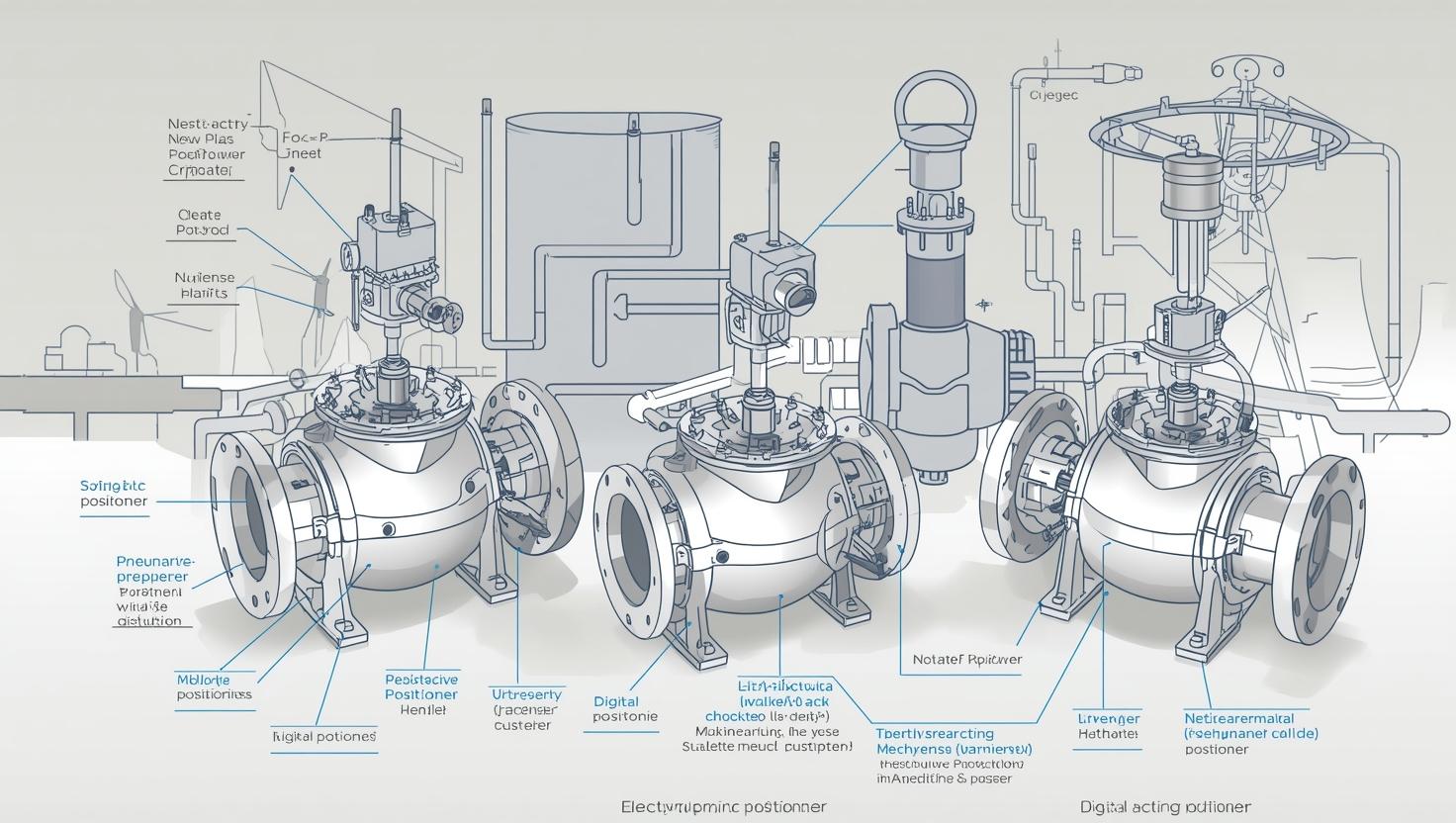
Pneumatic Valve Positioners
Pneumatic valve positioners remain widely used due to their reliability, durability, and suitability for hazardous industrial environments. They are commonly deployed in process industries where compressed air systems are already established.
Electro-Pneumatic Valve Positioners
Electro-pneumatic positioners combine electronic control signals with pneumatic actuation, providing improved accuracy and compatibility with modern automation systems.
Digital Valve Positioners
Digital valve positioners represent the next generation of intelligent control solutions. They offer advanced diagnostics, communication capabilities, and improved monitoring features, making them increasingly popular in automated facilities.
By Communication Technology
Analog Communication
Traditional analog communication systems continue to be used in many industrial facilities due to their simplicity and compatibility with existing infrastructure.
Digital Communication
Digital communication technologies such as fieldbus and industrial communication protocols are gaining adoption due to their ability to provide enhanced diagnostics, remote configuration, and improved system integration.
By End-Use Industry
Oil & Gas
The oil and gas sector remains a major user of valve positioners due to the need for precise control in exploration, processing, refining, and transportation operations.
Chemicals and Petrochemicals
Chemical processing facilities require accurate flow control to maintain safety, quality, and operational efficiency.
Power Generation
Power plants use valve positioners for applications involving steam, water, and fuel control systems, supporting reliable energy production.
Water & Wastewater Treatment
Increasing investments in water management infrastructure are driving adoption of automated valve control solutions.
Pharmaceuticals and Food Processing
These industries require highly accurate and hygienic process control, creating opportunities for advanced valve positioning technologies.
Emerging Market Trends
Smart and Digital Valve Positioners
The shift from traditional mechanical devices toward intelligent digital positioners is one of the major market trends. Digital solutions provide advanced diagnostics, improved calibration, and real-time performance monitoring.
Predictive Maintenance and Condition Monitoring
Industries are increasingly adopting predictive maintenance strategies to reduce downtime and extend equipment life. Smart valve positioners can detect performance changes, identify potential failures, and support proactive maintenance activities.
Integration with Industrial Control Systems
Modern valve positioners are increasingly designed to integrate with distributed control systems (DCS), supervisory control and data acquisition (SCADA) systems, and automation platforms.
This integration enables centralized monitoring and improved process optimization.
Wireless Connectivity and Remote Operations
The adoption of wireless industrial technologies is creating new opportunities for remote valve monitoring and control. Wireless-enabled positioners support operations in challenging environments where traditional wiring may be difficult or costly.
Sustainability and Energy Efficiency
As industries focus on reducing environmental impact, efficient process control technologies are gaining importance. Valve positioners help optimize resource usage, reduce emissions, and improve overall plant sustainability.
Growth Opportunities in the Valve Positioners Market
Digital Transformation of Existing Industrial Facilities
Many industries are upgrading legacy infrastructure with smart automation solutions. Retrofitting existing plants with intelligent valve positioners presents significant growth opportunities.
Expansion of Smart Manufacturing
The growth of smart factories and automated production systems is increasing demand for connected control devices capable of supporting real-time decision-making.
Renewable Energy Applications
The expansion of renewable energy projects, including hydrogen production and advanced power systems, is creating new opportunities for valve automation technologies.
Emerging Markets and Industrial Development
Rapid industrialization in developing economies is driving investments in manufacturing, energy, and infrastructure projects, supporting market expansion.
Challenges Impacting Market Growth
Despite strong growth opportunities, the valve positioners market faces several challenges:
- High initial investment costs for advanced digital systems
- Complexity of integration with existing industrial infrastructure
- Need for skilled professionals for installation and maintenance
- Competition from alternative control technologies
However, technological advancements and increasing automation adoption are expected to help overcome these challenges.
Future Outlook
The future of the Valve Positioners Market will be shaped by digitalization, automation, and the growing demand for intelligent process control. As industries move toward connected and autonomous operations, smart valve positioners will become increasingly important for improving efficiency, reliability, and safety.
The integration of AI-based analytics, IIoT connectivity, and advanced diagnostics will further enhance the capabilities of valve positioners, enabling more predictive and optimized industrial operations.
Valve positioners are becoming a fundamental technology in modern industrial automation by enabling precise control, improved efficiency, and enhanced process reliability. The transition toward smart manufacturing, digital transformation, and connected industrial ecosystems is creating significant opportunities for advanced valve positioning solutions.
With increasing adoption across energy, manufacturing, chemical processing, and infrastructure industries, the Valve Positioners Market is positioned for continued growth as organizations prioritize precision performance, operational excellence, and intelligent automation.
About MarketsandMarkets™
MarketsandMarkets™ provides quantified B2B research on 30,000 high growth niche opportunities/threats which will impact 70% to 80% of worldwide companies’ revenues. Currently servicing 7500 customers worldwide including 80% of global Fortune 1000 companies as clients. Almost 75,000 top officers across eight industries worldwide approach MarketsandMarkets™ for their painpoints around revenues decisions.
Our 850 fulltime analyst and SMEs at MarketsandMarkets™ are tracking global high growth markets following the “Growth Engagement Model – GEM”. The GEM aims at proactive collaboration with the clients to identify new opportunities, identify most important customers, write “Attack, avoid and defend” strategies, identify sources of incremental revenues for both the company and its competitors. MarketsandMarkets™ now coming up with 1,500 MicroQuadrants (Positioning top players across leaders, emerging companies, innovators, strategic players) annually in high growth emerging segments. MarketsandMarkets™ is determined to benefit more than 10,000 companies this year for their revenue planning and help them take their innovations/disruptions early to the market by providing them research ahead of the curve.
MarketsandMarkets’s flagship competitive intelligence and market research platform, “Knowledgestore” connects over 200,000 markets and entire value chains for deeper understanding of the unmet insights along with market sizing and forecasts of niche markets.
Contact:
Mr. Rohan Salgarkar
MarketsandMarkets™ INC.
630 Dundee Road
Suite 430
Northbrook, IL 60062
USA : 1-888-600-6441
