The laboratory landscape is changing faster than ever. As life sciences, diagnostics, and pharmaceutical research scale up, the demand for precision, speed, and efficiency is pushing organizations to adopt advanced lab automation technologies. By 2025, automation is no longer a luxury—it’s a necessity for labs aiming to stay competitive, compliant, and innovation-driven.
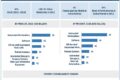
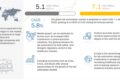
The global lab automation market, valued at US$5.97 billion in 2024, stood at US$6.36 billion in 2025 and is projected to advance at a resilient CAGR of 7.2% from 2025 to 2030, culminating in a forecasted valuation of US$9.01 billion by the end of the period. The primary driver of this growth is the increasing demand for high-throughput screening, which enables laboratories to efficiently process large volumes of samples in drug discovery and diagnostics. Automated systems minimize human intervention, leading to more accurate results for both clinical and research applications.
Download PDF Brochure: https://www.marketsandmarkets.com/pdfdownloadNew.asp?id=1158
What’s Driving the Growth of Lab Automation?
The rise of automation in laboratories is fueled by several long-term forces:
- The explosion of genomics, proteomics, and high-throughput screening
- Growing pressure to reduce manual errors and improve reproducibility
- Increasing integration of AI and intelligent software
- Need for faster drug discovery and clinical diagnostics
- Shortage of skilled laboratory professionals
As a result, the global lab automation market continues to expand, driven by automation-friendly workflows, digitized data systems, and robotics-powered productivity.
Top Lab Automation Market Trends for 2025
1. AI-Powered Labs Are Becoming the New Standard
Artificial intelligence is rapidly moving from an add-on to a core component of lab workflows.
AI is now used to:
✔ Predict experiment outcomes
✔ Optimize workflows in real time
✔ Reduce human intervention
✔ Enable smart decision-making
From image analysis to predictive analytics, AI-powered labs are transforming how scientists design, execute, and interpret experiments.
2. Robotics and Modular Automation Are Taking Over
Robotic arms, automated liquid handlers, and mobile robots are becoming central to modern lab design.
In 2025, labs are adopting:
- Flexible robotic platforms
- Customizable modular automation units
- Collaborative robots (cobots)
These systems improve throughput, cut down repetitive manual tasks, and ensure consistent, accurate results.
3. The Rise of Cloud-Connected Smart Labs
Cloud-based platforms are enabling:
- Real-time data sharing
- Remote monitoring of instruments
- Streamlined collaboration across global teams
The shift toward interconnected digital labs ensures higher transparency, seamless workflows, and faster data-driven decision-making.
4. Integrated ELN, LIMS, and Automation Ecosystems
A major trend in 2025 is the convergence of:
- Electronic Lab Notebooks (ELNs)
- Laboratory Information Management Systems (LIMS)
- Automation devices and software
This integration enables end-to-end traceability—from sample intake to automated reporting—boosting compliance and data integrity across operations.
5. Lab-on-a-Chip & Microfluidics Are Scaling Rapidly
Microfluidic-based automation is transforming:
- Drug screening
- Cell analysis
- Diagnostics
- Molecular biology workflows
These miniaturized, high-precision systems save time, reagents, and cost, making them ideal for high-throughput and point-of-care applications.
6. Rise of Fully Autonomous Labs
Autonomous labs that run 24/7 with minimal human input are shifting from concept to operational reality.
These labs use:
- Robotics
- AI workflow engines
- Automated sample tracking
- Smart sensors
The result? Continuous experimentation, accelerated discovery cycles, and unprecedented reproducibility.
Why These Trends Matter for Industry Stakeholders
For Biotech & Pharma:
Accelerated drug discovery, reduced operational costs, and higher reproducibility.
For Clinical Diagnostics:
Faster turnaround times, scalable workflows, and enhanced accuracy.
For Research Institutions:
Greater efficiency, reduced variability, and improved resource utilization.
For Automation Technology Providers:
Expanding demand for integrated, modular, and intelligent automation solutions.
The Future of Lab Automation: Smarter, Faster, Scalable
By 2025, lab automation is evolving into a comprehensive ecosystem combining AI, robotics, software integration, and cloud connectivity. Organizations that embrace these shifts will gain a significant competitive advantage—delivering faster discoveries, more efficient operations, and higher scientific impact.
The next era of laboratories is not just automated—it’s intelligent.