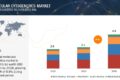
The global Molecular Cytogenetics Market, valued at USD 0.97 billion in 2024, is projected to grow at a robust CAGR of 7.1%, reaching USD 1.02 billion in 2025 and an impressive USD 1.43 billion by 2030.
This accelerated growth is fueled by the rising burden of cancer and genetic disorders, rapid advancements in cytogenetic technologies, and the increasing integration of molecular cytogenetics into routine clinical pathology.
Download PDF Brochure: https://www.marketsandmarkets.com/pdfdownloadNew.asp?id=148469224
Market Growth Drivers
1. Rising Incidence of Cancer & Genetic Disorders
With cancer and chromosomal abnormalities seeing consistent global growth, demand for high-resolution genomic analysis tools—including FISH, CGH, and aCGH—continues to rise.
2. Expanding Use in Clinical Pathology
Molecular cytogenetics is transitioning from research labs into core clinical workflows, especially for prenatal testing, oncology diagnostics, and personalized medicine.
3. Technological Advancements
Evolving imaging systems, probe technologies, AI-driven analytics, and automated workflows are making cytogenetic testing faster, more accurate, and more scalable.
4. Strong Momentum in Emerging Markets
Rapidly developing healthcare ecosystems across Asia Pacific, Middle East, and Latin America are accelerating adoption due to increased testing volumes and improved diagnostic infrastructure.
Market Segmentation Insights
By Product & Service
• Kits & Reagents (Fastest-growing segment)
Kits & reagents are projected to grow the fastest during the forecast period due to:
- High use in clinical diagnostics & research
- Accelerated adoption of ready-to-use solutions
- Rising demand for specialized probes, fluorescent labels, and optimized reagent kits
- Standardization needs across hospitals and labs
- Increased focus on reproducibility and reduced manual work
Kits significantly streamline workflows by eliminating the need for sourcing and validating individual components—driving efficiency in cancer and genetic disorder diagnostics.
By Technique
1. Comparative Genomic Hybridization (CGH / aCGH) — Largest Market Share (2024)
CGH dominates because it enables:
- Direct detection of copy number variations (CNVs)
- High-resolution screening without needing cell culturing
- Faster, more reliable workflows compared to traditional karyotyping
- Better detection of unbalanced karyotypes
- Critical insights into tumor biology for oncology diagnostics
The rise of array-CGH further improves genomic resolution, enabling simultaneous analysis of multiple genomic regions.
2. Fluorescence In Situ Hybridization (FISH)
Still widely used for detecting specific chromosomal abnormalities, gene amplifications, and translocations in oncology and prenatal testing.
3. Chromogenic In Situ Hybridization (CISH)
Preferred in settings where fluorescent microscopes are not available.
By Geography
Asia Pacific – Fastest Growing Region
APAC growth is supported by:
- Rising cancer and genetic disorder prevalence
- Large patient pools
- Expanding healthcare infrastructure
- Government initiatives supporting genomic testing
- Growing domestic manufacturing capacity
- Increased global partnerships, collaborations, and market expansions
Emerging economies like China, India, South Korea, and Singapore are becoming major hubs for cytogenetic innovation and adoption.
Key Market Players
Leading companies shaping the molecular cytogenetics space include:
- Thermo Fisher Scientific Inc. (US)
- Illumina, Inc. (US)
- Danaher (US)
- F. Hoffmann-La Roche Ltd. (Switzerland)
- Revvity (US)
- Abbott (US)
- Agilent Technologies, Inc. (US)
- PacBio (US)
- Bio-Rad Laboratories, Inc. (US)
- Bio-Techne (US)
Company Snapshots
Agilent Technologies, Inc. (US)
A leading contributor to molecular cytogenetics, Agilent provides a comprehensive suite of instruments, reagents, and software for cytogenetic analysis.
In 2025, the company strengthened its market position through:
- Strategic collaborations
- High-throughput workflow innovations
- Enhanced imaging and genomic analysis solutions
- Strong R&D focus and a global distribution network
Abbott (US)
Abbott is expanding in cytogenetics through:
- Automated analyzers
- High-precision assays
- Advanced chromosomal analysis tools
- Integrating next-generation technologies for oncology and personalized medicine
With strong global distribution and deep R&D investments, Abbott continues to enhance diagnostic accuracy and speed in clinical workflows.
Danaher (US)
Although Danaher’s portfolio includes multiple life sciences and diagnostic solutions, the company continues expanding globally through:
- Product innovations aligned with ISO 13485 standards
- Expansion in Europe & North America
- Strategic acquisitions and partnerships
Conclusion: Cytogenetics Powering the Future of Precision Medicine
The molecular cytogenetics market is entering a critical growth phase powered by:
- High disease burden
- Technological transformation
- Strong clinical adoption
- Rapid expansion in emerging markets
By 2030, the industry will play a central role in cancer diagnostics, prenatal screening, genetic disorder detection, and personalized treatment planning, making it one of the fastest-growing segments in genomic medicine.
Request Sample Pages : https://www.marketsandmarkets.com/requestsampleNew.asp?id=148469224