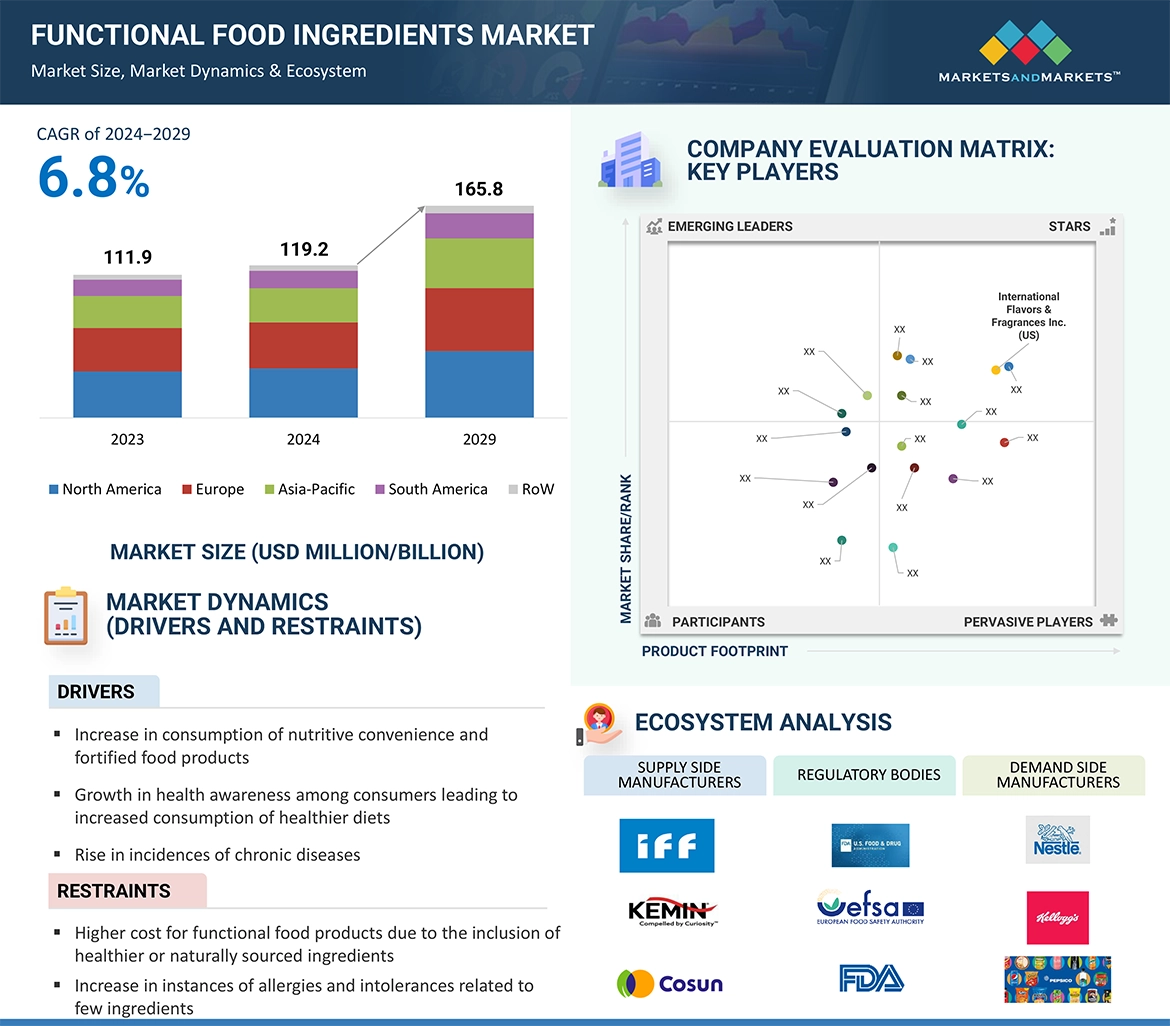
The global functional food ingredients market is witnessing rapid expansion, driven by evolving consumer lifestyles, growing health consciousness, and advancements in food science. Valued at USD 119.2 billion in 2024, the market is projected to reach USD 165.8 billion by 2029, progressing at a CAGR of 6.8%. As consumers increasingly turn toward foods that deliver targeted health benefits, the industry continues to evolve with innovation, scientific backing, and a shift toward preventive wellness.
Rising Health Awareness Fuels Market Expansion
Today’s consumers are more informed and proactive when it comes to their health. With lifestyle-related ailments—such as obesity, diabetes, and cardiovascular diseases—on the rise, people are showing a strong preference for diets that support holistic well-being.
The widespread availability of nutrition-related information through digital platforms, social media, and scientific publications has empowered individuals to make better dietary choices. Research highlighting the benefits of bioactive compounds, antioxidants, proteins, probiotics, and omega fatty acids has significantly boosted interest in functional foods.
Download PDF Brochure: https://www.marketsandmarkets.com/pdfdownloadNew.asp?id=9242020
Demographic Shifts Strengthen Market Growth
Changing global demographics also play a crucial role in market expansion. As populations age and middle-class groups grow across emerging economies, demand for foods that support long-term health is surging.
A notable example comes from South Korea, where the aging population has intensified competition in the health functional food space. According to a report published in March 2024 by Pulse (Maeil Business News Korea):
- The Korean health functional food market has more than doubled since 2019, reaching USD 4.7 billion in 2022.
- Companies like Dongwon F&B launched products such as BEAUTICK Bacillus SOD targeting middle-aged and elderly consumers.
- Other major players like Daesang Wellife and CJ Wellcare are also expanding portfolios aimed at aging-related health concerns.
Such demographic trends underscore the rising need for functional ingredients that support immunity, digestion, energy, and healthy aging.
“Beauty From Within”: A Trend Redefining the Market
One of the most transformative drivers of recent years is the booming “beauty from within” trend. Consumers increasingly recognize the strong link between nutrition and physical appearance, especially regarding skin, hair, and overall vitality.
According to Whole Foods Magazine, nutri-beauty supplements have seen a 57% market surge since 2019, reaching USD 53.4 billion in 2022, as noted by Kylen Ribeiro, CEO of Lightbody.
Functional ingredients rich in:
- Proteins
- Vitamins
- Omega fatty acids
- Antioxidants
play essential roles in improving skin elasticity, radiance, and hair strength. As consumers gravitate toward long-term, nutrition-based beauty solutions, this trend is expected to significantly contribute to the expansion of functional food products.
Request Sample Pages: https://www.marketsandmarkets.com/requestsampleNew.asp?id=9242020
Innovation in Ingredients & Product Development
The functional food market is experiencing a wave of innovation driven by advancements in food science and technology. Improved extraction methods, enhanced bioavailability, and new ingredient formulations have broadened the industry’s potential.
Innovative products flooding the market include:
- Superfoods like chia, turmeric, and spirulina
- Probiotic-infused beverages
- Omega-3-enriched snacks
- Fortified cereals and dairy products
These innovations address diverse health concerns—from digestion and immunity to cognitive and cardiovascular health—making functional foods more accessible and appealing.
Food Applications Hold the Largest Market Share
Among all applications, the food segment stands out as the dominant category in the functional food ingredients market.
Why food leads the market:
- Daily consumption makes foods an ideal vehicle for incorporating functional ingredients.
- Wide product diversity, including bakery, dairy, snacks, beverages, and cereals.
- No major compromise on taste or texture, enabling smoother consumer acceptance.
- Regulatory processes for functional foods are generally easier and faster compared to supplements and nutraceuticals.
The combination of convenience, familiarity, and health benefits positions food products as the strongest growth channel for functional ingredients.
North America Leads the Global Market
North America continues to dominate the functional food ingredients market during the forecast period.
Key factors behind regional leadership include:
- High consumer adoption of supplements and fortified foods.
- The 2023 CRN Consumer Survey revealed that 74% of U.S. adults regularly take dietary supplements.
- Strong R&D capabilities in food science and biotechnology.
- A well-defined regulatory framework ensures product safety and consumer trust.
- Growing wellness trends are driving demand for foods fortified with proteins, amino acids, carotenoids, probiotics, and more.
These factors collectively cement North America as a powerhouse in the global functional ingredients landscape.
Make an Inquiry: https://www.marketsandmarkets.com/Enquiry_Before_BuyingNew.asp?id=9242020
Key Players Shaping the Functional Food Ingredients Market
Several global companies are driving innovation, product development, and market expansion:
- Cargill, Incorporated (US)
- BASF SE (Germany)
- ADM (US)
- International Flavors & Fragrances Inc. (US)
- Arla Foods amba (Denmark)
- Kerry Group plc (Ireland)
- Ajinomoto Co., Inc. (Japan)
- DSM (Netherlands)
- Ingredion (US)
- Tate & Lyle (UK)
- TEIJIN LIMITED (Japan)
These players continue to invest heavily in research, global partnerships, and innovative ingredient solutions tailored to evolving consumer needs.