Humanoid Robot Market Growth Outlook
The rapid evolution of artificial intelligence, robotics, and machine learning technologies is driving significant Humanoid Robot Market growth worldwide. Humanoid robots, designed to resemble and interact like humans, are becoming increasingly capable of performing complex tasks across industries. From healthcare and manufacturing to retail and customer service, humanoid robots are reshaping how humans and machines collaborate in modern workplaces.
As organizations look for innovative ways to improve productivity, reduce labor shortages, and enhance operational efficiency, the demand for humanoid robots continues to increase. This surge in adoption is playing a key role in accelerating Humanoid Robot Market growth, making humanoid robotics one of the most exciting areas in advanced automation.
The global humanoid robot market is expected to grow from USD 2.92 billion in 2025 to USD 15.26 billion in 2030, with a CAGR of 39.2%. The global humanoid robot market is poised for major growth due to modern research that has evolved humanoid robot technology to the point where these robots can determine actions through sensor-based data processing.
Understanding Humanoid Robots
Humanoid robots are advanced robotic systems designed with a human-like structure that typically includes a head, torso, arms, and legs. These robots are equipped with sensors, cameras, artificial intelligence algorithms, and advanced processors that enable them to perceive their environment, interact with humans, and perform tasks autonomously.
Unlike traditional industrial robots that are restricted to specific repetitive tasks, humanoid robots are designed for flexibility and adaptability. They can operate in environments designed for humans, making them ideal for service-oriented applications. The increasing versatility of these robots is contributing significantly to Humanoid Robot Market growth.
Download PDF Brochure @ https://www.marketsandmarkets.com/pdfdownloadNew.asp?id=99567653
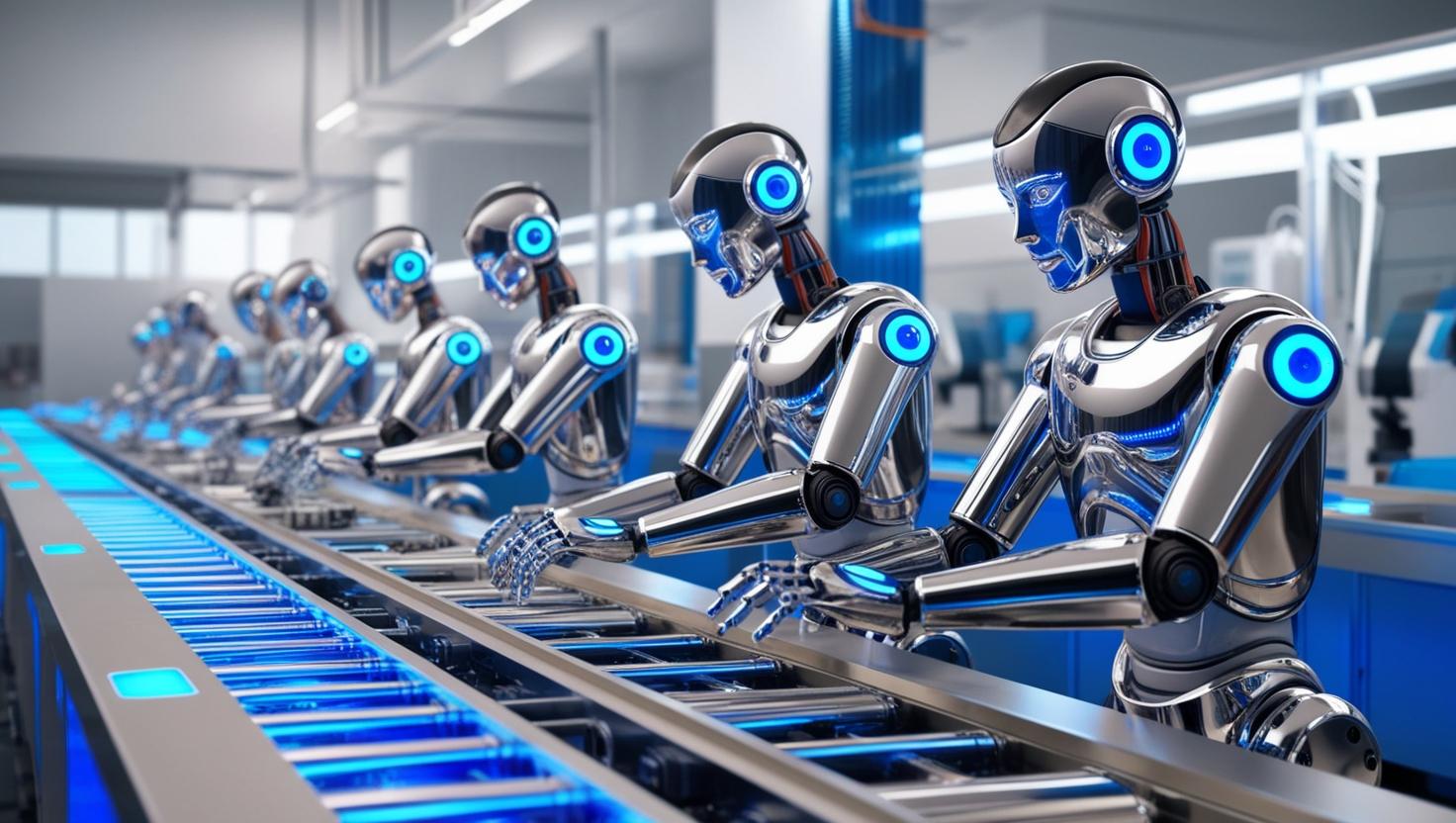
Key Factors Driving Humanoid Robot Market Growth
Advancements in Artificial Intelligence
Artificial intelligence is one of the primary drivers behind Humanoid Robot Market growth. AI technologies enable humanoid robots to learn from data, recognize speech and gestures, and make decisions based on real-time inputs.
Machine learning algorithms allow humanoid robots to continuously improve their performance by analyzing patterns and adapting to new situations. This capability is particularly valuable in dynamic environments such as hospitals, retail stores, and customer service centers.
As AI technologies continue to advance, humanoid robots are becoming more intelligent and capable, further supporting Humanoid Robot Market growth.
Increasing Demand for Automation
Businesses across industries are embracing automation to improve efficiency and reduce operational costs. Humanoid robots are particularly valuable in environments where human interaction is required but labor shortages exist.
For example, humanoid robots can assist customers in retail stores, guide visitors in airports, or provide information in hotels and hospitals. Their ability to communicate naturally with humans makes them highly suitable for these roles.
This growing demand for service automation is significantly contributing to Humanoid Robot Market growth.
Addressing Global Labor Shortages
Many countries are facing workforce shortages due to aging populations and declining labor participation rates. Humanoid robots offer a potential solution by performing routine tasks that would otherwise require human workers.
In manufacturing facilities, humanoid robots can assist with assembly processes and material handling. In healthcare environments, they can support medical staff by delivering supplies or assisting patients with basic tasks.
The increasing need to address labor shortages is expected to accelerate Humanoid Robot Market growth in the coming years.
Growing Investments in Robotics Research
Governments and private companies are investing heavily in robotics research and development. These investments are focused on improving robotic mobility, perception, and human interaction capabilities.
As research institutions and technology companies continue to develop advanced humanoid robotic systems, the availability of innovative solutions is expanding. This increased innovation is a key factor driving Humanoid Robot Market growth globally.
Applications of Humanoid Robots
Healthcare and Elderly Care
Healthcare is emerging as one of the most promising sectors contributing to Humanoid Robot Market growth. Humanoid robots can assist healthcare professionals by performing tasks such as patient monitoring, medication reminders, and hospital logistics.
In elderly care facilities, humanoid robots can provide companionship and assist with daily activities, improving the quality of life for seniors. Their ability to interact socially with patients makes them particularly valuable in caregiving environments.
Retail and Customer Service
Retail businesses are increasingly deploying humanoid robots to enhance customer engagement. These robots can greet customers, provide product recommendations, and assist with navigation inside stores.
In hotels and airports, humanoid robots are being used to guide visitors and answer frequently asked questions. These applications are expanding the commercial use of humanoid robots and supporting Humanoid Robot Market growth.
Manufacturing and Industrial Operations
While traditional industrial robots dominate factory automation, humanoid robots are gradually entering manufacturing environments where flexibility and adaptability are required.
Humanoid robots can assist workers in performing complex assembly tasks, inspecting products, and transporting materials across factory floors. Their ability to operate in human-designed workspaces makes them highly versatile.
These capabilities are contributing to the increasing adoption of humanoid robots and driving Humanoid Robot Market growth.
Education and Research
Educational institutions and research laboratories are using humanoid robots as interactive learning tools. These robots help students understand concepts related to robotics, artificial intelligence, and programming.
Humanoid robots can also serve as research platforms for studying human-robot interaction, cognitive science, and behavioral robotics. The growing adoption of humanoid robots in academic environments is further supporting Humanoid Robot Market growth.
Technological Innovations Transforming the Market
Continuous technological advancements are playing a critical role in accelerating Humanoid Robot Market growth. Improvements in robotic sensors, vision systems, and motion control technologies are enabling humanoid robots to perform tasks with greater accuracy and stability.
Advanced battery technologies are also enhancing the operational capabilities of humanoid robots by extending their working hours. Meanwhile, cloud computing and edge AI are enabling robots to process large amounts of data and make intelligent decisions in real time.
The integration of 5G connectivity is another emerging trend that will enable faster communication between robots and control systems. These innovations are expected to further strengthen Humanoid Robot Market growth.
Regional Insights
Different regions are contributing to Humanoid Robot Market growth at varying rates depending on technological development and industrial demand.
North America remains a major hub for robotics innovation due to strong investments in artificial intelligence and advanced manufacturing technologies. Europe is also witnessing significant adoption of humanoid robots in healthcare and service sectors.
Asia-Pacific is expected to experience the fastest Humanoid Robot Market growth, driven by rapid industrialization, expanding robotics manufacturing, and strong government support for automation technologies.
Countries such as Japan, South Korea, and China are at the forefront of humanoid robot development and deployment.
Challenges in the Humanoid Robot Market
Despite promising opportunities, several challenges may influence Humanoid Robot Market growth. High development and manufacturing costs remain a major barrier to widespread adoption. Building advanced humanoid robots requires sophisticated components, including sensors, processors, and precision actuators.
Another challenge is ensuring safe and reliable human-robot interaction. Humanoid robots must be designed with advanced safety features to prevent accidents and ensure user trust.
However, ongoing research and technological advancements are expected to address these challenges and support continued Humanoid Robot Market growth.
Future Outlook
The future of humanoid robotics is highly promising. As artificial intelligence and robotics technologies continue to evolve, humanoid robots will become more capable, affordable, and widely adopted.
In the coming years, humanoid robots are expected to play an increasingly important role in healthcare, logistics, hospitality, and personal assistance. Their ability to collaborate with humans will redefine how work is performed across industries.
With growing technological innovation and expanding applications, Humanoid Robot Market growth is expected to accelerate, shaping a future where humans and intelligent machines work together seamlessly.
Conclusion
The rise of advanced robotics and artificial intelligence is driving remarkable Humanoid Robot Market growth worldwide. Humanoid robots are transforming industries by enhancing productivity, improving customer experiences, and addressing labor shortages.
As companies continue to explore new applications for humanoid robots, the market will expand further, creating exciting opportunities for innovation and technological advancement.
Ultimately, Humanoid Robot Market growth reflects the broader transformation of modern industries toward intelligent automation and collaborative human-machine environments.
About MarketsandMarkets™
MarketsandMarkets™ has been recognized as one of America’s Best Management Consulting Firms by Forbes, as per their recent report.
MarketsandMarkets™ is a blue ocean alternative in growth consulting and program management, leveraging a man-machine offering to drive supernormal growth for progressive organizations in the B2B space. With the widest lens on emerging technologies, we are proficient in co-creating supernormal growth for clients across the globe.
Today, 80% of Fortune 2000 companies rely on MarketsandMarkets, and 90 of the top 100 companies in each sector trust us to accelerate their revenue growth. With a global clientele of over 13,000 organizations, we help businesses thrive in a disruptive ecosystem.
The B2B economy is witnessing the emergence of $25 trillion in new revenue streams that are replacing existing ones within this decade. We work with clients on growth programs, helping them monetize this $25 trillion opportunity through our service lines – TAM Expansion, Go-to-Market (GTM) Strategy to Execution, Market Share Gain, Account Enablement, and Thought Leadership Marketing.
Built on the ‘GIVE Growth’ principle, we collaborate with several Forbes Global 2000 B2B companies to keep them future-ready. Our insights and strategies are powered by industry experts, cutting-edge AI, and our Market Intelligence Cloud, KnowledgeStore™, which integrates research and provides ecosystem-wide visibility into revenue shifts.
To find out more, visit www.MarketsandMarkets™.com or follow us on Twitter , LinkedIn and Facebook .
Contact:
Mr. Rohan Salgarkar
MarketsandMarkets™ INC.
1615 South Congress Ave.
Suite 103, Delray Beach, FL 33445
USA: +1-888-600-6441
