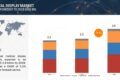
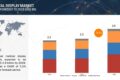
The global healthcare industry is undergoing rapid digital transformation, and medical displays have emerged as a critical component in modern diagnostics and surgical procedures. According to recent market analysis, the global Medical Display Market is projected to grow from USD 2.64 billion in 2025 to USD 3.45 billion by 2030, registering a CAGR of 5.5% during the forecast period. The increasing demand for high-resolution imaging technologies, coupled with advancements in display systems, is driving the market’s expansion worldwide.
Growing Importance of Medical Displays in Healthcare
Medical displays are specialized monitors designed to provide superior image quality and accuracy for healthcare applications. These displays are extensively used in radiology, pathology, mammography, surgery, dentistry, and various diagnostic procedures where image clarity is crucial for accurate clinical decisions.
The rising prevalence of chronic diseases such as cancer, cardiovascular disorders, and neurological conditions has significantly increased the number of imaging procedures performed globally. Consequently, healthcare providers are investing in advanced display technologies to enhance diagnostic confidence and improve patient outcomes.
Furthermore, the growing adoption of minimally invasive surgeries and image-guided interventions has created a greater need for high-performance medical displays capable of delivering detailed and real-time visual information.
Technological Advancements Driving Market Growth
Technological innovation is one of the primary factors transforming the medical displays landscape. Modern display systems now offer enhanced image quality and greater precision, enabling clinicians to detect abnormalities with improved accuracy.
Several innovations are reshaping the industry, including:
- Ultra-high-definition 4K and 8K resolution displays.
- Mini-LED backlighting technologies.
- AI-powered visualization tools.
- Enhanced brightness and contrast capabilities.
- Improved color calibration and grayscale performance.
- Advanced image processing for surgical applications.
These advancements are particularly beneficial in radiology, mammography, pathology, and minimally invasive procedures, where image precision directly influences clinical outcomes.
Artificial intelligence integration is also becoming increasingly important. AI-assisted imaging workflows help clinicians interpret images more efficiently, reduce diagnostic errors, and enhance overall productivity.
Challenges Limiting Wider Adoption
Despite promising growth prospects, several factors continue to restrain market expansion.
One of the major challenges is the high cost associated with advanced medical display systems. Premium displays equipped with 4K or 8K resolution, AI capabilities, and specialized calibration features require substantial investments, making them difficult to adopt in resource-constrained healthcare settings.
In addition, public healthcare institutions often face lengthy procurement cycles and budget limitations, delaying the replacement or upgrade of existing systems.
Low- and middle-income countries also encounter barriers related to infrastructure limitations and affordability, which slow the penetration of sophisticated imaging technologies.
Nevertheless, increasing healthcare digitization and investments in emerging economies are expected to offset these challenges and create significant opportunities for market players.
LED-Backlit LCD Displays Continue to Dominate
Based on technology, the LED-backlit LCD segment accounted for the largest share of the medical displays market in 2024.
LED-backlit LCD displays have become the preferred choice among healthcare providers because of their excellent brightness, long operational life, and energy efficiency. These displays provide superior image quality while consuming less power, making them highly suitable for demanding medical environments.
Another factor supporting their dominance is affordability. Compared to other advanced display technologies, LED-backlit LCD monitors offer an optimal balance between performance and cost, facilitating their widespread adoption across hospitals, clinics, and diagnostic centers.
Their reliability and compatibility with existing healthcare infrastructure further strengthen their position in the global market.
Under 22.9-Inch Panels Lead the Market
Among panel sizes, displays measuring under 22.9 inches held the largest market share in 2024.
These compact displays are highly valued for their versatility, cost-effectiveness, and space-saving characteristics. Smaller panels are widely used in laboratories, outpatient clinics, physician offices, and other healthcare environments where workspace optimization is essential.
Despite their compact dimensions, these displays deliver the image quality required for routine clinical applications and diagnostic tasks. Their ease of installation and integration with existing systems has made them an attractive option for healthcare facilities seeking high performance without significant infrastructure modifications.
As healthcare institutions increasingly focus on operational efficiency and cost optimization, demand for smaller display panels is expected to remain strong.
North America Maintains Market Leadership
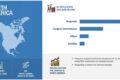
In 2024, North America accounted for the largest share of the global medical displays market.
The region’s dominance can be attributed to its highly developed healthcare infrastructure and widespread implementation of digital imaging technologies. North America is home to numerous leading medical technology companies that continuously invest in innovation and product development.
Significant investments in healthcare information technology have accelerated the adoption of advanced imaging systems, contributing to improved diagnostic capabilities across hospitals and imaging centers.
Several additional factors are supporting market growth in the region:
- Increasing number of diagnostic imaging centers.
- Favorable reimbursement policies.
- Rising demand for advanced imaging technologies.
- Strong presence of major industry participants.
- Expanding elderly population requiring frequent diagnostic examinations.
- Growing emphasis on precision medicine and early disease detection.
These factors collectively position North America as a key growth engine for the medical display industry.
Emerging Opportunities in Developing Markets
Emerging economies in Asia Pacific, Latin America, and the Middle East present considerable opportunities for manufacturers and technology providers.
Governments and healthcare organizations in these regions are increasingly investing in digital healthcare infrastructure, telemedicine platforms, and AI-enabled diagnostic solutions. As healthcare modernization continues, demand for high-quality medical displays is expected to rise substantially.
In addition, increasing awareness regarding early disease diagnosis and improved patient care is driving hospitals and clinics to upgrade their imaging capabilities, creating a favorable environment for market expansion.
Leading Companies Shaping the Competitive Landscape
Several global companies are actively contributing to technological advancements and market development. Key players operating in the medical displays market include:
- Barco (Belgium)
- EIZO (Japan)
- Sony Electronics Inc. (Japan)
- LG Electronics (South Korea)
- Novanta (US)
- FSN Medical Technologies (South Korea)
- Advantech (Taiwan)
- Quest International (US)
- STERIS (UK)
- Jusha Medical (China)
- Siemens Healthineers AG (Germany)
- Double Black Imaging (US)
- HP Development Co. Ltd. (US)
- Stryker (US)
- COJE Displays (South Korea)
These companies are focusing on innovation, product enhancements, AI integration, and strategic partnerships to strengthen their market presence and address evolving clinical requirements.
Conclusion
The medical displays market is witnessing steady growth as healthcare providers increasingly prioritize accurate visualization and enhanced diagnostic performance. Innovations such as 4K and 8K imaging, AI-driven workflows, and energy-efficient display technologies are transforming the way clinicians diagnose and treat patients.
While high equipment costs and infrastructure limitations remain challenges, expanding healthcare digitization and rising investments in emerging markets are expected to create substantial opportunities over the coming years. As precision medicine and advanced imaging continue to gain importance, medical displays will remain indispensable tools in delivering high-quality patient care and improving clinical outcomes worldwide.