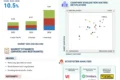
Smart glasses are emerging as an important category in wearable technology, combining traditional eyewear with digital displays, cameras, sensors, audio systems, and wireless connectivity. These devices allow users to access digital information while keeping their hands free and maintaining awareness of their surroundings. With advances in augmented reality (AR), mixed reality (MR), artificial intelligence (AI), and connectivity, smart glasses are moving beyond niche applications into consumer and enterprise environments.
The Smart Glasses Market Growth Analysis highlights how technological innovation and expanding industry applications are creating new opportunities for manufacturers, software developers, and technology providers. Smart glasses are increasingly being evaluated for applications such as remote assistance, industrial inspection, healthcare, education, gaming, logistics, and hands-free communication.
Top 10 Key Takeaways
- The Smart Glasses Market is benefiting from advances in AR, MR, AI, and wearable computing.
- MarketsandMarkets values the market at USD 878.8 million in 2024.
- The market is projected to reach USD 4,129.3 million by 2030, at a CAGR of 29.4%.
- Hands-free access to instructions and information is supporting industrial adoption.
- Manufacturing and warehousing are important enterprise application areas.
- Healthcare and telemedicine offer opportunities for remote collaboration and training.
- AI, sensors, and improved displays are expanding device functionality.
- Asia Pacific is projected to record the fastest regional growth.
- Privacy, battery life, comfort, and cost remain important adoption challenges.
- Long-term success will depend on combining useful applications with secure, comfortable, and reliable hardware.
Key Growth Drivers in the Smart Glasses Market
Increasing Adoption of Augmented and Mixed Reality
Augmented reality and mixed reality are among the most important technologies shaping the smart glasses industry. AR overlays digital information onto a user’s view of the physical environment, while MR can enable more interactive relationships between digital objects and real-world surroundings.
These capabilities are useful when workers or consumers need information without repeatedly looking at a smartphone, tablet, or computer. For example, technicians can receive repair instructions while inspecting equipment, warehouse employees can view picking information while handling products, and students can explore interactive learning content.
Improvements in display resolution, optical systems, spatial tracking, and sensor performance are helping manufacturers develop more capable devices. As these technologies mature, smart glasses can support a wider range of tasks, from simple notifications to immersive visualization and guided workflows.
Growing Demand for Hands-Free Operations
Hands-free functionality is a major driver of enterprise adoption. In industrial settings, workers often need to operate tools, handle materials, inspect equipment, or move products while accessing instructions or communicating with colleagues.
Smart glasses can display checklists, maintenance procedures, product information, and live video feeds without requiring workers to hold another device. Remote experts can also guide employees through unfamiliar tasks by viewing a live camera feed and providing instructions.
These applications can improve access to information and support workflow consistency. Actual productivity gains depend on device usability, network reliability, the quality of the software, and how well the technology fits into existing processes.
Download PDF Brochure @ https://www.marketsandmarkets.com/pdfdownloadNew.asp?id=148134046
Advancements in Artificial Intelligence and Sensors
AI is creating new possibilities for smart glasses by enabling more contextual and interactive experiences. Depending on the device and software, AI-powered features may support voice commands, language translation, image recognition, information retrieval, and context-aware assistance.
Cameras, microphones, accelerometers, gyroscopes, and other sensors help smart glasses interpret user inputs and device movement. Gesture recognition and eye-tracking capabilities can provide additional interaction methods in supported models.
The combination of AI and wearable hardware may help users access information more naturally and reduce dependence on handheld devices. However, manufacturers must consider processing requirements, battery consumption, data accuracy, privacy, and whether sensitive information is handled securely.
Expansion of Industrial and Enterprise Applications
Manufacturing, warehousing, logistics, and field services are creating opportunities for smart glasses providers. These industries rely on accurate instructions, timely communication, and efficient coordination across distributed teams.
Smart glasses can support assembly guidance, quality inspections, equipment maintenance, inventory picking, and remote troubleshooting. In large facilities, digital instructions may help employees follow standardized procedures, while remote collaboration can connect on-site personnel with specialists in other locations.
MarketsandMarkets identifies growing industrial adoption as a key market driver, particularly because camera- and audio-enabled smart glasses can provide real-time information while allowing employees to keep their hands free
Expanding Applications Across Industries
Manufacturing and Warehousing
Manufacturing and warehousing are important application areas in the Smart Glasses Market Growth Analysis. Employees in these environments often perform repetitive or complex tasks that require access to instructions, inventory records, equipment data, and safety procedures.
Smart glasses can present digital work instructions, identify the next task, and provide visual guidance during assembly or inspection. In warehouses, workers may use connected eyewear to access picking lists, confirm inventory details, and communicate with supervisors.
Remote assistance is another potential application. A technician can share a live view of a machine with an off-site expert, who can then provide guidance without travelling to the facility. These capabilities may help reduce delays and improve coordination, although outcomes depend on implementation quality and workforce training.
Healthcare and Telemedicine
Healthcare is another area where smart glasses may provide practical benefits. Depending on the device’s capabilities and the clinical setting, they can support remote consultations, medical education, surgical training, and access to relevant reference information.
For example, a healthcare professional may use a camera-enabled device to share a view with a remote specialist during a consultation or training session. Smart glasses can also support medical demonstrations by allowing learners to observe procedures from a clinician’s perspective.
In telemedicine, these devices may facilitate communication between professionals at different locations. They should not be treated as a substitute for appropriate clinical assessment or established medical equipment. Healthcare deployments must also consider patient consent, secure data transmission, device hygiene, and applicable privacy and regulatory requirements.
Education and Research
Educational institutions are exploring immersive and interactive tools to make complex subjects easier to understand. Smart glasses can potentially display three-dimensional models, contextual information, and guided instructions in the user’s field of view.
In technical education, learners may follow step-by-step guidance while practising equipment maintenance or laboratory procedures. In research environments, wearable displays may help users access notes, visualize selected data, or collaborate with colleagues.
The effectiveness of these applications depends on the quality of the educational content, device comfort, affordability, and accessibility. Institutions must also evaluate whether smart glasses add meaningful learning value compared with conventional digital tools.
Automotive and Transportation
Smart glasses can support selected automotive and transportation workflows, particularly maintenance, inspection, training, and remote collaboration. Technicians may access repair documentation or receive visual guidance while examining vehicle components.
In logistics and transportation operations, wearable displays can provide instructions and task information without requiring workers to repeatedly consult handheld devices. Smart glasses may also assist with training by presenting contextual demonstrations in controlled environments.
For consumer driving applications, safety is essential. Any in-view information must be designed to minimize distraction and comply with relevant regulations. Smart glasses should not encourage users to interact with digital content in ways that compromise attention or road safety.
Gaming and Entertainment
Gaming and entertainment offer opportunities for smart glasses that provide immersive visuals, audio, notifications, and interactive experiences. AR-enabled devices can place digital content within a user’s physical environment, while compatible applications may support new forms of location-based entertainment.
Audio-focused smart glasses can also support calls, music, and voice interactions without requiring users to wear separate headphones. Consumer interest will depend on whether these features provide a compelling everyday benefit.
Design remains important in this segment. Consumers are more likely to consider wearable technology when it combines useful functions with attractive styling, comfortable materials, reliable performance, and straightforward controls.
Construction and Field Services
Construction professionals and field-service teams often work at locations where direct access to documentation or specialist support is limited. Smart glasses can help display installation instructions, equipment specifications, checklists, and maintenance records during on-site work.
A field technician may share a live video feed with an expert who can explain a repair or identify a component. Construction teams may also use digital overlays for selected visualization and inspection tasks, depending on the device’s technical capabilities.
These applications can support communication and reduce the need to switch repeatedly between physical tasks and handheld screens. Successful deployment requires durable hardware, suitable connectivity, clear displays, and consideration of workplace hazards.
Emerging Technologies Transforming Smart Glasses
Advanced Display and Optical Technologies
Display quality strongly influences the usefulness of smart glasses. Manufacturers must balance image clarity, field of view, brightness, optical transparency, device size, and energy consumption.
Waveguide optics and compact display technologies can help deliver visual information while maintaining a glasses-like form factor. Higher-resolution displays can improve readability, particularly for instructions, labels, and visual overlays.
Nevertheless, fitting advanced optics into lightweight frames remains challenging. Manufacturers must balance display performance with comfort, durability, cost, and battery requirements to develop products suitable for longer periods of use.
Artificial Intelligence and Voice Interaction
Voice interaction allows users to request information or control supported features without relying on physical buttons or touchscreens. AI can extend these capabilities by interpreting requests, summarizing information, translating speech, or assisting with selected work tasks.
In enterprise settings, voice-based assistance may help workers retrieve instructions or document completed activities. In consumer settings, users may access calls, reminders, navigation, or other compatible services.
The quality of these experiences depends on speech recognition, environmental noise, language support, processing capacity, and data privacy. Clear user controls are particularly important when devices include microphones or cameras.
5G and Cloud Connectivity
Connectivity enables smart glasses to exchange data with smartphones, enterprise platforms, cloud services, and other connected systems. MarketsandMarkets identifies 5G development as an opportunity for the market because high-speed, low-latency communication can support applications such as live video, remote collaboration, and cloud-based processing. <Cite refs={[“turn407287search0”]} />
Cloud services can provide access to remote computing resources, while edge processing may reduce latency for tasks that require rapid responses. The most appropriate architecture depends on the application’s requirements, connectivity conditions, privacy considerations, and processing workload.
Reliable connectivity alone does not guarantee a strong user experience. Applications must also be designed to handle interruptions, protect data, and provide useful functionality when network access is limited.
Lightweight Design and Battery Optimization
Comfort is essential for devices intended to be worn throughout the day. Smart glasses must accommodate cameras, sensors, processors, speakers, batteries, and sometimes display systems without becoming excessively heavy or bulky.
Manufacturers are therefore working to balance compact designs with performance and durability. Improvements in power management, component integration, and materials can help make devices more practical for daily consumer use and enterprise workflows.
Battery life remains a challenge, especially for products that continuously use cameras, wireless connectivity, displays, or AI processing. Continued progress in energy-efficient components will be important for broader adoption.
Smart Glasses Market Segmentation
The Smart Glasses Market can be examined by product type, feature, industry, and region, among other categories.
By Type: Monocular and Binocular Smart Glasses
Monocular smart glasses present information through one eye, which can be useful for notifications, instructions, and task-oriented enterprise applications. Their design may be suitable for users who need limited visual information while continuing to focus on their surroundings.
Binocular smart glasses provide visual output to both eyes and can support more immersive experiences, including applications requiring depth perception or a wider visual field. MarketsandMarkets expects the binocular segment to maintain a prominent position during the forecast period, supported by demand for immersive AR applications in consumer and industrial settings.
By Feature: Basic and Advanced Smart Glasses
Smart glasses can also be grouped according to their feature sets. Basic models may focus on functions such as audio playback, calls, notifications, or camera use. Advanced models can incorporate a wider combination of sensors, displays, cameras, motion tracking, and interactive capabilities.
Advanced features can support more demanding applications in healthcare, manufacturing, gaming, and remote collaboration. MarketsandMarkets identifies advanced-feature devices as an important growth area, reflecting demand for richer functionality and more immersive user experiences.
By Industry
Smart glasses serve consumer and enterprise users across several industries. Consumer applications include communication, entertainment, navigation, and other wearable experiences. Enterprise applications include industrial inspection, manufacturing, healthcare, education, logistics, and field services.
Consumer adoption depends on design, convenience, affordability, and the availability of useful applications. Enterprise adoption is more closely linked to measurable improvements in workflow efficiency, training, safety, and access to expertise.
This broad application base allows suppliers to develop products for different user needs rather than relying on a single market segment.
Regional Outlook for the Smart Glasses Market
Asia Pacific
Asia Pacific is expected to record the fastest growth in the Smart Glasses Market, with MarketsandMarkets projecting a CAGR of 31.7% during the forecast period covered by its report. The region benefits from a strong electronics manufacturing base, large consumer markets, and demand from industrial and healthcare applications. <Cite refs={[“turn407287search0”]} />
China, Japan, South Korea, and India present opportunities shaped by different manufacturing capabilities, consumer preferences, and digital adoption patterns. Manufacturers and technology providers can benefit from partnerships with local distributors, device makers, software developers, and enterprise customers.
Price accessibility, localized applications, after-sales support, and compatibility with existing systems will be important factors in regional market development.
North America
North America remains an important market due to the presence of established technology companies, wearable-device innovators, and enterprise users exploring AR-enabled workflows. Smart glasses can support remote assistance, field service, manufacturing, and consumer communication.
Europe
Europe offers opportunities in industrial applications, healthcare, education, and immersive digital experiences. Manufacturers and service providers can use smart glasses to support maintenance, remote collaboration, training, and selected inspection tasks.
Adoption will also depend on privacy expectations, data protection, workplace requirements, and the availability of reliable enterprise software. Companies that integrate security and user consent into product design may be better positioned to address organizational concerns.
Rest of the World
Markets outside the major regional hubs may offer opportunities as connectivity infrastructure improves and digital tools become more accessible. Adoption is likely to vary according to purchasing power, local industry needs, distribution networks, and technical support.
For suppliers, partnerships and targeted use cases may be more effective than broad deployment strategies. Solutions tailored to specific sectors and operating conditions can help demonstrate value and encourage adoption.
Challenges and Barriers to Market Growth
Despite strong growth prospects, several challenges could influence the pace of smart glasses adoption.
High costs: Advanced optics, sensors, processors, and software can make smart glasses expensive. Businesses must assess whether the expected operational benefits justify the purchase and implementation costs.
Battery life and device comfort: Heavy designs and limited battery endurance can restrict use during long shifts or extended consumer activities. Manufacturers must balance performance with size, weight, and power consumption.
Privacy and data security: Cameras and microphones can capture information about users and bystanders. Clear recording indicators, permission controls, secure data handling, and transparent privacy policies are important for building trust.
Technical limitations: Display quality, outdoor visibility, connectivity reliability, and compatibility with existing systems can affect performance. Devices must be tested under realistic operating conditions before large-scale deployment.
Limited applications and user acceptance: Hardware alone cannot ensure adoption. Smart glasses need relevant software, intuitive interfaces, and workflows that solve real problems. Training and user feedback can help organizations identify suitable use cases.
Addressing these challenges will require collaboration among hardware manufacturers, software developers, enterprise customers, regulators, and end users.
Competitive Landscape and Key Players
Competition in the Smart Glasses Market includes consumer electronics companies, eyewear brands, display specialists, and enterprise AR solution providers. Companies compete through design, optical performance, software ecosystems, device comfort, connectivity, and application support.
MarketsandMarkets identifies the following companies among the key participants:
- Meta
- Vuzix
- Seiko Epson Corporation
- EssilorLuxottica
- Amazon.com, Inc.
- TCL Electronics Holdings Limited
- LUCYD EYEWEAR
- Lenovo
- Huawei Investment & Holding Co., Ltd.
- Xiaomi
These companies participate in different parts of the market, from consumer-oriented eyewear to enterprise-focused wearable displays and AR solutions. Their competitive strategies may include product launches, partnerships, technology development, and expansion into new application areas
Future Outlook: Opportunities Across Industries
The future of the Smart Glasses Market will depend on how effectively manufacturers combine advanced technology with practical everyday use. AI-enabled assistance, improved displays, more efficient batteries, and better integration with mobile and enterprise platforms could broaden the range of applications.
In industrial settings, smart glasses may become more useful for guided workflows, remote troubleshooting, quality checks, and training. In healthcare and education, they may support collaboration and access to selected information. In consumer markets, progress will depend on creating devices that are comfortable, attractive, useful, and easy to operate.
Another opportunity lies in developing industry-specific software. A manufacturing application may prioritize hands-free instructions and equipment data, while a healthcare solution may emphasize secure communication and carefully controlled information access. Software tailored to the task can help organizations obtain more value from wearable hardware.
The Smart Glasses Market Growth Analysis also points to the importance of responsible design. Privacy controls, safe user interfaces, cybersecurity, and accessibility must develop alongside new features. Companies that balance innovation with usability and trust are likely to be better positioned as the market expands.
Conclusion
The Smart Glasses Market is evolving as advances in AR, MR, AI, sensors, displays, and connectivity expand the capabilities of wearable technology. From manufacturing and warehousing to healthcare, education, automotive services, gaming, and field operations, smart glasses offer new ways to access information and collaborate without relying continuously on handheld devices.
Frequently Asked Questions (FAQs)
1. What is driving Smart Glasses Market growth?
Market growth is supported by advances in augmented and mixed reality, AI, sensor technologies, improved displays, and rising demand for hands-free information access across consumer and industrial applications.
2. What is the projected size of the Smart Glasses Market?
According to MarketsandMarkets, the market was valued at USD 878.8 million in 2024 and is projected to reach USD 4,129.3 million by 2030, at a CAGR of 29.4% during the forecast period.
3. Which industries are adopting smart glasses?
Key application areas include manufacturing, warehousing, healthcare, education, automotive services, gaming, entertainment, construction, and field services.
4. Which region is expected to grow fastest?
MarketsandMarkets projects Asia Pacific to be the fastest-growing region, with a CAGR of 31.7% during the forecast period covered by its report.
5. What are the major challenges facing the Smart Glasses Market?
Major challenges include high device costs, limited battery life, comfort and design constraints, privacy concerns, technical limitations, and the need for useful software applications.
MarketsandMarkets
MarketsandMarkets™ is a blue ocean alternative in growth consulting and program management, leveraging a man-machine offering to drive supernormal growth for progressive organizations in the B2B space. We have the widest lens on emerging technologies, making us proficient in co-creating supernormal growth for clients.
The B2B economy is witnessing the emergence of $25 trillion of new revenue streams that are substituting existing revenue streams in this decade alone. We work with clients on growth programs, helping them monetize this $25 trillion opportunity through our service lines – TAM Expansion, Go-to-Market (GTM) Strategy to Execution, Market Share Gain, Account Enablement, and Thought Leadership Marketing.
Built on the ’GIVE Growth’ principle, we work with several Forbes Global 2000 B2B companies – helping them stay relevant in a disruptive ecosystem. Our insights and strategies are molded by our industry experts, cutting-edge AI-powered Market Intelligence Cloud, and years of research. The KnowledgeStore™ (our Market Intelligence Cloud) integrates our research, facilitates an analysis of interconnections through a set of applications, helping clients look at the entire ecosystem and understand the revenue shifts happening in their industry.
To find out more, visit www.MarketsandMarkets™.com or follow us on Twitter, LinkedIn and Facebook.
Contact:
Mr. Rohan Salgarkar
MarketsandMarkets™ INC.
1615 South Congress Ave.
Suite 103
Delray Beach, FL 33445
USA : 1-888-600-6441