The US Submersible Pumps for Mining Sector Market Analysis highlights the growing importance of reliable pumping solutions in modern mining operations. Submersible pumps are essential for removing groundwater, controlling mine flooding, transporting abrasive liquids, and supporting water management across open-pit mines, underground mines, and mineral processing facilities. As mining companies focus on operational efficiency, worker safety, and environmental compliance, demand for durable and energy-efficient pumping systems is creating new opportunities across the United States.
Mining operations often encounter challenging conditions, including high water inflows, abrasive mineral particles, corrosive liquids, and limited access to equipment in underground environments. Submersible pumps are designed to operate while immersed in liquid, making them suitable for applications where conventional pumping arrangements may be less practical. Depending on their design, these pumps can support mine dewatering, drainage, and selected slurry-handling operations.
Top 10 Key Takeaways
- Mine dewatering remains a critical application for submersible pumps.
- Underground and open-pit mining create different pumping requirements.
- Energy efficiency is an important purchasing consideration.
- AI and predictive maintenance can support equipment monitoring.
- Wear-resistant materials can help address abrasive mining conditions.
- Slurry pumps support selected mineral processing and material-transfer applications.
- Digital monitoring can improve visibility into pump performance.
- Remote mine locations increase the importance of aftermarket service.
- The global submersible mining pumps market is projected to reach USD 2.04 billion by 2032.
- US market opportunities depend on mining investment, site conditions, and demand for reliable water-management infrastructure.
Key Growth Drivers in the US Submersible Pumps for Mining Sector Market
Increasing Demand for Mine Dewatering
Mine dewatering is a fundamental requirement for safe and productive mining operations. Groundwater infiltration and accumulated water can affect excavation activities, equipment performance, and access to underground working areas. Effective pumping systems help mining operators manage water levels and maintain suitable operating conditions.
The US Submersible Pumps for Mining Sector Market Analysis reflects opportunities arising from the need to maintain dependable dewatering infrastructure across underground and open-pit mining sites. High-head pumps can help move water from deeper locations, while drainage pumps support water removal from selected working areas and access routes.
Mining operators increasingly evaluate pumps based on flow capacity, pumping head, energy consumption, reliability, and maintenance requirements. Systems that can operate consistently under demanding conditions are particularly valuable when unplanned downtime can interrupt production.
Expansion of Metal and Mineral Mining
Demand for copper, gold, iron ore, and other minerals creates opportunities for specialized pumping equipment. Mining activities involving these resources require effective water management throughout excavation, mineral processing, and waste-handling operations.
The expansion of battery-metal mining, including lithium and nickel projects, is also influencing global mining equipment demand. Although investment levels vary across individual US mining projects, broader demand for minerals used in electrification and energy storage can support investment in extraction and processing infrastructure.
The US Submersible Pumps for Mining Sector Market Analysis therefore includes opportunities for manufacturers supplying reliable pumps suited to different mineral characteristics, water conditions, and operating environments.
Focus on Energy Efficiency and Operating Costs
Energy consumption is a major consideration for mines operating pumps continuously or moving water over substantial vertical distances. Inefficient pumping systems can increase electricity costs and contribute to higher operating expenses over the equipment’s lifetime.
Manufacturers are developing more efficient motors, improved hydraulic designs, and systems compatible with variable frequency drives. These technologies can help operators adjust pump performance to changing flow requirements and reduce unnecessary energy consumption when appropriately configured.
Mining companies are also considering total cost of ownership rather than purchase price alone. Equipment durability, maintenance intervals, spare-parts availability, and service support can significantly influence long-term value.
Greater Emphasis on Water Management and Environmental Compliance
Water management is becoming increasingly important as mining companies address environmental obligations and resource-efficiency objectives. Pumps support groundwater removal, water transfer, drainage, and selected water-reuse processes.
In appropriate applications, effective pumping systems can help mines collect and transfer water for treatment or reuse. Reliable slurry-handling equipment can also support mineral processing and tailings-management workflows.
US mining operators must select equipment that meets the requirements of their particular sites and applicable environmental permits. Pumping equipment alone does not ensure compliance; effective monitoring, treatment, maintenance, and water-management procedures are also necessary.
Download PDF Brochure @ https://www.marketsandmarkets.com/pdfdownloadNew.asp?id=71964610
Emerging Technologies Transforming the Market
Smart Pump Monitoring and Predictive Maintenance
Digital monitoring is an important development in the US Submersible Pumps for Mining Sector Market Analysis. Modern monitoring solutions can use sensors to measure parameters such as temperature, vibration, motor current, pressure, and flow rate.
When connected to suitable monitoring software, these measurements can help maintenance teams identify abnormal operating conditions and investigate potential problems before equipment failure occurs. Predictive maintenance tools can also support service planning and reduce reliance on fixed maintenance intervals when sufficient operating data is available.
For mines with remote equipment or limited access to maintenance personnel, monitoring can improve visibility into pump performance. However, its effectiveness depends on sensor quality, data interpretation, connectivity, and the ability of maintenance teams to act on alerts.
Artificial Intelligence and Data Analytics
Artificial intelligence and data analytics are creating opportunities to improve pump monitoring and maintenance planning. Analytics platforms can evaluate historical operating data to identify performance changes, detect recurring faults, and help estimate maintenance requirements.
AI-enabled systems may also support energy optimization by identifying inefficient operating conditions or comparing pump performance across different operating periods. These capabilities can help mining companies prioritize maintenance activities and investigate opportunities to reduce energy use.
AI tools are most effective when supported by reliable data and appropriate engineering expertise. They complement rather than replace equipment inspections, technical assessments, and established maintenance procedures.
Advanced Materials and Wear-Resistant Components
Mining pumps frequently handle liquids containing abrasive particles, which can accelerate wear in impellers, casings, seals, and other components. Material selection is therefore a major factor in pump reliability.
High-chrome alloys, specialized elastomers, corrosion-resistant materials, and improved sealing technologies can help address demanding operating conditions. The appropriate material depends on particle size, slurry composition, chemical exposure, temperature, and operating pressure.
Manufacturers that improve component life and simplify maintenance can offer mining operators meaningful lifecycle-cost advantages. Material innovation is especially relevant to slurry-handling applications where abrasion can significantly influence maintenance frequency.
Energy-Efficient Motors and Automated Controls
Modern motor technologies and automated control systems can help improve pumping performance. Variable frequency drives allow motor speed to be adjusted to changing system requirements, subject to the pump’s operating limits and installation design.
Automated controls can also help manage pump sequencing, operating schedules, and selected protective functions. When integrated with monitoring systems, they provide operators with better visibility into equipment status.
For US mining operations, the business case depends on the site’s electricity costs, pumping requirements, operating hours, and existing infrastructure. A suitable engineering assessment is necessary before selecting a new system or retrofitting existing equipment.
Major Applications of Submersible Pumps in US Mining
Underground Mining
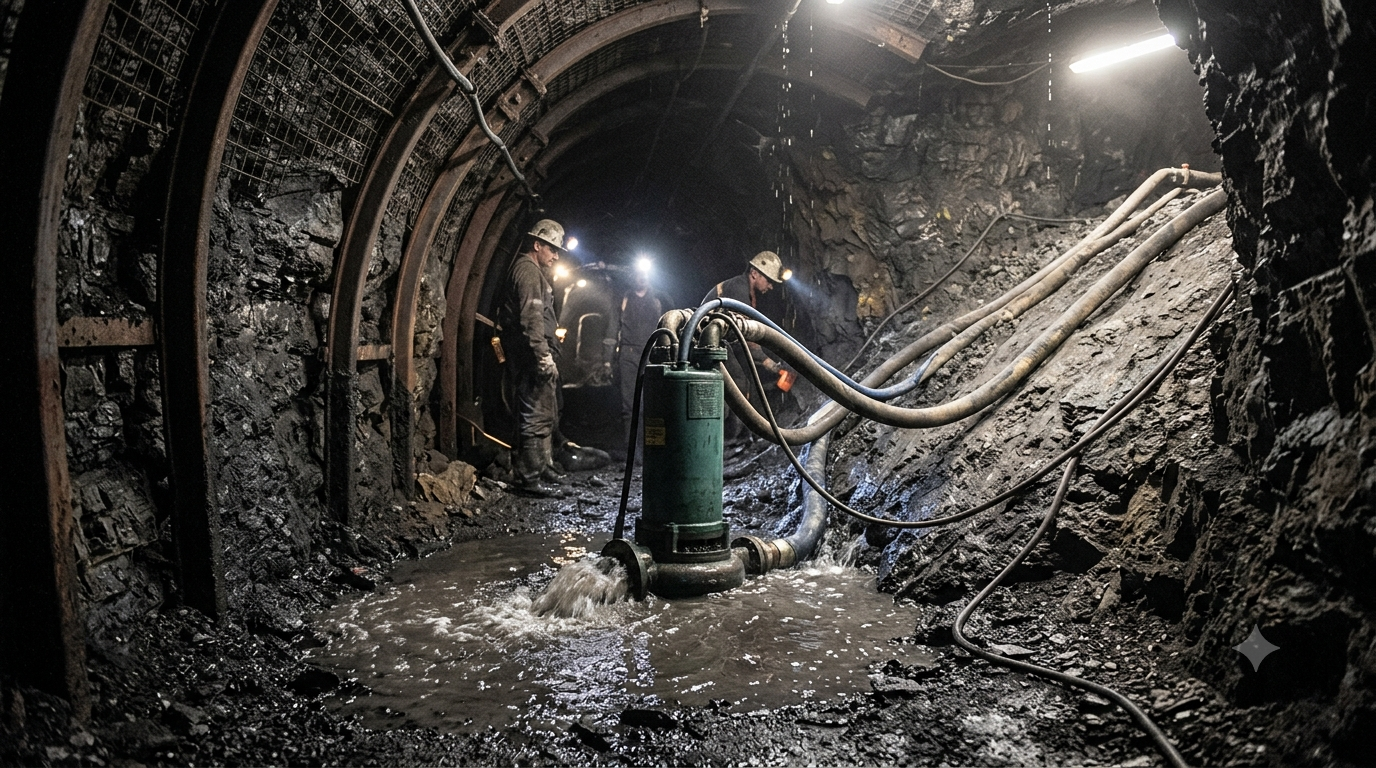
Underground mines require reliable water removal to maintain access to working areas and support safe operations. Submersible pumps can be installed in sumps and other designated collection points to remove accumulated water.
Deeper operations may require high-head pumping systems capable of transferring water through significant vertical distances. Equipment reliability, compact installation, and service accessibility are important considerations in confined mining environments.
The US Submersible Pumps for Mining Sector Market Analysis identifies underground dewatering as an important application opportunity because water control remains essential throughout mine development and production.
Open-Pit Mining
Open-pit mines can experience water accumulation from rainfall, groundwater inflows, and runoff. Pumping systems help manage water in designated collection areas and support continued access to mining and transport zones.
The appropriate pump depends on water volume, elevation differences, solids content, and site conditions. Operators may use different pump types across dewatering, drainage, and transfer applications rather than relying on a single configuration.
Durability and ease of deployment are important when equipment must operate in changing conditions or be relocated as excavation progresses.
Mineral Processing and Slurry Handling
Mineral processing facilities require systems for moving water and, in suitable applications, liquids containing suspended mineral particles. Submersible slurry pumps can support selected transfer tasks where their construction and hydraulic characteristics match the material being handled.
Abrasive solids can cause significant wear, making pump selection and material compatibility essential. Operators must evaluate particle concentration, solids size, flow requirements, and maintenance access before selecting equipment.
Tailings and Water Management
Tailings management involves handling residual materials generated during mineral processing. Pumping equipment can support certain slurry-transfer, backfill, and water-management applications, depending on the process design.
Mining companies are increasingly evaluating equipment that can support reliable material movement while helping manage maintenance requirements and resource use. Submersible pumps must be selected according to the specific characteristics of the slurry and the requirements of the overall system.
Market Segmentation and Purchasing Considerations
The submersible mining pumps industry can be segmented by pump type, operation, power rating, application, mine type, and region.
By pump type, key categories include dewatering pumps, slurry pumps, and drainage pumps. Dewatering pumps address water removal, while slurry pumps are designed for compatible liquids containing suspended solids. Drainage pumps support water removal in designated mining areas.
By operation, electric and hydraulic systems serve different operating requirements. Electric pumps are widely relevant to applications with suitable power infrastructure, while hydraulic systems may be considered where their operating characteristics match site needs.
By power rating, low-, medium-, and high-power pumps address different combinations of flow, head, and operating conditions. Selection should be based on engineering requirements rather than power rating alone.
By application, the market serves underground mining, open-pit mining, mineral processing, and selected tailings-management operations. Each application presents distinct challenges related to water volume, solids content, elevation, and maintenance access.
For US mining operators, purchasing decisions commonly involve reliability, energy efficiency, service support, installation requirements, spare-parts availability, and total cost of ownership. Compatibility with existing electrical and monitoring infrastructure is also important.
Regional Opportunities in the United States
The US market includes mining operations with varying requirements across different states and mineral categories. Opportunities for submersible pumps depend on the scale of mining activity, site geology, water-management conditions, and investment in existing infrastructure.
Copper and gold mining operations can require substantial dewatering and water-transfer capabilities, while coal and other mineral operations have their own drainage and pumping requirements. Processing facilities may also need pumps designed for specific water and slurry characteristics.
The US Submersible Pumps for Mining Sector Market Analysis highlights opportunities for suppliers that can offer application-specific equipment, technical support, and dependable aftermarket services. Regional demand should be assessed at the project level because mining investment and operating conditions differ significantly between locations.
Challenges Facing the US Submersible Pumps for Mining Sector Market
Despite opportunities for growth, several challenges influence purchasing decisions.
High maintenance requirements: Abrasive particles, corrosive liquids, and continuous operation can accelerate component wear and increase service costs.
Initial investment: High-performance pumps, monitoring systems, installation, and supporting infrastructure can require significant capital expenditure.
Remote operating environments: Mines may be located far from service centers, creating challenges for maintenance personnel, spare-parts availability, and equipment repairs.
Energy consumption: Continuous pumping can create substantial electricity costs, particularly in high-head applications. Efficient system design is essential to manage operating expenses.
Integration and workforce readiness: Digital monitoring and automated controls require suitable connectivity, system integration, staff training, and maintenance capabilities.
Addressing these issues requires careful pump selection, appropriate installation, preventive maintenance, and collaboration between mining operators and equipment suppliers.
Future Outlook
The future of the US Submersible Pumps for Mining Sector Market Analysis is closely connected to mining modernization, water-management requirements, and advances in industrial equipment technology. Demand for dependable dewatering systems is likely to remain important as operators focus on safe working conditions and operational continuity.
Digital monitoring, AI-assisted maintenance, efficient motor systems, and advanced wear-resistant materials are expected to influence product development. These technologies can help operators improve equipment visibility, plan maintenance, and evaluate energy performance when implemented appropriately.
Opportunities will also depend on mining investment, commodity-market conditions, environmental requirements, and the economics of upgrading existing infrastructure. Manufacturers that prioritize reliability, service support, and application-specific engineering will be well positioned to compete for mining equipment projects.
Conclusion
The US Submersible Pumps for Mining Sector Market Analysis highlights the importance of reliable pumping equipment in dewatering, drainage, slurry handling, and mining water management. Demand is supported by the need to improve operational continuity, manage challenging site conditions, and control equipment lifecycle costs.
Emerging technologies such as predictive maintenance, AI-based analytics, advanced materials, and automated pump controls are creating opportunities to improve performance and maintenance planning. At the same time, high initial costs, abrasive operating conditions, energy consumption, and servicing challenges remain important considerations.
As US mining companies continue to evaluate infrastructure modernization, submersible pump suppliers that combine durable equipment with efficient operation, technical expertise, and dependable aftermarket services can benefit from emerging market opportunities.
Frequently Asked Questions (FAQs)
1. What drives the US Submersible Pumps for Mining Sector Market?
Key drivers include demand for mine dewatering, underground mining requirements, efficient water management, energy-saving technologies, and the need for reliable pumping equipment in challenging operating conditions.
2. What are submersible pumps used for in mining?
Submersible pumps are used for dewatering, drainage, water transfer, and selected slurry-handling applications across underground mines, open-pit mines, and mineral processing facilities.
3. Which technologies are transforming the market?
Predictive maintenance, AI-based analytics, remote monitoring, energy-efficient motors, variable frequency drives, and wear-resistant materials are important technological developments.
4. Who are the key companies in the submersible mining pumps industry?
Companies identified by MarketsandMarkets include Xylem, The Weir Group, Flowserve, KSB, Tsurumi Manufacturing, Ebara, Grundfos, Sulzer, Metso, and ITT Goulds Pumps.
5. What challenges affect market growth?
High equipment and maintenance costs, abrasive operating conditions, energy consumption, remote-site servicing, and integration requirements can influence adoption.