The PDA Terminal Market is evolving as businesses increasingly rely on mobile computing devices to capture data, manage inventory, track assets, and improve operational visibility. Personal digital assistant (PDA) terminals, particularly rugged handheld devices designed for enterprise use, combine data processing, barcode scanning, wireless connectivity, and application-specific functions in a portable form factor. These capabilities make them valuable across logistics, warehousing, retail, manufacturing, healthcare, transportation, and field services.
As organizations accelerate digital transformation, demand is shifting toward intelligent, connected, and durable handheld terminals that support real-time business operations. Companies are adopting these devices to reduce manual data entry, improve inventory accuracy, streamline workflows, and connect frontline employees with enterprise software.
The PDA Terminal Market is also experiencing technological changes driven by Android-based operating systems, radio-frequency identification (RFID), artificial intelligence (AI), the Internet of Things (IoT), and advanced wireless connectivity. These developments are expanding the role of PDA terminals beyond basic data collection toward integrated business operations and intelligent decision support.
Competition is intensifying as established enterprise mobility providers and emerging device manufacturers develop solutions with improved scanning performance, ruggedness, battery life, connectivity, and software integration. In this environment, vendors that combine reliable hardware with strong service capabilities and application compatibility can strengthen their market positions.
Top 10 Key Takeaways
- PDA terminals support mobile data collection and real-time enterprise workflows.
- E-commerce and warehouse automation are important demand drivers.
- Ruggedness and reliability remain essential for industrial applications.
- AI can improve selected data-capture and workflow tasks.
- RFID complements barcode scanning in inventory and asset tracking.
- Android is an important platform for modern enterprise handheld devices.
- Cloud and wireless connectivity enable cross-location data synchronization.
- Competition increasingly depends on software, integration, and support services.
- Smartphone alternatives create pricing pressure in less demanding applications.
- Long-term opportunities will depend on combining reliable hardware with secure, connected enterprise solutions.
Key Growth Drivers in the PDA Terminal Market
Expansion of E-Commerce and Warehouse Automation
The growth of e-commerce has increased the need for faster order fulfilment, accurate inventory records, and real-time shipment tracking. Warehouses and distribution centers process large volumes of products, making efficient data capture essential for maintaining productivity.
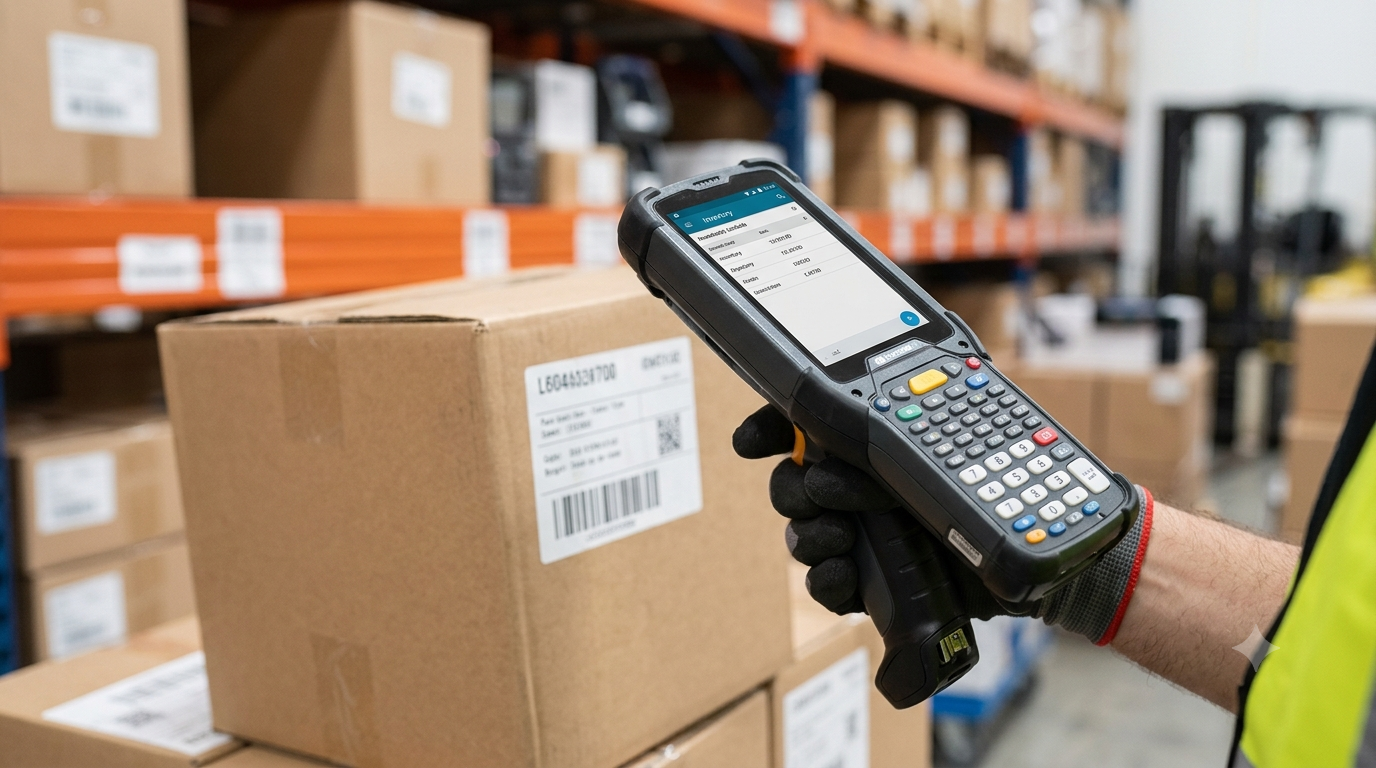
PDA terminals support barcode scanning, order picking, receiving, dispatching, and stock verification. Employees can use handheld devices to access warehouse management systems and update inventory records as tasks are completed.
Automated warehouses also require reliable communication between workers, inventory systems, and material-handling equipment. Connected PDA terminals help bridge these activities by providing mobile access to operational information.
As retailers and logistics providers invest in warehouse automation, demand for rugged handheld devices that can withstand continuous use is expected to remain an important growth opportunity.
Increasing Adoption of Digital Supply Chain Solutions
Businesses increasingly require visibility across procurement, manufacturing, storage, transportation, and distribution. PDA terminals can capture product and shipment information at different points in the supply chain, helping organizations maintain accurate records and improve traceability.
When integrated with enterprise resource planning (ERP), warehouse management systems (WMS), and transportation management systems (TMS), these devices allow employees to update business information from the point of activity.
The PDA Terminal Market benefits from this shift toward connected operations, particularly among companies managing multiple warehouses, retail locations, manufacturing plants, or delivery networks.
Demand for Rugged and Reliable Devices
Industrial environments can expose handheld devices to dust, moisture, temperature variations, impacts, and frequent handling. Consumer-grade smartphones may not provide the durability, scanning performance, or serviceability required for some demanding applications.
Rugged PDA terminals are designed to support these environments through reinforced enclosures, suitable ingress protection, durable displays, and industrial-grade scanning components. Some models also provide replaceable batteries, dedicated scanning triggers, and accessories designed for specific workflows.
Businesses increasingly evaluate device reliability and total cost of ownership when selecting terminals. A durable device can reduce replacement frequency and help limit disruptions caused by equipment failures, although actual benefits depend on usage conditions and maintenance practices.
Download PDF Brochure @ https://www.marketsandmarkets.com/pdfdownloadNew.asp?id=60961696
Emerging Technology Trends Transforming the PDA Terminal Market
Artificial Intelligence and Intelligent Data Capture
AI is creating opportunities to improve how PDA terminals capture, process, and interpret information. AI-enabled software can support image recognition, document processing, data classification, and selected automated inspection tasks.
For example, image-based recognition may help identify damaged packaging or read labels under challenging conditions when supported by suitable cameras and software. Intelligent applications can also help flag inconsistent inventory records or direct employees toward specific operational tasks.
These capabilities are extending the role of PDA terminals beyond scanning and data entry. Instead of simply recording information, connected devices can help employees interpret operational data and complete workflows more efficiently.
However, AI capabilities vary by device and application. Performance depends on camera quality, processing resources, data quality, and integration with enterprise systems. Vendors must also address data security and the reliability of automated recommendations.
RFID and Advanced Barcode Scanning
Barcode scanning remains a core function in the PDA Terminal Market, supporting product identification, inventory control, and shipment verification. Advances in scanning engines and imaging technology can improve the capture of one-dimensional and two-dimensional barcodes across different operating conditions.
RFID is expanding data-capture capabilities by allowing compatible terminals to identify tagged items without requiring direct visual alignment with each tag. Handheld RFID readers can help businesses conduct inventory counts, locate tagged assets, and verify products across selected applications.
Combining barcode scanning and RFID in multifunction terminals can give organizations greater flexibility. Retailers may use barcode scanning for transactions and RFID for inventory checks, while logistics providers can use both technologies for package identification and asset tracking.
The choice between barcode and RFID depends on operational requirements, tag costs, read range, accuracy, and existing infrastructure.
Android-Based Enterprise Mobility
Android has become an important operating system for modern enterprise handheld terminals. Its application ecosystem and development tools allow organizations to build or deploy software suited to warehouse operations, retail processes, field service, and manufacturing.
Enterprise-focused Android terminals can support centralized device configuration, application deployment, security controls, and remote troubleshooting. These capabilities are particularly useful for organizations managing large device fleets across multiple locations.
The transition from legacy mobile operating systems also creates migration opportunities. Businesses may need to replace older devices, update applications, and train employees to use new platforms.
For manufacturers, operating-system support, security updates, application compatibility, and device-management capabilities are increasingly important competitive factors.
5G, Wi-Fi, and Bluetooth Connectivity
Wireless connectivity enables PDA terminals to exchange information with enterprise systems and connected equipment. Wi-Fi supports communication within warehouses, stores, hospitals, and factories, while cellular connectivity can help mobile workers access information across wider geographic areas.
Bluetooth enables connections to compatible accessories, including printers, headsets, and selected scanning devices. Depending on the model and network environment, newer connectivity options can improve data synchronization and support more demanding applications.
For businesses operating large facilities, reliable network coverage is essential. Connectivity interruptions can delay inventory updates, order processing, and field reporting.
As organizations expand connected operations, vendors that offer dependable wireless performance and compatibility with enterprise networks can improve their competitive position in the PDA Terminal Market.
IoT Integration and Real-Time Asset Tracking
IoT integration connects PDA terminals with sensors, tracking systems, and enterprise platforms. This allows workers to access asset information, record equipment status, and update operational data while working on-site.
In manufacturing, terminals can help track components and work-in-progress materials. In logistics, they can support package verification and asset movement records. In healthcare, suitable devices can help staff manage inventory and identify equipment or supplies.
Integration with real-time location systems and asset-management platforms can improve visibility across facilities. However, successful implementation requires consistent data standards, compatible hardware, secure connectivity, and well-designed workflows.
Cloud Computing and Enterprise Software Integration
Cloud-based applications allow organizations to synchronize information across multiple locations and provide authorized users with access to current operational data. PDA terminals can serve as mobile access points for inventory systems, order-management software, customer records, and field-service applications.
Cloud integration can also simplify software updates and support centralized management. Nevertheless, businesses must consider network availability, data protection, access controls, and the implications of storing sensitive information in cloud environments.
A strong software ecosystem can differentiate PDA terminal manufacturers from competitors that focus primarily on hardware specifications.
Competitive Landscape of the PDA Terminal Market
The competitive landscape includes established enterprise mobility companies, barcode and data-capture specialists, rugged-device manufacturers, and regional suppliers offering cost-effective alternatives.
Competition increasingly extends beyond device pricing. Buyers evaluate scanning performance, durability, operating-system support, application compatibility, security, device-management tools, service coverage, and long-term availability of spare parts.
Major Market Participants
Key companies participating in the industrial PDA handheld terminal market include:
- Zebra Technologies Corporation: Offers enterprise mobile computers, barcode scanning solutions, RFID technologies, and software for frontline operations.
- Honeywell International Inc.: Supplies rugged mobile computers and data-capture solutions for logistics, retail, manufacturing, and field operations.
- Datalogic S.p.A.: Focuses on automatic identification, barcode scanning, and related data-capture technologies.
- Panasonic Connect Co., Ltd.: Provides rugged computing solutions designed for demanding industrial and mobile working environments.
- Urovo Technology Co., Ltd.: Supplies enterprise mobility devices for logistics, retail, warehousing, and related applications.
- Bluebird Inc.: Offers mobile computing and data-capture devices for enterprise and commercial users.
- Chainway Information Technology Co., Ltd.: Provides handheld terminals and RFID-enabled devices for inventory management and asset tracking.
- Unitech Electronics Co., Ltd.: Develops mobile computers and data-capture products for business applications.
- Denso Wave Incorporated: Participates in automatic identification and data-capture technologies, including barcode-related solutions.
These companies compete through product development, application support, distribution networks, and partnerships with enterprise software providers. Their offerings vary by product category, geography, and target customer, so the competitive position of individual vendors depends on the specific application and customer requirements.
Product Innovation and Differentiation
Manufacturers are differentiating their products through better scanning engines, improved display readability, longer battery life, lighter designs, and greater resistance to environmental conditions.
Multifunction terminals that combine barcode scanning, RFID, cameras, and wireless connectivity can address multiple operational requirements with a single device. This may simplify device procurement and reduce the need for workers to carry separate equipment.
Software is also becoming a more important differentiator. Device-management platforms, security tools, workflow applications, and integration services can help vendors build longer-term customer relationships.
Strategic Partnerships and Service Capabilities
PDA terminal manufacturers frequently work with software developers, systems integrators, distributors, and enterprise technology providers to deliver complete solutions.
These partnerships can improve compatibility with warehouse management systems, ERP platforms, retail software, and field-service applications. They can also help manufacturers reach customers in specialized industries.
After-sales support is another important factor. Businesses deploying large fleets need access to technical assistance, replacement devices, repairs, accessories, and software updates. Vendors with dependable support networks can be better positioned to serve customers with demanding uptime requirements.
Applications Across Major Industries
Retail and E-Commerce
Retailers use PDA terminals for inventory checks, shelf replenishment, price verification, goods receiving, and order fulfilment. Mobile devices help employees access product information without returning to fixed workstations.
E-commerce businesses use handheld terminals to support picking, packing, dispatching, and returns management. Real-time updates can help reduce discrepancies between physical inventory and system records.
Logistics and Transportation
Logistics providers use PDA terminals to scan parcels, track shipments, record deliveries, and verify proof of delivery. Mobile connectivity enables drivers and warehouse teams to exchange updates with dispatch and customer-service systems.
These applications can improve shipment traceability and help identify delays or discrepancies during distribution.
Manufacturing
Manufacturers use handheld terminals to track raw materials, components, production orders, and finished goods. Barcode and RFID technologies can help maintain traceability throughout production and quality-control processes.
Integration with manufacturing execution systems can also support work-order updates and inventory visibility across production facilities.
Healthcare
Healthcare facilities can use compatible PDA terminals for inventory management, supply tracking, patient identification, and medication verification workflows. Devices used in clinical environments must meet relevant hygiene, privacy, and operational requirements.
Secure integration with healthcare information systems is essential when devices handle sensitive patient or medication-related data.
Field Services
Field-service professionals can use PDA terminals to access work orders, capture inspection results, record equipment information, and update service reports. These devices are particularly useful when technicians need portable tools that support reliable data capture in outdoor or industrial environments.
Challenges Affecting Market Growth
Despite expanding applications, the PDA Terminal Market faces several challenges.
High initial costs: Rugged terminals and specialized scanning hardware can cost more than consumer smartphones. Businesses must evaluate device durability, maintenance, and productivity benefits when comparing total ownership costs.
Cybersecurity risks: Connected devices can introduce security vulnerabilities if software is outdated or device access is poorly managed. Organizations need appropriate authentication, encryption, patch management, and remote device controls.
Integration complexity: Connecting terminals with existing ERP, warehouse, retail, and manufacturing systems can require application development and systems integration.
Rapid technology changes: Businesses must plan for operating-system updates, security support, hardware replacement, and application compatibility throughout the device lifecycle.
Competition from smartphones: Enterprise-ready smartphones can handle some data-capture tasks at a lower upfront cost. Dedicated PDA terminals remain relevant when specialized scanning, ruggedness, battery performance, accessories, or continuous enterprise use justify their additional cost.
Addressing these challenges requires careful technology selection, employee training, lifecycle planning, and collaboration between device vendors and software providers.
Future Outlook and Growth Opportunities
The future of the PDA Terminal Market will be shaped by the convergence of mobile computing, intelligent data capture, automation, and enterprise software. As businesses seek better visibility across operations, handheld terminals are likely to remain important tools for connecting frontline activities with digital business systems.
AI-assisted data capture, RFID integration, improved wireless connectivity, and centralized device management are expected to influence future product development. These technologies can help organizations automate selected tasks, improve traceability, and reduce manual work.
Another opportunity lies in industry-specific solutions. Logistics providers may prioritize fast scanning and delivery tracking, while manufacturers may require durable devices with RFID capabilities and integration with production systems. Healthcare organizations may place greater emphasis on secure access and device hygiene.
The PDA Terminal Market is also likely to see continued competition between premium enterprise suppliers and cost-conscious manufacturers. Vendors will need to balance affordability with reliability, security, and long-term support.
Organizations that treat PDA terminals as part of an integrated digital infrastructure, rather than as standalone hardware, may be better positioned to realize operational benefits.
Conclusion
The PDA Terminal Market is evolving from traditional handheld data-capture devices toward connected enterprise mobility solutions. Growth in e-commerce, warehouse automation, supply chain digitalization, and industrial connectivity is encouraging businesses to adopt terminals that support real-time information exchange and efficient frontline workflows.
AI, RFID, Android-based platforms, cloud computing, and advanced wireless connectivity are creating new opportunities for product innovation. At the same time, competition is increasingly defined by software integration, device reliability, cybersecurity, and aftermarket support.
Although high costs, integration requirements, and competition from smartphones remain challenges, manufacturers that deliver durable devices, intelligent features, and dependable enterprise support can strengthen their market positions. As businesses continue to digitize operations, PDA terminals will remain valuable tools for improving data accuracy, traceability, and workforce productivity.
Frequently Asked Questions (FAQs)
1. What is driving the PDA Terminal Market?
The market is supported by e-commerce growth, warehouse automation, supply chain digitalization, demand for real-time data capture, and increasing adoption of rugged mobile computing devices.
2. Which technologies are shaping the PDA Terminal Market?
Key technologies include AI-assisted data capture, barcode scanning, RFID, Android operating systems, IoT integration, cloud computing, and wireless connectivity.
3. Who are the major players in the PDA Terminal Market?
Major participants include Zebra Technologies, Honeywell, Datalogic, Panasonic Connect, Urovo Technology, Bluebird, Chainway, Unitech, and Denso Wave.
4. Which industries use PDA terminals?
PDA terminals are used in retail, e-commerce, logistics, warehousing, manufacturing, healthcare, transportation, and field services.
5. What challenges affect PDA terminal adoption?
Major challenges include device costs, cybersecurity, integration with legacy systems, lifecycle management, and competition from enterprise-ready smartphones.