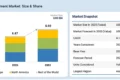
The global Electrophysiology Market is projected to grow from USD 12.55 billion in 2025 to USD 21.72 billion by 2030, registering a CAGR of 11.6% during 2025–2030. Increasing cardiac arrhythmias, technological innovation, and the growing geriatric population are important factors supporting this growth.
Atrial fibrillation (AF) is one of the most common types of cardiac arrhythmia. It occurs when the heart’s upper chambers beat irregularly, which can affect the normal flow of blood through the heart. The growing prevalence of heart rhythm disorders is creating increasing demand for advanced electrophysiology diagnosis and treatment solutions.
Electrophysiology Market and Atrial Fibrillation
Atrial fibrillation is a major indication within the electrophysiology market. The report identifies AF, atrial flutter, atrioventricular nodal reentry tachycardia (AVNRT), Wolff-Parkinson-White syndrome (WPW), and other conditions as key indications.
In 2024, atrial fibrillation dominated the electrophysiology market. The increasing aging population, along with rising rates of obesity, hypertension, diabetes, and sedentary lifestyles, is contributing to the growing burden of AF.
Importantly, atrial fibrillation is also expected to record the highest CAGR among indications during the forecast period, creating significant opportunities for companies developing electrophysiology technologies.
Download PDF Brochure @ https://www.marketsandmarkets.com/pdfdownloadNew.asp?id=200003281
Growing Demand for Atrial Fibrillation Treatment
The growing number of patients with AF is increasing demand for effective diagnostic and treatment procedures. Electrophysiology allows specialists to study the heart’s electrical activity and identify abnormal electrical pathways.
Advances in cardiac mapping, intracardiac imaging, and catheter-based procedures are helping physicians improve the accuracy and effectiveness of AF treatment.
Hospitals and cardiac centers remain important users of electrophysiology technologies because they have the infrastructure and specialized professionals required to perform complex procedures.
Role of Catheter Ablation in AF Management
Electrophysiology ablation catheters represented the largest product segment in 2024. Increasing acceptance of catheter ablation for arrhythmia treatment, particularly AF, is supporting demand for these devices.
Newer technologies include contact-force sensing, high-density mapping, cryoablation, laser ablation, and pulsed field ablation. These technologies are designed to improve treatment precision and procedural outcomes.
Advanced Technologies Transforming Electrophysiology
Technology is rapidly changing how AF is diagnosed and treated. Advanced 3D electro-anatomical mapping systems can create detailed, real-time maps of the heart’s electrical activity, helping physicians navigate complex procedures.
Pulsed field ablation (PFA) is another emerging technology being used for AF treatment. The report highlights PFA systems as important commercial applications in the electrophysiology market, alongside advanced mapping and contact-force ablation technologies.
Future Outlook
The future of AF treatment is expected to be shaped by continued innovation in catheter ablation, cardiac mapping, imaging, and minimally invasive procedures.
The Asia Pacific region is expected to register the highest growth rate in the global electrophysiology market during the forecast period, supported by a large population, increasing healthcare spending, rising chronic diseases, and growing adoption of advanced technologies.