The global Automated Stationary NDT Inspection Market is experiencing strong momentum as industries increasingly adopt advanced automation technologies to improve product quality, operational efficiency, and safety compliance. Non-Destructive Testing (NDT) has become a critical component in manufacturing, aerospace, automotive, oil & gas, and energy sectors, ensuring structural integrity without damaging components.
With the rapid rise of Industry 4.0, smart factories, and AI-powered inspection systems, the Automated Stationary NDT Inspection Market growth is accelerating across both developed and emerging economies. Manufacturers are shifting from manual inspection methods to fully automated stationary systems that deliver higher accuracy, consistency, and real-time defect detection.
Understanding Automated Stationary NDT Inspection Systems
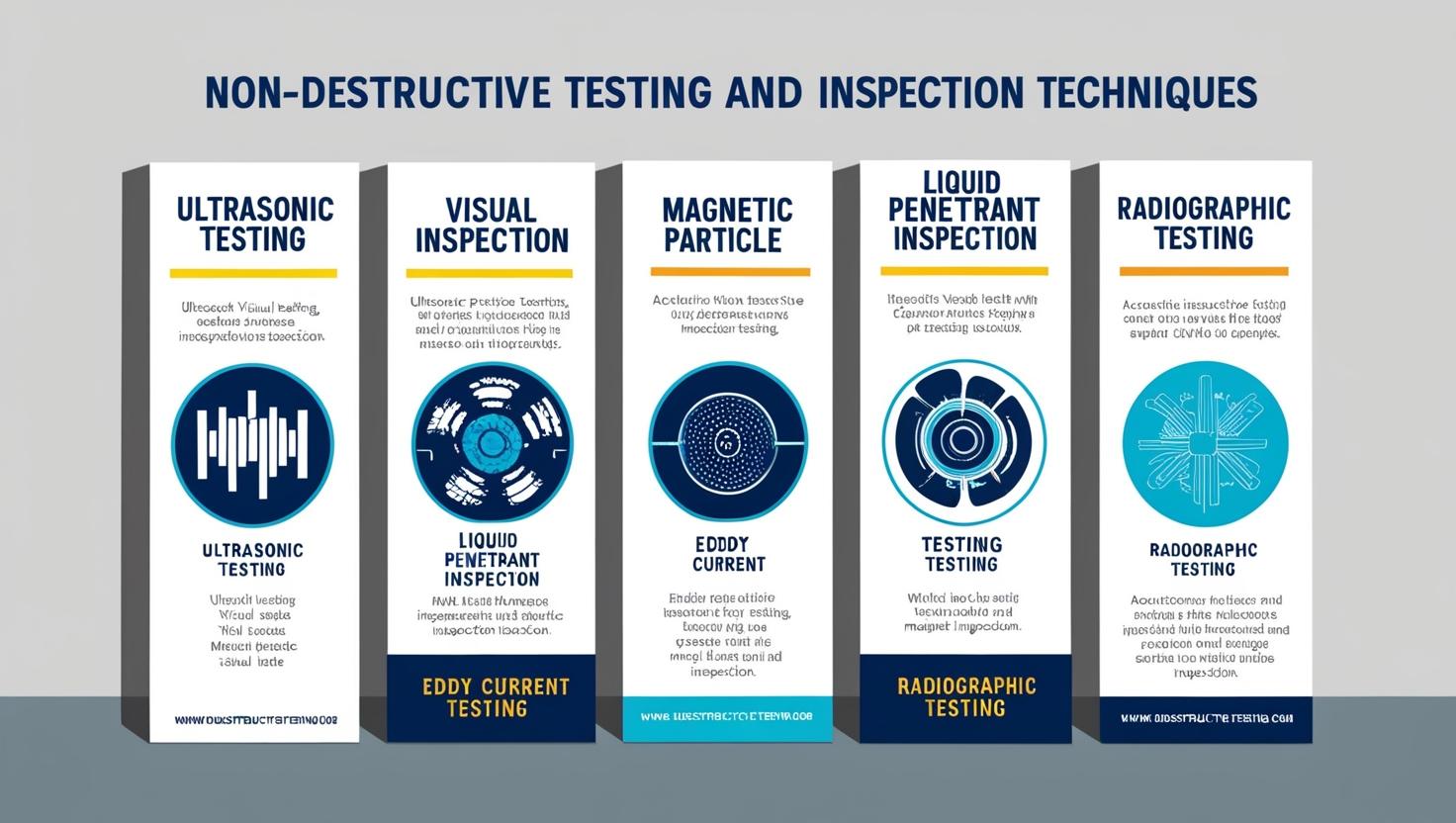
Automated stationary NDT inspection systems are fixed-position testing setups used to evaluate materials, components, and assemblies without causing damage. These systems utilize advanced technologies such as:
- Ultrasonic testing (UT)
- Radiographic testing (RT)
- Eddy current testing (ECT)
- Vision-based inspection systems
- AI and machine learning algorithms
- Robotics and automation platforms
Unlike portable systems, stationary NDT systems are integrated into production lines, enabling continuous, high-speed inspection of manufactured parts.
The increasing demand for precision manufacturing is significantly contributing to Automated Stationary NDT Inspection Market growth worldwide.
Key Drivers of Automated Stationary NDT Inspection Market Growth
1. Rising Industrial Automation
One of the primary drivers of Automated Stationary NDT Inspection Market growth is the global expansion of industrial automation. Smart factories are integrating automated inspection systems directly into production lines to ensure real-time quality control.
These systems help manufacturers:
Detect defects instantly
Reduce production downtime
Improve product consistency
Minimize human error
As automation becomes standard in manufacturing, demand for stationary NDT systems continues to grow.
2. Increasing Demand for Quality Assurance
Industries such as aerospace, automotive, and energy require extremely high levels of safety and reliability. Even minor defects can lead to catastrophic failures.
Automated stationary NDT systems ensure:
High-precision defect detection
Consistent inspection results
Compliance with safety regulations
Reduced inspection variability
This growing need for quality assurance is driving strong Automated Stationary NDT Inspection Market growth.
Download PDF Brochure @ https://www.marketsandmarkets.com/pdfdownloadNew.asp?id=233564506
3. Adoption of Industry 4.0 Technologies
The integration of Industry 4.0 technologies is transforming traditional inspection processes. Automated NDT systems now leverage:
Artificial intelligence
Machine learning
Industrial IoT (IIoT)
Big data analytics
Cloud-based monitoring systems
These technologies enhance inspection accuracy and enable predictive maintenance, further accelerating Automated Stationary NDT Inspection Market growth.
4. Expansion of Aerospace and Automotive Manufacturing
The aerospace and automotive industries are major adopters of automated stationary NDT systems.
In aerospace, these systems are used for:
Aircraft structural inspection
Engine component testing
Fatigue and stress analysis
In automotive manufacturing, they support:
Weld inspection
Casting and forging analysis
EV battery component testing
The increasing complexity of manufacturing processes is boosting Automated Stationary NDT Inspection Market growth globally.
5. Stringent Safety Regulations and Standards
Governments and regulatory bodies are enforcing strict safety standards across industries to ensure product reliability and operational safety.
Compliance requirements from organizations such as:
ISO standards
ASME codes
ASTM guidelines
are driving manufacturers to adopt automated NDT solutions, supporting overall Automated Stationary NDT Inspection Market growth.
Emerging Trends in the Market
AI-Powered Defect Detection
Artificial intelligence is revolutionizing inspection accuracy by enabling automated recognition of defects, anomalies, and structural inconsistencies.
Robotics-Integrated Inspection Systems
Robotics is improving inspection speed, precision, and repeatability in stationary NDT systems.
Real-Time Data Analytics
Manufacturers are increasingly using real-time analytics to monitor inspection results and optimize production quality.
Digital Twin Integration
Digital twin technology allows manufacturers to simulate inspection processes and predict potential failures before they occur.
Cloud-Based Inspection Platforms
Cloud connectivity enables centralized monitoring, data storage, and remote inspection analysis across multiple facilities.
These trends are significantly contributing to Automated Stationary NDT Inspection Market growth.
Key Applications
- Aerospace Industry
- Aircraft structural integrity testing
- Engine component inspection
- Composite material evaluation
- Automotive Industry
- Weld quality inspection
- EV battery safety testing
- Engine component validation
- Oil & Gas Industry
- Pipeline inspection
- Pressure vessel testing
- Corrosion detection
- Energy Sector
- Wind turbine inspection
- Power plant equipment testing
- Structural safety analysis
- Manufacturing Industry
- Casting and forging inspection
- Material defect detection
- Assembly line quality control
Challenges in the Market
Despite strong Automated Stationary NDT Inspection Market growth, several challenges persist:
- High initial investment costs
- Complex system integration
- Skilled workforce requirements
- Data management challenges
- Maintenance of advanced systems
However, ongoing technological advancements are helping reduce these barriers over time.
Future Outlook
The future of the Automated Stationary NDT Inspection Market growth looks highly promising as industries continue adopting automation, AI, and digital manufacturing technologies.
Key future developments include:
Fully autonomous inspection systems
AI-driven predictive quality control
Greater adoption in small and medium enterprises
Integration with smart manufacturing ecosystems
Expansion in emerging industrial economies
As manufacturing becomes more intelligent and connected, automated stationary NDT systems will play a central role in ensuring product safety, efficiency, and reliability.
Automated Stationary NDT systems Key Takeaways
- Automated stationary NDT systems enable high-precision, real-time defect detection
- Industrial automation is a major driver of Automated Stationary NDT Inspection Market growth
- Aerospace, automotive, and energy sectors are key adopters
- AI, robotics, and IoT are transforming inspection processes
- Strict safety regulations are increasing demand for advanced NDT systems
- Digital twin and cloud technologies are emerging trends
- High initial costs remain a challenge for adoption
- Industry 4.0 is reshaping manufacturing quality control systems
- Predictive maintenance is improving operational efficiency
- Market growth is expected to continue strongly in the coming years
Frequently Asked Questions (FAQs)
1. What is driving Automated Stationary NDT Inspection Market growth?
Industrial automation, AI integration, and increasing quality standards are major growth drivers.
2. Which industries use automated stationary NDT systems?
Aerospace, automotive, oil & gas, energy, and manufacturing industries widely use these systems.
3. How does AI improve NDT inspection?
AI enhances defect detection accuracy, reduces errors, and enables predictive analysis.
4. What are the advantages of stationary NDT systems?
They offer high-speed inspection, consistent results, and seamless integration into production lines.
5. What is the future of the Automated Stationary NDT Inspection Market?
The future includes fully automated, AI-driven inspection systems integrated with sma
About MarketsandMarkets™
MarketsandMarkets™ has been recognized as one of America’s Best Management Consulting Firms by Forbes, as per their recent report.
MarketsandMarkets™ is a blue ocean alternative in growth consulting and program management, leveraging a man-machine offering to drive supernormal growth for progressive organizations in the B2B space. With the widest lens on emerging technologies, we are proficient in co-creating supernormal growth for clients across the globe.
Today, 80% of Fortune 2000 companies rely on MarketsandMarkets, and 90 of the top 100 companies in each sector trust us to accelerate their revenue growth. With a global clientele of over 13,000 organizations, we help businesses thrive in a disruptive ecosystem.
The B2B economy is witnessing the emergence of $25 trillion in new revenue streams that are replacing existing ones within this decade. We work with clients on growth programs, helping them monetize this $25 trillion opportunity through our service lines – TAM Expansion, Go-to-Market (GTM) Strategy to Execution, Market Share Gain, Account Enablement, and Thought Leadership Marketing.
Built on the ‘GIVE Growth’ principle, we collaborate with several Forbes Global 2000 B2B companies to keep them future-ready. Our insights and strategies are powered by industry experts, cutting-edge AI, and our Market Intelligence Cloud, KnowledgeStore™, which integrates research and provides ecosystem-wide visibility into revenue shifts.
To find out more, visit www.MarketsandMarkets™.com or follow us on Twitter , LinkedIn and Facebook .
Contact:
Mr. Rohan Salgarkar
MarketsandMarkets™ INC.
1615 South Congress Ave.
Suite 103, Delray Beach, FL 33445
USA: +1-888-600-6441
