The global humanoid robot market is entering a phase of rapid expansion, driven by advancements in artificial intelligence, automation, and human–machine interaction. As industries seek to enhance efficiency, address labor shortages, and improve customer engagement, humanoid robots are increasingly being deployed across healthcare, retail, and manufacturing environments.
According to MarketsandMarkets, the global humanoid robot market is projected to grow from USD 2.92 billion in 2025 to USD 15.26 billion by 2030, at an impressive CAGR of 39.2%, highlighting the accelerating pace of adoption across industries.
Rising Adoption in Healthcare
Healthcare is emerging as one of the most impactful sectors for humanoid robots. With a rapidly aging global population and increasing demand for patient care, humanoid robots are being deployed for caregiving, rehabilitation, and patient monitoring.
These robots can assist elderly individuals with daily activities, provide companionship, and support healthcare professionals by reducing workload pressures. Their ability to leverage AI, natural language processing, and real-time monitoring makes them valuable in both hospitals and homecare environments. The growing need for scalable and efficient healthcare solutions is a key driver of humanoid robot adoption.
Download PDF Brochure @ https://www.marketsandmarkets.com/pdfdownloadNew.asp?id=99567653
Transforming Customer Experience in Retail
In the retail sector, humanoid robots are enhancing customer engagement and service delivery. From greeting customers and providing product recommendations to assisting with in-store navigation, these robots are redefining the shopping experience.
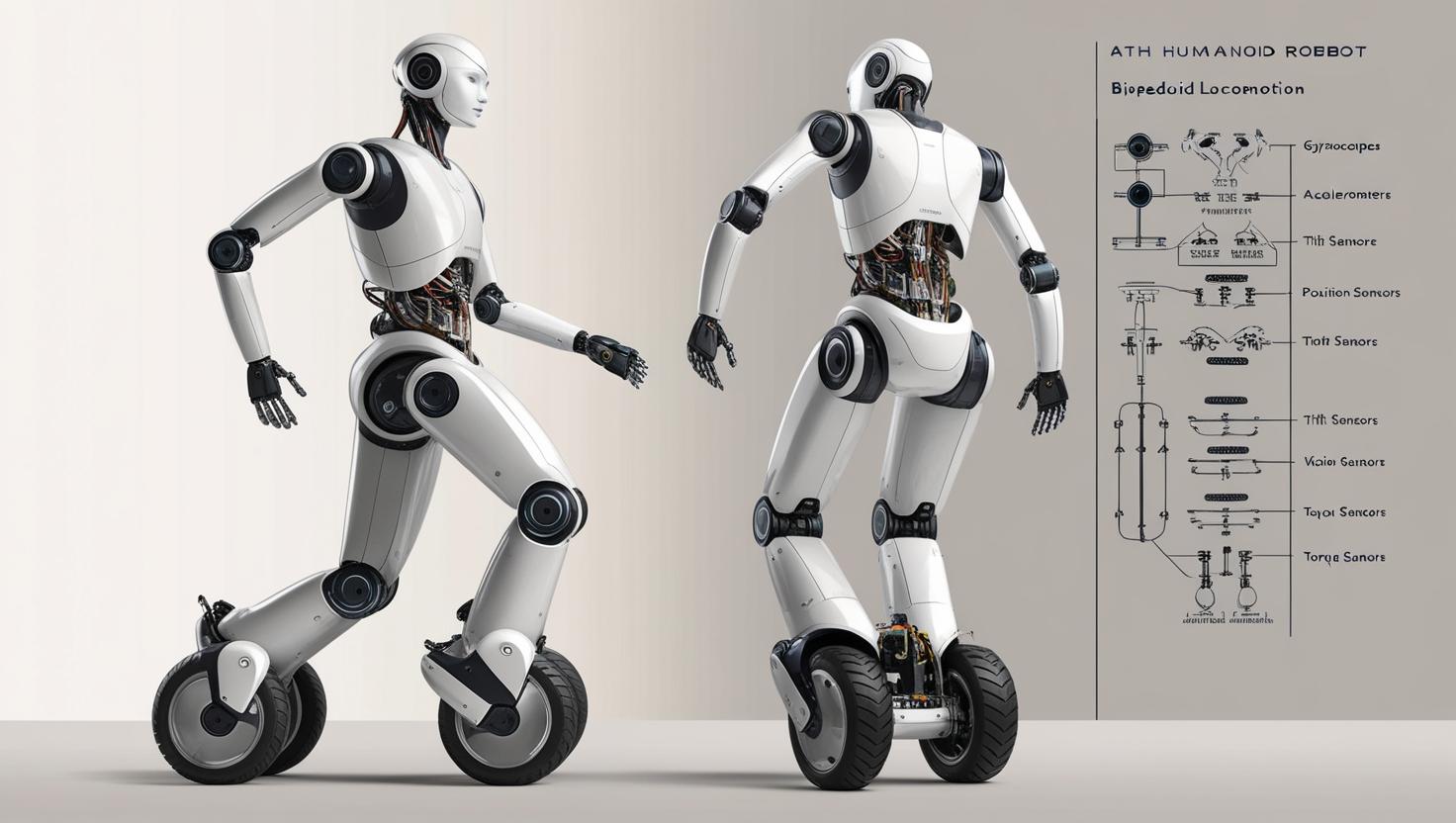
Retailers are increasingly leveraging humanoid robots for customer service, inventory assistance, and promotional activities, enabling more personalized and interactive experiences. Wheel-driven humanoid robots, in particular, are gaining traction in retail due to their stability and cost efficiency in indoor environments.
Driving Efficiency in Manufacturing
Manufacturing remains a major growth area for humanoid robots as industries move toward smart factories and Industry 4.0. Humanoid robots are being deployed to perform repetitive, hazardous, and labor-intensive tasks, improving workplace safety and operational efficiency.
Their human-like design allows them to operate in environments built for humans, making them ideal for assembly lines, material handling, and industrial support tasks. As companies strive to optimize productivity and address labor shortages, humanoid robots are becoming integral to workforce augmentation strategies.
Technology Trends Powering the Market
The rapid growth of the humanoid robot market is fueled by continuous advancements in technology, including:
Artificial Intelligence and Machine Learning: Enabling autonomous decision-making and improved human–robot interaction
Computer Vision and Sensors: Enhancing perception, navigation, and object recognition
Actuators and Mobility Systems: Supporting advanced movement and dexterity
Cloud and IoT Integration: Allowing real-time monitoring, analytics, and remote operations
The software segment, in particular, is expected to witness the fastest growth due to increasing demand for intelligent, adaptive, and connected robotic systems.
Regional Insights
From a regional perspective, Asia Pacific is expected to register the highest growth rate, driven by strong government initiatives, rapid industrialization, and widespread adoption of automation technologies in countries like China, Japan, and South Korea.
Meanwhile, North America and Europe continue to play a crucial role in innovation, supported by robust R&D ecosystems and early adoption across healthcare and logistics sectors.
Competitive Landscape
The humanoid robot market is highly competitive, with several key players driving innovation and commercialization. Leading companies include SoftBank Robotics Group, ROBOTIS Co., Ltd., Agility Robotics, UBTECH Robotics Corp. Ltd., and PAL Robotics.
These companies are focusing on enhancing AI-driven interaction, mobility, and autonomous capabilities to expand their applications across industries.
Future Outlook
The future of humanoid robots lies in their ability to seamlessly integrate into everyday environments and collaborate with humans. As technology matures and costs decline, humanoid robots are expected to move beyond pilot deployments to large-scale commercialization.
With growing adoption across healthcare, retail, and manufacturing, humanoid robots are set to redefine workforce dynamics, improve service delivery, and unlock new opportunities for innovation.
The humanoid robot market is no longer a futuristic concept—it is rapidly becoming a reality. Driven by AI, automation, and increasing industry demand, humanoid robots are poised to play a transformative role across key sectors, shaping the next generation of intelligent and adaptive systems.
Humanoid Robot Market FAQ
Q1: What is driving the growth of the humanoid robot market?
A1: The growth of the humanoid robot market is driven by advancements in artificial intelligence, robotics, and automation, along with increasing demand for human-like machines to improve efficiency and address labor shortages across industries.
Q2: What is the projected market size of the humanoid robot market by 2030?
A2: The humanoid robot market is projected to reach approximately USD 15.26 billion by 2030, growing at a strong CAGR due to rising adoption across multiple sectors.
Q3: How are humanoid robots being used in healthcare?
A3: In healthcare, humanoid robots are used for patient care, elderly assistance, rehabilitation support, and monitoring, helping reduce workload on healthcare professionals and improving patient engagement.
Q4: What role do humanoid robots play in the retail industry?
A4: In retail, humanoid robots enhance customer experience by assisting with product recommendations, guiding customers in stores, managing inventory, and supporting promotional activities.
Q5: How are humanoid robots transforming manufacturing?
A5: In manufacturing, humanoid robots improve productivity and safety by performing repetitive and hazardous tasks, assisting in assembly lines, and supporting smart factory operations.
About MarketsandMarkets™
MarketsandMarkets™ has been recognized as one of America’s Best Management Consulting Firms by Forbes, as per their recent report.
MarketsandMarkets™ is a blue ocean alternative in growth consulting and program management, leveraging a man-machine offering to drive supernormal growth for progressive organizations in the B2B space. With the widest lens on emerging technologies, we are proficient in co-creating supernormal growth for clients across the globe.
Today, 80% of Fortune 2000 companies rely on MarketsandMarkets, and 90 of the top 100 companies in each sector trust us to accelerate their revenue growth. With a global clientele of over 13,000 organizations, we help businesses thrive in a disruptive ecosystem.
The B2B economy is witnessing the emergence of $25 trillion in new revenue streams that are replacing existing ones within this decade. We work with clients on growth programs, helping them monetize this $25 trillion opportunity through our service lines – TAM Expansion, Go-to-Market (GTM) Strategy to Execution, Market Share Gain, Account Enablement, and Thought Leadership Marketing.
Built on the ‘GIVE Growth’ principle, we collaborate with several Forbes Global 2000 B2B companies to keep them future-ready. Our insights and strategies are powered by industry experts, cutting-edge AI, and our Market Intelligence Cloud, KnowledgeStore™, which integrates research and provides ecosystem-wide visibility into revenue shifts.
To find out more, visit www.MarketsandMarkets™.com or follow us on Twitter , LinkedIn and Facebook .
Contact:
Mr. Rohan Salgarkar
MarketsandMarkets™ INC.
1615 South Congress Ave.
Suite 103, Delray Beach, FL 33445
USA: +1-888-600-6441
