The global Humanoid Robot Market is entering a transformative phase driven by rapid advancements in artificial intelligence (AI), robotics hardware, and, most importantly, human-machine collaboration. As industries move toward more adaptive and intelligent automation, humanoid robots are evolving from isolated machines into collaborative partners working alongside humans in real-world environments.
According to the MarketsandMarkets Humanoid Robot Market report, the market is projected to grow from USD 2.92 billion in 2025 to USD 15.26 billion by 2030, registering a strong CAGR of 39.2% during the forecast period.
This rapid expansion highlights how Humanoid Robot Market Trends are increasingly shaped by the convergence of robotics, AI-driven decision-making, and human-centric design.
Top 10 Key Takeaways
- The Humanoid Robot Market is projected to reach USD 15.26 billion by 2030.
- Human-machine collaboration is a core driver of market trends.
- Humanoid robots are shifting from replacement tools to collaborative assistants.
- AI and machine learning enable natural interaction with humans.
- Manufacturing and logistics are key adoption sectors.
- Labor shortages are accelerating demand for humanoid robots.
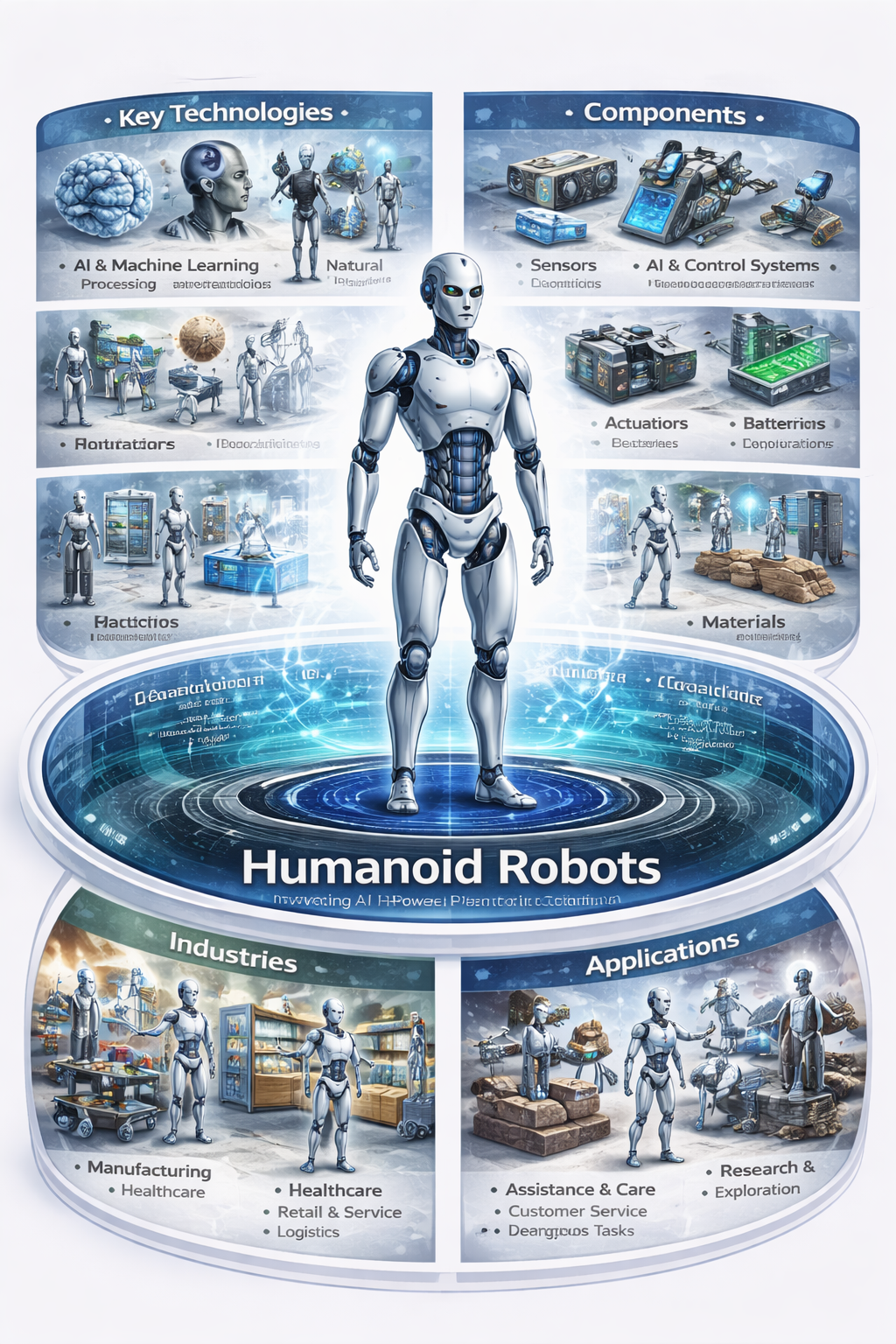
- Advanced sensors and actuators improve safety and interaction.
- Hybrid workforce models are replacing full automation approaches.
- Asia-Pacific is the fastest-growing regional market.
- Future humanoid robots will act as intelligent human collaborators.
Human-Machine Collaboration Redefining Robotics Evolution
One of the most important shifts influencing Humanoid Robot Market Trends is the move toward human-robot collaboration (HRC) rather than full automation replacement.
Unlike traditional industrial robots that operate in isolated environments, humanoid robots are designed to:
- Work safely alongside humans
- Understand human gestures and voice commands
- Adapt to dynamic environments
- Assist rather than replace human workers
Research in human-robot collaboration highlights that modern robotics is evolving toward “symbiotic partnerships” where robots and humans jointly execute tasks in shared spaces.
This shift is particularly important in sectors facing labor shortages, aging populations, and rising demand for flexible automation.
AI and Natural Interaction Driving Collaboration Trends
AI is a central force shaping Humanoid Robot Market Trends, especially in enabling natural and intuitive interaction between humans and machines.
Modern humanoid robots now incorporate:
- Natural language processing (NLP)
- Computer vision for object and face recognition
- Gesture and emotion recognition systems
- Machine learning for adaptive behavior
These capabilities allow robots to understand human intent and respond contextually, making collaboration smoother and more efficient.
In real-world deployments, humanoid robots are already being tested in environments such as manufacturing, logistics, healthcare, and customer service, where interaction with humans is essential.
Download PDF Brochure @ https://www.marketsandmarkets.com/pdfdownloadNew.asp?id=99567653
Workplace Transformation and Shared Task Execution
A major trend shaping Humanoid Robot Market Trends is the increasing use of humanoid robots in shared work environments, particularly in industries such as manufacturing and logistics.
Humanoid robots are being deployed to:
- Assist workers in assembly lines
- Handle repetitive or physically demanding tasks
- Support warehouse picking and sorting
- Improve workplace safety in hazardous environments
Research shows humanoid robots can significantly improve automation levels in manufacturing by working alongside human operators in hybrid production systems.
This collaborative approach enhances productivity while allowing human workers to focus on higher-value decision-making and supervisory tasks.
Labor Shortages Accelerating Human-Robot Collaboration
One of the strongest external drivers influencing Humanoid Robot Market Trends is the growing global labor shortage.
Industries such as:
- Manufacturing
- Healthcare
- Elderly care
- Logistics
are increasingly struggling to find skilled and unskilled labor for repetitive or physically intensive tasks.
Humanoid robots are being introduced as “robot coworkers” to fill this gap rather than replace human labor entirely. Recent developments indicate that humanoid robots are expected to complement human workers in environments facing workforce shortages.
This collaborative model ensures continuity of operations while reducing dependency on scarce labor resources.
Advancements in Sensors and Actuators Enhancing Collaboration
Technological innovation in sensors and actuators is significantly influencing Humanoid Robot Market Trends.
Key components enabling collaboration include:
Vision sensors for object detection and navigation
Torque sensors for safe physical interaction
Accelerometers and gyroscopes for balance control
Electric and hydraulic actuators for precise motion
These systems allow humanoid robots to safely operate in environments designed for humans, improving trust and usability in shared workspaces.
The combination of advanced sensing and motion control is essential for ensuring safety during direct human-robot interaction.
Shift from Automation to Augmented Workforce Models
A major transformation in Humanoid Robot Market Trends is the shift from full automation to augmented workforce models.
Instead of replacing humans, humanoid robots are increasingly:
- Supporting human decision-making
- Enhancing operational efficiency
- Reducing physical workload
- Improving accuracy and consistency
This hybrid workforce model is becoming especially important in industries where human judgment, creativity, and adaptability are still essential.
As a result, humanoid robots are evolving into intelligent assistants rather than standalone automation systems.
Growing Investment and Industrial Ecosystem Development
The humanoid robotics industry is attracting significant global investment from:
- Automotive companies
- Technology firms
- Industrial manufacturers
- Defense organizations
Major industrial players are collaborating with robotics companies to develop components such as actuators, sensors, and control systems, strengthening the overall ecosystem. Recent industry projections suggest strong growth in humanoid robotics component demand by 2030.
This growing ecosystem is reinforcing Humanoid Robot Market Trends by accelerating commercialization and large-scale deployment.
Regional Trends in Human-Machine Collaboration
North America
North America leads in AI-driven robotics innovation, with strong investments in human-robot collaboration research and industrial automation.
Asia-Pacific
Asia-Pacific is witnessing the fastest growth due to:
Manufacturing expansion
Aging population challenges
Government robotics initiatives
Countries such as China, Japan, and South Korea are heavily investing in humanoid robotics for both industrial and service applications.
Europe
Europe is focusing on collaborative robotics in manufacturing, logistics, and healthcare, with strong emphasis on safety standards and human-centric automation.
Challenges in Human-Machine Collaboration
Despite strong progress, several challenges remain in shaping Humanoid Robot Market Trends:
- High development and deployment costs
- Limited dexterity compared to humans
- Safety concerns in unpredictable environments
- Energy efficiency limitations
- Ethical and regulatory considerations
These challenges must be addressed to enable large-scale adoption of humanoid robots in everyday work environments.
Future Outlook of Humanoid Robot Market Trends
The future of Humanoid Robot Market Trends will be defined by deeper integration between humans and machines. Key future developments include:
- Fully collaborative AI-powered workplaces
- Emotionally aware humanoid robots
- Autonomous learning in real-time environments
- Wider adoption in healthcare and eldercare
- Expansion into retail, education, and hospitality
As AI capabilities improve and hardware costs decline, humanoid robots are expected to become standard collaborators in multiple industries rather than experimental technologies.
Frequently Asked Questions (FAQs)
1. What is driving Humanoid Robot Market Trends?
AI advancements, labor shortages, industrial automation, and human-robot collaboration are key drivers.
2. What is human-machine collaboration in robotics?
It refers to robots working alongside humans in shared environments to assist and enhance productivity.
3. Which industries use humanoid robots?
Manufacturing, healthcare, logistics, retail, and service industries are primary adopters.
4. Are humanoid robots replacing humans?
No, current trends show humanoid robots are designed to assist and collaborate with humans, not replace them.
5. What is the future of humanoid robots?
They are expected to become intelligent collaborators integrated into workplaces, homes, and public services.
About MarketsandMarkets™
MarketsandMarkets™ has been recognized as one of America’s Best Management Consulting Firms by Forbes, as per their recent report.
MarketsandMarkets™ is a blue ocean alternative in growth consulting and program management, leveraging a man-machine offering to drive supernormal growth for progressive organizations in the B2B space. With the widest lens on emerging technologies, we are proficient in co-creating supernormal growth for clients across the globe.
Today, 80% of Fortune 2000 companies rely on MarketsandMarkets, and 90 of the top 100 companies in each sector trust us to accelerate their revenue growth. With a global clientele of over 13,000 organizations, we help businesses thrive in a disruptive ecosystem.
The B2B economy is witnessing the emergence of $25 trillion in new revenue streams that are replacing existing ones within this decade. We work with clients on growth programs, helping them monetize this $25 trillion opportunity through our service lines – TAM Expansion, Go-to-Market (GTM) Strategy to Execution, Market Share Gain, Account Enablement, and Thought Leadership Marketing.
Built on the ‘GIVE Growth’ principle, we collaborate with several Forbes Global 2000 B2B companies to keep them future-ready. Our insights and strategies are powered by industry experts, cutting-edge AI, and our Market Intelligence Cloud, KnowledgeStore™, which integrates research and provides ecosystem-wide visibility into revenue shifts.
To find out more, visit www.MarketsandMarkets™.com or follow us on Twitter , LinkedIn and Facebook .
Contact:
Mr. Rohan Salgarkar
MarketsandMarkets™ INC.
1615 South Congress Ave.
Suite 103, Delray Beach, FL 33445
USA: +1-888-600-6441
