The Rotary and RF Rotary Joints Market Analysis highlights a growing market supported by increasing demand for reliable signal transmission, advanced radar systems, satellite communications, and high-frequency connectivity solutions. Rotary and RF rotary joints are essential components in systems that require the transfer of electrical, RF, microwave, optical, or other signals between stationary and rotating structures.
As aerospace and defense platforms become more sophisticated, communication networks expand, and radar systems require higher performance, the demand for compact, reliable, and high-frequency rotary joint technologies is increasing. Emerging technologies, including advanced materials, miniaturization, improved sealing, and sophisticated RF designs, are creating new opportunities across military, commercial, and industrial applications.
According to MarketsandMarkets, the market is benefiting from rising investments in aerospace and defense technologies, increasing deployment of radar and satellite communication systems, and the growing need for uninterrupted signal transmission in rotating applications.
Rising Demand for Reliable Signal Transmission
A key factor shaping the Rotary and RF Rotary Joints Market Analysis is the increasing requirement for continuous and reliable signal transmission between stationary and rotating components.
Conventional cable connections can experience limitations when continuous rotation is required. Rotary joints address this challenge by enabling signals and power to pass between components while allowing mechanical rotation.
This capability is particularly important in radar antennas, satellite communication systems, military equipment, medical imaging systems, industrial machinery, and other applications where rotational movement is combined with high-performance signal transmission.
As these systems become more complex, manufacturers are focusing on rotary joint designs that offer improved reliability, lower insertion loss, higher operating frequencies, and longer service life.
Download PDF Brochure @ https://www.marketsandmarkets.com/pdfdownloadNew.asp?id=153269258
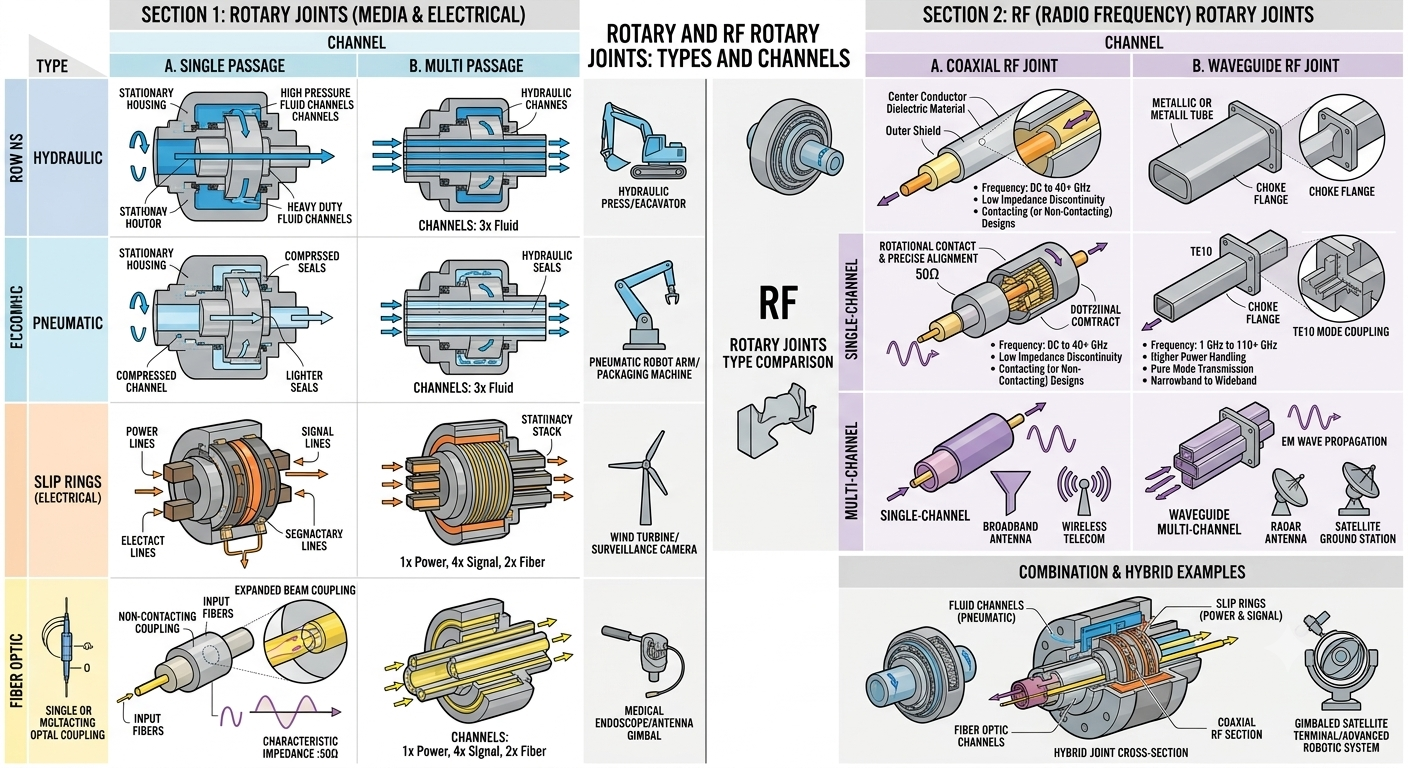
Aerospace and Defense Remain Major Growth Engines
Aerospace and defense represent some of the most important application areas in the Rotary and RF Rotary Joints Market. Modern defense systems increasingly depend on advanced radar, electronic warfare, communications, surveillance, and targeting equipment.
Radar systems often require antennas to rotate while maintaining uninterrupted RF signal transmission. Rotary joints provide the interface required to transfer RF energy between stationary equipment and rotating antenna structures.
Increasing defense expenditure and modernization programs are supporting demand for advanced radar and communication systems. As countries invest in next-generation defense platforms, the need for high-performance rotary and RF rotary joint technologies is expected to increase.
Radar Modernization Creates New Opportunities
Radar is a particularly important application for RF rotary joints. Ground-based, naval, airborne, and other radar platforms use rotating antennas to scan large areas and detect objects.
The development of advanced radar technologies is increasing performance requirements for rotary joints. Systems operating at higher frequencies may require specialized designs capable of maintaining signal integrity under demanding environmental and mechanical conditions.
The transition toward electronically sophisticated radar platforms is therefore creating opportunities for manufacturers to develop RF rotary joints with improved frequency handling, low signal loss, enhanced durability, and compact form factors.
Satellite Communication Drives Demand
Satellite communication is another important area contributing to the Rotary and RF Rotary Joints Market Analysis. Ground stations and satellite-related systems can require high-performance components capable of maintaining reliable signal transmission.
The expansion of satellite communications, broadband connectivity, Earth observation, and space-based systems is increasing demand for components designed to operate reliably in demanding environments.
Rotary joints used in satellite communication applications must often meet stringent requirements related to reliability, signal integrity, environmental resistance, and long operational life.
The continuing development of satellite constellations and advanced communication infrastructure could therefore provide additional opportunities for rotary joint manufacturers.
Electronic Warfare Applications Expand the Addressable Market
Electronic warfare systems increasingly rely on sophisticated RF and microwave technologies. These systems can involve antennas, sensors, and other components that require rotational movement while maintaining RF connectivity.
RF rotary joints can enable signal transmission in such applications, supporting communication between rotating and stationary subsystems.
As defense organizations invest in electronic warfare capabilities, surveillance technologies, and advanced RF systems, the addressable market for high-performance rotary joints is expected to expand.
Technological Innovation Supports Market Development
Innovation is at the center of the Rotary and RF Rotary Joints Market Analysis. Manufacturers are working to improve electrical performance while reducing size, weight, and mechanical complexity.
Key areas of innovation include:
- Higher-frequency operation
- Lower insertion loss
- Improved return loss
- Compact and lightweight designs
- Advanced materials
- Enhanced durability
- Better environmental sealing
- Improved rotational performance
- Longer operational life
- Integration of multiple signal channels
These improvements enable rotary joints to meet the requirements of increasingly sophisticated aerospace, defense, telecommunications, and industrial systems.
Miniaturization Becomes an Important Trend
Miniaturization is becoming increasingly important as equipment manufacturers seek to reduce system size and weight.
Smaller rotary joints can help designers develop more compact radar systems, communication equipment, and other platforms. This is especially important in aerospace and defense applications where size and weight can directly influence platform performance.
Manufacturers are therefore investing in advanced engineering and materials to produce smaller rotary joints without compromising RF performance or mechanical reliability.
High-Frequency Technologies Create Growth Opportunities
The growing adoption of microwave and millimeter-wave technologies is creating new opportunities for the market. Higher-frequency systems can provide greater bandwidth and support advanced communication and sensing applications.
However, high-frequency operation also increases the technical challenges associated with signal transmission. Rotary joints must be engineered to minimize signal losses and maintain consistent performance during rotation.
The development of advanced RF designs capable of operating across wider frequency ranges could become a significant competitive differentiator.
Industrial Applications Support Diversification
Although aerospace and defense remain key markets, rotary joint technologies are also used in industrial applications.
Manufacturing equipment, automated machinery, robotics, material-handling systems, medical equipment, and other rotating systems can require reliable transmission of electrical power, data, or RF signals.
Industrial automation is creating demand for components capable of operating continuously in challenging environments. This diversification provides manufacturers with opportunities to expand beyond traditional defense and communications applications.
Medical Equipment Offers Specialized Opportunities
Medical imaging and diagnostic equipment represent another application area. Certain medical systems require components capable of transferring signals or power between stationary and rotating structures.
Reliability is particularly important in medical applications because equipment must operate consistently and accurately.
As healthcare providers adopt advanced imaging technologies and diagnostic systems, specialized rotary components may benefit from continued technological development.
Harsh-Environment Performance Becomes Critical
Rotary joints used in aerospace, defense, maritime, and industrial environments must withstand demanding operating conditions.
Temperature fluctuations, vibration, moisture, dust, pressure, and mechanical stress can affect performance. As a result, manufacturers are developing advanced sealing systems, durable materials, and robust mechanical structures.
Improving resistance to environmental stresses can increase operational life and reduce maintenance requirements, making reliability a key purchasing consideration.
Integration of Multiple Functions
Another emerging direction in the Rotary and RF Rotary Joints Market is the integration of multiple transmission capabilities into a single component.
Modern systems may require the simultaneous transfer of RF signals, electrical power, optical signals, and data. Hybrid rotary joints can help reduce component count and system complexity.
Integrated solutions can also save space and simplify equipment design, particularly in applications with strict size and weight requirements.
Increasing Defense Modernization Creates Opportunities
Defense modernization programs worldwide are creating favorable conditions for the rotary joint industry. Governments are investing in advanced surveillance, radar, communications, missile-defense, electronic warfare, and other systems.
These platforms require reliable RF components capable of operating under demanding conditions.
The modernization of legacy systems can also create replacement and upgrade opportunities for rotary joint suppliers. Manufacturers that can provide higher-performance alternatives while maintaining compatibility with existing platforms may benefit from these programs.
Challenges Facing the Market
Despite positive growth prospects, the Rotary and RF Rotary Joints Market Analysis also identifies several challenges.
High-performance rotary joints can require sophisticated engineering, precision manufacturing, specialized materials, and extensive testing. These factors can increase production costs.
Reliability requirements are another challenge. Components used in aerospace and defense systems often need to operate for extended periods with minimal maintenance. Manufacturers must therefore invest heavily in testing and quality assurance.
Additionally, the increasing complexity of RF systems can make component design more challenging as customers demand wider bandwidth, higher frequencies, smaller dimensions, and improved performance.
Key Trends Shaping the Rotary and RF Rotary Joints Market
Several trends are expected to influence the market in the coming years:
- Increasing adoption of advanced radar systems
- Growing demand for satellite communication
- Expansion of aerospace and defense modernization programs
- Rising use of high-frequency and microwave technologies
- Increasing miniaturization of RF components
- Development of lightweight rotary joint designs
- Growing demand for low-loss signal transmission
- Integration of RF, electrical, and optical capabilities
- Increasing focus on harsh-environment reliability
- Expansion of industrial automation
- Rising demand for electronic warfare systems
- Continued innovation in materials and manufacturing processes
Competitive Landscape
The competitive environment includes manufacturers specializing in RF components, microwave technologies, rotary interfaces, and advanced communication systems. Companies compete on factors such as product performance, frequency range, reliability, customization capabilities, size, weight, and lifecycle cost.
Manufacturers are increasingly focusing on research and development to create next-generation rotary joints for advanced radar, satellite communications, electronic warfare, and industrial applications.
Customization is also becoming important because customers often require rotary joints designed for specific operating frequencies, mechanical configurations, environmental conditions, and system architectures.
Future Outlook
The Rotary and RF Rotary Joints Market Analysis points toward continued opportunities as aerospace, defense, telecommunications, and industrial sectors increasingly depend on sophisticated rotating systems.
The expansion of radar networks, satellite communication infrastructure, electronic warfare platforms, and automated industrial equipment will continue to create demand for reliable signal and power transmission technologies.
At the same time, technological advances in materials, RF engineering, miniaturization, sealing, and hybrid connectivity are expected to improve the capabilities of rotary joints.
The market is also likely to benefit from the growing integration of multiple transmission technologies. Hybrid rotary joints capable of simultaneously handling RF, optical, electrical, and data signals could become increasingly attractive as system architectures become more compact and complex.
Ultimately, the Rotary and RF Rotary Joints Market Analysis demonstrates that emerging technologies are creating opportunities across both established and emerging applications. Aerospace and defense will remain important growth areas, while satellite communications, industrial automation, medical equipment, and advanced RF systems will provide additional avenues for expansion.
As customers increasingly demand smaller, lighter, more reliable, and higher-performance components, manufacturers that invest in advanced designs and application-specific solutions will be well positioned to capture future opportunities in the global Rotary and RF Rotary Joints Market.
