The Smart Home Market is experiencing substantial growth as consumers increasingly adopt connected devices, intelligent automation systems, and advanced home management technologies. The growing integration of Artificial Intelligence (AI), the Internet of Things (IoT), wireless connectivity, and cloud computing is transforming traditional residential environments into intelligent, connected ecosystems.
Smart home technologies enable homeowners to remotely monitor and control lighting, security systems, heating, ventilation, air conditioning (HVAC), entertainment devices, kitchen appliances, and other household equipment. These solutions improve convenience, enhance residential security, optimize energy consumption, and support more personalized living experiences.
According to MarketsandMarkets, the global Smart Home Market is projected to grow from USD 230.76 billion in 2026 to USD 450.20 billion by 2032, registering a compound annual growth rate (CAGR) of 11.8% during the forecast period. Increasing internet penetration, rising adoption of connected devices, growing disposable incomes, and demand for energy-efficient residential solutions are supporting this expansion.
Major Factors Driving Smart Home Market Growth
1. Increasing Internet Penetration and Connected Devices
The growing availability of high-speed internet and wireless communication technologies is supporting the adoption of smart home solutions. Connected devices such as smart speakers, lighting systems, thermostats, security cameras, and appliances allow homeowners to manage household activities through centralized applications.
The expansion of IoT ecosystems is also improving communication between different household devices. This connectivity enables automated operations, remote access, and real-time monitoring, encouraging consumers to invest in intelligent residential technologies.
2. Artificial Intelligence Transforming Home Automation
Artificial Intelligence is changing how smart home devices operate. AI-powered systems can analyze user preferences, learn household routines, and automate everyday activities.
Intelligent assistants can manage lighting, temperature, entertainment, and security through voice commands. AI-based security systems can also analyze camera feeds, identify unusual activities, and generate alerts.
The integration of AI with IoT devices is expected to improve personalization, operational efficiency, and the overall smart home experience.
Download PDF Brochure @ https://www.marketsandmarkets.com/pdfdownloadNew.asp?id=121
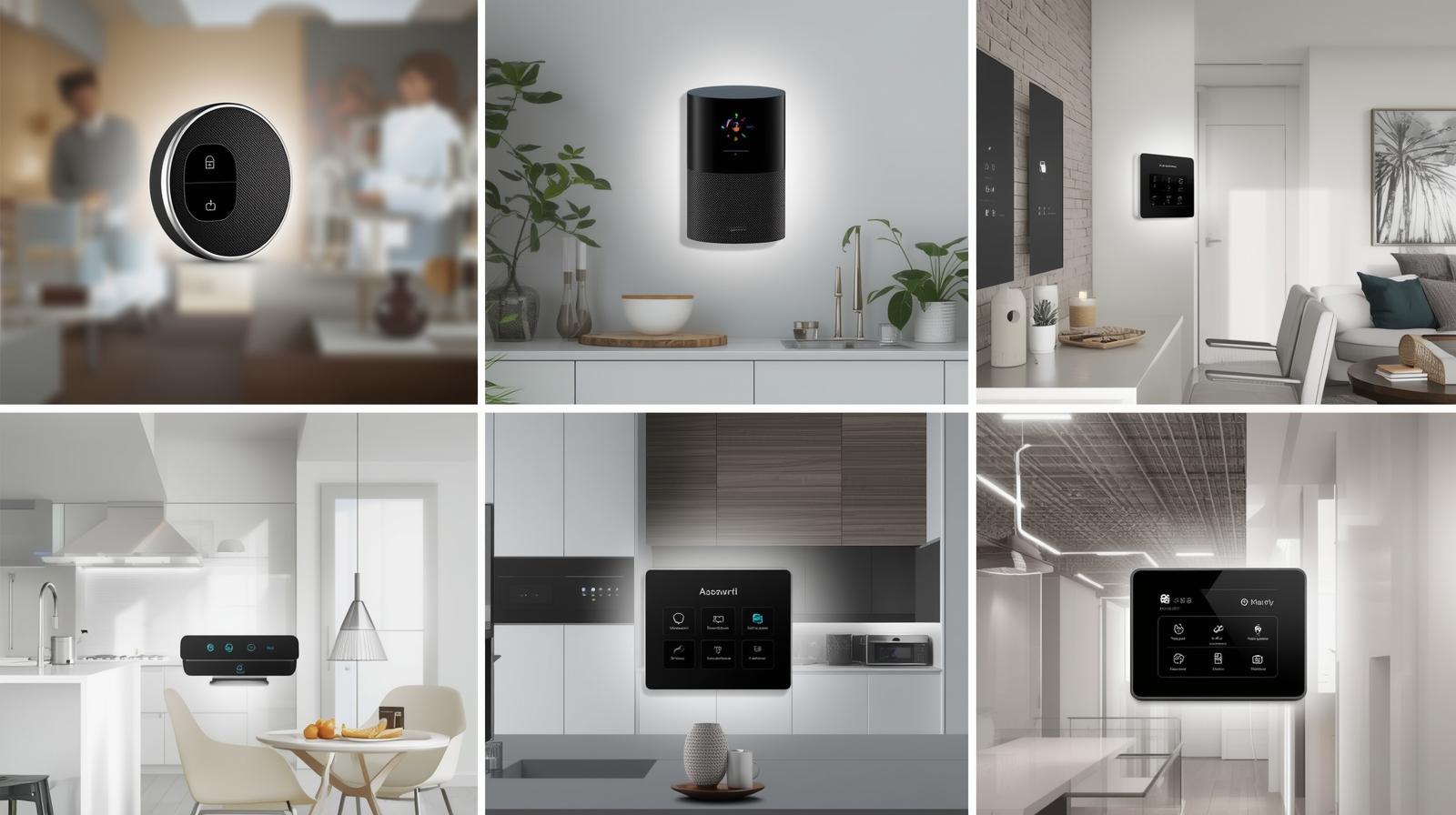
3. Growing Demand for Home Security Solutions
Residential safety and security are important factors supporting smart home adoption. Consumers are increasingly investing in connected security cameras, smart locks, motion sensors, video doorbells, and intelligent access control systems.
These technologies provide remote monitoring and real-time notifications, allowing homeowners to monitor their properties from smartphones and other connected devices.
The growing demand for convenient and reliable residential security is creating opportunities for manufacturers offering integrated home protection solutions.
4. Rising Focus on Energy Efficiency
Energy efficiency is becoming an important consideration for homeowners as electricity costs and environmental concerns increase. Smart thermostats, automated lighting, energy monitoring devices, and intelligent HVAC systems help optimize household energy consumption.
These solutions can automatically adjust temperature settings, control lighting based on occupancy, and monitor electricity usage.
The growing focus on sustainable living and low-carbon residential infrastructure is expected to support investments in energy-efficient smart home technologies.
5. Increasing Disposable Income and Urbanization
Rising disposable income and expanding middle-class populations in emerging economies are supporting demand for advanced residential technologies.
Urbanization and the development of modern residential infrastructure are also creating opportunities for smart lighting, connected appliances, home entertainment, and intelligent security systems.
Residential developers are increasingly incorporating smart technologies into new housing projects to improve property value, convenience, and energy performance.
Emerging Technologies Transforming the Smart Home Industry
AI-Powered Smart Home Ecosystems
AI is enabling smart homes to move beyond basic remote control toward predictive and personalized automation. Intelligent systems can coordinate multiple household devices and adjust operations according to user behavior and environmental conditions.
Wireless Connectivity and IoT Integration
Wireless communication technologies simplify the installation and integration of connected devices. The wireless segment held approximately 64% of the smart home market in 2025, highlighting the importance of flexible connectivity in modern residential environments.
Cloud-Based Home Management
Cloud platforms enable homeowners to remotely access connected devices, manage automation settings, and monitor residential systems. These platforms also support integration across multiple devices and applications.
Voice-Controlled Smart Home Solutions
Voice assistants are improving the accessibility of smart home technologies. Users can control lighting, appliances, entertainment systems, and other connected devices through voice commands, making home automation more convenient.
Smart HVAC and Intelligent Climate Control
Smart HVAC systems are gaining importance as consumers increasingly focus on indoor comfort and energy efficiency. These systems use connected thermostats, sensors, and automated controls to optimize heating and cooling operations.
Smart Home Market Segmentation and Growth Opportunities
By Product
The Smart Home Market covers several product categories, including:
- Smart Lighting Solutions
- Smart Security and Access Control Systems
- Smart HVAC Systems
- Smart Entertainment Systems
- Smart Healthcare Solutions
- Smart Kitchen Appliances
- Smart Home Gadgets
- Smart Furniture
Smart HVAC, security systems, and connected lighting are creating significant opportunities as homeowners increasingly prioritize energy management, safety, and convenience.
By Residence Type
The market includes single-family homes, multi-family buildings, and villas or luxury homes.
Single-family homes provide opportunities for integrated automation, security, and energy management solutions. Multi-family residential buildings are increasingly incorporating centralized smart infrastructure to improve building operations.
Luxury homes are also adopting advanced entertainment, climate control, lighting, and security technologies.
By Protocol and Communication Technology
The market is segmented into wired and wireless communication technologies.
Wireless solutions are widely adopted because they simplify installation and provide flexibility when connecting multiple household devices. Wired technologies continue to serve applications requiring stable and dedicated connectivity.
By Application
Major smart home applications include:
- Safety and Security
- Comfort and Convenience
- Energy Management
- Entertainment
- Health and Wellness
- Other Applications
Safety, security, and energy management are becoming important adoption areas as consumers seek intelligent solutions that improve everyday residential experiences.
By Installation Type
The market includes new installations and retrofit installations.
New installations involve integrating smart technologies during residential construction. Retrofit installations enable homeowners to upgrade existing properties with connected devices, intelligent controls, and automated systems without requiring complete infrastructure replacement.
Retrofit solutions are creating opportunities among homeowners seeking to modernize existing residential environments.
Regional Outlook: Asia Pacific Emerging as a High-Growth Market
Asia Pacific is projected to register the highest CAGR of approximately 17% in the Smart Home Market during the forecast period.
The region’s growth is supported by increasing urbanization, expanding middle-class populations, rising disposable incomes, government initiatives promoting smart cities, and growing adoption of connected devices.
China, India, Japan, and South Korea are important markets for smart home technologies. Increasing investments in digital infrastructure, residential construction, and IoT-enabled solutions are supporting regional development.
North America remains an important market due to strong adoption of connected devices, established technology providers, and growing investments in residential automation and security solutions.
Competitive Landscape and Key Market Players
The Smart Home Market is characterized by continuous technological innovation, product development, strategic partnerships, and increasing competition among established technology providers.
Major companies operating in the market include:
- Schneider Electric (France)
- Siemens (Germany)
- Amazon.com, Inc. (US)
- Honeywell International Inc. (US)
- ASSA ABLOY (Sweden)
- Johnson Controls (Ireland)
- Robert Bosch (Germany)
- ADT (US)
- Daikin Industries, Ltd. (Japan)
- ABB (Switzerland)
These companies are focusing on AI-powered automation, connected security, intelligent HVAC, energy management, and integrated smart home platforms. Product innovation and partnerships across the residential technology ecosystem are helping companies expand their market presence.
Future Outlook: The Rise of Intelligent and Connected Homes
The future of the Smart Home Market will be shaped by advancements in AI, IoT, wireless connectivity, cloud computing, and intelligent automation. Smart homes are gradually evolving from collections of standalone devices into integrated ecosystems capable of managing multiple residential functions.
AI-powered assistants, predictive energy management, connected healthcare solutions, intelligent security systems, and automated HVAC technologies will play an important role in future residential environments.
The growing adoption of retrofit installations will also expand market opportunities by allowing homeowners to modernize existing properties. Meanwhile, residential developers and technology providers are expected to increase investments in integrated smart home infrastructure.
With the global Smart Home Market projected to reach USD 450.20 billion by 2032 at a CAGR of 11.8%, intelligent home technologies are becoming an important part of the global digital transformation landscape.
Companies that prioritize affordability, interoperability, cybersecurity, energy efficiency, and AI-driven innovation will be well positioned to benefit from the growing demand for connected living solutions.
About MarketsandMarkets™
MarketsandMarkets™ has been recognized as one of America’s Best Management Consulting Firms by Forbes, as per their recent report.
MarketsandMarkets™ is a blue ocean alternative in growth consulting and program management, leveraging a man-machine offering to drive supernormal growth for progressive organizations in the B2B space. With the widest lens on emerging technologies, we are proficient in co-creating supernormal growth for clients across the globe.
Today, 80% of Fortune 2000 companies rely on MarketsandMarkets, and 90 of the top 100 companies in each sector trust us to accelerate their revenue growth. With a global clientele of over 13,000 organizations, we help businesses thrive in a disruptive ecosystem.
The B2B economy is witnessing the emergence of $25 trillion in new revenue streams that are replacing existing ones within this decade. We work with clients on growth programs, helping them monetize this $25 trillion opportunity through our service lines – TAM Expansion, Go-to-Market (GTM) Strategy to Execution, Market Share Gain, Account Enablement, and Thought Leadership Marketing.
Built on the ‘GIVE Growth’ principle, we collaborate with several Forbes Global 2000 B2B companies to keep them future-ready. Our insights and strategies are powered by industry experts, cutting-edge AI, and our Market Intelligence Cloud, KnowledgeStore™, which integrates research and provides ecosystem-wide visibility into revenue shifts.
To find out more, visit www.MarketsandMarkets™.com or follow us on Twitter , LinkedIn and Facebook .
Contact:
Mr. Rohan Salgarkar
MarketsandMarkets™ INC.
1615 South Congress Ave.
Suite 103, Delray Beach, FL 33445
USA: +1-888-600-6441