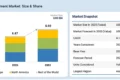
The global telemedicine Market is projected to reach USD 275.44 billion by 2031, up from USD 109.05 billion in 2026, registering a CAGR of 20.4% during the forecast period. Market growth is being driven by the digitalization of healthcare systems, increasing smartphone and internet penetration, rising chronic disease prevalence, growing adoption of connected medical devices, and the expansion of remote patient monitoring and digitally enabled care.

Download PDF Brochure:- https://www.marketsandmarkets.com/pdfdownloadNew.asp?id=1232
Digitalization of Healthcare Systems Accelerates telemedicine Adoption
Healthcare digitalization is creating a favorable environment for the adoption of telemedicine applications, connected devices, and remote care technologies. Europe provides a strong example of this trend, with continued improvements in digital health infrastructure and electronic health record accessibility.
The increasing connectivity of healthcare providers and the expansion of patient access to digital health records are creating additional opportunities for mobile health platforms and connected medical devices. At the same time, hospital-at-home programs and remote care models are expanding the role of telemedicine technologies beyond wellness and self-monitoring toward routine clinical care.
Large-scale connected care deployments demonstrate the increasing integration of mobile health technologies into healthcare delivery. This trend is expected to support demand for remote monitoring, connected devices, digital therapeutics, medication management, and patient engagement platforms.
Chronic Care Management Apps Held a Significant Share in 2025
By offering, the telemedicine apps segment includes chronic care management, mental health, women’s health, medication management, fitness, and clinical decision support (CDS) applications, while devices include solutions for areas such as sleep and drug delivery.
Chronic care management apps held a significant share of the telemedicine apps market in 2025.
The segment is benefiting from the increasing need for continuous management of conditions such as diabetes, cardiovascular diseases, hypertension, obesity, and respiratory disorders.
telemedicine applications support chronic disease management by enabling users to track health parameters, receive medication reminders, monitor symptoms, share health information with providers, and receive personalized guidance. These capabilities can reduce dependence on frequent in-person visits while supporting continuous patient engagement.
Connected cardiac monitoring is another example of how mobile platforms are becoming integrated with medical devices. Solutions such as Medtronic’s MyCareLink Heart enable compatible cardiac implant information to be transmitted through a smartphone-based platform for remote patient management.
Patients and Consumers Represented the Largest End-User Segment
By end user, the market is segmented into providers and patients/consumers.
Patients/consumers held the largest share of the telemedicine market in 2025.
Increasing smartphone penetration, greater awareness of preventive healthcare, and the availability of connected health devices are encouraging consumers to take a more active role in monitoring and managing their health.
Consumers increasingly use telemedicine technologies to monitor blood glucose, blood pressure, heart rate, physical activity, sleep, medication adherence, and other health metrics.
Continuous glucose monitoring is an important example of this consumer-driven adoption. Dexcom’s G7 CGM system enables users to view continuous glucose data through compatible mobile devices, supporting day-to-day diabetes management.
Similarly, connected blood-pressure monitoring solutions such as OMRON connect allow users to transfer readings from compatible monitors to a smartphone application, visualize trends, and share information with healthcare professionals.
The growing integration of smartphones, wearables, connected medical devices, and health applications is therefore strengthening patient engagement and expanding the addressable market for telemedicine.
Asia Pacific Expected to Register Considerable Growth Through 2031
Asia Pacific is expected to witness a considerable growth rate from 2026 to 2031.
The region’s growth is supported by rapid healthcare digitalization, increasing smartphone and internet penetration, rising chronic disease prevalence, and growing adoption of telehealth, wearables, telemedicine applications, and remote patient monitoring.
India represents an important growth market, supported by the Ayushman Bharat Digital Mission (ABDM) and the development of digital health infrastructure, including digital health IDs, electronic health records, healthcare-facility connectivity, and mobile-enabled healthcare services.
The expansion of India’s national telemedicine infrastructure is also increasing access to remote consultations, creating opportunities for mobile health platforms and connected care solutions.
In China, smartphone adoption, internet hospitals, online consultations, and digital health platforms are supporting digitally enabled healthcare delivery. Meanwhile, Japan and South Korea benefit from advanced digital infrastructure and increasing demand for chronic disease management and remote monitoring.
These developments are creating a strong regional ecosystem for telemedicine apps, connected medical devices, wearables, digital care platforms, and remote healthcare services.
Connected Devices and Remote Monitoring Expand the telemedicine Ecosystem
The evolution of telemedicine is increasingly centered on connectivity between mobile applications, wearable devices, medical devices, healthcare providers, and patient-generated health data.
Connected devices can enable continuous or periodic collection of health information outside conventional healthcare settings. Integration with mobile applications allows patients to access health information, monitor trends, and communicate relevant data to healthcare professionals.
This convergence is expanding telemedicine applications across chronic disease management, preventive care, medication adherence, women’s health, fitness, sleep monitoring, and clinical decision support.
For healthcare providers, connected telemedicine platforms can support remote monitoring and patient engagement while creating opportunities to incorporate patient-generated data into broader digital healthcare workflows.
Competitive Landscape
The global telemedicine market includes technology companies, medical device manufacturers, healthcare technology providers, and digital health companies competing across applications, connected devices, remote monitoring, and digital care platforms.
Key players include Oracle, Medtronic, OMRON Healthcare, Abbott, Dexcom, Inc., Welldoc, Boston Scientific Corporation, Siemens Healthineers, Optum, GE HealthCare, and ResMed, among others.
Companies are pursuing strategies including product launches, product updates, geographic expansion, partnerships, collaborations, mergers, and acquisitions to strengthen their market positions.
Competitive differentiation is increasingly focused on connected ecosystems, data integration, clinical applications, patient engagement, device interoperability, and solutions that support continuous care outside traditional healthcare facilities.