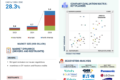
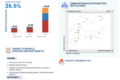
The United Kingdom point of care diagnostics market is a rapidly evolving sector characterized by a strategic shift toward decentralized healthcare and the integration of advanced digital technologies. Driven by an aging population and a high prevalence of chronic conditions such as diabetes and heart failure, the landscape is seeing increased adoption of rapid testing solutions in community settings, primary care, and home environments. The market is supported by National Health Service initiatives, including the Community Diagnostic Centre programme, which aim to improve patient outcomes through earlier disease detection and reduced hospital pressure. Technological innovations, including artificial intelligence, molecular diagnostics, and lab-on-a-chip systems, are enhancing the accuracy and speed of tests for infectious diseases and metabolic monitoring. While the industry faces challenges such as stringent regulatory requirements and specialized labor shortages, the focus on personalized medicine and the digital integration of diagnostic data into the broader healthcare ecosystem position the market for sustained long-term growth.
Key Drivers, Restraints, Opportunities, and Challenges in the United Kingdom Point of Care Diagnostics Market
The United Kingdom point of care diagnostics market is primarily driven by a growing geriatric population and the rising prevalence of chronic conditions like diabetes and cardiovascular diseases, which necessitate rapid, accessible monitoring and decentralized healthcare models. Market growth is further propelled by National Health Service (NHS) initiatives focused on training practitioners and funding decentralized diagnostics to reduce the burden on hospitals, as well as increasing investments in digital healthcare and AI-driven platforms. However, the industry faces significant restraints, including high initial capital costs for advanced diagnostic devices and stringent regulatory hurdles concerning test accuracy and reliability compared to centralized laboratory methods. Despite these hurdles, substantial opportunities exist in the expansion of home-based testing, the privatization and outsourcing of pathology services, and the development of innovative tools for oncology and infectious disease detection. Key challenges include the lack of alignment with definitive central lab standards and the critical need for robust reimbursement frameworks to ensure the long-term commercial viability of new point-of-care technologies.
Customer Segmentation, Needs, Preferences, and Buying Behavior in the United Kingdom Point of Care Diagnostics Market
The target customers for the United Kingdom point-of-care diagnostics market primarily include the National Health Service (NHS), private hospitals, physician offices, the UK Armed Forces, and an increasing segment of home-care users. Institutional customers like the NHS and military prioritize rapid, reliable, and portable solutions that function in austere or high-throughput environments to reduce the burden on centralized laboratories and improve timely clinical decision-making. Their purchasing behavior is increasingly influenced by government initiatives, such as the Community Diagnostic Centre programme, and a strategic shift toward digital healthcare and AI-based innovations. Meanwhile, individual consumers and elderly patients show a growing preference for home-based diagnostics and self-testing kits for chronic conditions like diabetes and infectious diseases, valuing convenience, privacy, and the ability to manage health outside traditional clinical settings. Across all segments, customers seek cost-effective, high-specificity devices that require minimal user expertise and provide real-time results.
Regulatory, Technological, and Economic Factors Impacting the United Kingdom Point of Care Diagnostics Market
The United Kingdom point of care diagnostics market is influenced by a complex interplay of regulatory, technological, and economic factors. Regulatory complexity remains a significant hurdle, as the transition from pandemic-era emergency flexibilities to normative standards and lengthy MHRA approval processes increase development costs and extend time-to-market for new entrants. Technologically, the integration of artificial intelligence and machine learning is driving market expansion by enhancing diagnostic accuracy and streamlining clinical decision-making, while advancements in molecular diagnostics and nanotechnology offer new opportunities in oncology and infectious disease testing. Economically, the market is sustained by the rising diagnostic needs of an aging population and the NHS’s annual HealthTech spend of over 10 billion pounds, yet profitability is challenged by a procurement focus on cost optimization and the high capital investment required for advanced molecular systems and recurring consumables.
Current and Emerging Trends in the United Kingdom Point of Care Diagnostics Market
The United Kingdom point of care diagnostics market is undergoing a rapid transformation driven by the decentralization of healthcare and the integration of advanced technologies like artificial intelligence and molecular diagnostics. Current trends include a significant shift toward home-based testing and self-monitoring, particularly for chronic conditions like diabetes and infectious diseases, supported by the expansion of telemedicine and NHS initiatives to reduce hospital burdens. Emerging trends are evolving quickly, as seen in the development of non-invasive diagnostics using saliva and breath, the adoption of CRISPR-based testing, and the integration of IoT for real-time remote patient monitoring. This evolution is accelerating with high growth projections, such as the point-of-care molecular diagnostics segment expected to grow at a CAGR of 8.8% through 2033, as the industry moves toward providing faster, more precise, and digitally connected diagnostic solutions.
Technological Innovations and Disruption Potential in the United Kingdom Point of Care Diagnostics Market
Technological innovations such as microfluidics, lab-on-a-chip, and advanced biosensors are gaining significant traction and are poised to disrupt the United Kingdom point of care diagnostics market by enabling laboratory-grade accuracy in compact, portable formats. The integration of artificial intelligence and machine learning is further transforming the industry by streamlining workflows, enhancing diagnostic precision through automated image analysis, and providing predictive healthcare insights. Additionally, the development of wearable technologies and digital connectivity via mobile apps and cloud-based platforms is decentralizing care, allowing for real-time monitoring and immediate clinical decision-making in community settings and at individual homes.
Short-Term vs. Long-Term Trends in the United Kingdom Point of Care Diagnostics Market
In the United Kingdom point of care diagnostics market, the massive surge in COVID-19 testing volumes is increasingly viewed as a short-term phenomenon that has stabilized, whereas several other trends represent long-term structural shifts. The move toward decentralization, characterized by the rising adoption of home-based testing and community diagnostic centers, is a permanent transformation driven by the National Health Service’s efforts to reduce hospital burdens and improve patient access. Similarly, the integration of artificial intelligence and connectivity into diagnostic devices is a fundamental shift aimed at enhancing accuracy and enabling real-time data integration for remote patient monitoring. Other enduring structural changes include the expansion of molecular diagnostics for oncology and infectious diseases, which are fueled by the long-term demographic realities of an aging population and the increasing prevalence of chronic conditions requiring early, rapid detection.