The global robotics industry is entering a transformative era as artificial intelligence, advanced sensors, and automation technologies accelerate the adoption of human-like machines. Humanoid Robot Market Growth Trends 2032 highlight a significant shift toward intelligent robots capable of performing complex tasks, collaborating with humans, and operating across diverse environments.
Humanoid robots are evolving from experimental prototypes into commercially viable solutions for manufacturing, healthcare, logistics, retail, education, and personal assistance. Increasing investments in artificial intelligence, machine learning, robotics hardware, and autonomous systems are creating strong momentum for market expansion.
As industries face labor shortages, rising operational costs, and growing demand for automation, Humanoid Robot Market Growth Trends 2032 are being shaped by the need for flexible, intelligent, and adaptive robotic solutions that can work alongside humans.
Understanding Humanoid Robots
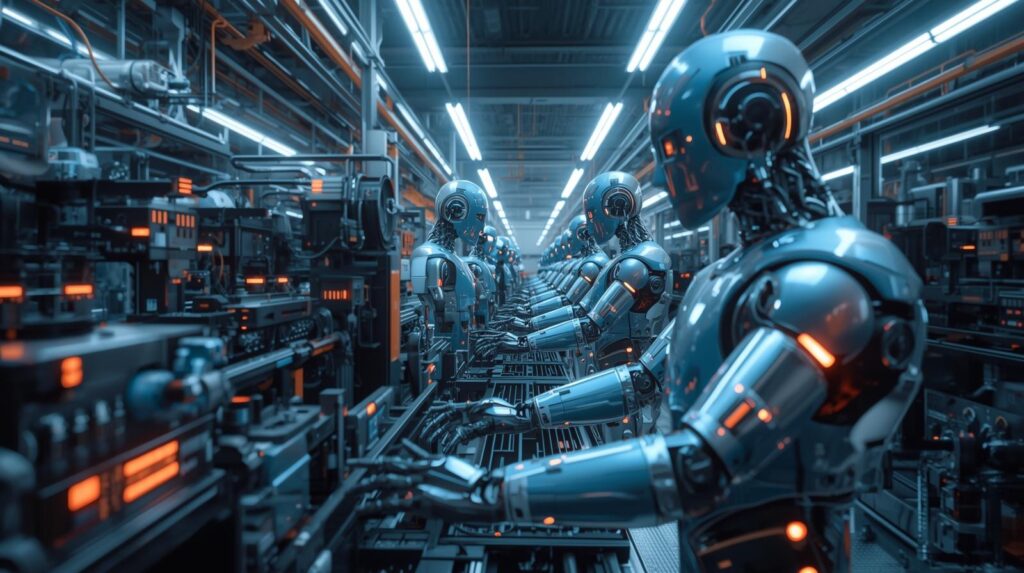
Humanoid robots are advanced robotic systems designed with human-like physical structures, including a head, torso, arms, and legs, enabling them to interact naturally with people and environments. These robots combine mechanical components, artificial intelligence, computer vision, sensors, and motion control technologies to perform tasks that traditionally require human involvement.
Unlike traditional industrial robots designed for repetitive operations, humanoid robots are built for versatility, mobility, and adaptability. Their ability to navigate dynamic environments makes them suitable for applications beyond conventional automation.
Key Humanoid Robot Market Growth Trends 2032
Rapid Advancement in Artificial Intelligence
One of the most significant Humanoid Robot Market Growth Trends 2032 is the integration of advanced AI capabilities. Improvements in large language models, machine learning, and computer vision are enabling humanoid robots to understand commands, recognize objects, learn from experiences, and make autonomous decisions.
AI-powered humanoid robots are becoming more capable of performing complex interactions, improving productivity, and adapting to changing environments.
Increasing Adoption in Manufacturing and Industrial Automation
Manufacturing remains one of the leading sectors driving humanoid robot adoption. Companies are exploring humanoid robots to address workforce challenges, automate repetitive tasks, and improve operational efficiency.
Modern factories require flexible automation solutions capable of handling varied tasks, and humanoid robots provide a human-like form factor that can operate in existing workspaces without major infrastructure modifications.
Download PDF Brochure @ https://www.marketsandmarkets.com/pdfdownloadNew.asp?id=99567653
Growing Use in Healthcare and Elderly Assistance
Healthcare represents a major opportunity area within Humanoid Robot Market Growth Trends 2032. Aging populations and healthcare worker shortages are increasing demand for robotic assistants capable of supporting patient care, rehabilitation, mobility assistance, and elderly companionship.
Humanoid robots can assist healthcare professionals by performing routine tasks, monitoring patients, and improving care delivery efficiency.
Expansion of Logistics and Warehouse Applications
The rapid growth of e-commerce and supply chain operations is driving demand for intelligent automation. Humanoid robots are being developed for material handling, inventory management, sorting, and warehouse assistance.
Their ability to navigate human-centered environments provides an advantage in warehouses where traditional automation systems may face limitations.
Improvements in Robotics Hardware
Hardware innovation is a critical factor influencing Humanoid Robot Market Growth Trends 2032. Advances in lightweight materials, high-performance actuators, compact motors, advanced sensors, and efficient battery technologies are improving robot mobility, balance, and durability.
Key components supporting humanoid robot development include:
- Linear and rotary actuators
- Motors
- Cameras and vision sensors
- Harmonic and planetary reducers
- Encoders
- Accelerometers
- Torque sensors
- Motion and joint controllers
These technologies enable humanoid robots to achieve more precise and natural movements.
Market Growth Drivers
Several factors are expected to accelerate Humanoid Robot Market Growth Trends 2032, including:
Rising Labor Shortages
Industries worldwide are experiencing workforce challenges, increasing interest in robotic systems that can perform physical tasks and support human workers.
Increasing AI Investments
Growing investments from technology companies, robotics startups, and research organizations are accelerating advancements in intelligent robotic platforms.
Demand for Flexible Automation
Unlike traditional automation systems designed for specific tasks, humanoid robots offer greater flexibility and can perform multiple functions across different industries.
Expansion of Smart Manufacturing
The adoption of Industry 4.0 technologies, connected factories, and intelligent automation is creating new opportunities for humanoid robots.
Growing Interest in Service Robotics
Hospitality, retail, education, and customer service sectors are exploring humanoid robots to enhance user experiences and improve operational efficiency.
Emerging Opportunities in the Humanoid Robot Market
The future of Humanoid Robot Market Growth Trends 2032 will be supported by several emerging opportunities:
Robotics-as-a-Service (RaaS)
Robotics-as-a-Service models can reduce adoption barriers by allowing businesses to access humanoid robots through subscription-based services instead of large upfront investments.
AI-Driven Personal Assistants
Humanoid robots have significant potential in homes and personal environments, assisting with household activities, education, security, and companionship.
Advanced Human-Robot Collaboration
Collaborative humanoid robots can work alongside employees, improving workplace safety and productivity without replacing human expertise.
Expansion into New Industries
Future applications may include agriculture, construction, defense, transportation, and disaster response, where human-like mobility provides operational advantages.
Challenges Impacting Market Development
Despite strong growth potential, several challenges may influence the pace of Humanoid Robot Market Growth Trends 2032:
- High development and manufacturing costs
- Complex AI training requirements
- Battery limitations and energy consumption
- Safety and regulatory concerns
- Challenges in achieving human-level dexterity
- Need for advanced computing infrastructure
- Limited commercial deployment experience
Addressing these challenges will be essential for widespread adoption.
Regional Outlook
North America is expected to remain a key market due to strong investments in artificial intelligence, robotics research, and technology innovation. Leading technology companies and startups are accelerating humanoid robot development across industrial and commercial applications.
Asia-Pacific is projected to experience significant growth due to expanding manufacturing capabilities, government robotics initiatives, and increasing automation adoption in countries such as China, Japan, and South Korea.
Europe is also expected to contribute substantially through investments in industrial automation, research programs, and human-centric robotics development.
Competitive Landscape and Innovation
The humanoid robotics ecosystem includes technology companies, robotics manufacturers, semiconductor providers, AI developers, and component suppliers. Companies are focusing on improving robot intelligence, mobility, affordability, and scalability.
Future competition will likely depend on advancements in:
- AI software platforms
- Robotic operating systems
- Sensor integration
- Autonomous navigation
- Motion control technologies
- Energy-efficient hardware
Future Outlook
The outlook for Humanoid Robot Market Growth Trends 2032 remains highly promising as robotics technology continues to mature. The convergence of AI, automation, advanced computing, and precision engineering is expected to transform humanoid robots into valuable tools across multiple industries.
By 2032, humanoid robots are expected to play a greater role in industrial operations, healthcare support, logistics, and service applications. As technology costs decline and capabilities improve, adoption will expand beyond research environments into everyday commercial applications.
Humanoid Robot Market Growth Trends 2032 demonstrate the increasing importance of intelligent automation in shaping the future of work and industry. Advancements in artificial intelligence, robotics hardware, and human-machine interaction are creating opportunities for more capable and versatile robotic systems.
While challenges remain, continued innovation and investment will accelerate the transition of humanoid robots from emerging technology to mainstream industrial and commercial solutions. The next decade will be critical in defining how humanoid robots integrate into businesses, communities, and everyday life.
Frequently Asked Questions (FAQs)
1. What are the key factors driving Humanoid Robot Market Growth Trends 2032?
The major factors driving Humanoid Robot Market Growth Trends 2032 include advancements in artificial intelligence, increasing demand for automation, labor shortages, growth of smart manufacturing, rising investments in robotics technologies, and expanding applications across healthcare, logistics, retail, and service industries.
2. Which industries are expected to adopt humanoid robots the most by 2032?
Industries such as manufacturing, healthcare, logistics, warehousing, retail, hospitality, education, and personal assistance are expected to be major adopters of humanoid robots. These industries are leveraging humanoid robots to improve efficiency, support workers, and automate complex tasks.
3. How is artificial intelligence influencing the humanoid robot market?
Artificial intelligence is enabling humanoid robots to understand commands, recognize objects, navigate environments, learn from interactions, and make autonomous decisions. AI-powered perception, machine learning, and natural language processing are key technologies accelerating Humanoid Robot Market Growth Trends 2032.
4. What are the major components used in humanoid robots?
Humanoid robots rely on advanced components such as linear and rotary actuators, motors, cameras and vision sensors, harmonic and planetary reducers, encoders, accelerometers, torque sensors, and motion and joint controllers. These components improve movement accuracy, balance, sensing capabilities, and overall performance.
5. What is the future outlook for the Humanoid Robot Market by 2032?
The humanoid robot market is expected to experience significant growth by 2032 as AI, robotics hardware, and automation technologies continue to advance. Future developments will focus on affordable production, improved dexterity, enhanced safety, and wider adoption across industrial and commercial applications.
About MarketsandMarkets™
MarketsandMarkets™ has been recognized as one of America’s Best Management Consulting Firms by Forbes, as per their recent report.
MarketsandMarkets™ is a blue ocean alternative in growth consulting and program management, leveraging a man-machine offering to drive supernormal growth for progressive organizations in the B2B space. With the widest lens on emerging technologies, we are proficient in co-creating supernormal growth for clients across the globe.
Today, 80% of Fortune 2000 companies rely on MarketsandMarkets, and 90 of the top 100 companies in each sector trust us to accelerate their revenue growth. With a global clientele of over 13,000 organizations, we help businesses thrive in a disruptive ecosystem.
The B2B economy is witnessing the emergence of $25 trillion in new revenue streams that are replacing existing ones within this decade. We work with clients on growth programs, helping them monetize this $25 trillion opportunity through our service lines – TAM Expansion, Go-to-Market (GTM) Strategy to Execution, Market Share Gain, Account Enablement, and Thought Leadership Marketing.
Built on the ‘GIVE Growth’ principle, we collaborate with several Forbes Global 2000 B2B companies to keep them future-ready. Our insights and strategies are powered by industry experts, cutting-edge AI, and our Market Intelligence Cloud, KnowledgeStore™, which integrates research and provides ecosystem-wide visibility into revenue shifts.
To find out more, visit www.MarketsandMarkets™.com or follow us on Twitter , LinkedIn and Facebook .
Contact:
Mr. Rohan Salgarkar
MarketsandMarkets™ INC.
1615 South Congress Ave.
Suite 103, Delray Beach, FL 33445
USA: +1-888-600-6441
