The global aerospace industry is undergoing significant transformation driven by increasing aircraft production, expanding commercial aviation fleets, rising defense investments, and growing demand for advanced aircraft maintenance technologies. As aircraft manufacturers and operators prioritize safety, reliability, and operational efficiency, non-destructive testing (NDT) is becoming an essential part of aerospace manufacturing and maintenance operations. These developments are intensifying competition in the Aerospace NDT Market and creating opportunities for established inspection service providers, equipment manufacturers, and emerging technology companies.
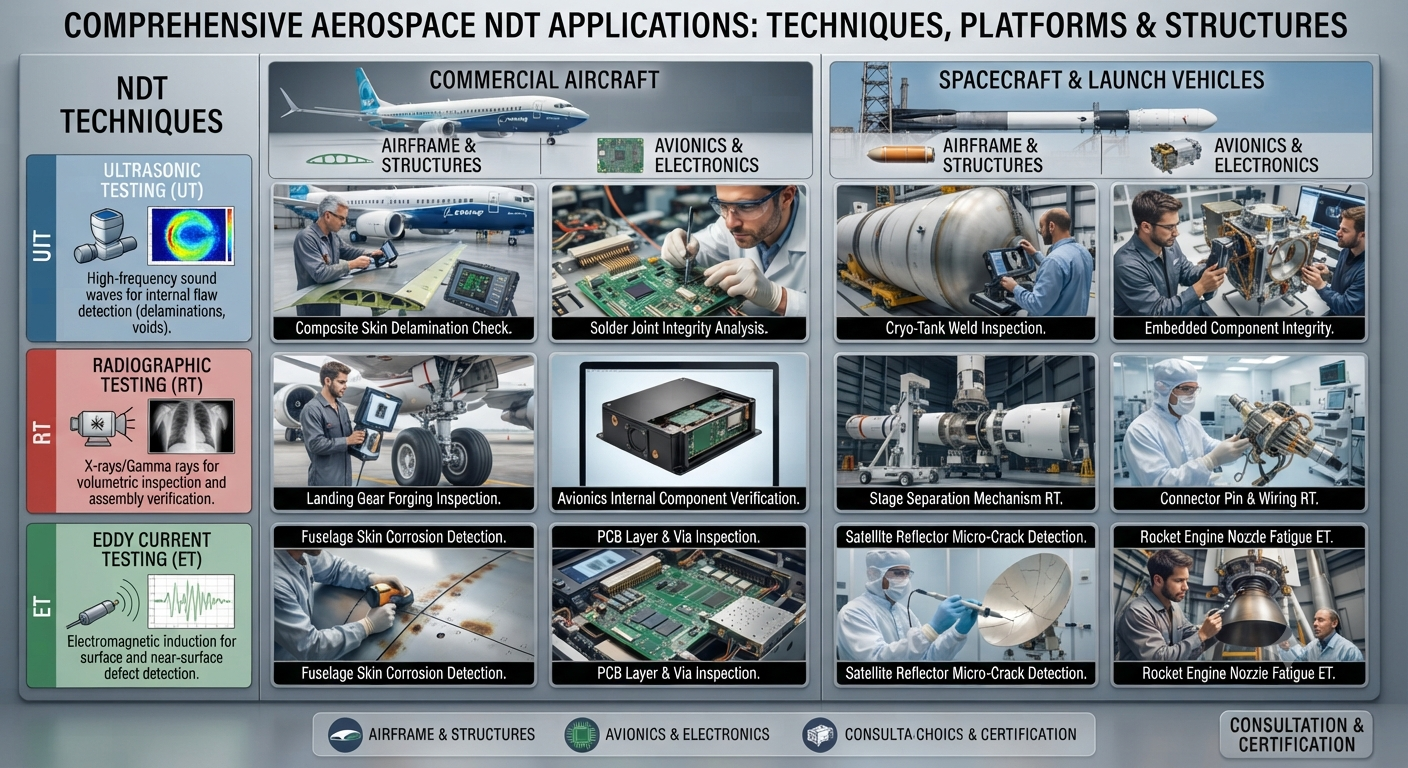
Aerospace non-destructive testing involves inspecting aircraft structures, engines, propulsion systems, avionics, and other critical components without damaging their functionality. NDT technologies help identify cracks, corrosion, material inconsistencies, structural defects, and manufacturing imperfections before they affect aircraft performance or safety.
The growing complexity of modern aircraft is increasing the importance of advanced inspection technologies. Aircraft manufacturers are using lightweight composite materials, advanced alloys, and additive manufacturing processes to improve fuel efficiency and structural performance. These materials require sophisticated inspection techniques capable of identifying internal defects and ensuring structural integrity.
According to MarketsandMarkets, the global Aerospace NDT Market was valued at USD 2.91 billion in 2025 and is projected to reach USD 5.69 billion by 2032, registering a compound annual growth rate (CAGR) of 9.9% during the forecast period. Increasing aircraft production, growing maintenance, repair, and overhaul (MRO) activities, and advancements in automated inspection technologies are supporting market expansion.
The competitive landscape is moderately consolidated, with the top five players collectively accounting for approximately 42–52% of the global market share, according to MarketsandMarkets’ competitive analysis. SGS SA, Wabtec Corporation, Baker Hughes Company, Intertek Group plc, and Bureau Veritas are among the leading participants.
As competition intensifies, companies are focusing on technological innovation, global service expansion, strategic partnerships, acquisitions, and digital inspection capabilities to strengthen their market positions.
Aerospace NDT Market Competitive Landscape: Understanding Industry Competition
The Aerospace NDT Market features a combination of multinational inspection and certification companies, specialized NDT equipment manufacturers, aerospace testing providers, and emerging technology developers.
Competition is influenced by several factors, including inspection accuracy, technology capabilities, regulatory compliance, service availability, equipment reliability, and customer relationships.
Unlike conventional industrial inspection markets, aerospace NDT requires specialized technical expertise and strict adherence to aviation quality and safety requirements. Inspection providers must demonstrate the ability to evaluate safety-critical components while maintaining reliable documentation and traceability.
The competitive environment can broadly be divided into three categories.
1. Global inspection, testing, and certification providers
Companies such as SGS SA, Bureau Veritas, Intertek Group, DEKRA, and Applus+ compete through extensive service networks, technical expertise, and integrated inspection and certification capabilities.
2. Advanced NDT equipment and technology providers
Companies such as Baker Hughes and Nikon Metrology focus on advanced inspection equipment, imaging technologies, ultrasonic testing, and digital inspection solutions.
3. Specialized aerospace inspection and engineering companies
Companies such as MISTRAS Group and Element Materials Technology provide specialized testing, material evaluation, laboratory services, and inspection capabilities for aerospace manufacturers and MRO providers.
This combination of equipment manufacturers and service providers creates a competitive ecosystem in which companies compete through technology differentiation, service quality, operational efficiency, and global customer coverage.
Top 5 Companies Shaping the Aerospace NDT Market
The competitive positioning of major industry participants is influenced by their technology portfolios, geographical presence, inspection expertise, and relationships with aerospace OEMs and MRO providers.
SGS SA – Leadership Through Global Inspection and Certification Capabilities
SGS SA holds a leading position in the Aerospace NDT Market through its extensive global inspection, testing, and certification capabilities. The company serves customers across aerospace manufacturing, component testing, maintenance, and quality assurance.
Its competitive strength comes from its established international service network, technical expertise, and ability to provide inspection and certification services across multiple industries.
In aerospace applications, SGS supports inspection requirements involving ultrasonic testing, radiographic testing, eddy current testing, and other non-destructive evaluation techniques.
Strategic positioning:
- Expanding advanced inspection and testing capabilities.
- Strengthening relationships with aerospace manufacturers and MRO providers.
- Leveraging global laboratory and service infrastructure.
- Integrating digital inspection and data-driven quality assurance.
- Supporting regulatory compliance and aircraft component reliability.
SGS benefits from its ability to provide integrated inspection services across different stages of the aerospace value chain.
. Wabtec Corporation – Advancing Inspection Technology
Wabtec Corporation is an important participant in the aerospace NDT competitive landscape through its inspection technology capabilities and specialized testing solutions.
The company’s competitive positioning is associated with advanced inspection equipment, ultrasonic testing technologies, and solutions designed to improve defect detection and inspection efficiency.
Aerospace manufacturers require precise testing systems to identify internal defects in critical components, particularly in applications involving complex materials and safety-critical structures.
Strategic positioning:
- Developing advanced ultrasonic inspection technologies.
- Improving inspection accuracy and defect characterization.
- Supporting automated and repeatable inspection processes.
- Expanding applications across aerospace manufacturing and maintenance.
- Strengthening technology capabilities for critical component evaluation.
Advanced inspection equipment and technology differentiation provide opportunities for Wabtec to strengthen its participation in the aerospace inspection ecosystem.
Baker Hughes – Digital and Automated Inspection Solutions
Baker Hughes participates in the Aerospace NDT Market through its Waygate Technologies business, which develops industrial inspection and non-destructive testing solutions.
The company’s portfolio includes digital radiography, computed tomography, ultrasonic testing, and remote visual inspection technologies.
Its inspection solutions support the evaluation of complex components used in aerospace manufacturing, aircraft engines, and maintenance operations.
Strategic positioning:
- Advancing digital radiography and computed tomography.
- Developing automated inspection workflows.
- Improving defect detection and imaging capabilities.
- Supporting inspection of complex aerospace components.
- Integrating digital data management into inspection processes.
The growing demand for precise and efficient inspection of aircraft engines and structural components creates opportunities for Baker Hughes to expand its aerospace NDT business.
Intertek Group plc – Strengthening Global Testing Services
Intertek Group plc competes in the Aerospace NDT Market through its global testing, inspection, and certification capabilities.
The company’s market positioning is supported by its technical expertise, international service presence, and quality assurance capabilities.
Aerospace manufacturers require comprehensive testing and validation services to ensure that aircraft components meet stringent quality and performance requirements.
Strategic positioning:
- Expanding aerospace testing and inspection services.
- Supporting aircraft manufacturers and component suppliers.
- Strengthening quality assurance and certification capabilities.
- Providing material testing and technical evaluation.
- Leveraging international service infrastructure.
Intertek’s integrated testing capabilities provide opportunities to address the growing demand for aerospace quality assurance and inspection services.
Bureau Veritas – Driving Inspection and Regulatory Compliance
Bureau Veritas is another major participant in the global Aerospace NDT Market. The company provides testing, inspection, and certification services that support quality management and regulatory compliance across industrial and aerospace applications.
Its competitive positioning is supported by its international network, inspection expertise, and established customer relationships.
Strategic positioning:
- Strengthening aerospace inspection and testing capabilities.
- Supporting regulatory compliance and safety assurance.
- Expanding technical services for aerospace supply chains.
- Improving inspection processes and quality verification.
- Leveraging global operational infrastructure.
As aerospace manufacturers increase their focus on component reliability and quality assurance, Bureau Veritas has opportunities to expand its inspection and certification services.
Other Important Companies Strengthening Market Competition
Beyond the leading five companies, several other participants are contributing to the development of aerospace inspection technologies and services.
. Element Materials Technology
Element Materials Technology provides materials testing, product qualification, and engineering services for aerospace and other highly regulated industries.
Its competitive opportunities include advanced materials evaluation, component testing, environmental testing, and support for aerospace manufacturing qualification.
As aircraft manufacturers increasingly adopt composite materials and advanced manufacturing processes, specialized material testing capabilities are becoming increasingly important.
MISTRAS Group
MISTRAS Group is an established provider of NDT, inspection, and asset protection solutions.
The company offers inspection capabilities that support aerospace manufacturing, defense, and industrial applications. Its portfolio includes ultrasonic testing, radiographic inspection, penetrant testing, and other specialized inspection services.
Its competitive opportunities are associated with expanding aerospace laboratory capabilities, improving automated inspection, and supporting complex component testing.
DEKRA
DEKRA participates in the broader testing, inspection, and certification ecosystem. Its expertise in technical inspection, industrial safety, and quality assurance supports opportunities across aerospace-related testing requirements.
The company can benefit from increasing demand for reliable testing processes, regulatory compliance, and specialized inspection services.
Nikon Metrology
Nikon Metrology contributes to aerospace inspection through advanced measurement, imaging, and industrial inspection technologies.
Its solutions support dimensional measurement, component evaluation, and quality control in aerospace manufacturing.
The growing complexity of aircraft structures and precision-engineered components creates opportunities for advanced metrology and inspection technologies.
Applus+
Applus+ is an important participant in the aerospace inspection industry, offering testing, inspection, and certification services.
The company is identified as an emerging leader in the MarketsandMarkets company evaluation matrix, supported by its expanding aerospace NDT service portfolio and growing presence in important aviation markets.
Its strategic opportunities include automated inspection, remote NDT technologies, partnerships, and expansion of specialized aerospace testing services.
Download PDF Brochure @ https://www.marketsandmarkets.com/pdfdownloadNew.asp?id=234773952
Competitive Positioning: How Leading Companies Differentiate Themselves
The Aerospace NDT Market is not determined solely by equipment performance. Companies must demonstrate their ability to deliver consistent inspection results, meet aviation quality requirements, maintain technical expertise, and support customers across multiple geographical locations.
Five important competitive factors are shaping industry positioning.
1. Technology and Product Innovation
Technology innovation is one of the most important competitive differentiators.
Companies are investing in phased array ultrasonic testing (PAUT), digital radiography, computed tomography, advanced eddy current testing, and automated inspection systems.
These technologies improve defect detection capabilities and help identify imperfections that may not be easily detected through conventional inspection methods.
For equipment manufacturers, innovation creates opportunities to introduce differentiated products with better resolution, faster processing, and improved inspection accuracy.
For service providers, access to advanced equipment can strengthen service quality and improve customer retention.
2. Global Service Network and Geographic Presence
Aerospace manufacturers and airlines operate across multiple countries, creating demand for inspection providers with international service capabilities.
Companies with established laboratory infrastructure, certified personnel, and regional service centers can support customers across manufacturing, maintenance, and repair operations.
A strong geographical presence also enables providers to respond more efficiently to inspection requirements and reduce delays associated with transporting components to distant testing facilities.
This makes geographic expansion an important competitive strategy for multinational NDT providers.
3. Regulatory Compliance and Technical Expertise
Aircraft safety requirements create significant barriers to entry in aerospace inspection.
NDT providers must demonstrate technical competency, qualified personnel, validated procedures, and appropriate quality management systems.
Compliance with applicable aviation standards and customer-specific requirements is essential for maintaining credibility and securing long-term contracts.
Companies with established certification capabilities and aerospace industry experience can develop stronger relationships with OEMs, airlines, defense organizations, and MRO providers.
4. Digitalization and Automation
Digital transformation is changing how aerospace inspection services are delivered.
Advanced inspection systems increasingly incorporate digital imaging, automated scanning, data analytics, and centralized inspection reporting.
Automation can reduce repetitive manual activities, improve inspection consistency, and support the evaluation of complex aircraft components.
Companies investing in digital inspection platforms can differentiate themselves through improved operational efficiency and data traceability.
5. Strategic Partnerships and Acquisitions
Strategic collaborations and acquisitions are important tools for strengthening market positions.
NDT providers can partner with aerospace OEMs, equipment manufacturers, research organizations, and technology developers to expand their capabilities.
Acquisitions can provide access to specialized inspection technologies, skilled personnel, laboratory infrastructure, and new regional markets.
According to MarketsandMarkets, leading companies are adopting organic and inorganic growth strategies, including service expansion, acquisitions, partnerships, collaborations, agreements, and investments.
Strategic Developments and Growth Strategies
The competitive landscape is increasingly shaped by investments in technology, service expansion, and strategic collaborations.
MarketsandMarkets identifies acquisitions, partnerships, collaborations, agreements, and investments as important growth strategies adopted by market participants.
The following strategic priorities are particularly important:
| Strategic priority | Competitive advantage |
|---|---|
| Technology development | Improves inspection accuracy and product differentiation |
| Service expansion | Increases customer reach and recurring revenue |
| Acquisitions | Provides access to new technologies and markets |
| Automation investments | Improves inspection efficiency and repeatability |
| Digital transformation | Strengthens data management and traceability |
| Regional expansion | Creates access to emerging aerospace markets |
Opportunities for Startups and Emerging Companies
The Aerospace NDT Market is also creating opportunities for specialized technology developers.
MarketsandMarkets identifies Dolphitech and Ether NDE among the notable startups and SMEs operating in specialized areas of the market.
Emerging companies can compete by focusing on niche technologies rather than attempting to replicate the broad service portfolios of multinational inspection providers.
Promising opportunity areas include:
- Portable phased array ultrasonic testing equipment.
- AI-powered defect detection software.
- Robotic inspection platforms.
- Advanced composite material inspection.
- Digital radiography and 3D imaging.
- Specialized aerospace inspection sensors.
- Remote and automated testing systems.
Startups that develop solutions addressing inspection accuracy, accessibility, and operational efficiency can establish partnerships with established aerospace companies and MRO providers.
Challenges Affecting Competitive Positioning
Despite attractive growth opportunities, companies operating in the Aerospace NDT Market face several challenges.
High Equipment and Implementation Costs
Advanced ultrasonic testing systems, digital radiography equipment, and automated inspection platforms require substantial investment.
Smaller service providers may find it difficult to adopt these technologies because of equipment costs, maintenance expenses, and employee training requirements.
Shortage of Skilled Inspection Professionals
Aerospace NDT requires specialized technical knowledge and qualified personnel.
Companies must continuously invest in training, certification, and skill development to maintain inspection quality and meet applicable industry requirements.
Complex Inspection of Advanced Materials
The increasing use of carbon-fiber composites, advanced alloys, and additive-manufactured components is creating new inspection challenges.
Traditional inspection methods may not be sufficient for certain complex structures, encouraging companies to invest in specialized equipment and procedures.
Rapid Technological Changes
Continuous innovation in AI, robotics, digital imaging, and inspection automation requires companies to upgrade their technologies regularly.
Businesses that fail to invest in research and development may lose competitiveness as aerospace customers increasingly demand advanced inspection capabilities.
Data Management and Integration
Digital inspection technologies generate large volumes of data that must be stored, analyzed, and integrated into existing aerospace quality management systems.
Ensuring data security, interoperability, traceability, and consistent reporting remains an important challenge.
Future Outlook: Where Will Aerospace NDT Competition Move Next?
The Aerospace NDT Market is expected to experience continued transformation as aircraft manufacturers, airlines, defense organizations, and MRO providers increase their investments in advanced inspection technologies.
The projected growth from USD 2.91 billion in 2025 to USD 5.69 billion by 2032 demonstrates the expanding commercial potential of the industry.
Several developments are expected to influence the future competitive landscape.
AI-driven inspection will become a competitive differentiator. Companies investing in automated defect recognition, intelligent image analysis, and predictive maintenance will have opportunities to improve service efficiency.
Advanced composite inspection will gain importance. Increasing adoption of lightweight aircraft materials will create demand for specialized ultrasonic and radiographic testing solutions.
Space and defense applications will expand. Growing investments in spacecraft, launch vehicles, and military aircraft will create opportunities for specialized inspection providers.
Digital inspection ecosystems will become more important. Companies will increasingly integrate inspection equipment, software, cloud-based reporting, and analytics into comprehensive solutions.
Asia Pacific will attract greater investment. Aircraft fleet expansion, aerospace manufacturing, and MRO infrastructure development will create opportunities for international and regional market participants.
Ultimately, competitive success will depend on companies’ ability to combine technological innovation, qualified personnel, regulatory expertise, and global service capabilities.
Conclusion
The Aerospace NDT Market is becoming increasingly competitive as aircraft manufacturers and operators demand more accurate, efficient, and technologically advanced inspection solutions.
Established companies such as SGS SA, Wabtec Corporation, Baker Hughes, Intertek Group, and Bureau Veritas are strengthening their market positions through inspection expertise, global service capabilities, and technology investments. Meanwhile, Element Materials Technology, MISTRAS Group, DEKRA, Nikon Metrology, and Applus+ are contributing to the competitive ecosystem through specialized testing and inspection solutions.
The growing adoption of AI, robotics, phased array ultrasonic testing, digital radiography, and automated inspection systems is creating new opportunities for both established companies and emerging technology providers.
For investors and industry participants, the most promising opportunities lie in advanced inspection equipment, aerospace testing services, composite material inspection, automated NDT platforms, and digital inspection technologies.
As aerospace manufacturing, commercial aviation, and space exploration continue to expand, companies that prioritize innovation, operational efficiency, strategic partnerships, and regional expansion will be better positioned to capture future market opportunities.
Frequently Asked Questions (FAQs)
1. What is the projected size of the Aerospace NDT Market by 2032?
The global Aerospace NDT Market is projected to reach USD 5.69 billion by 2032, growing from USD 2.91 billion in 2025 at a CAGR of 9.9%.
2. Who are the leading companies in the Aerospace NDT Market?
Major players include SGS SA, Wabtec Corporation, Baker Hughes Company, Intertek Group plc, Bureau Veritas, Element Materials Technology, MISTRAS Group, DEKRA, Nikon Metrology, and Applus+.
3. What is the competitive landscape of the Aerospace NDT Market?
The market is moderately consolidated, with the top five players collectively accounting for approximately 42–52% of global market share. Companies compete through technological innovation, inspection accuracy, global service networks, and regulatory expertise.
4. Which NDT technique dominates the Aerospace NDT Market?
Ultrasonic testing holds a leading position because of its high accuracy, deep penetration capabilities, and effectiveness in identifying internal defects in aircraft structures and composite materials.
5. Which region is expected to grow fastest in the Aerospace NDT Market?
Asia Pacific is expected to register the highest CAGR of 12.0%, supported by aircraft fleet expansion, increasing defense expenditure, aerospace manufacturing investments, and growing MRO infrastructure.