The humanoid robot market is entering a transformative phase as advances in artificial intelligence (AI), robotics, machine learning, and sensor technologies accelerate the development of human-like robotic systems. One of the most important trends shaping this industry is human-robot collaboration, which enables humanoid robots to work alongside people in industrial, commercial, healthcare, and service environments.
Unlike conventional industrial robots designed primarily for repetitive and isolated tasks, humanoid robots are being developed to operate in environments created for humans. Their human-like structure, mobility, and ability to interact with people make them suitable for applications that require flexibility, adaptability, and intelligent decision-making.
Human-robot collaboration is also changing the competitive landscape. Robotics manufacturers and technology companies are investing in advanced AI models, perception systems, motion control, and autonomous navigation to develop robots capable of performing complex tasks while working safely with human operators.
Humanoid Robot Market: Size and Growth Outlook
The humanoid robot market is experiencing rapid expansion as organizations explore new ways to automate tasks and improve operational efficiency. According to MarketsandMarkets, the global humanoid robot market is estimated at USD 5.41 billion in 2026 and is projected to reach USD 50.27 billion by 2035, growing at a CAGR of 28.1% from 2026 to 2035.
Increasing demand for flexible automation across manufacturing, warehousing, healthcare, education, hospitality, and retail is supporting this growth. Unlike traditional automation systems that are often designed for specific production processes, humanoid robots can potentially perform multiple tasks in environments originally developed for human workers.
The market is also benefiting from improvements in robot foundation models, AI-based perception, motion planning, manipulation software, and simulation-based training. These technologies are helping humanoid robots understand their surroundings, respond to instructions, and interact more effectively with people.
Human-Robot Collaboration Transforming Industrial Automation
Human-robot collaboration is becoming an important factor in the development of next-generation humanoid robots. It allows robots and human workers to operate in shared environments, combining human judgment and problem-solving capabilities with robotic consistency, strength, and precision.
In manufacturing facilities, humanoid robots can support workers with material handling, component transportation, assembly assistance, inspection, and repetitive operations. Their human-like form enables them to access workstations, tools, and equipment designed for people, potentially reducing the need for extensive infrastructure modifications.
In warehousing and distribution centers, humanoid robots can assist with picking, sorting, packaging, and moving materials. These capabilities can help organizations improve workflow efficiency and address labor-intensive activities.
Human-robot collaboration also has applications beyond industrial environments. In healthcare, humanoid robots can support selected patient assistance and facility operations. In hospitality and retail, they can assist with customer engagement, information delivery, and routine service activities.
The growing focus on collaborative automation is encouraging manufacturers to prioritize safety, adaptability, and intuitive interaction. As a result, humanoid robots are increasingly being developed as collaborative systems rather than machines operating independently of human workers.
Download PDF Brochure @ https://www.marketsandmarkets.com/pdfdownloadNew.asp?id=99567653
AI and Physical Intelligence Driving Innovation
Artificial intelligence is one of the most important technologies shaping the humanoid robot industry. Traditional robots generally depend on predefined instructions and structured operating environments. However, modern humanoid robots are increasingly integrating AI capabilities that allow them to perceive surroundings, interpret information, and respond to changing situations.
Physical AI is emerging as a key innovation area. It combines AI models with robotic hardware, enabling machines to understand and interact with the physical world. Through advanced perception systems, robots can identify objects, recognize obstacles, understand spatial relationships, and respond to human instructions.
Robot foundation models are also improving the ability of humanoid robots to perform different tasks. These models can support more flexible behavior by helping robots generalize learned skills across applications and environments.
Another important development is natural language processing. It enables users to communicate with robots through spoken or written instructions instead of relying exclusively on complex programming. This can simplify human-robot interaction and make robotic systems more accessible to workers without specialized technical training.
Continued improvements in AI-based decision-making, computer vision, and autonomous control are expected to expand the range of tasks humanoid robots can perform.
Competitive Landscape: Major Companies Strengthening Their Market Positions
Competition in the humanoid robot market is intensifying as established technology companies, robotics manufacturers, and emerging startups invest in hardware development and intelligent software platforms.
Key companies identified in the market include:
- Unitree Robotics: Develops robotic platforms and motion technologies for research and commercial applications.
- AGIBOT Innovation: Focuses on humanoid robotics and embodied intelligence technologies.
- UBTECH Robotics: Develops humanoid robots and intelligent robotic solutions for industrial and service applications.
- Leju Robotics: Participates in humanoid robotics development and related automation technologies.
- EngineAI: Focuses on humanoid robotic platforms and advanced robotics development.
- Fourier: Develops robotic systems, including humanoid and rehabilitation-related technologies.
- Figure AI: Develops general-purpose humanoid robots for applications such as manufacturing and logistics.
- Agility Robotics: Focuses on mobile humanoid robots designed for logistics and industrial environments.
- Tesla: Is developing humanoid robotics capabilities through its Optimus program.
- Boston Dynamics: Develops advanced mobile robotic platforms and dynamic movement technologies.
These companies are competing through improvements in mobility, manipulation, perception, computing, and autonomous task execution. Their strategies also reflect a growing shift toward integrated robotics ecosystems that combine hardware, AI models, software, deployment services, and fleet management.
As commercial adoption increases, competitive differentiation is likely to depend not only on robot design but also on reliability, operating costs, task performance, safety, and the ability to scale deployments.
Advancements in Sensors and Actuators Improving Robot Performance
Hardware innovation remains essential to the development of humanoid robots. These systems require multiple interconnected components to achieve stable movement, accurate manipulation, and effective interaction with their surroundings.
Actuators are among the most important components because they control the movement of robotic joints and limbs. Linear and rotary actuators help humanoid robots perform movements such as walking, lifting, bending, and handling objects.
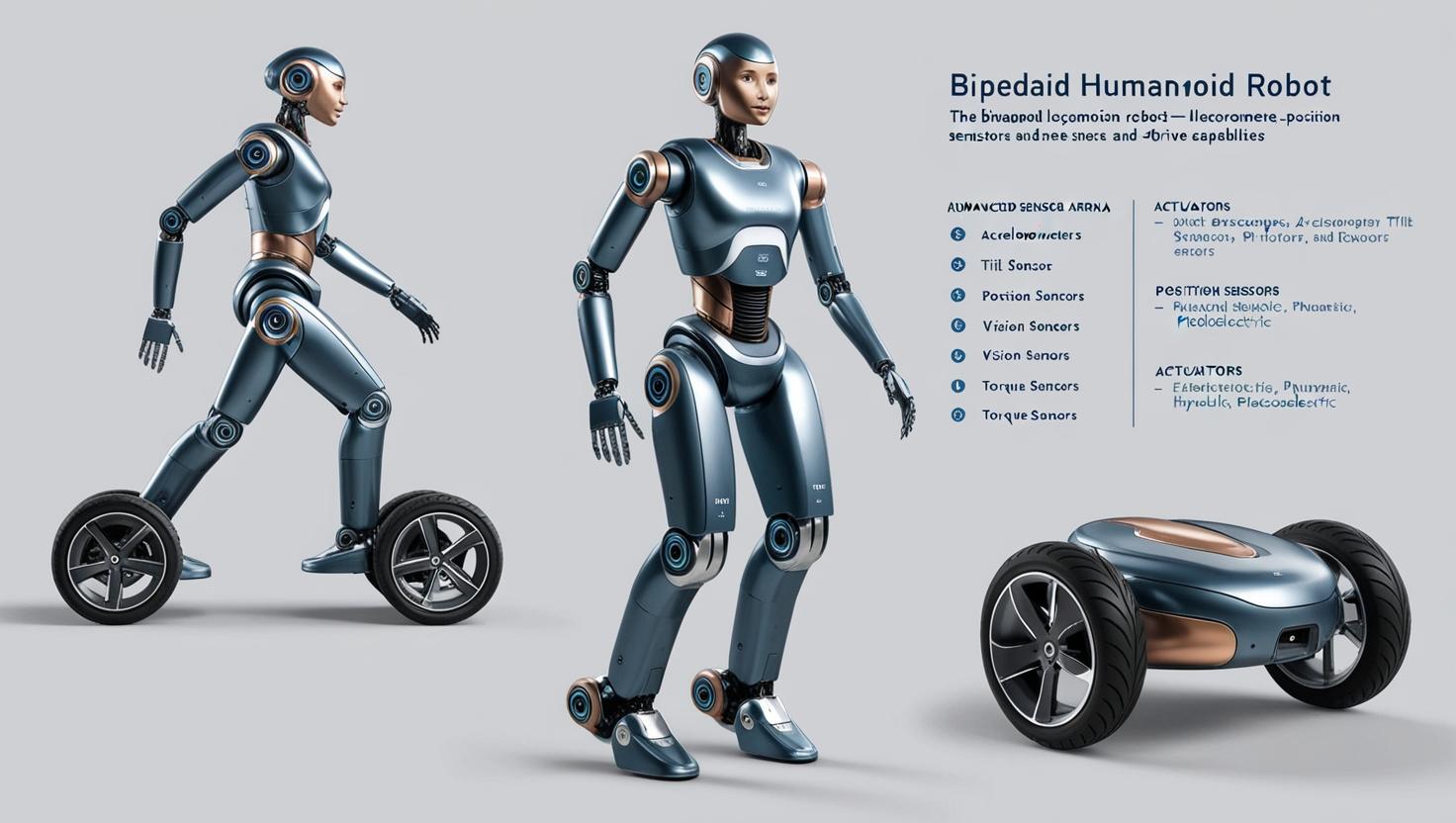
Motors, harmonic and planetary reducers, encoders, accelerometers, torque sensors, and motion controllers also contribute to robot performance. Improvements in these components can support better movement accuracy, stability, responsiveness, and energy efficiency.
Cameras and vision sensors are particularly important for human-robot collaboration. They allow robots to identify objects, detect obstacles, recognize environmental changes, and understand the position of nearby workers.
Advanced torque and force sensors can help robots adjust their movements when interacting with objects or operating in shared workspaces. These capabilities are important for reducing the risk of excessive force and improving collaborative task execution.
The integration of improved sensing and control systems is expected to make humanoid robots more capable of performing complex tasks in dynamic environments.
Simulation and Digital Twins Accelerating Development
Simulation-based training is becoming an important part of humanoid robot innovation. Training robots directly in physical environments can require significant time, resources, and specialized infrastructure. Simulation platforms provide an alternative by allowing developers to test robotic movements, train AI models, and evaluate task performance in virtual environments.
Digital twins can create virtual representations of physical robots, equipment, and operating facilities. Developers can use these models to study robot behavior, identify potential performance issues, and optimize workflows before deploying systems in real-world environments.
Simulation also enables robots to experience different scenarios, including unexpected obstacles and changes in operating conditions. This can help improve their ability to respond to unfamiliar situations.
For manufacturers, these technologies can reduce development complexity and support faster testing of robotic applications. As simulation tools become more sophisticated, they are expected to play a greater role in the commercialization of humanoid robots.
Human-Robot Collaboration Across Key Industries
Manufacturing
Manufacturing is an important application area for humanoid robots because production facilities often involve repetitive, physically demanding, and labor-intensive activities.
Humanoid robots can assist with material movement, assembly support, machine tending, and inspection. Their ability to operate in human-oriented workspaces can make them attractive for facilities seeking flexible automation without completely redesigning existing production lines.
Warehousing and Distribution Centers
Warehousing operations require continuous movement of goods, order preparation, sorting, and material handling. Humanoid robots can support selected tasks while working alongside warehouse employees.
Their potential to navigate existing facilities and interact with objects designed for human handling creates opportunities for more flexible warehouse automation.
Healthcare
Healthcare providers are exploring robotic technologies to support patient assistance, routine facility operations, and selected repetitive tasks. Humanoid robots may help with activities such as transporting supplies and providing basic information.
However, clinical applications require careful attention to safety, reliability, privacy, and regulatory requirements. Human professionals will continue to play an essential role in patient care and clinical decision-making.
Hospitality and Retail
In hospitality and retail environments, humanoid robots can support customer engagement, information services, and routine operational activities. Their human-like appearance and conversational capabilities can make interactions more intuitive.
These applications could help businesses improve service availability while allowing employees to focus on activities requiring human judgment and personal attention.
Education and Personal Assistance
Humanoid robots also offer opportunities in education, interactive learning, and personal assistance. They can support demonstrations, educational activities, and selected everyday tasks.
Continued improvements in natural language interaction and adaptive learning are expected to expand their potential applications in these environments.
Robotics-as-a-Service Creating New Business Opportunities
The high initial investment required for humanoid robot deployment can create challenges for organizations evaluating automation solutions. Robotics-as-a-Service (RaaS) is emerging as a business model that can reduce this barrier.
Under RaaS arrangements, organizations can access robotic capabilities through subscription-based or usage-based service models rather than purchasing and maintaining all equipment independently.
This approach can make humanoid robots more accessible to small and medium-sized businesses. It can also allow organizations to test robotic systems in specific workflows before expanding deployments.
Service providers may offer robot installation, maintenance, software updates, monitoring, and fleet management as part of their solutions. These services can simplify implementation and support ongoing system performance.
As the market develops, recurring service revenue and AI-enabled software platforms could become increasingly important parts of the competitive landscape.
Challenges Affecting Human-Robot Collaboration
Despite strong innovation momentum, several challenges continue to affect the adoption of humanoid robots.
Safety in shared workspaces: Robots must operate predictably around people. Reliable obstacle detection, force control, emergency stopping, and safety validation are important for collaborative environments.
High development and deployment costs: Advanced sensors, actuators, processors, batteries, and software can increase the total cost of humanoid robotic systems. Organizations must evaluate whether productivity improvements justify these investments.
Limited performance in complex environments: Humanoid robots may face difficulties when handling unfamiliar objects, navigating changing environments, or performing tasks that require advanced dexterity.
Power and battery limitations: Walking, lifting, and continuous operation require significant energy. Improving battery capacity, efficiency, and operating time remains an important development priority.
Integration and workforce readiness: Organizations need to integrate robots with existing systems and prepare employees to work with new technologies. Training, workflow redesign, and change management can influence adoption.
Addressing these challenges will be essential for moving humanoid robots from pilot projects toward reliable commercial deployment.
Future Outlook: Human-Robot Collaboration Shaping the Next Era of Robotics
The future of the humanoid robot market will depend on continued progress in AI, physical intelligence, autonomous navigation, advanced sensing, and robotic manipulation. As these technologies mature, humanoid robots are expected to become more capable of performing multiple tasks in environments designed for people.
Manufacturing and warehousing are likely to remain important areas of adoption because of their demand for flexible automation and repetitive task execution. Healthcare, hospitality, education, and personal assistance also represent opportunities as robots become more adaptable and easier to interact with.
The competitive landscape will increasingly be shaped by companies that can combine reliable hardware with intelligent software, effective safety systems, and scalable service models. Collaboration between robotics manufacturers, AI developers, component suppliers, and industrial end users will also influence the pace of innovation.
With the global humanoid robot market projected to reach USD 50.27 billion by 2035, human-robot collaboration is becoming an important part of the industry’s growth story. The successful integration of humanoid robots into workplaces will depend on their ability to complement human capabilities, improve productivity, and operate safely in real-world environments.
Frequently Asked Questions (FAQs) – Humanoid Robot Market
Q1. What is the projected size of the humanoid robot market by 2035?
The global humanoid robot market is projected to reach USD 50.27 billion by 2035, growing from USD 5.41 billion in 2026 at a CAGR of 28.1%.
Q2. How is human-robot collaboration driving the humanoid robot market?
Human-robot collaboration enables robots to work alongside people in manufacturing, warehousing, healthcare, and service environments, improving productivity, flexibility, and operational efficiency.
Q3. What are the key technologies driving humanoid robot innovation?
Artificial intelligence, machine learning, computer vision, advanced sensors, actuators, natural language processing, and autonomous navigation are driving humanoid robot innovation.
Q4. Which industries are adopting humanoid robots?
Manufacturing, logistics and warehousing, healthcare, hospitality, retail, education, and personal assistance are among the major industries exploring humanoid robot applications.
Q5. Who are the key players in the humanoid robot market?
Major companies include Unitree Robotics, AGIBOT Innovation, UBTECH Robotics, Figure AI, Tesla, Boston Dynamics, Agility Robotics, Fourier, Leju Robotics, and EngineAI.
About MarketsandMarkets™
MarketsandMarkets™ has been recognized as one of America’s Best Management Consulting Firms by Forbes, as per their recent report.
MarketsandMarkets™ is a blue ocean alternative in growth consulting and program management, leveraging a man-machine offering to drive supernormal growth for progressive organizations in the B2B space. With the widest lens on emerging technologies, we are proficient in co-creating supernormal growth for clients across the globe.
Today, 80% of Fortune 2000 companies rely on MarketsandMarkets, and 90 of the top 100 companies in each sector trust us to accelerate their revenue growth. With a global clientele of over 13,000 organizations, we help businesses thrive in a disruptive ecosystem.
The B2B economy is witnessing the emergence of $25 trillion in new revenue streams that are replacing existing ones within this decade. We work with clients on growth programs, helping them monetize this $25 trillion opportunity through our service lines – TAM Expansion, Go-to-Market (GTM) Strategy to Execution, Market Share Gain, Account Enablement, and Thought Leadership Marketing.
Built on the ‘GIVE Growth’ principle, we collaborate with several Forbes Global 2000 B2B companies to keep them future-ready. Our insights and strategies are powered by industry experts, cutting-edge AI, and our Market Intelligence Cloud, KnowledgeStore™, which integrates research and provides ecosystem-wide visibility into revenue shifts.
To find out more, visit www.MarketsandMarkets™.com or follow us on Twitter , LinkedIn and Facebook .
Contact:
Mr. Rohan Salgarkar
MarketsandMarkets™ INC.
1615 South Congress Ave.
Suite 103, Delray Beach, FL 33445
USA: +1-888-600-6441