The global data center ecosystem is expanding rapidly due to cloud computing, AI workloads, and hyperscale infrastructure growth. As digital infrastructure becomes more critical to business operations, organizations are increasingly relying on formal certifications to ensure reliability, resilience, security, and sustainability. According to MarketsandMarkets, theData Center Certification Market is experiencing strong growth, driven by stricter regulatory frameworks, rising cybersecurity concerns, and sustainability mandates across industries.
Data Center Certification Market Overview
The data center certification market covers a wide range of third-party assessments and compliance frameworks that validate the performance and safety of data center facilities. These certifications include infrastructure standards, security compliance audits, and environmental sustainability certifications.
The market is projected to grow significantly through 2032 as enterprises, cloud service providers, and colocation operators adopt certification frameworks to prove operational excellence and meet regulatory expectations. The demand is particularly strong in hyperscale and AI-ready data centers, where reliability and uptime are mission-critical.
Compliance: Strengthening Global Regulatory Alignment
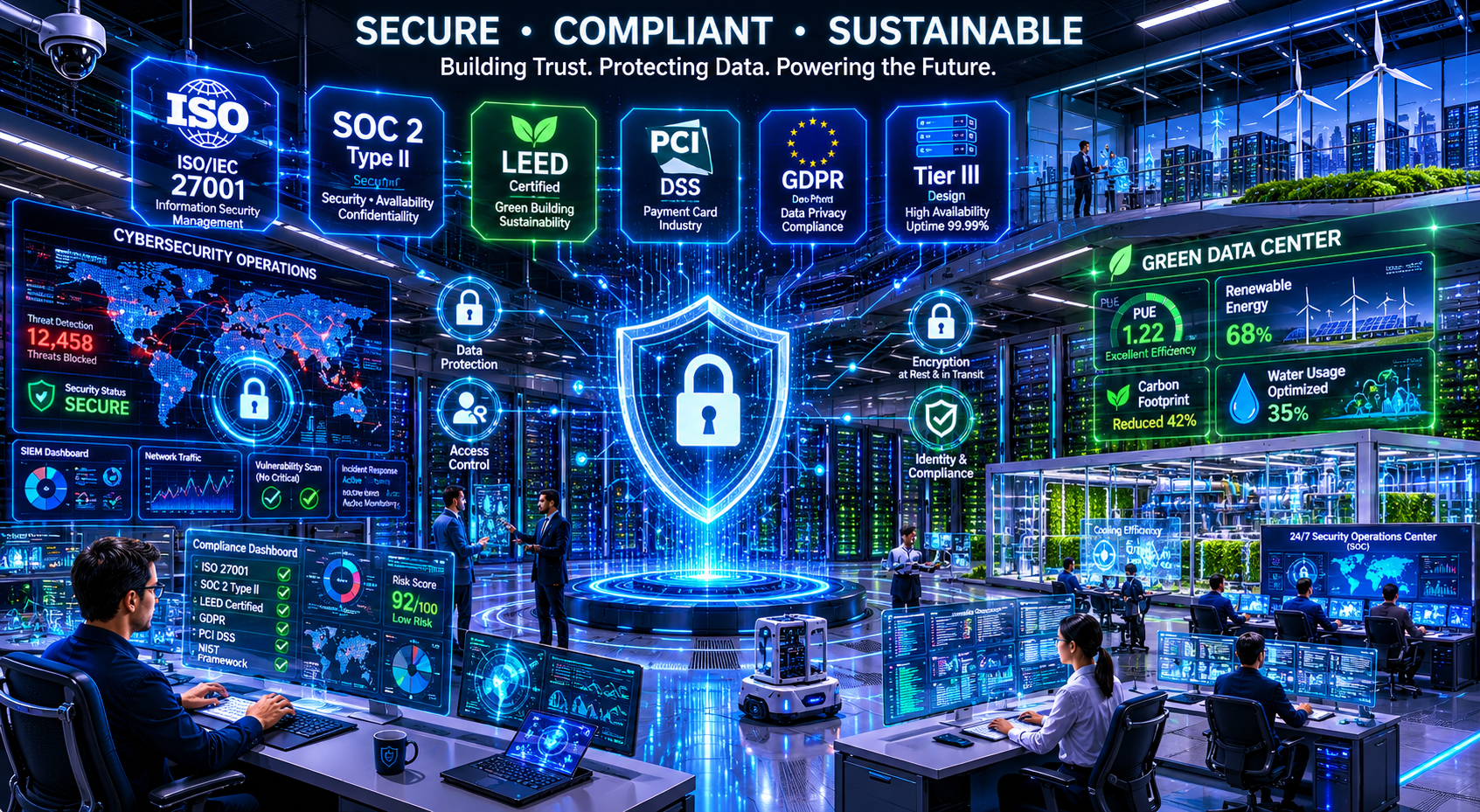
Compliance has become a core driver of the data center certification market. Enterprises operating in highly regulated sectors such as BFSI, healthcare, government, and defense require certified infrastructure to ensure adherence to strict data protection and operational standards.
Key compliance-related certifications include:
- ISO/IEC 27001 for information security management
- SOC 2 Type II for service organization controls
- PCI DSS for payment security
- ISO/IEC 22301 for business continuity management
Regulatory frameworks such as NIS2 in Europe and FedRAMP in the United States are also increasing the need for standardized certification processes. These frameworks ensure that data centers meet minimum thresholds for cybersecurity, risk management, and operational resilience.
Download PDF Brochure @ https://www.marketsandmarkets.com/pdfdownloadNew.asp?id=37943401
Security: Addressing Rising Cyber Threats
Security certification is one of the largest segments in the data center certification market. As cyberattacks become more sophisticated, organizations are prioritizing third-party validation of their infrastructure security controls.
Data centers must now demonstrate:
- Strong physical security systems
- Cybersecurity governance and monitoring
- Access control and identity management
- Incident response and recovery capabilities
Certifications such as ISO/IEC 27001 and SOC 2 Type II have become essential trust signals for cloud providers and colocation operators. These certifications help customers ensure that their workloads and sensitive data are protected against unauthorized access and operational disruptions.
Sustainability: Driving the Green Data Center Transition
Sustainability is emerging as the fastest-growing dimension of data center certification. With increasing global focus on carbon neutrality and energy efficiency, operators are adopting environmental certifications to meet ESG expectations.
Key sustainability frameworks include:
- LEED (Leadership in Energy and Environmental Design)
- BREEAM (Building Research Establishment Environmental Assessment Method)
- ISO 50001 for energy management systems
- ISO 14001 for environmental management
According to MarketsandMarkets, sustainability certifications are becoming a key differentiator as enterprises and investors prioritize energy-efficient and low-carbon infrastructure.
Additionally, initiatives like renewable energy integration, liquid cooling technologies, and advanced power usage effectiveness (PUE) tracking are now commonly validated through certification audits.
Key Market Trends
Several major trends are shaping the data center certification landscape:
1. Rise of Hyperscale and AI Data Centers
The rapid expansion of AI workloads and hyperscale facilities is increasing demand for multi-layer certification stacks covering security, infrastructure, and sustainability.
2. Multi-Certification Strategy Adoption
Operators are no longer relying on a single certification. Instead, they are combining multiple frameworks to meet diverse customer and regulatory requirements.
3. Shift Toward Continuous Compliance
Certification is evolving from periodic audits to continuous monitoring models, driven by real-time infrastructure data and automated compliance tools.
4. Increased Role of Third-Party Assurance Providers
Global TIC (Testing, Inspection, and Certification) companies and independent audit bodies are playing a larger role in validating data center performance and compliance.
Data center certification Market Outlook
The data center certification market is expected to grow strongly over the coming years, supported by increasing digital transformation, cloud adoption, and regulatory pressure. MarketsandMarkets projects steady expansion through 2032, with strong contributions from both developed and emerging economies.
As data centers evolve into the backbone of AI, cloud, and enterprise ecosystems, certification will become a critical requirement rather than an optional advantage.
Compliance, security, and sustainability are no longer separate priorities—they are interconnected pillars of modern data center operations. Certification frameworks provide the trust, transparency, and accountability needed to support the next generation of digital infrastructure.
Organizations that invest in comprehensive certification strategies will be better positioned to attract enterprise clients, meet regulatory expectations, and achieve long-term operational resilience in an increasingly competitive market.
Frequently Asked Questions (FAQ) – Data Center Certification Market
1. What is the Data Center Certification Market?
The Data Center Certification Market refers to third-party assessment and auditing services that verify data centers for compliance, security, performance, and sustainability standards. These certifications ensure facilities meet global operational and regulatory benchmarks.
2. Why is data center certification important?
Certification is important because it helps ensure data centers are secure, reliable, and energy-efficient. It builds trust among customers, supports regulatory compliance, and reduces operational risks.
3. What are the key types of data center certifications?
Major certifications include:
ISO/IEC 27001 (Information Security Management)
SOC 2 Type II (Security and controls)
Uptime Institute Tier Standards (Infrastructure reliability)
LEED and BREEAM (Green building and sustainability)
ISO 50001 (Energy management)
4. What factors are driving growth in the Data Center Certification Market?
Key growth drivers include rising cloud adoption, increasing cybersecurity threats, strict regulatory requirements, and growing demand for sustainable and energy-efficient data centers.
5. How does certification improve data center security?
Certifications ensure that data centers follow strict security protocols such as access control, encryption, monitoring systems, and incident response procedures, reducing the risk of cyberattacks and data breaches.
6. What role does sustainability play in data center certification?
Sustainability certifications help data centers reduce carbon emissions, improve energy efficiency, and meet ESG goals. This is increasingly important due to global climate regulations and corporate sustainability commitments.
7. Who are the key end-users of data center certification services?
Major end-users include cloud service providers, colocation operators, telecom companies, BFSI institutions, government organizations, and large enterprises.
8. Which regions are leading the data center certification market?
North America currently leads due to advanced digital infrastructure, while Asia-Pacific is experiencing rapid growth driven by hyperscale data center expansion and increasing cloud adoption.
9. How often do data centers need certification renewal?
Most certifications require periodic audits, typically every 1 to 3 years, depending on the standard and regulatory requirements.
10. What is the future outlook for the market?
The market is expected to grow steadily as data centers become more critical to digital infrastructure, with increasing emphasis on continuous compliance, automation, and green certification standards.
About MarketsandMarkets™
MarketsandMarkets™ has been recognized as one of America’s Best Management Consulting Firms by Forbes, as per their recent report.
MarketsandMarkets™ is a blue ocean alternative in growth consulting and program management, leveraging a man-machine offering to drive supernormal growth for progressive organizations in the B2B space. With the widest lens on emerging technologies, we are proficient in co-creating supernormal growth for clients across the globe.
Today, 80% of Fortune 2000 companies rely on MarketsandMarkets, and 90 of the top 100 companies in each sector trust us to accelerate their revenue growth. With a global clientele of over 13,000 organizations, we help businesses thrive in a disruptive ecosystem.
The B2B economy is witnessing the emergence of $25 trillion in new revenue streams that are replacing existing ones within this decade. We work with clients on growth programs, helping them monetize this $25 trillion opportunity through our service lines – TAM Expansion, Go-to-Market (GTM) Strategy to Execution, Market Share Gain, Account Enablement, and Thought Leadership Marketing.
Built on the ‘GIVE Growth’ principle, we collaborate with several Forbes Global 2000 B2B companies to keep them future-ready. Our insights and strategies are powered by industry experts, cutting-edge AI, and our Market Intelligence Cloud, KnowledgeStore™, which integrates research and provides ecosystem-wide visibility into revenue shifts.
To find out more, visit www.MarketsandMarkets™.com or follow us on Twitter , LinkedIn and Facebook .
Contact:
Mr. Rohan Salgarkar
MarketsandMarkets™ INC.
1615 South Congress Ave.
Suite 103, Delray Beach, FL 33445
USA: +1-888-600-6441
