Military Robots Market Outlook 2029: Autonomous Ground Vehicles, Swarm Robotics, and the Future of Combat
The global military landscape is undergoing a profound transformation driven by advances in artificial intelligence, autonomous systems, robotics, and network-centric warfare. As defense forces seek to enhance operational efficiency, improve force protection, and maintain strategic superiority in increasingly complex threat environments, military robots are becoming indispensable assets across modern...
How AI-Powered Military Robots Are Transforming Modern Warfare and Accelerating Defense Modernization
The military robots market size was valued at USD 18.19 billion in 2024 and is projected to reach USD 26.49 billion by 2029, growing at a CAGR of 7.8% from 2024 to 2029. The rapid advancement of artificial intelligence (AI), autonomous systems, and advanced robotics is fundamentally reshaping the nature of modern warfare. Military organizations worldwide are increasingly investing in AI-powered robotic...
Mission Sustainment Technologies Advancing Modern Combat Service Support
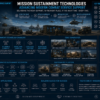
Modern military operations depend not only on advanced weapon systems and combat platforms but also on the ability to sustain forces effectively across dynamic and contested environments. As defense organizations prepare for increasingly complex operational scenarios, mission sustainment technologies are becoming central to ensuring operational readiness, force mobility, and long-term mission success....
Smart Military Supply Chains Supporting Future Autonomous Defense Operations
The modern battlefield is becoming increasingly complex as military forces operate across dispersed, contested, and multi-domain environments. From autonomous drones and robotic ground vehicles to advanced command-and-control networks and distributed combat formations, future defense operations depend on the rapid movement of supplies, equipment, fuel, and critical resources. In response, defense...
Digital Sustainment Platforms Transforming Military Logistics and Operational Efficiency
The modernization of military logistics is entering a new era driven by digital technologies, advanced analytics, and interconnected operational networks. As defense organizations face increasingly complex missions across multiple domains, the ability to maintain equipment readiness, manage resources efficiently, and support forces in real time has become a strategic imperative. Digital sustainment...
Military Equipment Maintenance and Inventory Readiness Reshaping Force Sustainment
Modern military effectiveness depends not only on advanced weapons and combat platforms but also on the ability to maintain those assets in a state of constant operational readiness. As armed forces around the world confront increasingly complex security challenges, military equipment maintenance and inventory readiness have become central pillars of force sustainment strategies. The growing emphasis...
Strategic Mobility and Tactical Logistics Driving Defense Modernization Initiatives
The evolving nature of global security challenges is compelling military organizations to rethink how forces, equipment, and supplies are deployed and sustained across diverse operational environments. As nations prepare for increasingly complex and rapidly changing threats, strategic mobility and tactical logistics have emerged as critical pillars of defense modernization. Modern armed forces require...
Cryogenic Storage Innovations Reshaping Space Propellant Infrastructure Worldwide
The global space industry is undergoing a major technological transformation as governments and private aerospace companies accelerate investments in reusable launch systems, deep-space exploration missions, orbital fuel depots, and long-duration space operations. At the center of this evolution is the rapid advancement of cryogenic storage technologies, which are reshaping modern space propellant...
Space Propellant Tank Market Trends Shaped by Small Satellite Launch Expansion
The rapid expansion of the global small satellite industry is significantly transforming the space propellant tank market. As governments, commercial operators, and private aerospace companies accelerate the deployment of small satellites for communication, Earth observation, navigation, scientific research, and defense applications, demand for lightweight, high-efficiency propellant storage systems...