The Life Science Instrumentation Market is undergoing a transformative phase as technological advancements reshape the landscape of biomedical research, diagnostics, and drug development. With the increasing need for high-precision analytical tools, laboratories worldwide are adopting next-generation instrumentation to accelerate innovation and improve patient outcomes.
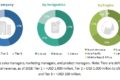
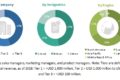
The global life science instrumentation market is projected to grow from USD 63.4 billion in 2025 to USD 92.5 billion by 2031, registering a steady CAGR of 6.5%. This growth is fueled by rising investments in pharmaceutical and biotechnology R&D, expanding genomics and proteomics research, and the growing demand for advanced diagnostic technologies.
Market Overview: Technology Driving Scientific Excellence
Life science instrumentation forms the backbone of modern laboratories, enabling researchers to analyze complex biological systems with unprecedented accuracy. From molecular characterization to high-throughput screening, these instruments are essential across pharmaceutical, clinical, agricultural, and academic settings.
Increasing adoption of automation, artificial intelligence (AI), and machine learning is further enhancing analytical precision while reducing manual intervention. As laboratories move toward digital ecosystems, advanced instrumentation is becoming indispensable for maintaining competitiveness and accelerating discovery timelines.
Key Takeaways Highlighting Market Momentum
- Spectroscopy instruments dominate the technology segment, supported by the rising adoption of portable, hybrid, and multi-modal systems for rapid molecular analysis.
- The research application segment holds the largest market share, driven by expanding genomics, proteomics, and metabolomics studies.
- Pharmaceutical and biotechnology companies represent a major end-user segment, leveraging advanced analytical platforms for early disease detection and precision diagnostics.
- North America leads the global life science instrumentation market, backed by strong R&D infrastructure and substantial funding from public and private sectors.
- Industry leaders are focusing on product innovation—such as Waters Corporation’s launch of the Xevo Charge Detection Mass Spectrometer (CDMS)—to support next-generation therapeutics and structural biology research.
Technology Landscape: Advancing Analytical Capabilities
The life science instrumentation market by technology includes spectroscopy, chromatography, polymerase chain reaction (PCR), immunoassays, microscopy, Next-Generation Sequencing (NGS), flow cytometry, electrophoresis, centrifuges, cell counting systems, and liquid handling technologies.
Among these, spectroscopy continues to lead due to its ability to deliver precise biomolecular insights. The integration of AI-powered analytics allows automated interpretation of complex datasets, enabling researchers to make faster, data-driven decisions.
Meanwhile, PCR and NGS technologies are gaining traction as genomic research expands. These tools support applications ranging from pathogen detection to biomarker discovery, reinforcing their importance in precision medicine.
Microscopy and flow cytometry are also witnessing increased adoption, particularly in cell biology and immunology studies, where high-resolution imaging and cellular analysis are essential.
Application Insights: Research at the Core of Market Growth
The life science instrumentation market by application is categorized into research, clinical & diagnostic, and other uses. Research applications account for the largest share, largely due to the global push to understand complex biological mechanisms.
Genomics, proteomics, and metabolomics research rely heavily on advanced analytical platforms capable of handling large datasets and delivering reproducible results. Investments from academic institutions, government bodies, and private organizations are further strengthening laboratory infrastructure, enabling cutting-edge experimentation.
Clinical and diagnostic applications are also expanding steadily as healthcare providers adopt advanced technologies for early detection, disease monitoring, and personalized treatment strategies.
End User Trends: Pharma and Biotech Leading Adoption
Pharmaceutical and biotechnology companies represent a substantial portion of the life science instrumentation market, driven by their reliance on high-sensitivity instruments such as mass spectrometry systems, spectroscopy platforms, and molecular diagnostic tools.
The growing emphasis on personalized medicine and biomarker-based testing is accelerating demand for sophisticated instrumentation capable of detecting subtle biological variations. Additionally, hospitals and diagnostic laboratories are integrating advanced systems to enhance testing accuracy and operational efficiency.
The agriculture and food industries are emerging as important adopters as well, utilizing life science instruments for contamination detection, quality assurance, and crop research.
Regional Outlook: North America Maintains Leadership
North America continues to hold the largest share of the global life science instrumentation market, supported by well-established research ecosystems, early adoption of advanced technologies, and strong financial backing.
Government initiatives promoting scientific innovation, combined with private-sector investments, are fostering a favorable environment for market expansion. Meanwhile, emerging economies in Asia Pacific are expected to witness notable growth due to expanding healthcare infrastructure and increasing research activities.
Driver: Increasing Investment in Pharmaceutical R&D
One of the primary drivers of the life science instrumentation market is the surge in pharmaceutical R&D spending. Global pharma and biotech firms are expanding their pipelines and manufacturing capabilities, creating strong demand for high-performance analytical, imaging, and automation tools.
Advanced instrumentation supports critical workflows in genomics, cell therapy, bioprocessing, and formulation development. As research becomes more data-intensive, laboratories require technologies capable of high-throughput screening and advanced molecular characterization.
This rise in R&D activity is ultimately translating into sustained market growth.
Restraint: Shortage of Skilled Professionals
Despite promising growth prospects, the market faces a notable challenge—the shortage of skilled professionals capable of operating complex instrumentation.
Rapid technological advancements have increased the sophistication of analytical and automation systems, creating a widening gap between instrument capabilities and user expertise. Laboratories must invest in workforce training and development to fully leverage these technologies.
Without adequate expertise, organizations risk underutilizing high-value instruments, potentially slowing research progress.
Opportunity: Expansion of CROs, CDMOs, and CTLs
The expansion of Contract Research Organizations (CROs), Contract Development and Manufacturing Organizations (CDMOs), and Contract Testing Laboratories (CTLs) presents significant opportunities for the life science instrumentation market.
As biopharmaceutical companies increasingly outsource research and manufacturing to improve efficiency and reduce operational costs, service providers require advanced analytical and automation tools to meet client expectations.
High-throughput technologies enable CROs and CDMOs to accelerate drug discovery, optimize processes, and maintain regulatory compliance—further driving demand for next-generation instrumentation.
Competitive Landscape: Innovation as a Growth Strategy
Major market players are adopting both organic and inorganic growth strategies, including product launches, collaborations, and strategic investments. Innovation remains a key differentiator in a competitive environment where precision, speed, and scalability are critical.
New instrument platforms designed for large biomolecule characterization and structural analysis are helping researchers tackle increasingly complex therapeutic challenges, reinforcing the market’s innovation-driven trajectory.
Conclusion: A Market Shaping the Future of Science
The life science instrumentation market is poised for sustained expansion as scientific research becomes more sophisticated and data-driven. Growing pharmaceutical R&D investments, expanding research applications, and rising demand for precision diagnostics are creating a strong foundation for long-term growth. While challenges such as workforce shortages persist, opportunities arising from outsourcing trends and technological breakthroughs continue to reshape the industry. As laboratories worldwide prioritize accuracy, automation, and efficiency, life science instrumentation will remain a cornerstone of scientific progress—empowering discoveries that define the future of healthcare and biotechnology.