The Automated Stationary NDT & Inspection Systems Industry is experiencing strong growth as manufacturers and industrial sectors increasingly prioritize precision, safety, and operational efficiency. With the rise of smart factories, Industry 4.0 initiatives, and stricter regulatory standards, automated non-destructive testing (NDT) and inspection solutions are becoming critical components in quality assurance processes.The global automated stationary NDT & inspection systems market is expected to grow from USD 767.4 million in 2025 to USD 1,195.9 million by 2030, registering a robust CAGR of 9.3%.
What Are Automated Stationary NDT & Inspection Systems?
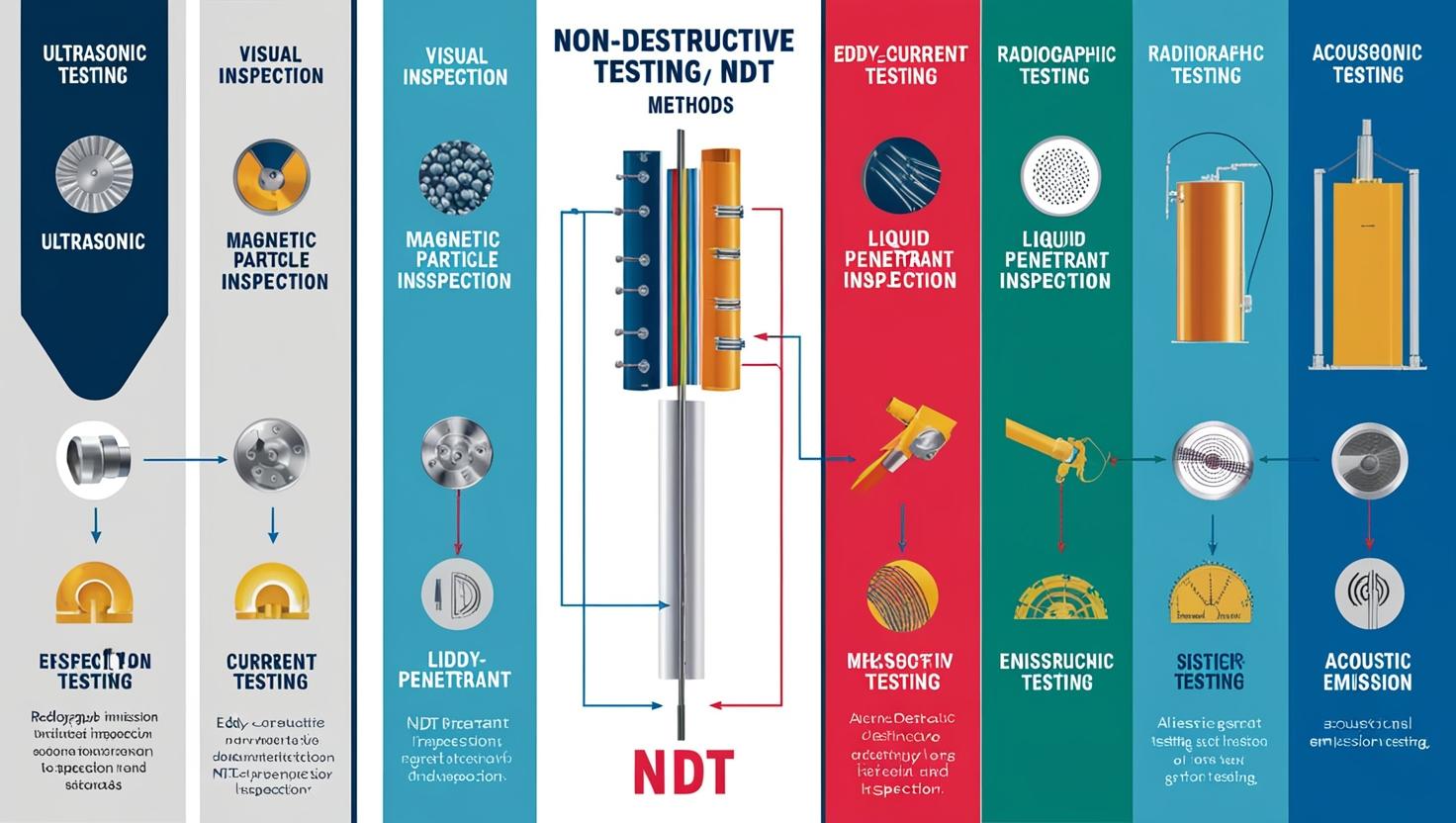
Automated stationary NDT & inspection systems are fixed-position inspection setups designed to evaluate materials, components, and assemblies without causing damage. These systems use technologies such as ultrasonic testing, radiography, eddy current testing, and optical imaging to detect structural defects, material inconsistencies, or manufacturing flaws. Unlike manual inspections, automated stationary systems provide high repeatability, precision, and throughput, making them ideal for large-scale production environments.
Drivers of Industry Growth
Several factors are driving the expansion of the Automated Stationary NDT & Inspection Systems Industry:
Rising Quality and Safety Standards – Industries such as aerospace, automotive, oil & gas, and energy are under increasing pressure to meet stringent safety and regulatory requirements. Automated inspection systems ensure compliance by delivering accurate and consistent defect detection.
Efficiency and Productivity Gains – Automated systems reduce human error, speed up inspection processes, and allow for continuous monitoring of production lines. This efficiency supports higher throughput and lowers operational costs, fueling growth in the industry.
Technological Advancements – Integration of robotics, AI, and machine learning with automated NDT systems enhances defect detection, predictive maintenance, and data analytics. These innovations provide actionable insights that help manufacturers optimize production processes.
Industry 4.0 and Smart Factory Adoption – The shift toward connected and automated manufacturing environments is accelerating demand for stationary inspection systems. IoT-enabled inspection devices can communicate with production management software, enabling real-time monitoring and reporting.
Download PDF Brochure @ https://www.marketsandmarkets.com/pdfdownloadNew.asp?id=233564506
Applications Across Industries
The Automated Stationary NDT & Inspection Systems Industry serves a wide range of sectors:
Aerospace and Defense – For detecting fatigue cracks, corrosion, and structural weaknesses in aircraft components.
Automotive – Ensuring precision in engine components, welds, and safety-critical parts.
Oil & Gas – Monitoring pipelines, pressure vessels, and storage tanks for corrosion and defects.
Power Generation – Inspecting turbines, boilers, and renewable energy equipment to maintain efficiency and safety.
Manufacturing – Supporting mass production quality control with high-speed automated inspection systems.
Advantages Over Manual Inspection
Automated stationary NDT systems offer several benefits that are driving adoption:
High Accuracy and Consistency – Reduces human error and ensures uniform inspection standards.
Faster Throughput – Enables continuous inspection without slowing production lines.
Data Integration – Advanced systems store and analyze inspection data for predictive maintenance and quality optimization.
Safety Improvements – Minimizes human exposure to hazardous environments and materials.
Regional Market Insights
The Automated Stationary NDT & Inspection Systems Industry is seeing growth across major industrial hubs:
North America – Driven by aerospace, automotive, and energy sector investments.
Europe – Strong adoption in advanced manufacturing and compliance-driven industries.
Asia-Pacific – Rapid industrialization, manufacturing expansion, and adoption of smart factory technologies.
Future Outlook
The Automated Stationary NDT & Inspection Systems Industry is expected to continue its upward trajectory as manufacturers increasingly integrate smart inspection solutions into production lines. Advances in AI, robotics, and IoT will further enhance system capabilities, enabling predictive defect detection, higher throughput, and improved quality control.
With the growing demand for operational efficiency, safety compliance, and precision manufacturing, automated stationary NDT & inspection solutions are poised to remain a key driver of industrial quality assurance globally.
Frequently Asked Questions (FAQs)
1. What are automated stationary NDT & inspection systems?
Automated stationary NDT & inspection systems are fixed-position setups used to inspect materials, components, or assemblies without causing damage. They use technologies like ultrasonic, radiography, eddy current, and optical imaging to detect defects with high precision and consistency.
2. What is driving the growth of the automated stationary NDT & inspection systems industry?
The growth is driven by rising quality and safety standards, adoption of smart factories and Industry 4.0, technological advancements like AI and robotics, and the need for faster, more accurate inspection in aerospace, automotive, oil & gas, and manufacturing sectors.
3. Which industries use automated stationary NDT & inspection systems the most?
Key industries include aerospace and defense, automotive, oil & gas, power generation, and manufacturing. These systems ensure safety, compliance, and operational efficiency by detecting defects in critical components.
4. What are the advantages of automated NDT systems over manual inspection?
Automated systems provide higher accuracy, faster throughput, better data integration for predictive maintenance, reduced human error, and improved safety by minimizing human exposure to hazardous environments.
5. How do technological advancements impact this industry?
Technologies such as AI, machine learning, IoT, and robotics enhance defect detection, predictive maintenance, and real-time monitoring. These innovations improve efficiency, reduce downtime, and support data-driven quality control.
About MarketsandMarkets™
MarketsandMarkets™ has been recognized as one of America’s Best Management Consulting Firms by Forbes, as per their recent report.
MarketsandMarkets™ is a blue ocean alternative in growth consulting and program management, leveraging a man-machine offering to drive supernormal growth for progressive organizations in the B2B space. With the widest lens on emerging technologies, we are proficient in co-creating supernormal growth for clients across the globe.
Today, 80% of Fortune 2000 companies rely on MarketsandMarkets, and 90 of the top 100 companies in each sector trust us to accelerate their revenue growth. With a global clientele of over 13,000 organizations, we help businesses thrive in a disruptive ecosystem.
The B2B economy is witnessing the emergence of $25 trillion in new revenue streams that are replacing existing ones within this decade. We work with clients on growth programs, helping them monetize this $25 trillion opportunity through our service lines – TAM Expansion, Go-to-Market (GTM) Strategy to Execution, Market Share Gain, Account Enablement, and Thought Leadership Marketing.
Built on the ‘GIVE Growth’ principle, we collaborate with several Forbes Global 2000 B2B companies to keep them future-ready. Our insights and strategies are powered by industry experts, cutting-edge AI, and our Market Intelligence Cloud, KnowledgeStore™, which integrates research and provides ecosystem-wide visibility into revenue shifts.
To find out more, visit www.MarketsandMarkets™.com or follow us on Twitter , LinkedIn and Facebook .
Contact:
Mr. Rohan Salgarkar
MarketsandMarkets™ INC.
1615 South Congress Ave.
Suite 103, Delray Beach, FL 33445
USA: +1-888-600-6441