The semiconductor industry is undergoing a transformative shift, and chiplet technology is emerging as a key enabler of this change. As demand for high-performance computing (HPC), artificial intelligence (AI), 5G, and data-intensive applications grows, traditional monolithic chips face limitations in scaling, cost, and power efficiency. Chiplets—modular, interconnected semiconductor building blocks—offer a flexible and efficient solution, making them central to the next wave of innovation in the semiconductor market. The chiplet market is expected to grow from USD 51.94 billion in 2025 to USD 157.23 billion by 2030, at a CAGR of 24.8%
Understanding Chiplets
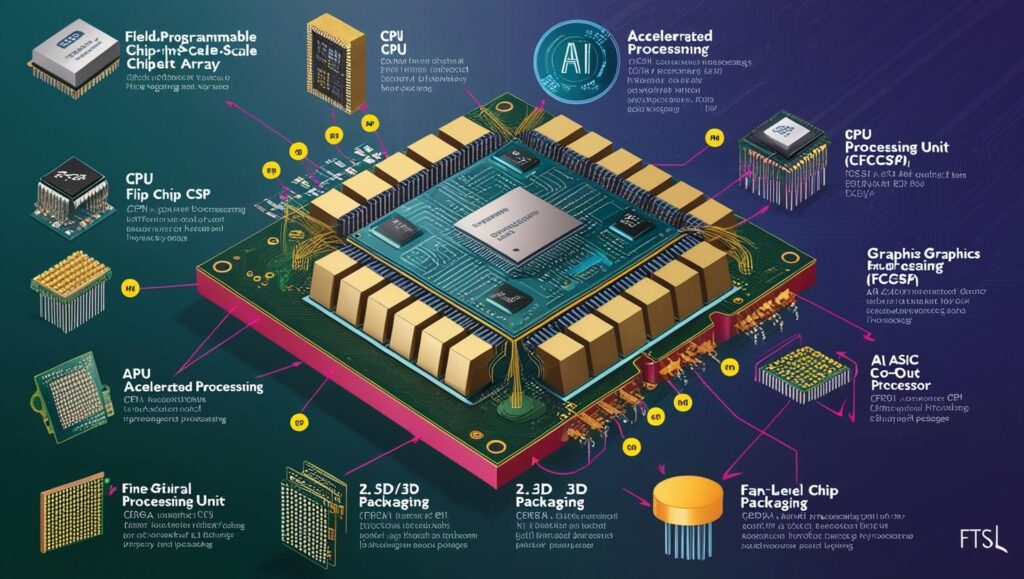
Chiplets are small, functional silicon blocks that can be integrated into a single package to form a complete system-on-chip (SoC). Unlike monolithic chips, where all functions are fabricated on a single die, chiplets allow different functions (compute, memory, I/O) to be produced separately and then interconnected.
Key Advantages of Chiplets:
Scalability: Enables faster development of complex chips by integrating pre-validated modules.
Cost Efficiency: Reduces production costs by using smaller dies and improving yield.
Performance: Allows mixing and matching of optimized components for better power and thermal management.
Time-to-Market: Speeds up innovation by reusing standard chiplet components.
Download PDF Brochure @ https://www.marketsandmarkets.com/pdfdownloadNew.asp?id=131809383
Market Growth Drivers
1. Rising Demand for High-Performance Computing and AI
AI workloads, data centers, and HPC applications require chips with massive computational power and low latency. Chiplets enable heterogeneous integration, allowing specialized compute units, memory, and accelerators to coexist efficiently, boosting overall system performance.
2. Advanced Packaging Innovations
Technologies like 2.5D and 3D packaging are fueling chiplet adoption. These packaging methods allow multiple chiplets to be interconnected within a single package while reducing interconnect length, improving bandwidth, and minimizing energy consumption.
3. Cost and Yield Optimization
As semiconductor nodes shrink below 7nm, manufacturing large monolithic chips becomes challenging and expensive. Chiplets help overcome these challenges by producing smaller dies separately, improving yield and reducing wafer cost.
4. Industry Push for Modular Semiconductor Design
Leading semiconductor companies are moving toward modular architectures to enable flexible and customizable chip design. This approach allows faster upgrades, easy integration of new IP blocks, and reduced dependency on a single fabrication node.
Key Applications Driving Chiplet Adoption
Data Centers and Cloud Computing – High-speed, low-power interconnects between CPU, GPU, memory, and accelerators.
Artificial Intelligence and Machine Learning – Specialized AI chiplets for inference and training.
Telecommunications and 5G – Chiplets for high-bandwidth, low-latency networking solutions.
Consumer Electronics – Modular chips for gaming consoles, laptops, and advanced smartphones.
Automotive Electronics – Chiplets for autonomous driving, ADAS, and in-vehicle AI systems.
Regional Insights
North America: Leads the market due to semiconductor R&D, cloud computing infrastructure, and AI-driven chip adoption.
Asia Pacific: Fastest-growing region, driven by manufacturing hubs in Taiwan, South Korea, and China, along with rising adoption of AI and 5G applications.
Europe: Focuses on automotive and industrial applications, leveraging chiplets for advanced driver-assistance systems (ADAS) and industrial IoT.
Challenges in the Chiplet Market
Despite the promise, chiplets face several challenges:
Standardization: Lack of universal standards for chiplet interfaces and interconnects can hinder interoperability.
Design Complexity: Integration of heterogeneous components requires sophisticated design and testing.
Thermal Management: Densely packed chiplets can generate heat hotspots, requiring advanced cooling solutions.
Addressing these challenges is critical for widespread adoption and long-term market growth.
Emerging Trends
Heterogeneous Integration: Combining CPUs, GPUs, NPUs, and memory in a single package.
Open Standards: Initiatives like Universal Chiplet Interconnect Express (UCIe) are promoting industry-wide compatibility.
AI-Specific Chiplets: Specialized modules for accelerating AI training and inference.
Micro-Bump and Advanced Packaging: Techniques to increase interconnect density and reduce latency.
Sustainable Manufacturing: Optimizing die size and yield reduces material waste, improving sustainability.
Future Outlook
The chiplet market is poised for exponential growth as industries seek more scalable, high-performance, and cost-efficient semiconductor solutions. With the rise of AI, HPC, 5G, and next-gen consumer electronics, chiplets will become the standard for modular, flexible, and energy-efficient system design.
As chiplet technology matures and standardization improves, it is expected to redefine the semiconductor landscape—allowing companies to innovate faster, reduce costs, and deliver high-performance solutions across multiple sectors.
The Global Chiplet Market represents a critical evolution in semiconductor design and manufacturing. By enabling modularity, scalability, and cost optimization, chiplets are addressing the limitations of traditional monolithic chips and powering the next generation of AI, HPC, cloud computing, 5G, and advanced electronics.
FAQ 1: What are chiplets and how are they different from traditional chips?
Chiplets are small, functional semiconductor blocks that can be integrated into a single package to form a complete system-on-chip (SoC). Unlike traditional monolithic chips, which are fabricated as one large die, chiplets allow different functions—like compute, memory, and I/O—to be manufactured separately and then interconnected, improving scalability, yield, and cost efficiency.
FAQ 2: What are the main advantages of using chiplets?
Key benefits include:
Scalability: Modular approach allows flexible design upgrades.
Cost Efficiency: Smaller dies reduce wafer costs and improve manufacturing yield.
High Performance: Optimized components can be combined for better power and thermal management.
Faster Time-to-Market: Pre-validated chiplets accelerate product development.
FAQ 3: Which industries are driving chiplet adoption?
Chiplets are gaining traction in several industries:
Data Centers & Cloud Computing – High-speed CPU/GPU and memory integration
Artificial Intelligence & Machine Learning – Specialized AI chiplets for training and inference
Telecommunications & 5G – Low-latency, high-bandwidth network chips
Automotive Electronics – Advanced driver-assistance systems (ADAS) and autonomous vehicles
Consumer Electronics – Gaming consoles, smartphones, and laptops
About MarketsandMarkets™
MarketsandMarkets™ has been recognized as one of America’s Best Management Consulting Firms by Forbes, as per their recent report.
MarketsandMarkets™ is a blue ocean alternative in growth consulting and program management, leveraging a man-machine offering to drive supernormal growth for progressive organizations in the B2B space. With the widest lens on emerging technologies, we are proficient in co-creating supernormal growth for clients across the globe.
Today, 80% of Fortune 2000 companies rely on MarketsandMarkets, and 90 of the top 100 companies in each sector trust us to accelerate their revenue growth. With a global clientele of over 13,000 organizations, we help businesses thrive in a disruptive ecosystem.
The B2B economy is witnessing the emergence of $25 trillion in new revenue streams that are replacing existing ones within this decade. We work with clients on growth programs, helping them monetize this $25 trillion opportunity through our service lines – TAM Expansion, Go-to-Market (GTM) Strategy to Execution, Market Share Gain, Account Enablement, and Thought Leadership Marketing.
Built on the ‘GIVE Growth’ principle, we collaborate with several Forbes Global 2000 B2B companies to keep them future-ready. Our insights and strategies are powered by industry experts, cutting-edge AI, and our Market Intelligence Cloud, KnowledgeStore™, which integrates research and provides ecosystem-wide visibility into revenue shifts.
To find out more, visit www.MarketsandMarkets™.com or follow us on Twitter , LinkedIn and Facebook .
Contact:
Mr. Rohan Salgarkar
MarketsandMarkets™ INC.
1615 South Congress Ave.
Suite 103, Delray Beach, FL 33445
USA: +1-888-600-6441
