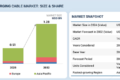
The Spain medical aesthetics market is a rapidly expanding sector characterized by a significant shift toward non-invasive and minimally invasive procedures, such as botulinum toxin injections and dermal fillers, which now dominate consumer demand due to their lower risks and reduced downtime. The landscape is driven by an aging population seeking anti-aging treatments, a strong cultural emphasis on beauty and wellness, and Spain’s reputation as a leading hub for medical tourism, offering high-quality services at competitive prices compared to other Western nations. Technological advancements, including the integration of artificial intelligence for personalized treatment planning and the adoption of advanced energy-based devices for skin tightening and body contouring, are further enhancing diagnostic accuracy and procedural efficiency. While the market features a robust infrastructure of specialized dermatology and cosmetic clinics concentrated in urban centers like Madrid and Barcelona, it remains highly competitive with major global players like AbbVie, Galderma, and Merz Pharma leveraging extensive portfolios to meet the evolving needs of a diversifying demographic that includes a growing segment of younger patients and men. Despite challenges such as stringent regulatory oversight by the AEMPS and high equipment costs, the market is poised for sustained growth as healthcare providers and beauty centers increasingly integrate medical aesthetics to provide comprehensive, technology-driven diagnostic and treatment solutions.
Key Drivers, Restraints, Opportunities, and Challenges in the Spain Medical Aesthetics Market
The Spain medical aesthetics market is primarily driven by an aging population seeking a youthful appearance, a rising cultural emphasis on beauty and wellness, and an increasing preference for non-invasive or minimally invasive procedures like Botox and dermal fillers, which offer reduced downtime. The market is further propelled by Spain’s growing popularity as a medical tourism destination and the rising influence of social media in normalizing aesthetic enhancements. However, growth is restrained by stringent EU Medical Device Regulations (MDR) that increase compliance costs, the high capital and maintenance expenses of advanced energy-based devices, and the fact that most elective procedures are not covered by insurance. Significant opportunities exist in the expansion of services for male consumers, the adoption of regenerative aesthetics using exosomes and biostimulators, and the integration of AI-powered diagnostics for personalized treatment planning. Despite these prospects, the market faces challenges such as an acute shortage of certified aesthetic professionals in rural areas, economic sensitivity that affects discretionary spending, and the risk of medical liability or complications that can erode consumer trust.
Customer Segmentation, Needs, Preferences, and Buying Behavior in the Spain Medical Aesthetics Market
The target customers for the Spain medical aesthetics market comprise a diverse demographic including a core base of women over 40 seeking anti-aging solutions, a rising segment of men—with 28% having undergone treatments—and an increasing number of younger “Millennial” and “Gen Z” patients focused on prevention and “beautification” trends. These consumers prioritize natural-looking results, safety, and convenience, increasingly preferring non-invasive or minimally invasive procedures like Botox, dermal fillers, and energy-based treatments that offer reduced downtime. Their purchasing behavior is characterized by a strong preference for specialized clinics, which perform 54% of procedures, and a growing trend toward medical tourism, with 17.5% of patients being international visitors attracted by high-quality services at competitive prices. Across all segments, customers are becoming more informed and discerning, valuing personalized treatment plans and transparent, professional care that enhances self-confidence while maintaining long-term skin health.
Regulatory, Technological, and Economic Factors Impacting the Spain Medical Aesthetics Market
The Spain medical aesthetics market is shaped by a complex interplay of regulatory, technological, and economic factors that influence entry and profitability. Regulatory compliance remains a primary hurdle, as products must adhere to the stringent EU Medical Device Regulation (MDR) and oversight from the Spanish Agency of Medicines and Medical Products (AEMPS), which mandate rigorous safety assessments and CE-marking. Technologically, the integration of artificial intelligence for personalized treatment protocols and the advancement of energy-based platforms, such as ultrasound and radiofrequency systems, are driving market expansion by enhancing efficacy and safety. Economically, while an aging population and rising social acceptance sustain high demand, the market is sensitive to fluctuations in consumer disposable income and the high capital investment required for advanced equipment. Additionally, the lack of insurance coverage for most elective procedures means that market profitability is heavily dependent on out-of-pocket spending and the ability of providers to offer cost-effective, high-quality treatments.
Current and Emerging Trends in the Spain Medical Aesthetics Market
The Spain medical aesthetics market is undergoing a rapid transformation characterized by a profound shift toward minimally invasive and non-invasive procedures, such as injectables and energy-based treatments, which consumers favor for their reduced downtime and lower risk profiles. These trends are evolving quickly, as evidenced by the market’s projected expansion at a CAGR of approximately 16.5% through 2033 and a roughly 20% annual increase in the number of aesthetic clinics. Emerging trends include the integration of regenerative aesthetics—such as exosomes and acoustic-wave therapies—and the adoption of AI-powered diagnostics and high-frequency ultrasound for real-time treatment mapping. Furthermore, the market is being reshaped by the convergence of professional beauty centers and medical clinics, alongside a rising “preventative” demand among younger demographics and a steady influx of international medical tourists, reinforcing Spain’s position as a dynamic hub for advanced aesthetic innovation.
Technological Innovations and Disruption Potential in the Spain Medical Aesthetics Market
Technological innovations in the Spain medical aesthetics market are centered on non-invasive energy-based platforms and digital integration, with AI-driven multi-modal systems gaining significant traction for their ability to tailor energy delivery to individual skin profiles. Advanced laser technologies, such as 1726 nm lasers for durable acne clearance and non-ablative fractional resurfacing lasers like the Mosaic 3D, are disrupting traditional treatments by offering high efficacy with minimal epidermal damage. Furthermore, ultra-high-frequency ultrasound scanners and high-intensity focused ultrasound (HIFU) are expanding into new applications like diagnostic mapping and scalp rejuvenation, while regenerative aesthetics—utilizing exosomes and biostimulators—are emerging to trigger natural collagen production. These advancements, coupled with the introduction of long-acting, rapid-function botulinum toxins and AI-powered diagnostic tools, are accelerating the shift toward personalized, low-downtime procedures across Spain’s growing network of specialized clinics.
Short-Term vs. Long-Term Trends in the Spain Medical Aesthetics Market
In the Spain medical aesthetics market, the temporary surge in procedures immediately following the lifting of pandemic lockdowns is viewed as a short-term phenomenon, whereas several other trends represent long-term structural shifts. The move toward minimally invasive and non-invasive treatments, such as botulinum toxin and hyaluronic acid fillers, is a permanent transformation driven by consumer demand for reduced downtime, lower costs, and natural-looking results. Similarly, the integration of artificial intelligence and advanced energy-based devices into clinical workflows is a fundamental shift aimed at enhancing treatment precision and personalizing patient outcomes. Other enduring structural changes include the rise of regenerative aesthetics and the expansion of the male consumer segment, which are fueled by increasing aesthetic consciousness and the long-term demographic realities of an aging population seeking effective anti-aging solutions.