The humanoid robot market in 2026 is entering a decisive phase of commercialization, shifting from experimental prototypes to real-world deployments across manufacturing, logistics, healthcare, and service industries. The global humanoid robot market is expected to grow from USD 2.92 billion in 2025 to USD 15.26 billion in 2030, with a CAGR of 39.2%. , reflecting a rapid expansion fueled by artificial intelligence, advanced sensing technologies, and improved mobility systems.
This transformation is being driven by the convergence of AI models, hardware innovation, and strong demand for automation in labor-intensive sectors.
1. AI Becomes the Core Intelligence Layer
Artificial intelligence is now the central driver of humanoid robotics evolution. Modern humanoid robots are no longer strictly pre-programmed machines; instead, they are powered by generative AI, reinforcement learning, and multimodal perception systems that allow them to interpret environments and make decisions in real time.
Key developments include:
- Integration of large language models (LLMs) for natural human interaction
- Vision-language-action models enabling context-aware behavior
- Real-time learning systems that improve performance through experience
These AI capabilities are enabling humanoid robots to perform complex tasks such as warehouse sorting, customer interaction, and assisted manufacturing, marking a shift toward “general-purpose robotics.”
2. Sensors Enable Human-Like Perception
A major trend shaping the 2026 humanoid robot market is the rapid advancement of sensor technologies. Robots are increasingly equipped with high-resolution vision systems, force sensors, tactile feedback modules, and depth perception cameras.
These sensors allow humanoids to:
- Recognize and manipulate objects in unstructured environments
- Maintain balance during dynamic movement
- Detect human presence and ensure safe interaction
- Operate in low-light or complex industrial conditions
The improvement in sensor fusion—combining visual, tactile, and spatial data—is making humanoid robots significantly more reliable in real-world environments, especially in logistics and manufacturing settings.
Download PDF Brochure @ https://www.marketsandmarkets.com/pdfdownloadNew.asp?id=99567653
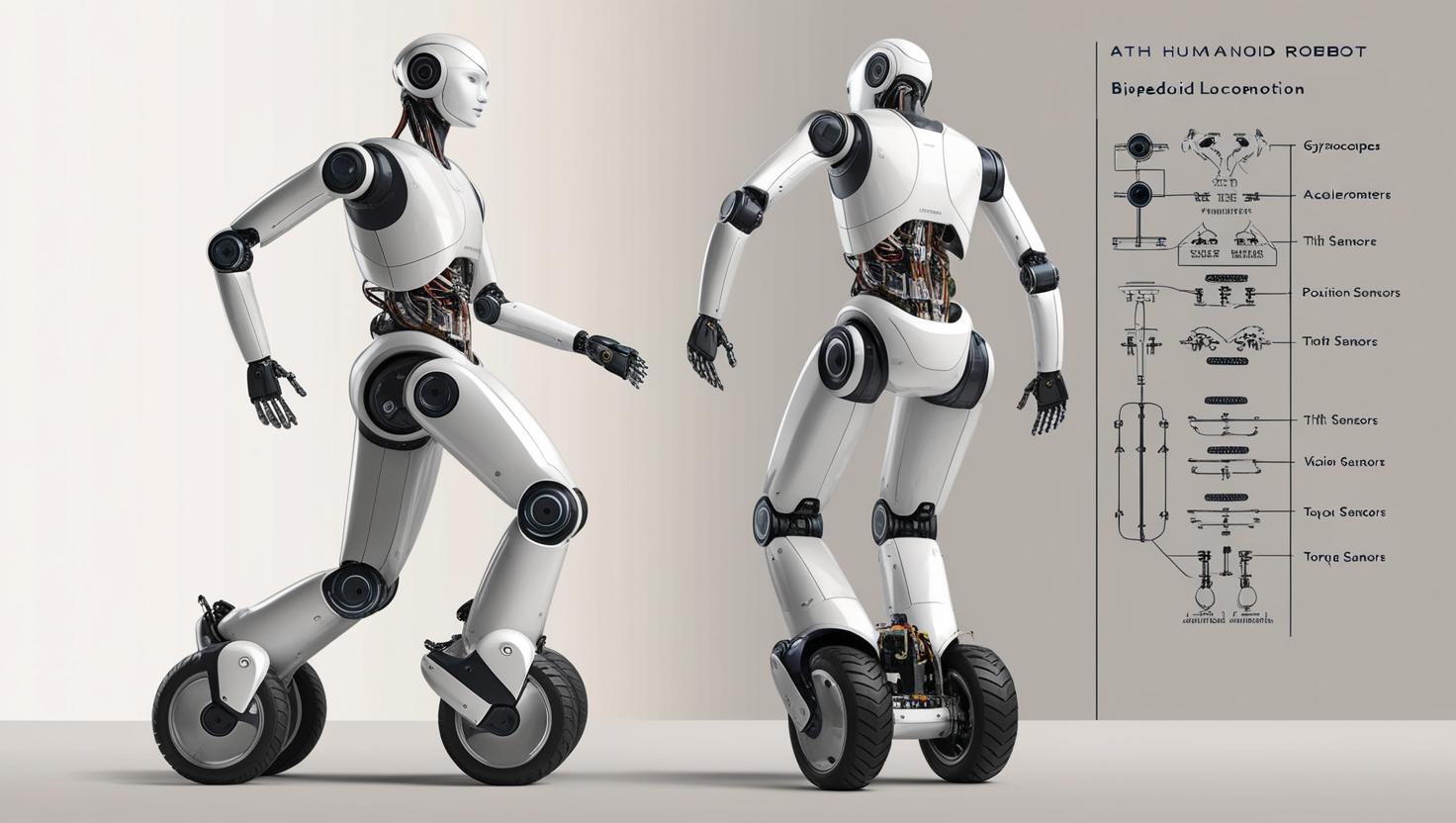
3. Mobility and Actuation Systems Reach New Performance Levels
Mobility remains one of the most critical engineering challenges in humanoid robotics. However, 2026 has seen significant improvements in actuators, joint systems, and motion control.
Key trends include:
- Lightweight, high-torque electric actuators improving strength-to-weight ratios
- Advanced balance algorithms for bipedal walking stability
- Energy-efficient motion systems extending operational runtime
- Improved dexterity in robotic hands for fine manipulation tasks
These advancements are making humanoid robots more adaptable in human-designed environments such as factories, warehouses, and retail spaces.
4. Rapid Commercialization Across Industries
Humanoid robots are moving beyond research labs into practical deployments. Early adoption is strongest in:
- Manufacturing: Assembly support, material handling, inspection tasks
- Logistics: Warehouse sorting, packaging, and inventory movement
- Healthcare: Elderly assistance and patient support functions
- Retail & Services: Customer interaction and reception tasks
Industry forecasts suggest that commercial deployments will accelerate sharply in the second half of the decade as production costs decline and hardware scales.
5. Investment and Competition Are Intensifying
The humanoid robotics sector has attracted billions of dollars in investment from major technology companies, automotive manufacturers, and venture capital firms. Companies such as Tesla, Figure AI, Apptronik, and Unitree Robotics are leading the race to commercialize scalable humanoid platforms.
Recent industry activity highlights:
- Large-scale pilot deployments in factories and logistics centers
- Strategic partnerships between robotics firms and industrial manufacturers
- Strong focus on reducing unit costs and scaling production
This competitive environment is accelerating innovation cycles and pushing robots closer to mass-market viability.
6. Market Outlook: From Pilots to Scale
The broader robotics industry is already experiencing accelerated growth, driven by labor shortages and automation demand. Humanoid robots represent one of the fastest-growing segments within this ecosystem, with strong expectations for scaling between 2026 and 2030.
However, challenges remain:
- High production costs for actuators and sensors
- Energy efficiency limitations
- Safety regulations and deployment standards
- Need for robust real-world training data
Despite these barriers, the trajectory is clear: humanoid robots are transitioning from experimental systems to economically viable workforce substitutes in select industries.
The humanoid robot market in 2026 is defined by three powerful forces—AI intelligence, advanced sensors, and improved mobility systems. Together, they are enabling robots to move, see, and think in ways that closely resemble human capability.
As costs continue to decline and performance improves, humanoid robots are expected to become a core component of industrial automation and service ecosystems over the next decade, reshaping how work is performed across multiple sectors.
About MarketsandMarkets™
MarketsandMarkets™ has been recognized as one of America’s Best Management Consulting Firms by Forbes, as per their recent report.
MarketsandMarkets™ is a blue ocean alternative in growth consulting and program management, leveraging a man-machine offering to drive supernormal growth for progressive organizations in the B2B space. With the widest lens on emerging technologies, we are proficient in co-creating supernormal growth for clients across the globe.
Today, 80% of Fortune 2000 companies rely on MarketsandMarkets, and 90 of the top 100 companies in each sector trust us to accelerate their revenue growth. With a global clientele of over 13,000 organizations, we help businesses thrive in a disruptive ecosystem.
The B2B economy is witnessing the emergence of $25 trillion in new revenue streams that are replacing existing ones within this decade. We work with clients on growth programs, helping them monetize this $25 trillion opportunity through our service lines – TAM Expansion, Go-to-Market (GTM) Strategy to Execution, Market Share Gain, Account Enablement, and Thought Leadership Marketing.
Built on the ‘GIVE Growth’ principle, we collaborate with several Forbes Global 2000 B2B companies to keep them future-ready. Our insights and strategies are powered by industry experts, cutting-edge AI, and our Market Intelligence Cloud, KnowledgeStore™, which integrates research and provides ecosystem-wide visibility into revenue shifts.
To find out more, visit www.MarketsandMarkets™.com or follow us on Twitter , LinkedIn and Facebook .
Contact:
Mr. Rohan Salgarkar
MarketsandMarkets™ INC.
1615 South Congress Ave.
Suite 103, Delray Beach, FL 33445
USA: +1-888-600-6441
