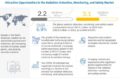
The global Radiation Detection, Monitoring & Safety Market is poised for substantial growth over the next several years, driven by increasing nuclear energy investments, expanding use of medical imaging technologies, stricter radiation safety regulations, and growing security concerns worldwide. According to MarketsandMarkets™, the market is projected to grow from approximately USD 3.80 billion in 2026 to USD 5.68 billion by 2031, registering a CAGR of 8.4% during the forecast period.
As industries increasingly rely on radiation-based technologies and governments strengthen safety standards, the demand for advanced radiation detection, monitoring, and protection solutions continues to accelerate across healthcare, nuclear power, defense, industrial manufacturing, and environmental monitoring sectors.
Growing Importance of Radiation Safety Across Industries
Radiation plays a vital role in several critical industries, particularly healthcare, energy generation, scientific research, and national security. While radiation technologies provide significant benefits, they also require robust monitoring and safety measures to protect workers, patients, the public, and the environment from harmful exposure.
The growing adoption of diagnostic imaging procedures such as CT scans, PET scans, and X-rays, along with the increasing use of radiotherapy for cancer treatment, has heightened the need for accurate radiation monitoring systems. Simultaneously, the expansion of nuclear power infrastructure worldwide has increased demand for radiation surveillance and safety equipment across power plants and research facilities.
Governments and regulatory agencies are implementing stricter workplace safety regulations and radiation protection standards, compelling organizations to invest in advanced monitoring technologies. These regulations are particularly important in industries where radiation exposure risks must be continuously measured and controlled.
Technological Advancements Driving Market Expansion
One of the key factors fueling market growth is the rapid advancement of radiation detection technologies. Modern systems are increasingly incorporating artificial intelligence (AI), Internet of Things (IoT) connectivity, cloud computing, and predictive analytics capabilities.
These innovations enable:
- Real-time radiation monitoring
- Automated threat detection
- Remote surveillance capabilities
- Predictive maintenance
- Enhanced data analytics
- Faster emergency response
AI-powered monitoring systems can identify anomalies and potential radiation threats more efficiently than traditional systems. Meanwhile, cloud-enabled platforms allow organizations to centralize radiation data and improve operational visibility across multiple locations.
The integration of wearable radiation monitoring devices and portable detection systems is also transforming workplace safety practices, particularly in healthcare facilities, nuclear plants, and defense applications.
Radiation Detection & Monitoring Products Lead Market Growth
Among product categories, radiation detection and monitoring products accounted for approximately 80% of the market share in 2025 and are expected to continue dominating the industry throughout the forecast period.
The segment’s growth is driven by increasing demand for continuous radiation surveillance across critical infrastructure and industrial environments. Organizations are deploying advanced solutions such as:
- Personal dosimeters
- Area radiation monitors
- Portable radiation detectors
- Remote sensing systems
- Environmental radiation monitoring stations
- Nuclear threat detection equipment
The need for real-time monitoring and compliance with evolving regulatory requirements is encouraging widespread adoption of these technologies across multiple sectors.
Additionally, advancements in wireless communication, sensor technologies, and AI-driven analytics are enhancing the functionality and effectiveness of radiation detection products, further boosting market demand.
Diagnostics & Therapy Segment Expected to Register Highest CAGR
The diagnostics and therapy application segment is anticipated to witness the highest CAGR of 8.9% during the forecast period.
Healthcare remains one of the largest consumers of radiation-based technologies. Medical imaging systems such as X-ray machines, CT scanners, fluoroscopy systems, and nuclear medicine equipment rely heavily on radiation for accurate diagnosis.
At the same time, radiotherapy continues to play a critical role in cancer treatment worldwide. As healthcare providers increase investments in advanced imaging and therapeutic technologies, the need for radiation monitoring and protection solutions becomes increasingly important.
Hospitals, diagnostic centers, cancer treatment facilities, and research institutions are investing in sophisticated radiation safety systems to ensure compliance, protect healthcare workers, and maintain patient safety.
Detectors Emerging as the Fastest-Growing Product Segment
Within the market, detectors are expected to be the fastest-growing product segment over the forecast period.
Radiation detectors serve as the foundation of nearly all radiation monitoring systems. Their ability to accurately identify and measure radiation levels makes them essential across a broad range of applications, including:
- Nuclear power generation
- Medical diagnostics
- Cancer treatment
- Homeland security
- Military operations
- Industrial inspection
- Environmental monitoring
Several factors are contributing to the rapid growth of detector technologies:
Rising Nuclear Infrastructure Investments
Many countries are increasing investments in nuclear energy as part of their long-term clean energy strategies. This expansion requires advanced radiation detection systems to ensure operational safety and regulatory compliance.
Growing Medical Applications
The increasing use of radiation-based diagnostic and therapeutic procedures is creating significant demand for highly sensitive detection technologies within healthcare settings.
Enhanced Security Requirements
Concerns regarding nuclear terrorism, radioactive material trafficking, and radiological threats have intensified the need for advanced detection systems at airports, ports, border crossings, and critical infrastructure facilities.
Technology Innovation
Semiconductor-based detectors, AI-enabled detection systems, wearable devices, and portable monitoring equipment are improving sensitivity, accuracy, and usability, making radiation detection solutions more effective and accessible.
North America Maintains Market Leadership
North America accounted for approximately 56% of global market revenue in 2025 and is expected to maintain its dominant position throughout the forecast period.
Several factors contribute to the region’s leadership:
- Advanced healthcare infrastructure
- Extensive use of medical imaging technologies
- High adoption of radiotherapy treatments
- Significant nuclear power generation capacity
- Strong defense and homeland security investments
- Stringent radiation safety regulations
The United States, in particular, has a large network of nuclear power plants, research laboratories, military installations, and healthcare facilities that require continuous radiation monitoring and protection systems.
Furthermore, increasing public awareness regarding radiation safety and environmental monitoring continues to support market growth across the region.
Future Outlook
The future of the radiation detection, monitoring, and safety market appears highly promising as governments, healthcare providers, energy companies, and security agencies continue prioritizing radiation protection and risk management.
Emerging technologies such as AI-powered analytics, smart sensors, cloud-based monitoring platforms, and connected wearable devices are expected to reshape the industry over the coming decade. These innovations will enable more efficient radiation surveillance, faster threat detection, improved regulatory compliance, and enhanced worker safety.
As nuclear energy investments increase, medical imaging volumes grow, and global security concerns evolve, demand for advanced radiation detection and monitoring solutions will continue to rise. Organizations that embrace next-generation radiation safety technologies will be better positioned to meet regulatory requirements, improve operational efficiency, and protect both people and the environment.
With projected revenues reaching USD 5.68 billion by 2031, the Radiation Detection, Monitoring & Safety Market is set to play a critical role in supporting safer healthcare systems, secure infrastructure, and sustainable industrial development worldwide.