The global digital economy is witnessing a transformative shift as artificial intelligence moves from experimental labs to enterprise-scale production. This transition has sparked an unprecedented infrastructure expansion, placing AI data centers at the heart of modern computing. The AI Data Center Growth trajectory is staggering, with the market valued at USD 471.59 billion in 2026 and projected to reach USD 2.02 trillion by 2032, reflecting a compound annual growth rate of 27.5%. This explosive expansion represents one of the largest infrastructure investment cycles in computing history, driven by the insatiable demand for compute resources required to train and deploy increasingly sophisticated AI models. Organizations across every sector are recognizing that AI infrastructure is no longer a discretionary technology investment but a strategic business imperative that will define competitive positioning for the next decade.
The primary catalyst behind this remarkable AI Data Center Growth is the rapid adoption of generative AI and large language models across industries. These advanced AI systems require massive computational power, specialized hardware accelerators, and high-bandwidth networking capabilities that traditional data centers were never designed to support . Technology companies, hyperscalers, and AI startups have collectively committed hundreds of billions of dollars toward expanding AI infrastructure capacity. Major cloud service providers are constructing multi-gigawatt AI campuses capable of hosting tens of thousands of GPUs and AI accelerators, fundamentally transforming the scale and architecture of modern data centers . This investment surge is creating a new class of facilities purpose-built for AI workloads, featuring high-density compute clusters, advanced cooling systems, and sophisticated power management infrastructure that can support the unique demands of generative AI training and inference.
The Architectural Transformation of AI Data Centers
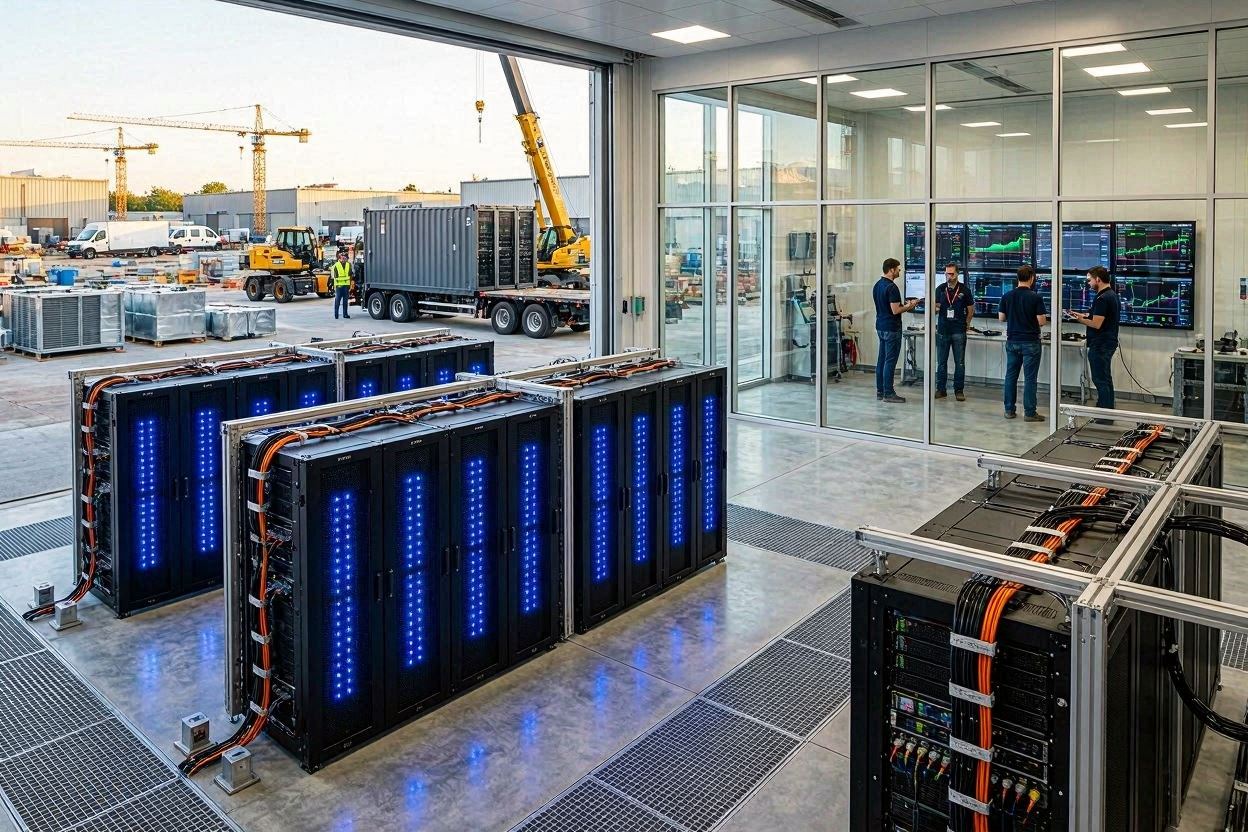
The transition from traditional cloud computing to AI-optimized infrastructure represents a ground-up redesign of data center architecture. Traditional enterprise data centers typically operate at rack densities of 5 to 15 kilowatts per rack, designed primarily for CPU-based cloud computing workloads . However, AI data centers supporting generative AI and LLM workloads require dramatically different specifications. Modern AI chips, particularly NVIDIA’s Blackwell-generation GPUs drawing up to 1,000 watts per chip, have pushed rack power densities to 120 to 132 kilowatts per rack for current-generation configurations . Industry projections suggest next-generation configurations could require 240 kilowatts per rack within a year, representing a 10x increase compared to traditional data center densities. This fundamental shift in power requirements is forcing operators to completely rethink facility design, from electrical distribution systems to thermal management solutions.
The cooling infrastructure required to support these high-density AI workloads has undergone a revolutionary transformation. Air cooling, the standard approach for data center thermal management, reaches its practical upper limit at around 40 kilowatts per rack, making it inadequate for modern AI clusters . The industry has rapidly transitioned to liquid cooling solutions, with direct-to-chip cooling becoming the required approach for current-generation AI hardware configurations. Water’s thermal conductivity is approximately 3,000 times greater than air’s, making it a fundamentally superior medium for heat removal at the densities required by AI workloads . Major operators have moved beyond evaluation phases, with Google running liquid cooling across more than 1,500 TPU pod deployments, Microsoft moving all new data center designs to closed-loop liquid cooling, and Meta committing substantial investments to liquid-cooled AI data centers . This transition represents a multi-year, multi-billion dollar infrastructure overhaul that is reshaping the data center industry.
Sovereign AI and Regional Market Dynamics
Government-led AI initiatives are emerging as powerful drivers of AI data center growth, creating new demand for localized AI infrastructure that complies with data sovereignty requirements and national security priorities. Governments worldwide are developing AI governance frameworks and critical infrastructure policies that directly influence AI data center investments . The EU AI Act, U.S. AI safety initiatives, cybersecurity regulations, data sovereignty requirements, and national AI strategies are driving investments in secure, compliant, and sovereign AI infrastructure . National programs across the United States, Europe, China, India, Japan, South Korea, the UAE, and Singapore are supporting hyperscale AI facilities, semiconductor manufacturing, and sovereign cloud deployments . This regulatory landscape is transforming AI data centers into strategic national assets, with governments increasingly viewing AI compute capacity as essential infrastructure for economic competitiveness and national security.
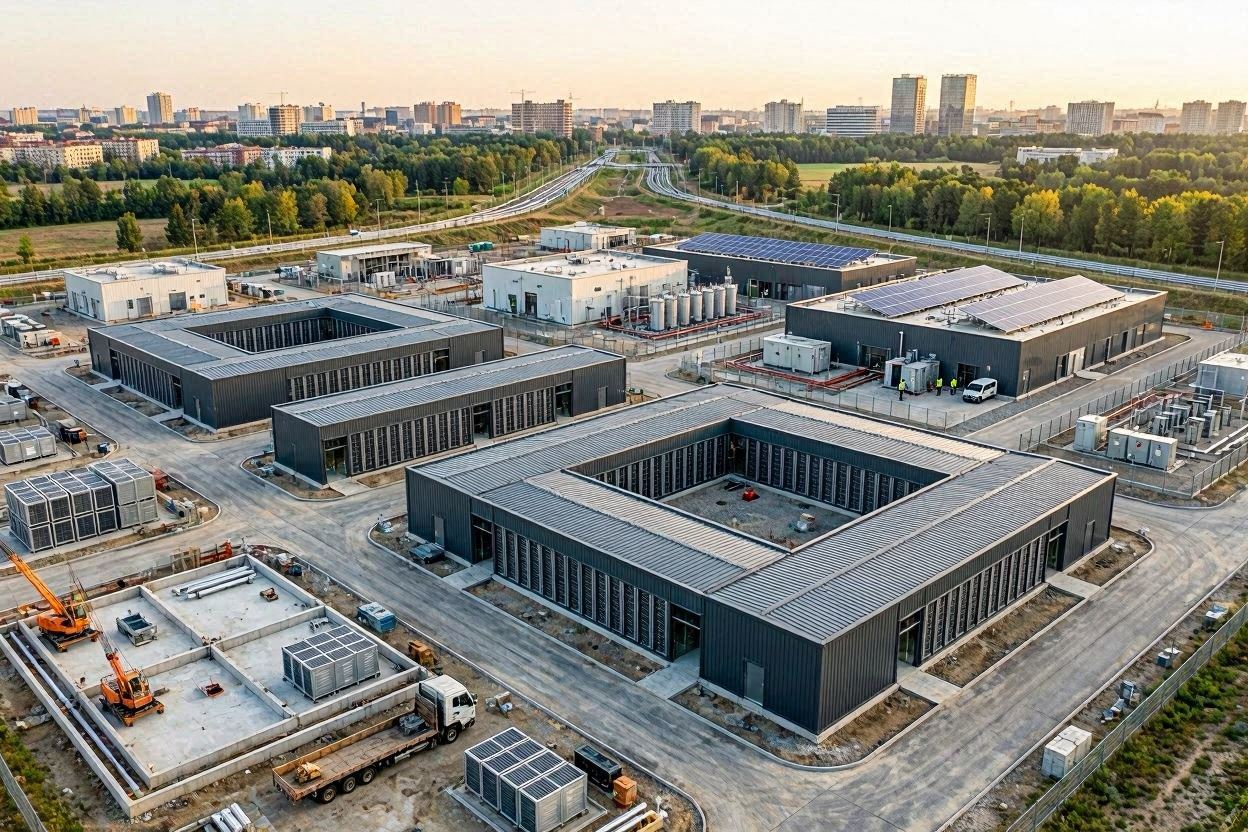
Countries such as China, India, Japan, South Korea, and Singapore are investing heavily in AI development as part of national innovation strategies to strengthen their digital economies . India’s AI Mission, the United Kingdom’s AI Opportunities Action Plan, and the European Union’s AI Continent Action Plan are indicative of growing emphasis on AI’s importance and related digital infrastructure . NTT DATA, operating over 160 data centers globally, is investing USD 1.5 billion to expand data center capacity in India to beyond 800 megawatts over time, with large-scale GPU clusters designed for AI workloads . This regional expansion reflects a broader trend of distributed AI infrastructure development, reducing dependency on any single geographic concentration and ensuring resilience in the global AI ecosystem.
The Shift from Training to Inference Workloads
While AI model training has historically dominated data center workloads and investment priorities, the industry is approaching a significant inflection point where inference workloads are expected to overtake training as the primary driver of AI data center growth. Currently, AI represents approximately a quarter of all data center workloads, with training driving most of the demand, but this could represent about half by 2030 . Industry analysts anticipate a significant shift beginning in 2027, when inference workloads could surpass training as the dominant demand for AI . This transition reflects the maturing AI ecosystem, where trained models are increasingly deployed into production environments to serve billions of user queries, process real-time data streams, and power automated decision-making systems. The growing emphasis on inference workloads has significant implications for data center architecture, as inference typically requires lower compute intensity per request but demands consistent, low-latency response times at massive scale.
The energy consumption implications of this shift are substantial and raising urgent concerns around sustainability and grid stability. An AI-generated response can consume up to ten times the energy of a standard web search, stressing both power supply and cooling subsystems . Large-scale inference generates massive aggregate demand, as billions of queries must be processed in real time . The International Energy Agency projects that global electricity consumption from data centers will more than double, rising from about 460 terawatt-hours in 2024 to roughly 1,050 terawatt-hours by 2030 under its main scenario, with AI identified as the primary driver of this growth . For the United States specifically, the IEA notes that data centers are on course to account for nearly half of projected growth in electricity demand between 2024 and 2030, underscoring how AI-driven compute is reshaping the energy-use profile of industrialized economies . This energy intensity is driving innovations in cooling efficiency, renewable energy integration, and carbon-aware scheduling to reconcile scalability with sustainability.
Download PDF Brochure @ https://www.marketsandmarkets.com/pdfdownloadNew.asp?id=267395404
Market Leaders and Competitive Dynamics
The AI data center market is moderately consolidated, with leading vendors strengthening their positions through AI-optimized infrastructure offerings and strategic partnerships. Key market participants include Dell Inc., Hewlett Packard Enterprise Development LP, Huawei Technologies Co., Ltd., Super Micro Computer, Inc., Lenovo, IBM, and IEIT Systems Co., Ltd. . Competition is increasingly focused on AI-optimized servers, liquid cooling solutions, infrastructure integration capabilities, and AI factory deployments . Technology innovation areas driving competitive differentiation include GPU and accelerator clusters, AI factories and hyperscale campuses, sovereign AI cloud platforms, edge AI data center infrastructure, and AI-specific colocation facilities . Companies capable of integrating compute, networking, storage, cooling, and AI software ecosystems into unified infrastructure solutions are best positioned to capture value from the accelerating AI-driven growth .
The enterprise segment of the AI data center market is projected to grow at the highest compound annual growth rate, as organizations across multiple industries increasingly adopt AI to enhance operational efficiency and data-driven decision-making . Enterprises in sectors such as healthcare, financial services, manufacturing, retail, and telecommunications are integrating AI technologies for applications including predictive analytics, process automation, fraud detection, and intelligent customer engagement . This growing reliance on AI-driven insights is encouraging companies to deploy dedicated AI infrastructure within their data centers or through hybrid environments that combine on-premises resources with cloud-based computing . The rapid growth of generative AI tools within enterprise workflows is further accelerating demand for specialized compute servers, scalable storage systems, and high-speed networking infrastructure . As digital transformation priorities align with AI adoption, enterprise investment in AI-ready data center infrastructure is expected to expand significantly.
Frequently Asked Questions
What is driving AI Data Center Growth in 2026?
The primary driver of AI Data Center Growth is the exponential demand for generative AI and large language model workloads, which require massive GPU-accelerated compute infrastructure for training and inference. Hyperscale cloud providers are investing billions in purpose-built AI data center campuses, while enterprises across all industries are deploying proprietary AI models and applications .
How large is the AI data center market expected to become?
The global AI data center market was valued at USD 471.59 billion in 2026 and is projected to reach USD 2.02 trillion by 2032, reflecting a compound annual growth rate of 27.5 percent . This represents one of the largest infrastructure expansion cycles in modern computing history .
What are the key challenges facing AI data center expansion?
Key challenges include high capital expenditure requirements, power availability constraints, cooling infrastructure limitations, semiconductor supply constraints, lengthy permitting processes, and evolving AI regulations . The industry also faces significant sustainability challenges related to energy consumption and grid stability .
Why is liquid cooling becoming essential for AI data centers?
Modern AI chips generate substantially more heat than traditional CPUs, with rack power densities reaching 120 to 132 kilowatts per rack for current-generation configurations . Air cooling reaches its practical upper limit at around 40 kilowatts per rack, making liquid cooling the required approach for modern AI hardware .
