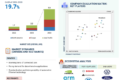
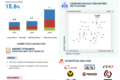
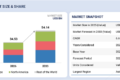
The global automotive telematics market is witnessing strong growth as vehicles become increasingly connected, intelligent, and software-driven. Automotive telematics technologies are enabling real-time communication between vehicles, cloud platforms, infrastructure systems, and users, transforming the way vehicles are monitored, managed, and serviced. Rising demand for connected vehicles, fleet management solutions, remote diagnostics, and software-defined vehicle platforms is accelerating automotive telematics market growth worldwide. The market is projected to grow from USD 10.02 billion in 2025 to USD 16.72 billion by 2032 at a CAGR of 7.6%.
Automotive Telematics Industry Overview
Automotive telematics combines telecommunications, vehicle electronics, cloud computing, GPS technologies, and wireless connectivity to enable data exchange between vehicles and external systems. Telematics solutions support a wide range of applications including navigation, vehicle tracking, emergency assistance, remote diagnostics, predictive maintenance, driver behavior monitoring, and connected mobility services.
Modern telematics systems are becoming central to the connected vehicle ecosystem as automakers increasingly focus on digital services, software-enabled features, and data-driven business models. Growing consumer demand for convenience, safety, and connectivity is further driving the adoption of automotive telematics technologies globally.
Software-Defined Vehicles Driving Automotive Telematics Market Growth
The emergence of software-defined vehicles is one of the most important factors driving the automotive telematics market. Modern vehicles increasingly rely on software platforms to manage vehicle functions, enable connectivity, and deliver continuous feature enhancements throughout the vehicle lifecycle.
Telematics systems serve as the foundation of software-defined vehicles by enabling data communication, remote monitoring, software deployment, and cloud connectivity. Automakers are investing heavily in advanced telematics platforms to support personalized user experiences, subscription-based services, and continuous software upgrades.
As the automotive industry transitions toward software-centric vehicle architectures, demand for telematics solutions is expected to increase significantly.
Over-the-Air (OTA) Updates Transforming Connected Vehicle Services
Over-the-air updates are reshaping vehicle ownership experiences by allowing manufacturers to remotely deliver software upgrades, security patches, performance improvements, and new features without requiring dealership visits.
Automotive telematics platforms provide the communication infrastructure necessary for OTA deployment, enabling manufacturers to maintain and improve vehicles throughout their operational life. OTA capabilities help reduce maintenance costs, improve cybersecurity, and enhance customer satisfaction.
The growing adoption of OTA technologies across passenger cars, electric vehicles, and connected mobility platforms is expected to remain a major driver of automotive telematics market growth.
Download PDF Brochure @ https://www.marketsandmarkets.com/pdfdownloadNew.asp?id=245073008
Fleet Management and Remote Diagnostics Accelerating Telematics Adoption
Fleet operators are increasingly utilizing telematics solutions to improve operational efficiency, reduce fuel consumption, optimize routes, and enhance vehicle utilization. Telematics systems provide real-time insights into vehicle location, driver behavior, fuel efficiency, maintenance schedules, and operational performance.
Remote diagnostics capabilities allow fleet managers and service providers to identify vehicle issues before failures occur, reducing downtime and maintenance costs. Predictive maintenance solutions powered by telematics data are helping organizations improve asset reliability and operational productivity.
The continued expansion of logistics, transportation, and commercial fleet operations is expected to create substantial growth opportunities within the automotive telematics market.
4G and 5G Connectivity Supporting Advanced Vehicle Communication
Cellular connectivity remains a critical component of automotive telematics systems. Currently, 4G connectivity continues to dominate the market due to its widespread coverage, reliability, and compatibility with existing telematics applications. Automakers are integrating 4G-based telematics systems across a wide range of vehicle categories to support navigation, vehicle monitoring, remote services, and connected mobility applications.
At the same time, the rollout of 5G networks is enabling next-generation telematics capabilities such as ultra-low latency communication, enhanced V2X connectivity, autonomous driving support, and real-time data processing. The combination of 4G and emerging 5G technologies is expected to accelerate innovation within the connected vehicle ecosystem.
Usage-Based Insurance Creating New Revenue Opportunities
Usage-Based Insurance (UBI) is emerging as one of the fastest-growing applications within the automotive telematics market. Insurance providers are increasingly utilizing telematics data to assess driving behavior, vehicle usage patterns, mileage, and risk profiles.
By leveraging telematics information, insurers can offer personalized insurance premiums based on actual driving habits rather than traditional demographic factors. This approach improves pricing accuracy while encouraging safer driving behaviors among vehicle owners.
The growing adoption of connected vehicles and advanced data analytics platforms is expected to further expand opportunities within the usage-based insurance segment.
North America Leading Automotive Telematics Market Share
North America is expected to maintain a significant share of the automotive telematics market due to its advanced digital infrastructure, high penetration of connected vehicles, and strong adoption of fleet management technologies. Regulatory requirements, commercial fleet modernization initiatives, and increasing investments in connected mobility solutions continue to support market growth across the region.
Major automotive manufacturers are integrating embedded telematics systems into new vehicle platforms while fleet operators continue expanding investments in connected vehicle technologies. The region’s leadership in software development, cloud computing, and intelligent transportation systems further strengthens its position within the global automotive telematics market.
Future Outlook for the Automotive Telematics Market
The future of the automotive telematics market will be shaped by software-defined vehicles, connected mobility ecosystems, artificial intelligence, vehicle data analytics, V2X communication, and next-generation connectivity technologies. As vehicles become increasingly connected and software-driven, telematics platforms will play a critical role in enabling digital services, autonomous driving capabilities, fleet optimization, and intelligent transportation systems.
Growing investments in cloud computing, OTA platforms, predictive maintenance technologies, and connected vehicle infrastructure will continue creating significant opportunities for automakers, telematics providers, software developers, and mobility companies. As a result, the automotive telematics market is expected to experience sustained innovation and long-term growth through 2032.
Request Free Sample Report @ https://www.marketsandmarkets.com/requestsampleNew.asp?id=245073008