Stem cell therapy is rapidly transforming the future of healthcare by offering innovative regenerative solutions for conditions that were once considered difficult or impossible to treat. From musculoskeletal disorders and neurological diseases to cardiovascular conditions and immune-related disorders, stem cell-based therapies are opening new possibilities in personalized and regenerative medicine.
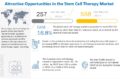
According to MarketsandMarkets™, the Stem Cell Therapy Market is projected to grow from USD 0.48 billion in 2026 to USD 3.65 billion by 2035, registering an impressive CAGR of 25.3% during the forecast period. This remarkable growth reflects increasing investments in regenerative medicine, expanding clinical research, technological advancements in stem cell manufacturing, and growing demand for innovative treatment options for chronic and degenerative diseases.
Market Snapshot
- Market Size (2026): USD 0.48 Billion
- Projected Market Size (2035): USD 3.65 Billion
- CAGR (2026–2035): 25.3%
- Forecast Period: 2026–2035
The market is witnessing accelerated momentum as biotechnology companies, pharmaceutical manufacturers, healthcare providers, and research institutions continue to invest heavily in next-generation regenerative therapies.
Key Factors Driving Market Growth
Rising Burden of Chronic and Degenerative Diseases
The growing prevalence of diseases such as osteoarthritis, Parkinson’s disease, spinal cord injuries, cardiovascular disorders, diabetes, and autoimmune conditions is creating significant demand for regenerative treatment approaches. Unlike conventional therapies that primarily manage symptoms, stem cell therapies aim to repair or regenerate damaged tissues, offering the potential for long-term clinical benefits.
Expanding Investments in Regenerative Medicine
Public and private investments in regenerative medicine continue to increase worldwide. Governments, academic institutions, biotechnology firms, and venture capital investors are funding research programs focused on improving stem cell therapies, accelerating commercialization, and expanding clinical applications.
Growing collaborations between pharmaceutical companies and biotechnology firms are also strengthening product pipelines and speeding up clinical development.
Increasing Clinical Trial Activity
The global pipeline for stem cell therapies continues to expand as researchers investigate treatments across multiple therapeutic areas. Increasing numbers of clinical trials are generating valuable efficacy and safety data, supporting future regulatory approvals and commercialization opportunities.
As clinical evidence grows, healthcare providers and patients are becoming more confident in adopting stem cell-based treatments.
Technology is Revolutionizing Stem Cell Manufacturing
Technological innovation has become one of the strongest growth drivers for the stem cell therapy market.
Modern manufacturing platforms now include:
- Advanced stem cell sourcing techniques
- Automated cell isolation and processing
- Closed-system manufacturing
- Ex vivo cell expansion technologies
- Cryopreservation solutions
- Automated potency testing
- High-throughput quality control workflows
- Enhanced traceability and chain-of-identity systems
These innovations significantly improve manufacturing scalability, reproducibility, and product consistency.
For autologous therapies, technological improvements help maintain patient-specific identity while reducing manufacturing variability. Meanwhile, allogeneic therapies benefit from standardized donor-cell expansion, large-scale manufacturing capabilities, and improved batch-to-batch consistency.
Additionally, evolving Good Manufacturing Practice (GMP) regulations, stringent sterility requirements, potency assay standards, donor eligibility guidelines, and post-market surveillance frameworks are encouraging developers to adopt contamination-controlled and validated manufacturing platforms.
Tissue-Specific Stem Cells Continue to Lead
Based on cell source, the stem cell therapy market includes:
- Adipose tissue-derived MSCs
- Bone marrow-derived MSCs
- Placenta/Umbilical cord-derived MSCs
- Induced pluripotent stem cells (iPSCs)
- Embryonic stem cells
- Tissue-specific stem cells
- Other stem cell sources
Among these, tissue-specific stem cell therapies accounted for the largest market share in 2025.
Their leadership is largely attributed to their established clinical use, well-defined biological functions, and proven therapeutic outcomes. Examples include hematopoietic stem cells used for blood disorders, corneal epithelial stem cells for ocular repair, cartilage-related therapies for musculoskeletal diseases, and skin-derived stem cells for wound healing and burn treatment.
Because these therapies have accumulated substantial clinical evidence and regulatory experience, they continue to dominate the commercial landscape.
Induced Pluripotent Stem Cells Show Exceptional Growth Potential
Although tissue-specific stem cells currently lead the market, induced pluripotent stem cells (iPSCs) are expected to register the highest growth rate between 2026 and 2035.
iPSCs can be generated from adult cells and reprogrammed into virtually any cell type, making them highly attractive for disease modeling, regenerative medicine, personalized therapies, and drug discovery.
Continuous advancements in iPSC technology are improving manufacturing efficiency, reducing ethical concerns associated with embryonic stem cells, and expanding opportunities for next-generation regenerative therapies.
Allogeneic Stem Cell Therapy Emerges as the Fastest-Growing Segment
Based on therapy type, the market is segmented into autologous and allogeneic stem cell therapies.
While autologous stem cell therapy represented the largest market share in 2025, allogeneic stem cell therapy is projected to experience the fastest growth during the forecast period.
Allogeneic therapies offer several commercial advantages, including:
- Off-the-shelf treatment availability
- Standardized manufacturing
- Lower production costs
- Large-scale manufacturing capability
- Faster patient access
- Broader commercial scalability
Growing regulatory approvals, expanding clinical pipelines, and improvements in advanced cell processing technologies continue to strengthen the outlook for allogeneic stem cell therapies.
Regional Insights
North America Maintains Market Leadership
North America held the largest share of the global stem cell therapy market in 2025.
The region benefits from:
- Strong regenerative medicine research infrastructure
- Significant biotechnology investments
- High R&D expenditure
- Advanced healthcare systems
- Active clinical trial ecosystem
- Presence of leading biotechnology and pharmaceutical companies
- Favorable funding initiatives
These factors continue to position North America as the global leader in stem cell therapy innovation.
Europe Records the Fastest Growth
Europe is projected to be the fastest-growing regional market, expanding at a remarkable 48.3% CAGR during the forecast period.
Increasing public funding, supportive regulatory initiatives, growing collaborations between academic institutions and biotechnology companies, and expanding regenerative medicine research programs are driving market growth across European countries.
Competitive Landscape
The stem cell therapy market is highly competitive, with companies focusing on clinical development, manufacturing innovation, strategic collaborations, regulatory approvals, and commercialization.
Leading companies operating in the market include:
- Vericel Corporation (US)
- Mesoblast (Australia)
- MEDIPOST (South Korea)
- JCR Pharmaceuticals Co., Ltd. (Japan)
- Takeda Pharmaceutical Company Limited (Japan)
- Anterogen Co., Ltd. (South Korea)
- CorestemChemon Inc. / Corestem, Inc. (South Korea)
- Vertex Pharmaceuticals (US)
- Pharmicell Co., Ltd. (South Korea)
- Holostem Terapie Avanzate Srl (Italy)
- Stempeutics Research Pvt. Ltd. (India)
- Cipla Limited (India)
- Bayer AG (Germany)
- Aspen Neuroscience (US)
- Longeveron Inc. (US)
- Smith+Nephew (UK)
These organizations continue to invest in research, manufacturing capabilities, strategic partnerships, and pipeline expansion to strengthen their positions in the rapidly evolving regenerative medicine landscape.
Future Outlook
The future of stem cell therapy extends far beyond today’s approved applications. Continued advances in induced pluripotent stem cell technologies, gene editing, automated manufacturing, artificial intelligence-driven cell analytics, and precision medicine are expected to reshape regenerative healthcare over the next decade.
As regulatory frameworks mature and manufacturing processes become increasingly scalable, stem cell therapies are expected to transition from specialized treatments toward broader clinical adoption. Combined with growing investments and expanding therapeutic indications, the market is well positioned for sustained long-term growth.
With the global stem cell therapy market projected to reach USD 3.65 billion by 2035, regenerative medicine is entering a new phase of commercialization—one that promises to redefine how chronic, degenerative, and complex diseases are treated worldwide.