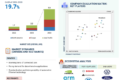
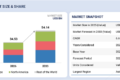
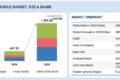
The Racing Simulator Market size is projected to grow from USD 0.5 billion in 2024 to USD 1.1 billion by 2030, registering a CAGR of 15.6% during the forecast period. Rising eSports tournaments and leagues, growing interest in professional motor racing, technological advancements, increasing affordability, and easier access to racing simulation systems are key factors driving market growth.
The global Racing Simulator Market is experiencing rapid growth as virtual racing, eSports competitions, motorsport training, and advanced simulation technologies gain popularity worldwide. Racing simulators provide users with an immersive driving experience by replicating real-world vehicle dynamics, steering behavior, braking, acceleration, and racing environments. Increasing accessibility, improving affordability, and continuous advancements in simulation technology are expanding the market beyond professional motorsports into home entertainment, gaming, and commercial applications.
Racing Simulator Market Overview
Racing simulators are specialized systems that replicate real-world racing experiences through a combination of hardware and software. Depending on the configuration, these systems can include steering wheels, pedal sets, cockpits, seats, displays, motion platforms, and simulation software.
The market is segmented by type into compact, mid-scale, and full-scale racing simulators. It is also analyzed by application, offering, vehicle type, sales channel, component, and region. The increasing availability of different simulator configurations is allowing both casual users and professional racing organizations to select systems according to their requirements and budgets.
eSports and Virtual Racing Driving Racing Simulator Market Growth
The rapid expansion of eSports and virtual racing competitions is one of the major drivers of the Racing Simulator Market. Competitive sim racing allows participants to compete in realistic virtual environments while connecting with racing communities across different regions.
The increasing popularity of virtual racing events, professional leagues, and competitions is encouraging both individual users and commercial organizations to invest in high-quality racing simulation equipment. Racing simulators also provide an accessible way for motorsport enthusiasts to participate in competitive racing without the costs associated with real-world motorsports.
The continued development of eSports ecosystems is therefore expected to support strong Racing Simulator Market growth through 2030.
Compact Racing Simulators Leading Market Demand
Compact/entry-level racing simulators are expected to hold the largest share of the Racing Simulator Market during the forecast period. Their popularity is primarily attributed to affordability, space efficiency, easy installation, and suitability for casual and beginner racing enthusiasts.
These systems are commonly used for home entertainment and can also be deployed in arcades, gaming lounges, and family entertainment centers. Compact systems typically combine basic racing hardware such as steering wheels, pedal sets, frames, monitor stands, and seats.
The increasing accessibility of affordable racing simulation systems is expanding the consumer base and supporting the growth of the compact simulator segment.
Download PDF Brochure @ https://www.marketsandmarkets.com/pdfdownloadNew.asp?id=247895850
Steering Wheels Emerging as a Key Racing Simulator Component
Steering wheels are projected to be the largest and fastest-growing component segment in the Racing Simulator Market through 2030. Modern racing simulator steering wheels increasingly replicate the functionality and design of real racing vehicle steering systems.
Advanced steering wheels can include buttons, paddle shifters, rotary controls, digital displays, and force-feedback systems. Force feedback enables users to experience resistance and vibrations associated with different driving surfaces and vehicle maneuvers, creating a more realistic simulation experience.
The growing availability of customized and licensed steering wheels, together with developments in direct-drive systems and advanced control technologies, is expected to support continued demand for high-performance racing simulator hardware.
VR and AI Transforming Racing Simulation Technology
Technological innovation is a major trend shaping the Racing Simulator Market. The integration of virtual reality (VR), artificial intelligence (AI), advanced graphics, and motion simulation is making racing environments increasingly realistic and immersive.
VR technologies enable users to experience three-dimensional racing environments, while AI can enhance virtual competitors, simulation behavior, and training applications. Advanced motion platforms further reproduce vehicle movements, helping users experience acceleration, braking, cornering, and other driving dynamics.
The continued integration of these technologies is expected to increase the appeal of racing simulators among both recreational users and professional racing organizations.
Professional Driver Training Creating New Market Opportunities
Professional driver training represents an important opportunity within the Racing Simulator Industry. Racing simulators allow professional drivers and motorsport teams to practice racing scenarios, analyze vehicle behavior, and improve driving skills in controlled environments.
Simulation can also reduce dependence on physical vehicles and real-world track time for certain training and development activities. This makes advanced racing simulators valuable to motorsport teams, professional drivers, automotive organizations, and research institutions.
Growing emphasis on simulation-based training is expected to create additional opportunities for advanced mid-scale and full-scale simulator systems.
Personal and Commercial Applications Expanding Market Demand
The Racing Simulator Market serves both personal and commercial applications. Personal users are increasingly adopting compact systems for home entertainment, gaming, and recreational sim racing.
Commercial applications include gaming centers, arcades, family entertainment centers, professional training facilities, motorsport organizations, and other simulation environments. The availability of systems across different price points and configurations is helping racing simulation reach a broader customer base.
The combination of recreational gaming, professional training, and competitive racing is expected to continue expanding overall market demand.
North America Leading the Racing Simulator Market
North America is expected to lead the global Racing Simulator Market during the forecast period. The region benefits from an established gaming and eSports culture, strong motorsports participation, high disposable income, and widespread acceptance of technologically advanced entertainment products.
Virtual racing events associated with motorsport series such as NASCAR and IndyCar contribute to the region’s strong sim racing ecosystem. North America is also at the forefront of developments in motion platforms, high-definition graphics, and VR-based racing simulation.
The presence of major racing simulator providers further supports regional market development.
Future Outlook for the Racing Simulator Market
The future of the Racing Simulator Market will be shaped by the continued expansion of eSports, virtual racing communities, professional driver training, VR, AI, motion simulation, and increasingly affordable hardware.
The growing accessibility of compact racing simulators will continue bringing new users into the market, while advanced steering wheels, motion platforms, and immersive technologies will support demand for mid- and full-scale systems. The convergence of gaming, motorsports, professional training, and simulation technology is expected to create significant opportunities for racing simulator manufacturers and technology providers.
With the market projected to reach USD 1.1 billion by 2030 from USD 0.5 billion in 2024 at a CAGR of 15.6%, the Racing Simulator Market is positioned for strong growth and continued technological innovation through 2030.
Request Free Sample Report @ https://www.marketsandmarkets.com/requestsampleNew.asp?id=247895850