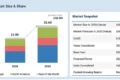
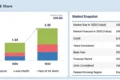
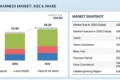
The global automotive camera market size is projected to grow from USD 9.29 billion in 2026 to USD 15.82 billion by 2033, at a CAGR of 7.9%. The demand for automotive cameras is growing mainly due to technological advancements and growing consumer focus on advanced driving systems for safety and a comfortable experience. Additionally, the advancements in semi-autonomous vehicles and SDV architecture, including AI/ML-based algorithm are driving the demand for automotive cameras.
Automobile manufacturers across the globe are focusing on incorporating Level 2/Level 2+ automation, connected mobility, improved SDV architectures, and autonomous driving technologies. As ADAS technologies develop, automotive OEMs like Hyundai, Toyota, Mercedes-Benz, BMW, and Volkswagen are becoming more reliant on developing distinctive, software-powered ADAS functionalities, tailored to mid- to premium-range vehicles and serving region-specific customer requirements. This technological shift toward customizable ADAS packages enabled by automotive camera-based technologies, such as ACC, DMS, adaptive intelligent lighting, and night vision, is transforming these features from cost centers into monetizable offerings through subscriptions, feature-on-demand models, and trim-based differentiation. At the same time, global and regional Tier 1 suppliers & technology providers are capitalizing on this transition by advancing high-resolution imaging, AI-enabled perception, and sensor fusion integrated with centralized ECU and edge-processing architectures. This will help all key stakeholders, including hardware, software, and data service providers, to create a new revenue pool and unlock sustained business ventures through scalable, regionally adaptive, and customer-segmented camera-based ADAS solutions.
Download PDF Brochure @ https://www.marketsandmarkets.com/pdfdownloadNew.asp?id=125124333
The digital cameras segment is projected to experience exceptional deployment in the automotive camera market over the next 3-4 years, as it supports almost every major ADAS function that relies on real-time, high-definition visual data. Digital camera adoption is accelerating as vehicle manufacturers integrate multiple ADAS functions into fewer, more capable high-resolution cameras (5MP–8MP+), reducing redundant hardware while increasing per-camera complexity through HDR imaging, AI-enabled perception, and edge processing. Technology companies are evolving toward centralized solutions and automotive Ethernet capabilities to facilitate high-speed data transmission and ECU consolidation, leading to stabilization & slightly lower camera count per vehicle in the future while adding significant value to the system. On the other hand, developments in CMOS cameras, night-vision capabilities, and sensor fusion are broadening applications, especially in luxury ICE and electric vehicles. Such advancements not only support the camera and semiconductor vendors but also complement the efforts of the adjacent players, like wiring harnesses and connectivity solutions, due to the need for high-speed data and power transmission, resulting in sustainable growth in the mid to long run. The Asia Pacific has emerged as the largest hub for pure electric vehicle (EV) adoption and the second largest hub for internal combustion engine (ICE) vehicle production, driven by high-volume manufacturing ecosystems and strong domestic demand. Regional OEMs operate under tight cost and margin pressures, which push them to prioritize cost-competitive ADAS features built on low-cost components rather than premium, high-end systems. As a result, these OEMs rely on local suppliers for critical components such as cameras, semiconductors, and sensors to maintain supply chain efficiency and pricing advantage. This creates a significant opportunity for regional suppliers to get new business opportunities by offering cost-benefit solutions, quality products, localized support, faster turnaround times, and proven reliability. Ultimately, suppliers that can demonstrate strong engineering capabilities, scalability, and alignment with OEM cost-performance expectations will be best positioned to build trust and secure long-term contracts.
North America is projected to be the largest region in the automotive camera market.
North America is projected to be the largest market for automotive cameras during the forecast period. The region’s leadership is driven by the strong adoption of ADAS and increasing integration of camera-based safety features across vehicle segments. Full-size SUVs such as the Ford Expedition and Chevrolet Suburban continue to witness strong demand, reflecting growing consumer preference for larger vehicles equipped with advanced safety and comfort technologies.
Additionally, regulatory support from agencies such as the National Highway Traffic Safety Administration (NHTSA) continues to drive adoption, with mandates like rear-view cameras and increasing emphasis on ADAS features such as lane departure warning and blind spot detection across passenger vehicles, LCVs, and HCVs. Regional OEMs, including Ford Motor Company, Tesla, Inc., and General Motors, are further supporting market growth by deploying camera-centric semi-autonomous systems. In 2025-2026, Ford expanded its BlueCruise hands-free driving system across more vehicle models in North America, while General Motors enhanced its Super Cruise and Ultra Cruise platforms with improved multi-camera integration. Tesla continues to advance its Full Self-Driving (FSD) system with a vision-only approach, further increasing reliance on camera-based perception. Moreover, investments in AI-enabled camera systems, driver monitoring systems, and 360-degree surround-view technologies by Tier 1 suppliers are strengthening the regional ecosystem. High consumer awareness, strong purchasing power, and rising adoption of Level 2+ automation are further accelerating demand for automotive cameras in North America.
Key Players
The automotive camera market is dominated by global players such as Robert Bosch GmbH (Germany), Manga International Inc. (Canada), Valeo (France), ZF Friedrichshafen AG (Germany), Denso Corporation (Japan), and Ficosa Internacional SA (Spain). These companies have adopted product development strategies, expansions, partnerships & collaborations, and mergers & acquisitions to gain traction in the market.
Request Free Sample Report @ https://www.marketsandmarkets.com/requestsampleNew.asp?id=125124333