NFC Market Trends are evolving rapidly as Near Field Communication (NFC) technology moves beyond traditional contactless payments into smart retail, digital identity, product authentication, access control, ticketing, healthcare, automotive, and connected consumer electronics. NFC enables short-range wireless communication between compatible devices when they are brought into close proximity, supporting fast, convenient, and secure interactions.
According to MarketsandMarkets, the global NFC Market is estimated at USD 24.42 billion in 2026 and is projected to reach USD 37.42 billion by 2032, registering a CAGR of 7.4% from 2026 to 2032. Increasing adoption of contactless payments, digital wallets, NFC-enabled smartphones, wearable devices, and connected consumer electronics is supporting market expansion. Investments in digital payment infrastructure, smart retail, transportation, automotive, healthcare, and access control are also creating new opportunities for NFC technology.
The latest NFC Market Trends demonstrate a shift toward connected experiences in which a simple tap can initiate a payment, verify a product, unlock a building, authenticate a user, access digital information, or connect a device. Advances in NFC ICs, antennas, tags, readers, secure elements, and low-power technologies are further expanding the technology’s applications.
Top Key Takeaways
- The global NFC Market is projected to grow from USD 24.42 billion in 2026 to USD 37.42 billion by 2032.
- The market is expected to register a 7.4% CAGR from 2026 to 2032.
- Contactless payments and digital wallets remain major drivers of NFC adoption.
- Smart retail and NFC-enabled product authentication are creating new growth opportunities.
- Digital identity and access control are expanding NFC applications beyond payments.
- Card emulation is expected to account for the largest operating-mode share in 2026.
- Consumer electronics are expected to account for the largest vertical share in 2032.
- NFC ICs and antennas are expected to hold the largest hardware share in 2032.
- Asia Pacific accounted for approximately 46% of the NFC Market in 2025.
- Security, interoperability, energy harvesting, smart retail, wearables, and connected devices will shape the next phase of NFC Market Trends.
Contactless Payments Remain a Major Growth Driver
Contactless payments continue to be one of the most important forces behind NFC Market Trends. Consumers increasingly use smartphones, smartwatches, payment cards, and other NFC-enabled devices to complete transactions without physically inserting or swiping cards.
The growth of digital wallets is reinforcing this trend. NFC enables smartphones and wearable devices to communicate with payment terminals through close-range wireless communication, providing a convenient mechanism for mobile transactions. MarketsandMarkets identifies the increasing adoption of contactless payments and digital wallets as a major driver of the NFC Market.
The expansion of digital payment infrastructure across banking, retail, transportation, and hospitality is creating demand for NFC ICs, antennas, readers, secure elements, and payment-enabled devices. As merchants increasingly support contactless transactions, the ecosystem surrounding NFC is expanding across both developed and emerging markets.
NFC is also becoming important in mobile point-of-sale applications. Smartphones and compact NFC readers can enable businesses to accept contactless payments without relying exclusively on traditional fixed payment terminals. This flexibility can be particularly useful for small businesses, mobile commerce, transportation, events, and other environments requiring portable payment solutions.
Download PDF Brochure @ https://www.marketsandmarkets.com/pdfdownloadNew.asp?id=520
Smart Retail Creates New NFC Market Opportunities
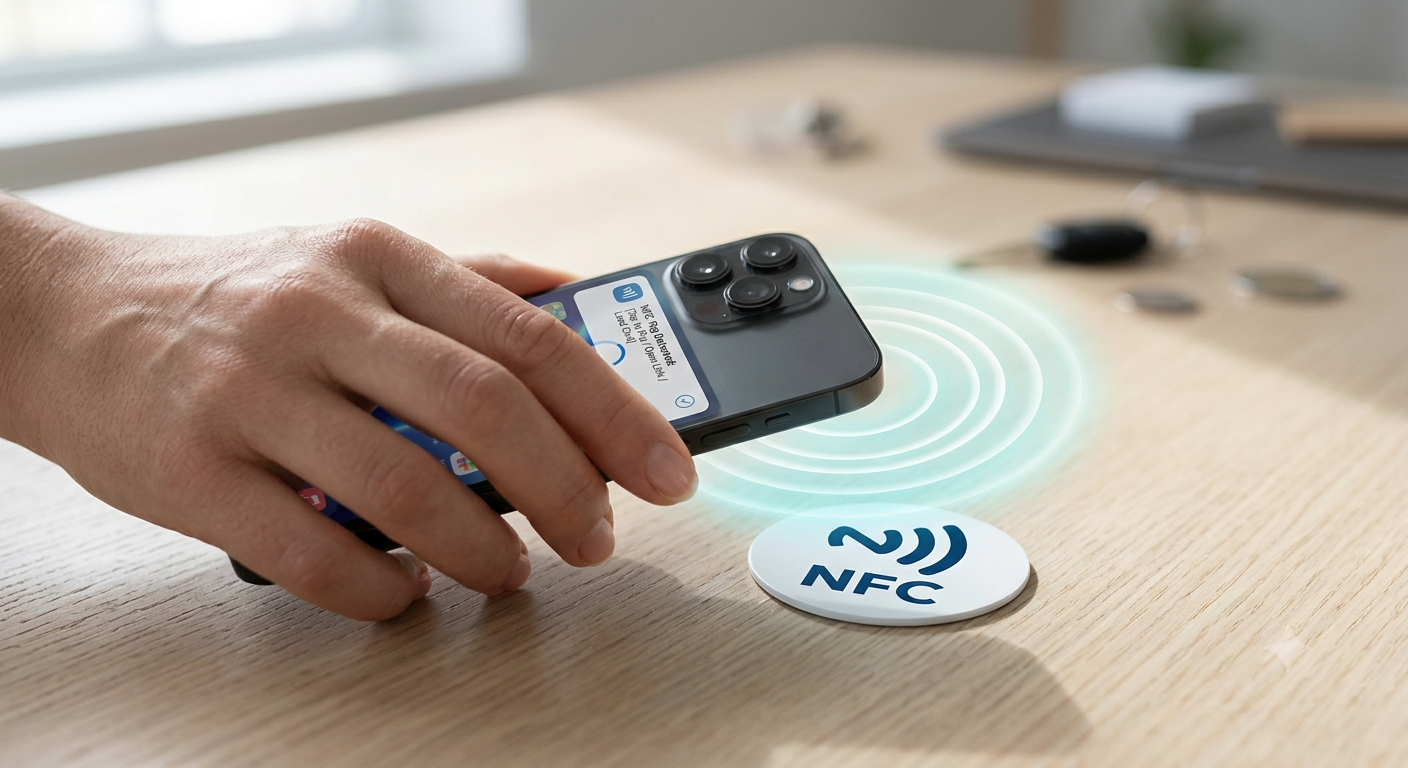
Smart retail is emerging as one of the most promising areas within NFC Market Trends. Retailers and brands are embedding NFC tags into products and packaging to connect physical products with digital experiences.
NFC-enabled products can allow consumers to tap their smartphones to access product information, verify authenticity, view digital content, register products, or interact with brands. This creates a bridge between physical retail environments and digital platforms.
MarketsandMarkets identifies the expansion of NFC-enabled smart retail, product authentication, smart packaging, and digital product identification as important opportunities. NFC tags can help retailers and manufacturers enhance customer engagement while supporting product traceability and anti-counterfeiting initiatives.
For premium products, pharmaceuticals, food and beverages, electronics, and other categories vulnerable to counterfeiting, NFC-based authentication can provide an additional digital layer. Consumers can use smartphones to verify whether a product is associated with an authenticated digital identity.
This convergence of NFC tags, cloud platforms, product databases, and mobile devices is creating new opportunities for retailers, manufacturers, packaging companies, and technology providers.
Digital Identity and Authentication Expand NFC Applications
Another important development shaping NFC Market Trends is the increasing use of NFC for digital identity and authentication. NFC can support secure credential exchange and authentication in applications such as access control, identification, digital credentials, and connected devices.
The technology’s short communication range can be useful in scenarios where users intentionally bring a device or credential close to a reader. NFC card emulation is particularly important because it enables smartphones and smartwatches to function as digital credentials.
MarketsandMarkets expects the card emulation segment to account for the largest share of the NFC Market in 2026, driven by applications in contactless payments, digital wallets, transit ticketing, access control, and digital identification.
This expansion is creating opportunities for NFC-based employee credentials, mobile access cards, digital identification systems, and smart-building access solutions. The integration of NFC with other wireless technologies such as Bluetooth Low Energy and ultra-wideband can further support interoperable access-control ecosystems.
NFC-Enabled Smartphones and Wearables Fuel Adoption
Smartphones and wearable devices are at the center of many NFC Market Trends. NFC functionality is increasingly integrated into smartphones, smartwatches, fitness trackers, and other connected consumer electronics.
These devices can use NFC for payments, authentication, device pairing, ticketing, access control, and information exchange. Wearables can provide an especially convenient interface because users can complete transactions or access services without taking out a smartphone.
MarketsandMarkets expects consumer electronics to account for the largest vertical share in 2032, supported by widespread NFC integration in smartphones, smartwatches, tablets, laptops, and other connected devices.
Miniaturization of NFC ICs and antennas is helping manufacturers integrate NFC functionality into increasingly compact devices. Improvements in power efficiency and component integration are also expanding possibilities for NFC-enabled wearables and IoT products.
The growing number of NFC-enabled endpoints is consequently strengthening demand throughout the NFC ecosystem, including semiconductor components, antennas, secure elements, tags, readers, and software.
NFC ICs and Antennas Support Hardware Growth
Hardware innovation is another key factor influencing NFC Market Trends. NFC ICs and antennas form the foundation of many NFC-enabled devices and systems.
MarketsandMarkets expects the NFC ICs & antennas segment to hold the largest market share in 2032. Their widespread integration into smartphones, wearables, payment terminals, automotive systems, and other connected devices is supporting demand.
Advances in miniaturized ICs, antenna design, power efficiency, and component integration are enabling manufacturers to incorporate NFC into smaller and more sophisticated products.
The ecosystem also includes NFC tags and readers. Tags are important for product identification, authentication, smart packaging, and retail applications, while readers are essential for payments, access control, ticketing, and device interaction.
As NFC applications diversify, hardware manufacturers are developing application-specific solutions optimized for security, power consumption, communication performance, size, and operating environment.
NFC Expands into Automotive and Healthcare
Automotive and healthcare are emerging application areas within NFC Market Trends. In automotive environments, NFC can support digital keys, vehicle access, authentication, pairing, and connected experiences.
NFC-based digital keys can allow smartphones or other authorized devices to interact with vehicles through secure short-range communication. The technology can also complement Bluetooth and ultra-wideband solutions in broader connected-vehicle ecosystems.
Healthcare is another area where NFC can support product identification, authentication, information access, and connected medical applications. For example, NFC tags can be integrated into medical products to provide access to product information and support traceability.
MarketsandMarkets highlights healthcare and automotive among the industries increasingly deploying NFC solutions alongside banking, retail, transportation, hospitality, and consumer electronics.
The ability to connect physical objects with digital information is particularly valuable in healthcare and pharmaceutical applications, where traceability and authentication can be important.
Energy Harvesting Opens New NFC Opportunities
A notable emerging development in NFC Market Trends is the use of energy harvesting. MarketsandMarkets projects light energy harvesting to register the highest CAGR among energy-source segments during the forecast period. This growth is supported by advances in photovoltaic energy harvesting and battery-free IoT sensing applications.
Energy harvesting can enable connected devices to operate with reduced dependence on conventional batteries. This is particularly relevant for low-power sensors, smart labels, connected packaging, and IoT applications.
Battery-free or ultra-low-power NFC devices can potentially reduce maintenance requirements and enable deployment in locations where replacing batteries is inconvenient. The convergence of NFC, energy harvesting, sensors, and IoT could therefore create new applications across retail, logistics, healthcare, smart buildings, and industrial environments.
Asia Pacific Leads the NFC Market
Regional development is another major element of NFC Market Trends. Asia Pacific accounted for approximately 46% of the global NFC Market in 2025, making it the largest regional market. MarketsandMarkets attributes this position to rapid adoption of contactless payments, widespread penetration of NFC-enabled smartphones and wearables, expanding digital payment infrastructure, and the presence of major NFC semiconductor and technology providers across China, Japan, South Korea, and India.
Investments in digital wallets, smart transportation, connected consumer electronics, and contactless payment infrastructure are further supporting NFC adoption across the region.
The region’s strong electronics manufacturing ecosystem also creates favorable conditions for NFC component development and production. As consumer electronics penetration increases and digital payment ecosystems expand, NFC adoption is expected to continue across both consumer and commercial applications.
Security Becomes Critical for NFC Market Trends
While NFC provides convenience, security remains a critical consideration. NFC applications involving payments, banking, digital identity, access control, and healthcare require protection against unauthorized access and other security threats.
MarketsandMarkets identifies evolving contactless security threats as a key challenge. These include unauthorized access, data interception, relay attacks, and credential theft.
NFC providers are therefore focusing on secure elements, encryption, tokenization, authentication, and improved security protocols. Security must be balanced with ease of use because NFC applications are often designed around rapid, seamless interactions.
Interoperability is another challenge. Differences among smartphones, operating systems, readers, tags, secure elements, and software platforms can create integration complexity. Limited device compatibility can slow deployment in some applications and increase development requirements.
Competitive Landscape
The NFC Market includes semiconductor manufacturers, connectivity providers, security companies, tag manufacturers, reader providers, and technology solution companies. Key players identified by MarketsandMarkets include NXP Semiconductors, Broadcom, Qualcomm Technologies, Texas Instruments, STMicroelectronics, Renesas Electronics, ams-OSRAM, Thales, Infineon Technologies, and Sony.
Companies are focusing on NFC ICs, antennas, secure elements, readers, payment technologies, authentication, and low-power solutions. Recent developments demonstrate the industry’s movement toward secure smart-home onboarding, product authentication, access control, and connected-device applications.
For example, MarketsandMarkets reports that in June 2026, STMicroelectronics launched the ST25DA-C, supporting secure NFC commissioning for Matter 1.6-enabled smart-home devices. NXP also introduced the EdgeLock SE051H for secure NFC commissioning of Matter-enabled devices.
These developments demonstrate how NFC is expanding from payments into connected-device provisioning and smart-home ecosystems.
Future Outlook for NFC Market Trends
The future of NFC Market Trends will be shaped by the convergence of contactless payments, digital identity, smart retail, connected devices, IoT, wearable technology, and secure authentication.
NFC is increasingly functioning as a digital bridge between physical objects and connected platforms. A product package can become an interactive digital interface, a smartphone can become a payment credential or access key, and a wearable can serve as a secure transaction device.
With the market projected to reach USD 37.42 billion by 2032, the opportunity extends well beyond conventional payment applications.
As NFC ICs and antennas become smaller, secure elements become more sophisticated, and energy-efficient technologies advance, NFC can become increasingly integrated into everyday products and infrastructure. Smart retail, product authentication, digital identity, connected automotive systems, healthcare, and access control are likely to remain important areas of opportunity.
Frequently Asked Questions
1. What are the key NFC Market Trends?
Key NFC Market Trends include contactless payments, digital wallets, smart retail, digital identity, product authentication, access control, NFC-enabled smartphones, wearables, connected consumer electronics, and low-power NFC technologies.
2. What is the size of the NFC Market?
The global NFC Market is estimated at USD 24.42 billion in 2026 and is projected to reach USD 37.42 billion by 2032, growing at a CAGR of 7.4%.
3. How is NFC transforming smart retail?
NFC enables retailers and manufacturers to embed digital functionality into products and packaging, allowing consumers to access product information, authenticate products, interact with brands, and access digital content through a simple tap.
4. Why is digital identity important for NFC?
NFC can enable smartphones, smartwatches, and other devices to function as digital credentials for payments, access control, ticketing, authentication, and identification applications.
5. Which region has the largest NFC Market share?
Asia Pacific held approximately 46% of the global NFC Market in 2025, supported by contactless payment adoption, NFC-enabled smartphones and wearables, digital payment infrastructure, and a strong NFC technology ecosystem.
About MarketsandMarkets™
MarketsandMarkets™ has been recognized as one of America’s Best Management Consulting Firms by Forbes, as per their recent report.
MarketsandMarkets™ is a blue ocean alternative in growth consulting and program management, leveraging a man-machine offering to drive supernormal growth for progressive organizations in the B2B space. With the widest lens on emerging technologies, we are proficient in co-creating supernormal growth for clients across the globe.
Today, 80% of Fortune 2000 companies rely on MarketsandMarkets, and 90 of the top 100 companies in each sector trust us to accelerate their revenue growth. With a global clientele of over 13,000 organizations, we help businesses thrive in a disruptive ecosystem.
The B2B economy is witnessing the emergence of $25 trillion in new revenue streams that are replacing existing ones within this decade. We work with clients on growth programs, helping them monetize this $25 trillion opportunity through our service lines – TAM Expansion, Go-to-Market (GTM) Strategy to Execution, Market Share Gain, Account Enablement, and Thought Leadership Marketing.
Built on the ‘GIVE Growth’ principle, we collaborate with several Forbes Global 2000 B2B companies to keep them future-ready. Our insights and strategies are powered by industry experts, cutting-edge AI, and our Market Intelligence Cloud, KnowledgeStore™, which integrates research and provides ecosystem-wide visibility into revenue shifts.
To find out more, visit www.MarketsandMarkets™.com or follow us on Twitter , LinkedIn and Facebook .
Contact:
Mr. Rohan Salgarkar
MarketsandMarkets™ INC.
1615 South Congress Ave.
Suite 103, Delray Beach, FL 33445
USA: +1-888-600-6441
