The 3D Metrology Market Growth is being accelerated by the transformation of conventional manufacturing into connected, automated, and data-driven production environments. Three-dimensional metrology technologies enable manufacturers to measure, inspect, and analyze the dimensions and geometry of components with high accuracy. As industries increasingly adopt smart factories, Industry 4.0, artificial intelligence (AI), robotics, and industrial IoT, 3D metrology is becoming an important technology for maintaining quality while improving production efficiency.
According to MarketsandMarkets, the global 3D Metrology Market was valued at USD 11.13 billion in 2024 and is projected to grow from USD 11.57 billion in 2025 to USD 15.01 billion by 2029, registering a CAGR of 6.2% during the forecast period. Increasing adoption of 5G and IoT-enabled manufacturing, growing demand for AI-powered metrology tools, and the shift from labor-intensive inspection toward automated optical inspection are among the major factors supporting market expansion. The rising production of electric vehicles (EVs) and autonomous vehicles (AVs), along with Industry 4.0, big data analytics, and cloud computing, is further creating opportunities.
The evolution of manufacturing is also changing how companies use metrology. Rather than treating inspection as a separate final-stage activity, manufacturers are increasingly integrating measurement technologies into production workflows. This allows quality data to be captured closer to the point of production and used to identify deviations, optimize processes, and reduce defects.
Top Key Takeaways
- The global 3D Metrology Market was valued at USD 11.13 billion in 2024 and is projected to reach USD 15.01 billion by 2029.
- The market is expected to grow at a 6.2% CAGR from 2024 to 2029.
- Smart factories and Industry 4.0 are increasing demand for connected metrology solutions.
- AI and machine learning are creating opportunities for automated inspection, defect detection, and advanced data analysis.
- The 3D AOI segment is expected to register the highest CAGR among product types.
- Quality control and inspection remain the dominant application area.
- EV and autonomous vehicle production is increasing demand for high-precision measurement technologies.
- The medical end-use industry is expected to register the highest CAGR during the forecast period.
- Asia Pacific is expected to be the fastest-growing region, with an estimated 8.0% CAGR.
- Cloud computing, big data analytics, IoT, AI, and Industry 4.0 will create new opportunities for the next generation of 3D metrology systems.
Download PDF Brochure @ https://www.marketsandmarkets.com/pdfdownloadNew.asp?id=203080758
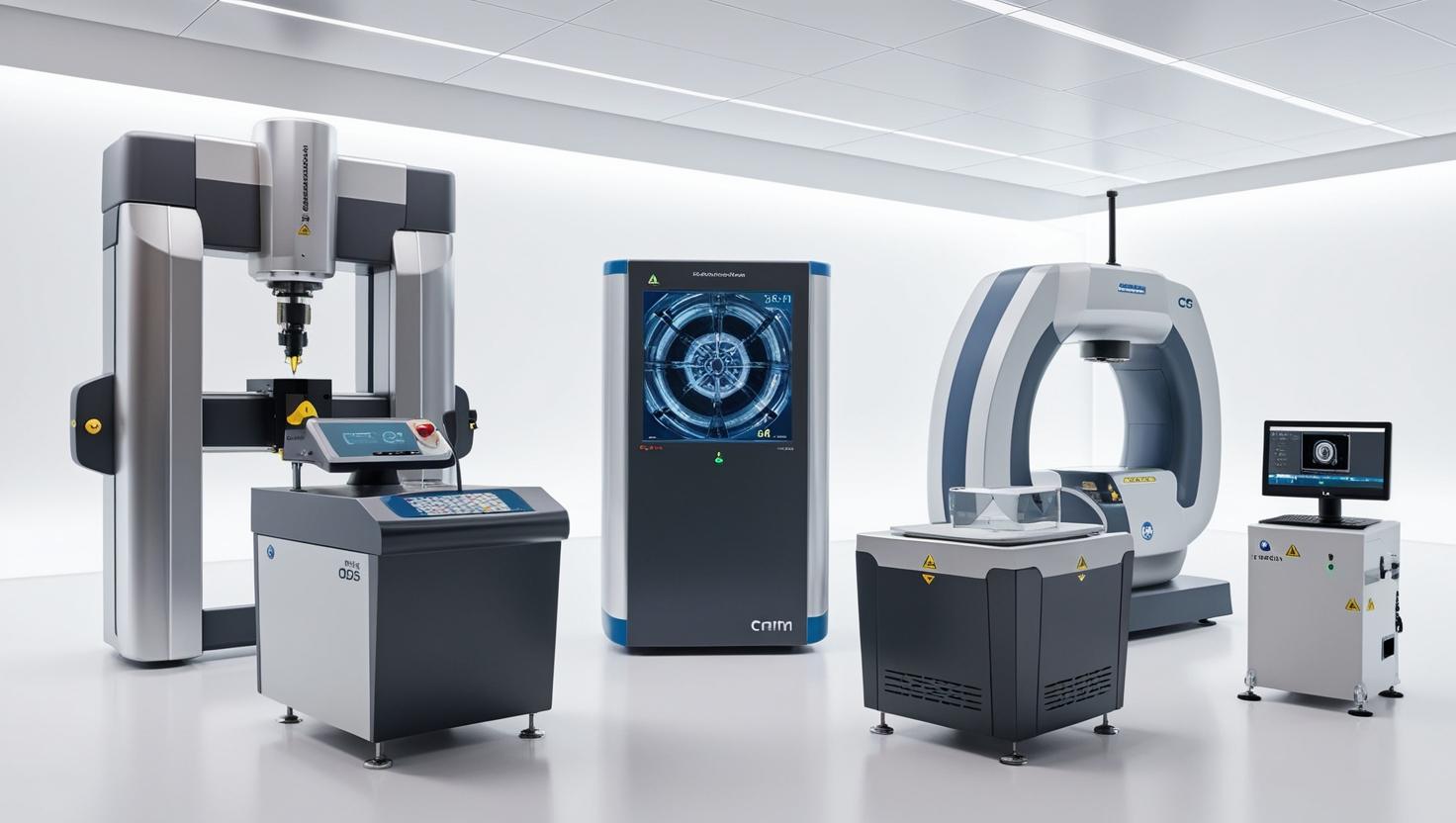
Smart Factories Accelerate 3D Metrology Market Growth
The emergence of smart factories is one of the major factors influencing 3D Metrology Market Growth. Industry 4.0 connects machines, sensors, production equipment, inspection systems, and analytics platforms, allowing manufacturers to create more responsive and automated production environments.
In these environments, 3D metrology can provide digital measurement data that supports continuous quality monitoring. Coordinate measuring machines (CMMs), optical scanners, automated optical inspection systems, and other measurement technologies can be integrated into manufacturing workflows to capture dimensional information and identify variations.
The increasing use of IoT-enabled manufacturing is also generating larger volumes of production and inspection data. Manufacturers can use this data to understand process performance and improve quality-control strategies. MarketsandMarkets identifies the adoption of Industry 4.0, 5G and IoT-enabled manufacturing, big data analytics, and cloud computing as important factors supporting the market.
As smart factories expand, manufacturers are therefore looking for metrology systems that provide accurate measurements while also supporting automation, connectivity, and data integration.
AI-Driven Inspection Creates New Opportunities
Artificial intelligence is emerging as an important technology in the evolution of 3D metrology. AI and machine learning can analyze large quantities of measurement data, detect patterns, identify abnormalities, and support automated defect detection.
According to MarketsandMarkets, AI-powered inspection and quality-control systems can improve accuracy and efficiency in defect detection while reducing labor requirements. AI-based data analysis can also identify patterns and anomalies within large datasets, supporting decision-making and preventive maintenance. In addition, AI can support simulation, virtual testing, rapid prototyping, and design optimization.
The integration of AI with 3D scanning and inspection technologies creates opportunities for manufacturers to move toward more intelligent quality management. Instead of simply identifying whether a component meets a specification, AI-enabled systems can analyze inspection results and help identify recurring process deviations.
Generative AI could further expand these capabilities by supporting data interpretation, engineering workflows, and design-related applications. The combination of AI, metrology software, and connected manufacturing systems is consequently becoming an important area of technology development.
Automated Optical Inspection Gains Momentum
The transition from manual inspection toward automated systems is another important contributor to 3D Metrology Market Growth. Automated optical inspection (AOI) systems enable manufacturers to inspect components rapidly and consistently while reducing dependence on manual inspection processes.
MarketsandMarkets expects the 3D AOI segment to register the highest CAGR among product types during the forecast period. 3D AOI systems can perform volumetric and coplanarity inspections and provide height information for components such as ball grid arrays, chip components, lead tips, and reflowed solder fillets.
Demand for 3D AOI is particularly strong in electronics manufacturing, where components and printed circuit boards are becoming increasingly compact and complex. Automotive electronics are another important application area as vehicles incorporate larger numbers of electronic systems.
For electronics manufacturing services companies, automated inspection can support high-volume production while maintaining consistent quality. Advanced 3D AOI systems can combine defect detection with dimensional measurement, providing manufacturers with more comprehensive information about component and assembly quality.
Coordinate Measuring Machines Remain Important
Coordinate measuring machines continue to represent an important technology within the 3D metrology ecosystem. CMMs are widely used to measure medium- and large-sized components where dimensional accuracy, repeatability, and reliability are essential.
MarketsandMarkets expects the CMM segment to witness significant growth, driven by the need to accurately measure medium- to large-sized machine components. Within CMM types, the bridge CMM segment is expected to account for the largest market share in 2029. Bridge CMMs are valued for their precision, rigidity, reliability, and ability to perform diverse measurement tasks.
CMMs remain important in automotive, aerospace, industrial machinery, and other precision manufacturing applications. Their role is also evolving as manufacturers seek to connect measurement systems with digital production environments.
The development of advanced CMMs with improved software, scanning capabilities, automation, and connectivity is helping manufacturers integrate dimensional inspection more effectively into modern production processes.
EV and Autonomous Vehicle Production Supports Market Expansion
The growth of electric and autonomous vehicles is creating new opportunities for 3D Metrology Market Growth. EVs and AVs require highly precise components and increasingly sophisticated electronic systems, increasing the importance of dimensional measurement and quality assurance.
Battery systems, electric motors, power electronics, lightweight structural components, and other EV systems require accurate manufacturing and inspection. Autonomous vehicles add sensors, cameras, computing systems, and other components that require stringent quality control.
MarketsandMarkets identifies increasing adoption of EVs and AVs as a major driver of the 3D metrology market. These applications require high-precision inspection, complex surface measurement, sub-micron tolerances, and high-throughput measurement capabilities.
The increasing automation of automotive production is also creating opportunities for robotic and in-process metrology. Measurement systems can increasingly be positioned closer to production equipment, enabling manufacturers to identify dimensional deviations without relying exclusively on separate inspection stations.
Quality Control and Inspection Remain Core Applications
Quality control and inspection represent the dominant application area in the 3D metrology market. Manufacturers use 3D measurement technologies to verify component dimensions, inspect complex geometries, identify defects, and compare physical parts with digital designs.
MarketsandMarkets identifies quality control and inspection as the leading application because of the need for accurate measurement and analysis across industries such as automotive, aerospace, and electronics.
The availability of detailed three-dimensional measurement data enables manufacturers to analyze surfaces and geometries that may be difficult to evaluate using conventional two-dimensional inspection techniques.
As products become more complex, manufacturers increasingly require inspection technologies that can capture comprehensive dimensional information. This trend is particularly relevant to advanced manufacturing, aerospace components, medical devices, and electronics.
Medical Industry Opens New Opportunities
The medical industry represents an important emerging opportunity within 3D Metrology Market Growth. MarketsandMarkets expects the medical end-use industry to register the highest CAGR from 2024 to 2029. Increasing R&D expenditure, demand for highly accurate components, and greater focus on quality control are supporting adoption.
Medical devices frequently involve complex geometries and stringent dimensional requirements. 3D metrology can support the inspection of components during product development and manufacturing, helping manufacturers verify products against precise specifications.
The growth of advanced manufacturing and customized medical components is creating additional opportunities for optical scanning, CMMs, and other high-precision measurement technologies.
Additive Manufacturing Expands the Opportunity Landscape
Additive manufacturing is another emerging application area for 3D metrology. As manufacturers increasingly use 3D printing to produce functional components, accurate measurement becomes important for verifying the quality and dimensional accuracy of printed parts.
MarketsandMarkets identifies aerospace, medical devices, and additive manufacturing as emerging industries contributing to market expansion. The increased use of advanced manufacturing processes creates a need for accurate measurement and quality assurance.
3D metrology can compare manufactured components with digital CAD models to identify deviations in geometry and surface characteristics. This capability can support both prototyping and production applications.
The combination of additive manufacturing and 3D metrology can therefore contribute to a more integrated digital manufacturing workflow in which design, production, measurement, and quality assurance are connected.
Asia Pacific Emerges as a High-Growth Region
Asia Pacific is expected to register the highest CAGR of 8.0% during the forecast period. The region’s growth is supported by rapid industrial development, automation, precision manufacturing, and investments in semiconductor, electronics, and automotive production.
China, Japan, and South Korea are important manufacturing hubs with strong automotive, semiconductor, and electronics industries. These industries require advanced inspection and quality-assurance technologies, creating demand for 3D metrology.
Government initiatives supporting manufacturing digitization are also contributing to adoption. China, for example, is investing in manufacturing modernization and digitalization, increasing the need for metrology equipment and services.
Key companies operating in the region include KEYENCE, Mitutoyo, Nikon, and Chotest Technology. Global manufacturers are also expanding production and engineering capabilities in Asia Pacific to address demand from advanced manufacturing industries.
Hardware Dominates the 3D Metrology Market
The hardware segment is expected to dominate the market throughout the forecast period. Demand for metrology hardware is being supported by automotive and aerospace applications that require accurate quality control and dimensional inspection.
The hardware ecosystem includes CMMs, optical digitizers and scanners, form measurement equipment, X-ray and CT equipment, video measuring machines, and 3D AOI systems.
At the same time, software is becoming increasingly important because modern metrology equipment generates substantial amounts of measurement data. Advanced software enables manufacturers to process, visualize, analyze, and interpret this information.
The combination of sophisticated measurement hardware with intelligent software is helping transform metrology from a standalone inspection technology into an integrated component of digital manufacturing.
Cloud Computing and Data Analytics Create New Opportunities
Cloud computing is creating additional opportunities for 3D Metrology Market Growth. Connected metrology systems can allow measurement data to be stored, accessed, and analyzed across different production facilities and engineering teams.
MarketsandMarkets identifies the growing application of cloud computing services as an opportunity for the market. The adoption of big data analytics can also enable manufacturers to extract greater value from inspection data.
Digital manufacturing environments can integrate measurement data with CAD, manufacturing, quality, and production systems. This integration can improve collaboration between engineering and manufacturing teams while supporting data-driven quality management.
As manufacturers increasingly adopt digital twins and connected production systems, 3D measurement data can become an important input for monitoring physical production against digital specifications.
Market Challenges: Standardization, Cost, and Software Complexity
Despite strong opportunities, several challenges could affect 3D Metrology Market Growth. Lack of standardization across metrology systems can make it difficult for manufacturers to integrate equipment from different suppliers or introduce new systems into existing production environments.
High initial investment and maintenance costs are another restraint. Advanced metrology systems require specialized equipment, software, calibration, maintenance, and skilled personnel.
Software complexity is also a challenge. Modern metrology platforms provide advanced capabilities for automated and non-contact inspection, but operators may require extensive training to use sophisticated software effectively. MarketsandMarkets identifies large data volumes, complex software solutions, and limited availability of training centers as challenges for the industry.
Greater standardization, simpler interfaces, modular architectures, and expanded training programs could help address these barriers.
Competitive Landscape
The 3D metrology market includes companies providing CMMs, optical scanning systems, inspection equipment, software, and integrated measurement solutions. Major players identified by MarketsandMarkets include Hexagon AB, ZEISS Group, FARO, Mitutoyo Corporation, KEYENCE Corporation, KLA Corporation, Renishaw, and Nikon Corporation.
Product development remains a major competitive strategy. Recent developments include ZEISS’s SPECTRUM CMM series, FARO’s Quantum X FaroArm portable coordinate measurement instruments, Hexagon’s ATLASCAN Max and MARVELSCAN portable 3D scanners, and Nikon’s integration of a wireless laser scanner with AAT3D’s on-machine metrology software.
These developments reflect the industry’s focus on portable, automated, non-contact, and connected inspection technologies.
Future Outlook for 3D Metrology Market Growth
The future of 3D Metrology Market Growth will be shaped by the convergence of AI, automation, IoT, cloud computing, robotics, digital manufacturing, and advanced measurement technologies.
Smart factories are increasing demand for measurement systems that can operate with minimal manual intervention and provide actionable data to production teams. AI-powered defect detection, 3D AOI, connected CMMs, optical scanning, and cloud-based analytics can help manufacturers improve quality while increasing production efficiency.
The global market is projected to reach USD 15.01 billion by 2029, growing at a CAGR of 6.2% from 2024 to 2029.
As EVs, semiconductor devices, electronics, aerospace components, medical devices, and other advanced products become more complex, demand for accurate and automated inspection is expected to increase. The combination of precision measurement and intelligent analytics will make 3D metrology increasingly important to next-generation manufacturing.
Frequently Asked Questions
1. What is driving 3D Metrology Market Growth?
Major growth drivers include Industry 4.0, 5G and IoT-enabled manufacturing, AI-powered metrology, automated optical inspection, increasing EV and AV production, and growing quality-control requirements.
2. What is the size of the 3D Metrology Market?
The global 3D Metrology Market was valued at USD 11.13 billion in 2024 and is projected to reach USD 15.01 billion by 2029, growing at a CAGR of 6.2%.
3. Which product type is expected to grow fastest?
The 3D automated optical inspection (AOI) system segment is expected to register the highest CAGR during the forecast period, supported by demand for automated inspection in electronics and automotive electronics manufacturing.
4. Which region is expected to grow fastest?
Asia Pacific is expected to register the highest CAGR of approximately 8.0%, supported by automation, precision manufacturing, semiconductor and electronics production, automotive manufacturing, and manufacturing digitalization.
5. How is AI transforming 3D metrology?
AI can enhance automated defect detection, measurement-data analysis, anomaly identification, preventive maintenance, simulation, rapid prototyping, and design optimization, making inspection processes more intelligent and efficient.
