The Non-Destructive Testing Market Growth is accelerating as industries increasingly adopt automation, robotics, artificial intelligence (AI), Internet of Things (IoT), and advanced inspection technologies to improve asset safety, reliability, and operational efficiency. Non-destructive testing (NDT) enables organizations to inspect materials, components, equipment, and structures without damaging their usability, making it an important technology for industries where safety, quality, and asset integrity are critical.
According to MarketsandMarkets, the global NDT and Inspection Market was valued at USD 14.99 billion in 2025 and is projected to reach USD 22.34 billion by 2030, registering a CAGR of 8.3% from 2025 to 2030. Increasing safety regulations, aging infrastructure, predictive maintenance requirements, and adoption of digital inspection solutions are supporting Non-Destructive Testing Market Growth across major industrial sectors.
Automation Accelerates Non-Destructive Testing Market Growth
Industrial automation is transforming conventional inspection processes. Manual NDT procedures can require significant time, skilled personnel, and access to equipment or structures that may be located in hazardous or difficult-to-reach environments. Automated inspection systems can reduce manual intervention while improving inspection consistency and data collection.
Automated ultrasonic testing, robotic inspection platforms, digital radiography, automated visual inspection, and sensor-based monitoring are increasingly being deployed across manufacturing, oil & gas, aerospace, power generation, automotive, and infrastructure applications.
The adoption of automation allows inspection teams to collect larger volumes of data while reducing repetitive manual activities. This is particularly valuable for facilities that require frequent inspection of pipelines, welds, aircraft components, pressure vessels, turbines, storage tanks, and other critical assets.
MarketsandMarkets identifies the expansion of industrial automation and robotics in inspection as an important driver of the market.
Robotics Transform Next-Generation Inspection
Robotics is becoming an important technology within the Non-Destructive Testing Market Growth landscape. Robotic systems can perform inspections in environments that may be hazardous, confined, elevated, underwater, or otherwise challenging for human inspectors.
Robots can be equipped with ultrasonic sensors, cameras, eddy-current probes, laser systems, magnetic particle testing equipment, and other NDT technologies. These systems can move along surfaces or predefined inspection paths while collecting inspection data.
In oil & gas facilities, robotic inspection systems can support pipeline, storage tank, refinery, and offshore asset inspections. In aerospace, robotic systems can assist with automated inspection of aircraft structures and composite components. Manufacturing facilities can use robotic NDT systems to inspect welds, castings, machined parts, and other components.
The increasing integration of robotics with AI and advanced sensing technologies is helping organizations develop more automated inspection workflows.
Download PDF Brochure @ https://www.marketsandmarkets.com/pdfdownloadNew.asp?id=882
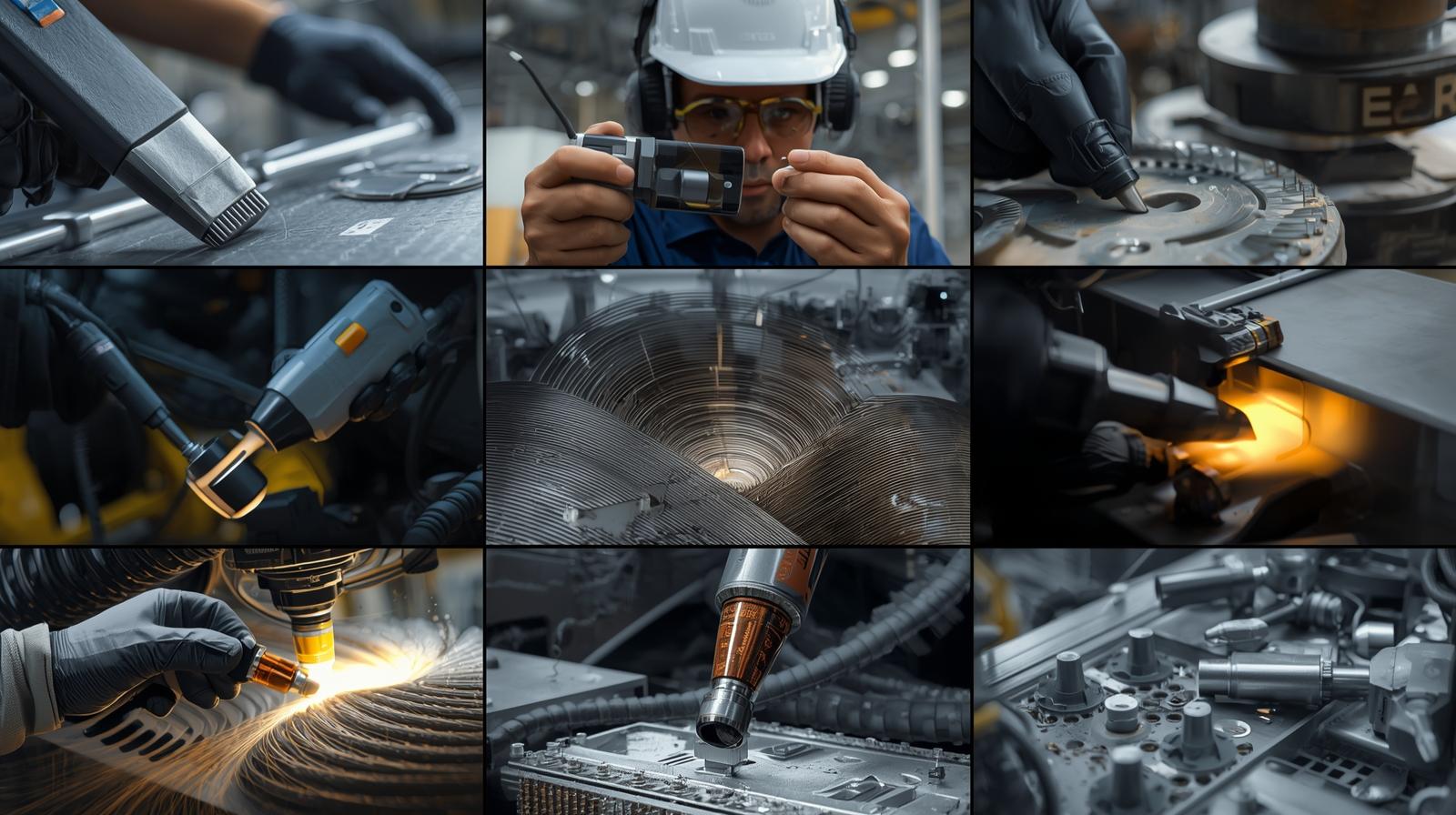
AI-Powered Inspection Improves Defect Detection
Artificial intelligence is becoming increasingly relevant to NDT because inspection processes generate large quantities of images, sensor readings, ultrasonic signals, and other data. AI-powered analytics can assist inspectors in identifying patterns and potential defects within inspection datasets.
AI-enabled systems can support automated defect recognition, image analysis, anomaly detection, predictive analytics, and decision support. These capabilities can help inspectors analyze complex inspection data more efficiently.
MarketsandMarkets identifies AI-powered analytics, IoT-connected sensors, and digital twin technologies as important trends influencing the NDT and inspection market.
AI is particularly relevant to automated radiographic testing and ultrasonic inspection, where large datasets can be generated during repeated inspections. Combining AI with NDT equipment can help standardize analysis and support faster identification of potential defects.
However, AI is expected to complement rather than completely replace qualified inspectors because inspection results often require engineering judgment, regulatory compliance, and domain-specific expertise.
Robotics and Remote Inspection Improve Worker Safety
Safety is a major factor supporting Non-Destructive Testing Market Growth. Many industrial assets are located in environments where inspection activities can expose personnel to operational, chemical, radiation, height, temperature, or confined-space hazards.
Remote inspection technologies allow organizations to reduce direct human exposure to hazardous environments. Drones, robotic crawlers, remotely operated systems, and automated inspection equipment can collect information while keeping personnel at safer locations.
Drone-based inspection is particularly relevant for large infrastructure, power facilities, industrial structures, bridges, wind turbines, and other assets that are difficult to access manually.
MarketsandMarkets highlights the increasing adoption of remote and contactless NDT solutions, robotics, augmented reality, and wireless sensors to improve safety and inspection efficiency.
Predictive Maintenance Supports Market Expansion
Predictive maintenance is another major factor influencing Non-Destructive Testing Market Growth. Instead of relying only on fixed maintenance schedules, industrial operators increasingly monitor asset conditions to identify early signs of deterioration.
NDT technologies can provide information about cracks, corrosion, wall thickness, weld quality, material degradation, and other conditions. When this information is combined with IoT sensors, historical inspection records, AI analytics, and digital twins, organizations can develop more proactive asset-management strategies.
Predictive maintenance can help organizations identify potential problems before they result in equipment failure. This can reduce unplanned downtime, extend asset life, and improve maintenance planning.
MarketsandMarkets identifies growing demand for asset integrity and predictive maintenance as a key driver of the NDT and inspection market.
Digital Twins Create New Opportunities for NDT
Digital twins are emerging as an important technology for asset monitoring and inspection. A digital twin can represent the condition and operational behavior of a physical asset using data from sensors, inspections, and operational systems.
When NDT data is incorporated into digital twin platforms, operators can develop a more comprehensive view of asset health. Inspection results can be compared with historical information and operational data to identify changes in asset condition.
This approach can support structural health monitoring, predictive maintenance, lifecycle management, and risk-based inspection programs.
The integration of NDT with digital twins is therefore creating opportunities for inspection providers to offer more data-driven and connected services.
Ultrasonic Testing Remains a Major Technology
Among NDT techniques, ultrasonic testing (UT) continues to hold the largest market share. UT is widely used to identify internal flaws, measure material thickness, inspect welds, and evaluate structural integrity.
Advanced forms of ultrasonic testing include phased array ultrasonic testing (PAUT), time-of-flight diffraction (TOFD), guided wave testing, straight beam testing, angle beam testing, and immersion testing.
These technologies are used across oil & gas, aerospace, power generation, manufacturing, automotive, and other industrial applications.
MarketsandMarkets indicates that UT accounted for the largest market share in 2024, while acoustic emission testing is projected to register the fastest growth.
The development of automated ultrasonic systems is further supporting Non-Destructive Testing Market Growth by enabling repeatable inspection procedures and integration with robotic platforms.
Acoustic Emission Testing Gains Momentum
Acoustic emission testing (AET) is projected to experience strong growth because of its applications in structural health monitoring and predictive maintenance.
AET detects transient elastic waves generated by changes within materials or structures. It can be used to monitor structural behavior and identify potential damage during operation.
The technology is particularly relevant to pressure vessels, storage tanks, pipelines, aerospace structures, and other assets where continuous or condition-based monitoring is important.
AI-enabled AET systems can further support automated analysis of acoustic signals, creating opportunities for intelligent monitoring platforms.
Digital Radiography Modernizes Inspection
Radiographic testing remains an important method for detecting internal defects. The transition from conventional film-based radiography toward digital radiography is improving inspection workflows and data management.
Digital radiography can provide faster image processing, digital storage, easier data sharing, and integration with software-based analysis. AI can further enhance digital image interpretation by helping identify potential anomalies.
Digital radiography is used in aerospace, automotive, manufacturing, oil & gas, and other industries where internal component inspection is required.
The broader adoption of digital imaging and AI-enabled analytics is therefore contributing to the modernization of NDT processes.
Aging Infrastructure Drives NDT Demand
Aging industrial and public infrastructure is another important factor behind Non-Destructive Testing Market Growth. Pipelines, bridges, rail networks, power facilities, manufacturing equipment, storage tanks, and other structures require regular inspection to maintain operational safety.
NDT allows organizations to evaluate infrastructure condition without damaging assets. This makes it valuable for structural health monitoring, maintenance planning, and asset lifecycle management.
The need to extend the operating life of existing infrastructure is increasing demand for inspection services and advanced testing technologies.
As infrastructure operators seek to reduce maintenance costs while improving reliability, digital NDT solutions can support condition-based and predictive maintenance programs.
Oil & Gas Remains a Major Application Area
Oil & gas represents the largest vertical in the NDT and inspection market. The industry depends heavily on asset integrity management because pipelines, refineries, storage tanks, offshore platforms, pressure vessels, and other infrastructure require continuous monitoring.
NDT techniques help identify corrosion, cracks, weld defects, wall-thickness changes, and other potential integrity issues.
Remote inspection, robotics, drones, automated ultrasonic testing, and digital inspection platforms are becoming increasingly relevant to oil & gas operators seeking to improve inspection efficiency and reduce exposure to hazardous environments.
MarketsandMarkets estimates the oil & gas segment at USD 4.06 billion in 2025, with the segment projected to reach USD 6.20 billion by 2030.
Aerospace Creates High-Growth Opportunities
Aerospace is projected to register the highest CAGR among major verticals in the NDT and inspection market. Increasing aircraft production, maintenance requirements, advanced materials, and the use of composites are creating additional inspection requirements.
Aircraft components must meet stringent quality and safety requirements. NDT is used to inspect airframes, engines, landing gear, composite structures, welds, and other critical components.
Advanced ultrasonic testing, eddy-current testing, digital radiography, thermography, and robotic inspection can support aerospace manufacturers and maintenance organizations.
The growing complexity of aerospace materials also increases the need for advanced inspection technologies capable of detecting defects that may not be visible through conventional methods.
Asia Pacific Leads NDT Market Expansion
Asia Pacific is projected to be the fastest-growing regional market, with a 10.0% CAGR from 2025 to 2030. Industrial expansion, infrastructure development, aerospace manufacturing, automotive production, energy investments, and stronger safety requirements are contributing to regional demand.
Countries including China, India, Japan, South Korea, and other Southeast Asian economies are investing in manufacturing, transportation infrastructure, power generation, renewable energy, and industrial facilities.
These developments are creating opportunities for NDT equipment manufacturers, inspection service providers, robotics companies, and digital inspection technology suppliers.
North America remains an important market, supported by mature oil & gas infrastructure, aerospace manufacturing, power generation assets, and established safety regulations. MarketsandMarkets projects the North American market to grow from USD 5.16 billion in 2025 to USD 7.71 billion by 2030.
Renewable Energy Opens New Growth Opportunities
The expansion of renewable energy infrastructure is creating additional opportunities for NDT and inspection services. Wind turbines, solar installations, hydropower facilities, transmission infrastructure, and other energy assets require regular inspection and maintenance.
Wind turbine blades and towers, for example, can require inspection for cracks, delamination, corrosion, and other forms of degradation. Drones, robotics, ultrasonic testing, thermography, and advanced imaging can support these inspections.
MarketsandMarkets identifies growing demand for NDT and inspection services in renewable energy and power sectors as an important market opportunity.
Portable and Miniaturized NDT Devices Gain Adoption
Another emerging opportunity is the development of portable and miniaturized NDT equipment. Portable systems can enable inspectors to conduct testing at remote locations, field sites, maintenance facilities, and difficult-to-access environments.
Smaller and more connected devices can integrate wireless connectivity, digital displays, cloud platforms, and automated analysis capabilities.
The growing demand for portable NDT devices can support applications across infrastructure, manufacturing, automotive, energy, and field-service environments.
Challenges Facing Non-Destructive Testing Market Growth
Despite strong opportunities, the market faces several challenges. The high cost of advanced NDT equipment can limit adoption, particularly among small and medium-sized enterprises.
Advanced technologies such as phased array ultrasonic testing, digital radiography, automated systems, and robotic platforms can require substantial investment in equipment, software, integration, training, calibration, and maintenance.
MarketsandMarkets also identifies the shortage of skilled technicians for advanced NDT operations as a market restraint.
The increasing complexity of industrial structures and advanced materials presents another challenge. Composites, alloys, ceramics, and 3D-printed components may require specialized inspection methods and highly trained personnel.
Competitive Landscape
The global NDT and inspection market includes major inspection service providers, equipment manufacturers, technology companies, and specialized NDT organizations.
Key companies identified by MarketsandMarkets include SGS, Bureau Veritas, Baker Hughes, Applus+, Intertek, MISTRAS Group, TÜV Rheinland, DEKRA, Evident, Ashtead Technology, Eddyfi Technologies, Element Materials Technology, Acuren, TEAM, NDT Global, Comet Yxlon, Nikon Metrology, Carestream Health, Magnaflux, Sonatest, Vidisco, Cygnus Instruments, FPrimeC Solutions, Sonotron NDT, and OKOndt Group.
Companies are increasingly focusing on advanced equipment, digital inspection workflows, AI-powered analytics, robotics, remote inspection, cloud-based data management, and integrated service offerings.
Future Outlook for Non-Destructive Testing Market Growth
The future of Non-Destructive Testing Market Growth will increasingly depend on the convergence of NDT technologies with automation, robotics, AI, IoT, digital twins, cloud computing, and advanced sensing.
The global market is projected to reach USD 22.34 billion by 2030 from USD 14.99 billion in 2025, reflecting a CAGR of 8.3%.
Automation will help standardize inspection processes, robotics will enable safer access to hazardous environments, and AI will support faster analysis of complex inspection data. IoT-connected systems and digital twins will provide additional opportunities for continuous asset monitoring and predictive maintenance.
At the same time, stringent safety requirements, aging infrastructure, growing aerospace production, renewable energy investments, and industrial automation will continue to create demand for reliable inspection technologies.
As industries move toward smarter and more connected operations, NDT is evolving from a periodic inspection activity into an increasingly integrated component of asset management and industrial digital transformation.
Top 10 Key Takeaways
- The global NDT and Inspection Market was valued at USD 14.99 billion in 2025.
- The market is projected to reach USD 22.34 billion by 2030, registering a CAGR of 8.3%.
- Automation and robotics are transforming inspection workflows across major industrial sectors.
- AI-powered analytics are improving defect detection, inspection data analysis, and decision-making.
- Ultrasonic testing remains the largest NDT technique segment.
- Acoustic emission testing is projected to register the fastest growth among techniques.
- Oil & gas remains the largest vertical, while aerospace is projected to register the highest CAGR.
- Asia Pacific is the fastest-growing regional market, with a projected CAGR of 10.0% from 2025 to 2030.
- Renewable energy, portable NDT devices, robotics, and remote inspection are creating new market opportunities.
- AI, IoT, digital twins, robotics, and automated inspection are expected to shape the next generation of NDT solutions.
Frequently Asked Questions
What is the size of the Non-Destructive Testing Market in 2025?
The global NDT and Inspection Market was valued at USD 14.99 billion in 2025.
What will be the Non-Destructive Testing Market size by 2030?
The global NDT and Inspection Market is projected to reach USD 22.34 billion by 2030, growing at a CAGR of 8.3% from 2025 to 2030.
What is driving Non-Destructive Testing Market Growth?
Major growth drivers include stringent safety regulations, predictive maintenance, aging infrastructure, industrial automation, robotics, AI, IoT, digital twins, and increasing demand for remote and contactless inspection solutions.
Which NDT technique holds the largest market share?
Ultrasonic testing (UT) holds the largest market share because of its widespread use in weld inspection, flaw detection, corrosion mapping, thickness measurement, and structural integrity assessment.
Which region is expected to grow fastest in the NDT Market?
Asia Pacific is projected to be the fastest-growing region, with a CAGR of 10.0% from 2025 to 2030, supported by industrial expansion, infrastructure development, energy investments, and stronger safety and quality requirements
About MarketsandMarkets™
MarketsandMarkets™ has been recognized as one of America’s Best Management Consulting Firms by Forbes, as per their recent report.
MarketsandMarkets™ is a blue ocean alternative in growth consulting and program management, leveraging a man-machine offering to drive supernormal growth for progressive organizations in the B2B space. With the widest lens on emerging technologies, we are proficient in co-creating supernormal growth for clients across the globe.
Today, 80% of Fortune 2000 companies rely on MarketsandMarkets, and 90 of the top 100 companies in each sector trust us to accelerate their revenue growth. With a global clientele of over 13,000 organizations, we help businesses thrive in a disruptive ecosystem.
The B2B economy is witnessing the emergence of $25 trillion in new revenue streams that are replacing existing ones within this decade. We work with clients on growth programs, helping them monetize this $25 trillion opportunity through our service lines – TAM Expansion, Go-to-Market (GTM) Strategy to Execution, Market Share Gain, Account Enablement, and Thought Leadership Marketing.
Built on the ‘GIVE Growth’ principle, we collaborate with several Forbes Global 2000 B2B companies to keep them future-ready. Our insights and strategies are powered by industry experts, cutting-edge AI, and our Market Intelligence Cloud, KnowledgeStore™, which integrates research and provides ecosystem-wide visibility into revenue shifts.
To find out more, visit www.MarketsandMarkets™.com or follow us on Twitter , LinkedIn and Facebook .
Contact:
Mr. Rohan Salgarkar
MarketsandMarkets™ INC.
1615 South Congress Ave.
Suite 103, Delray Beach, FL 33445
USA: +1-888-600-6441
