The Humanoid Robot Market Analysis highlights a major transformation underway in robotics, as advances in artificial intelligence, physical AI, computer vision, sensors, actuators, and robot foundation models move humanoid robots from research environments toward real-world commercial applications. Designed to operate in environments created for humans, humanoid robots are increasingly being developed for manufacturing, warehousing, healthcare, education, retail, hospitality, and personal assistance.
According to MarketsandMarkets, the global humanoid robot market is estimated at USD 5.41 billion in 2026 and is projected to reach USD 50.27 billion by 2035, registering a CAGR of 28.1% from 2026 to 2035. The market was valued at USD 1.95 billion in 2025. Growing demand for flexible automation, labor shortages, AI-enabled robotics, and increasing investments in physical AI are among the major factors supporting market expansion.
The latest Humanoid Robot Market Analysis shows that the industry is progressing beyond experimental prototypes. Companies are increasingly focusing on commercially viable robots capable of perception, navigation, manipulation, learning, and human-robot interaction. Improvements in robot hardware and software are also opening new possibilities for large-scale deployment.
AI Is Redefining Humanoid Robot Market Analysis
Artificial intelligence is at the center of the next stage of humanoid robotics. Traditional robots typically perform predefined tasks in controlled environments, whereas AI-powered humanoid robots are being developed to perceive changing environments, understand instructions, plan actions, and adapt their behavior.
AI-based perception allows robots to process information from cameras, vision sensors, accelerometers, torque sensors, and other sensing technologies. This information enables humanoids to recognize objects, identify obstacles, understand their surroundings, and make decisions.
Robot foundation models and physical AI are taking these capabilities further. Instead of programming every individual task, developers can train robots using large datasets, simulation environments, demonstrations, and real-world experiences.
MarketsandMarkets identifies rapid progress in physical AI, robot foundation models, and simulation tools as a major growth driver. These technologies are improving perception, movement planning, manipulation, and task execution across manufacturing, logistics, healthcare, education, and service applications.
This evolution is a critical element of Humanoid Robot Market Analysis, as software intelligence increasingly becomes as important as mechanical design.
Physical AI Accelerates the Shift Toward General-Purpose Robots
Physical AI represents a significant innovation in the humanoid robot ecosystem. It enables AI systems to interact with the physical world rather than operating only within digital environments.
Humanoid robots equipped with physical AI can potentially learn how to navigate environments, manipulate objects, respond to changes, and collaborate with humans. Simulation-based training can expose robots to thousands or millions of scenarios without requiring equivalent physical testing.
Digital twins and simulation environments can also help developers evaluate robot movement, task performance, safety, and interaction before deployment.
The growing convergence of AI models, simulation, sensors, actuators, and robotics platforms is therefore helping manufacturers move toward more general-purpose humanoid systems.
Download PDF Brochure @ https://www.marketsandmarkets.com/pdfdownloadNew.asp?id=99567653
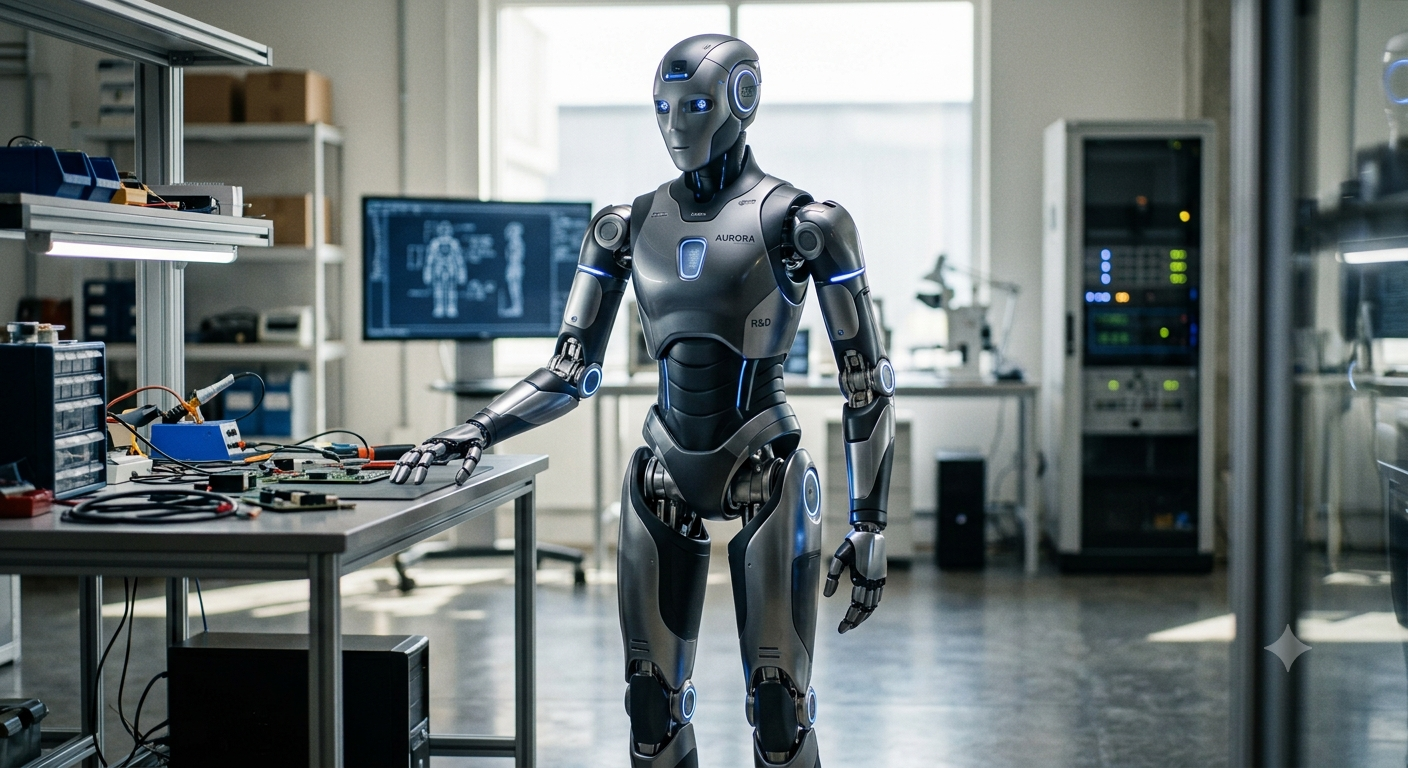
Biped Robots Lead the Humanoid Robot Market
By type, biped humanoid robots are expected to account for the largest share and register the highest CAGR during the forecast period. Their ability to navigate environments designed for humans makes them particularly attractive for industrial and service applications.
Biped robots can potentially walk through factory floors, warehouses, hospitals, offices, and retail environments without requiring significant modifications to existing infrastructure.
This is one of the central advantages of humanoid robotics. Instead of creating completely new environments for machines, manufacturers can develop robots capable of adapting to existing human-centric spaces.
Bipedal mobility is also improving through advances in motors, actuators, reducers, encoders, accelerometers, torque sensors, controllers, and battery systems.
As these components become more capable and cost-effective, biped humanoids could become increasingly practical for repetitive and physically demanding tasks.
Hardware Dominates While Software Gains Strategic Importance
Hardware is expected to account for the largest share of the humanoid robot market, with MarketsandMarkets estimating approximately 65%–75% share in 2026. High-value components include sensors, actuators, controllers, power systems, mobility systems, and structural components.
However, software is expected to register the highest CAGR during the forecast period.
This shift is important for the future of Humanoid Robot Market Analysis. The value proposition of humanoid robots is increasingly moving beyond physical hardware toward intelligence.
Software platforms can provide perception, motion planning, manipulation, robot learning, foundation models, fleet management, simulation, predictive maintenance, and autonomous decision-making.
As a result, future humanoid robot ecosystems are likely to combine physical machines with continuously improving software platforms.
Manufacturing Becomes a Major Application Opportunity
Manufacturing is expected to register the highest growth rate among humanoid robot applications, with MarketsandMarkets estimating a CAGR of approximately 27%–30% during the forecast period.
Manufacturing environments offer several potential use cases for humanoid robots. These include assembly assistance, machine tending, inspection, material handling, repetitive production activities, and movement of components.
Humanoid robots can be particularly attractive for tasks that require movement between workstations or manipulation of objects designed around human workers.
The ability to integrate robots into existing production environments could reduce the need for extensive factory redesigns.
The combination of AI perception, dexterous manipulation, autonomous navigation, and industrial connectivity could therefore make manufacturing one of the earliest large-scale commercial markets for humanoid robots.
Warehousing and Logistics Create New Growth Opportunities
Warehousing and distribution centers are another promising area identified in the Humanoid Robot Market Analysis.
The rapid growth of e-commerce and increasingly complex fulfillment operations are creating demand for flexible automation. Warehouses contain large numbers of repetitive activities, including picking, sorting, moving, loading, unloading, and organizing goods.
Humanoid robots can potentially perform tasks alongside existing automated systems while navigating spaces originally designed for human workers.
The MarketsandMarkets report identifies rising demand for humanoid robots from the logistics sector as an important opportunity.
Robots-as-a-Service models could further accelerate adoption by allowing logistics operators to access robotic capabilities without making large upfront capital investments.
Healthcare Expands the Role of Humanoid Robots
Healthcare is emerging as another important application area. Aging populations, healthcare worker shortages, and increasing demand for automated support services are encouraging healthcare providers to explore robotics.
Humanoid robots can potentially assist with patient engagement, rehabilitation, hospital logistics, routine support activities, education, and elderly care.
AI-powered perception and natural-language interaction can make robots more useful in environments where communication and human interaction are important.
MarketsandMarkets identifies rising demand for humanoid robots in healthcare as a significant market driver, with applications spanning hospitals, rehabilitation centers, elderly care facilities, and assisted-living environments.
The healthcare opportunity will depend heavily on safety, reliability, privacy, regulatory compliance, and the ability of robots to interact appropriately with patients and healthcare professionals.
Retail and Hospitality Drive Human-Robot Interaction
Retail, hospitality, and entertainment are expanding the commercial possibilities for humanoid robots.
Unlike traditional industrial automation, these applications require robots to interact directly with people. Humanoid platforms can potentially support customer guidance, reception, information services, product demonstrations, entertainment, and brand engagement.
Natural-language processing, computer vision, and generative AI can improve interactions by allowing robots to understand and respond to customers more naturally.
The growing emphasis on customer engagement in retail stores is identified as a market driver, while applications in hospitality and entertainment are contributing to the expansion of service-oriented humanoid robotics.
Robots-as-a-Service Opens a New Business Model
One of the most important emerging opportunities in the Humanoid Robot Market Analysis is the increasing adoption of Robots-as-a-Service (RaaS).
High upfront costs can prevent many organizations from adopting advanced humanoid robots. RaaS allows businesses to access robotic capabilities through subscription or service-based models.
Under these models, robot providers can manage deployment, maintenance, software updates, fleet management, and performance optimization.
MarketsandMarkets identifies RaaS and fleet-management models as important opportunities because they can reduce upfront ownership costs and support scalable deployments.
As humanoid robots become more commercially mature, service-based models could make the technology accessible to a wider range of industrial and commercial customers.
Advanced Actuators and Sensors Improve Robot Performance
The development of humanoid robots depends heavily on improvements in core components.
Actuators provide movement, while motors, reducers, encoders, torque sensors, accelerometers, and controllers enable precise motion and feedback.
Advanced cameras and vision sensors help robots understand their surroundings. Improvements in battery technologies can increase operating time, while better power management can support increasingly complex computing workloads.
The integration of these technologies is improving robot mobility, dexterity, balance, manipulation, and task accuracy.
The result is a new generation of humanoids that can perform more sophisticated tasks in dynamic environments.
Simulation and Digital Twins Accelerate Development
Developing physical robots can be expensive and time-consuming. Simulation enables developers to train and test robots virtually before deploying them in real environments.
Simulation can help robots learn navigation, object manipulation, balance, task planning, and responses to unexpected situations.
Digital twins can also replicate factory environments, warehouses, or other operating conditions. Developers can use these virtual environments to identify potential problems and optimize robot behavior.
MarketsandMarkets identifies simulation-based training and digital twins as important technologies accelerating humanoid robot development.
This approach can reduce development costs while increasing the volume of training data available to robot learning systems.
Asia Pacific Leads the Humanoid Robot Market
Asia Pacific is expected to account for more than 50% of the humanoid robot market share throughout the forecast period, supported by strong robotics manufacturing ecosystems, automation investments, and commercialization activities.
China, Japan, South Korea, and other Asian economies are investing heavily in robotics, AI, industrial automation, and advanced manufacturing.
China is particularly important to the regional market. MarketsandMarkets projects the China humanoid robot market to grow from USD 0.40 billion in 2025 to USD 2.80 billion by 2030, representing a CAGR of 47.6%. South Korea is projected to grow from USD 112.6 million in 2025 to USD 583.5 million by 2030, at a CAGR of 39.0%.
The region’s manufacturing capabilities, robotics supply chains, government support, and growing AI ecosystem position Asia Pacific as a major center for humanoid robot development and commercialization.
North America Strengthens AI and Robotics Innovation
North America is also becoming a major hub for humanoid robotics due to strong AI capabilities, venture investment, robotics startups, advanced manufacturing, and logistics automation.
Companies developing humanoid robots in the region are focusing on industrial automation, warehouse operations, human-robot collaboration, and general-purpose robotic platforms.
The combination of advanced AI models and robotics engineering is helping accelerate commercialization.
As more pilot programs transition into commercial deployments, North America is expected to remain an important contributor to the global humanoid robotics ecosystem.
Capital Requirements Remain a Major Restraint
Despite rapid technological progress, humanoid robot development requires significant investment.
Robots require sophisticated hardware, AI software, sensors, actuators, batteries, controllers, testing infrastructure, and safety validation. Continuous R&D is required to improve mobility, reliability, dexterity, and interaction capabilities.
MarketsandMarkets identifies significant capital investment and extensive R&D expenditure as a major restraint for the market.
High development costs can be particularly challenging for startups and smaller organizations. RaaS models, partnerships, strategic investments, and shared development platforms may help reduce some of these barriers.
Safety Remains Critical for Commercial Adoption
Humanoid robots operate in environments where people and machines may work in close proximity. Safety is therefore a fundamental requirement.
Potential risks include collisions, unexpected movements, manipulation errors, balance failures, and incorrect responses to changing environments.
MarketsandMarkets identifies safety concerns as a key challenge limiting humanoid robot adoption.
Developers must improve collision avoidance, emergency response, motion control, object recognition, fail-safe mechanisms, and compliance with applicable robotics safety standards.
Building trust among employees and end users will also be essential for large-scale adoption.
Competitive Landscape
The global humanoid robot market includes established robotics companies, technology companies, startups, and emerging specialized developers.
Key companies identified by MarketsandMarkets include Unitree Robotics, AGIBOT Innovation, UBTECH Robotics, Leju Robotics, EngineAI, Fourier, Figure AI, Agility Robotics, Tesla, and Boston Dynamics.
Competition is increasingly centered on robot mobility, AI intelligence, manipulation, battery efficiency, cost, safety, and commercial scalability.
Companies are also developing specialized software platforms, foundation models, fleet-management systems, and simulation technologies to differentiate their offerings.
The competitive landscape is therefore moving toward integrated robotics ecosystems rather than standalone robot hardware.
Recent Innovation Is Accelerating Commercialization
Recent industry developments demonstrate the rapid pace of innovation. MarketsandMarkets reports that XPENG raised more than USD 900 million for its robotics business in August 2026, with the funding intended to accelerate its humanoid robot development, physical AI model training, and mass-production capabilities.
The report also highlights growing activity from companies such as Unitree Robotics, Xiaomi, JD.com, Tesla, and Galaxy Universal around physical AI and humanoid robot deployment.
These developments demonstrate that the industry is increasingly focused on real-world data, simulation, world models, AI chips, and commercial deployment rather than demonstrations alone.
Future Outlook for Humanoid Robot Market Analysis
The future of the Humanoid Robot Market Analysis points toward a transition from specialized automation toward flexible, intelligent, human-centric robotic systems.
The market is projected to grow from USD 5.41 billion in 2026 to USD 50.27 billion by 2035, at a CAGR of 28.1%.
Manufacturing and logistics are likely to remain major early-adoption environments because of their high volumes of repetitive and labor-intensive activities. Healthcare, retail, hospitality, education, and personal assistance could provide additional long-term opportunities as robot intelligence and safety improve.
The biggest technological shift will likely come from the convergence of physical AI, foundation models, simulation, computer vision, advanced sensors, high-performance computing, and increasingly capable actuators.
At the same time, the commercialization of humanoid robots will depend on reducing hardware costs, increasing reliability, improving battery life, addressing safety concerns, and developing scalable business models.
Ultimately, humanoid robots could become an important layer of the next-generation automation ecosystem. Their ability to operate in human-designed environments gives them a unique advantage, while AI provides the intelligence required to make these machines increasingly adaptable.
Top 10 Key Takeaways
- Rapid market expansion: The humanoid robot market is projected to grow from USD 5.41 billion in 2026 to USD 50.27 billion by 2035, at a CAGR of 28.1%.
- AI is the core technology: Physical AI, robot foundation models, machine learning, and computer vision are improving perception, decision-making, navigation, and manipulation.
- Biped robots lead: Biped humanoids are expected to hold the largest share and register the highest growth rate because they can operate effectively in human-designed environments.
- Hardware dominates today: Hardware is expected to represent approximately 65%–75% of the market in 2026, although software is projected to grow faster.
- Manufacturing is a major opportunity: Manufacturing is expected to register a growth rate of approximately 27%–30%, driven by assembly, inspection, material handling, and repetitive production tasks.
- Logistics adoption is increasing: Warehousing and distribution centers are emerging as attractive applications for picking, sorting, fulfillment, and goods movement.
- RaaS can reduce adoption barriers: Robots-as-a-Service and fleet-management models can reduce upfront investment and support scalable commercial deployments.
- Asia Pacific leads the market: The region is expected to account for more than 50% of market share throughout the forecast period, supported by strong robotics ecosystems and automation investments.
- Safety remains a challenge: Collision avoidance, reliable motion, emergency response, and compliance with safety standards are essential for broader human-robot collaboration.
- Commercialization is accelerating: Investments in physical AI, simulation, advanced components, and mass production are helping humanoid robots transition from research projects toward real-world business applications.
FAQs
1. What is the current size of the Humanoid Robot Market?
According to MarketsandMarkets, the global humanoid robot market is estimated at USD 5.41 billion in 2026 and is projected to reach USD 50.27 billion by 2035, growing at a CAGR of 28.1%.
2. What are the key factors driving the Humanoid Robot Market?
Major growth drivers include advances in physical AI, robot foundation models, computer vision, machine learning, sensors, actuators, simulation tools, labor shortages, industrial automation, and increasing investments in robotics R&D.
3. Which application is expected to grow fastest?
Manufacturing is expected to register the highest growth rate, at approximately 27%–30%, supported by demand for assembly assistance, inspection, machine tending, material handling, and repetitive production activities.
4. Which region dominates the Humanoid Robot Market?
Asia Pacific is expected to account for more than 50% of the market share throughout the forecast period. Strong robotics manufacturing ecosystems and investments in automation and AI across China, Japan, South Korea, and other Asian markets are supporting regional growth.
5. What are the major challenges facing humanoid robot adoption?
High capital and R&D requirements, safety concerns, performance limitations in untested environments, and limited awareness of humanoid robot capabilities remain key challenges. Improving robot reliability, reducing costs, strengthening safety systems, and expanding RaaS models will be important for broader adoption.
About MarketsandMarkets™
MarketsandMarkets™ is a blue ocean alternative in growth consulting and program management, leveraging a man-machine offering to drive supernormal growth for progressive organizations in the B2B space. We have the widest lens on emerging technologies, making us proficient in co-creating supernormal growth for clients.
The B2B economy is witnessing the emergence of $25 trillion of new revenue streams that are substituting existing revenue streams in this decade alone. We work with clients on growth programs, helping them monetize this $25 trillion opportunity through our service lines – TAM Expansion, Go-to-Market (GTM) Strategy to Execution, Market Share Gain, Account Enablement, and Thought Leadership Marketing.
Built on the ’GIVE Growth’ principle, we work with several Forbes Global 2000 B2B companies – helping them stay relevant in a disruptive ecosystem. Our insights and strategies are molded by our industry experts, cutting-edge AI-powered Market Intelligence Cloud, and years of research. The KnowledgeStore™ (our Market Intelligence Cloud) integrates our research, facilitates an analysis of interconnections through a set of applications, helping clients look at the entire ecosystem and understand the revenue shifts happening in their industry.
To find out more, visit www.MarketsandMarkets™.com or follow us on Twitter, LinkedIn and Facebook.
Contact:
Mr. Rohan Salgarkar
MarketsandMarkets™ INC.
1615 South Congress Ave.
Suite 103
Delray Beach, FL 33445
USA : 1-888-600-6441
