The collaborative robots market, commonly referred to as the cobots market, is poised for explosive growth as industries worldwide increasingly embrace automation to boost productivity, safety, and flexibility. Unlike traditional industrial robots that require safety cages and complex programming, cobots are designed to work side-by-side with human operators, making automation more accessible and versatile across diverse sectors.
Accelerating Automation Trends Drive Market Growth
Several global trends are accelerating the adoption of collaborative robots. Labor shortages and rising wage costs are compelling manufacturers to automate repetitive and hazardous tasks. Cobots offer a practical solution due to their ease of deployment, affordability, and flexibility. Their user-friendly interfaces enable workers with limited programming skills to quickly integrate and operate cobots, reducing downtime and accelerating return on investment.
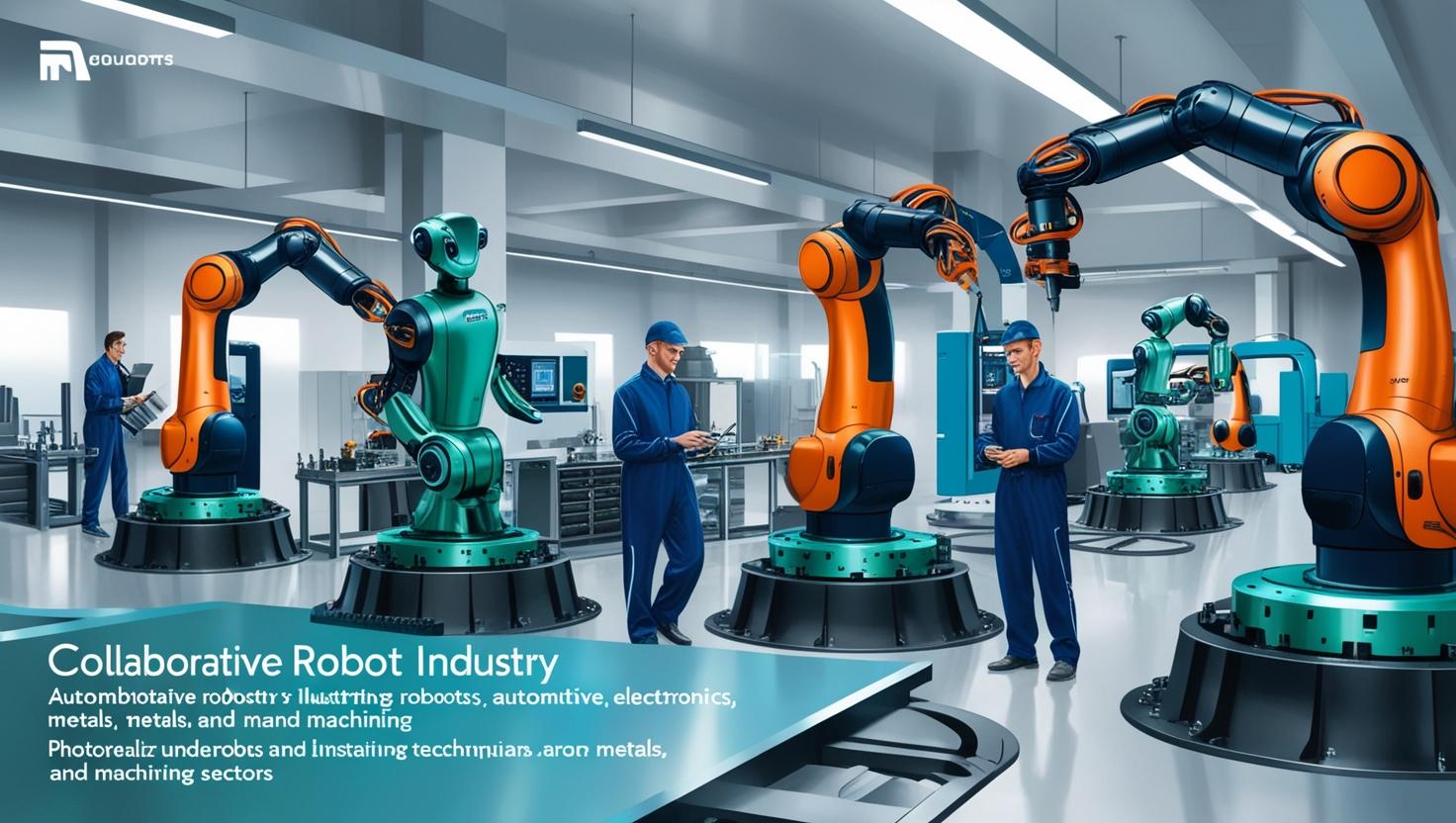
Industries such as automotive, electronics, food and beverage, healthcare, and logistics are increasingly deploying cobots to enhance assembly lines, quality control, packaging, material handling, and inspection processes. The ability of cobots to safely collaborate with human workers enhances productivity without compromising workplace safety.
Market Dynamics and Growth Projections
Collaborative Robot Industryworth $3.38 billion by 2030, reflecting a robust compound annual growth rate (CAGR) of over 18.9%. Key factors driving this growth include falling costs of cobot systems, advancements in artificial intelligence (AI), machine learning, and sensor technologies, as well as increasing demand for flexible manufacturing setups.
Regional markets also reflect varied adoption rates. Asia-Pacific leads with significant investments in manufacturing automation, especially in China, Japan, and South Korea. Europe and North America follow closely, driven by automotive and electronics industries focusing on efficiency and precision.
Download PDF Brochure @ https://www.marketsandmarkets.com/pdfdownloadNew.asp?id=194541294
Technological Innovations Fueling Cobot Capabilities
Modern cobots are equipped with advanced sensors, vision systems, and AI algorithms that enhance their ability to adapt to dynamic environments and perform complex tasks. These innovations allow cobots to recognize objects, avoid obstacles, and learn from human operators, thus broadening their applications beyond traditional manufacturing.
Additionally, the integration of IoT and cloud computing enables remote monitoring, predictive maintenance, and seamless integration into smart factory ecosystems, further amplifying the benefits of cobots.
Opportunities in the Collaborative Robots Market
The collaborative robots market is brimming with growth opportunities as industries worldwide shift toward automation with a human-centric approach. One of the most significant opportunities lies in small and medium-sized enterprises (SMEs), which traditionally faced barriers to automation due to high costs and complex robotics programming. With cobots becoming more affordable and easier to program, SMEs can now integrate automation to enhance productivity and competitiveness.
The expansion of emerging markets such as India, Southeast Asia, and Latin America presents another lucrative opportunity. These regions are witnessing increasing industrialization and investments in smart manufacturing, making them ripe for cobot adoption.
Healthcare and pharmaceutical industries offer untapped potential as well. Cobots can assist in repetitive or precision-driven tasks like drug dispensing, sample handling, and even patient assistance, improving operational efficiency and safety.
The ongoing advancements in AI, machine learning, and sensor technology also provide opportunities for developing smarter, more adaptable cobots capable of handling complex, unstructured tasks across various industries, from logistics to food processing.
Lastly, the growing emphasis on workplace safety and ergonomics creates demand for cobots that can assist with hazardous or physically demanding tasks, reducing workplace injuries and improving worker well-being.
Leading Players and Industry Collaborations
Key players like Universal Robots, Doosan Robotics, Techman Robot, ABB, Fanuc, and KUKA continue to innovate and expand their cobot portfolios. Collaborations between robotics firms, AI developers, and industrial enterprises are driving tailored solutions for specific applications, accelerating market penetration.
Startups focusing on niche applications and emerging markets are also contributing to the dynamic landscape of the cobot industry, fostering competitive pricing and innovative features.
The collaborative robots market is on the cusp of a significant expansion as rapid automation adoption reshapes industrial operations globally. Cobots’ unique ability to enhance human productivity while ensuring safety and flexibility positions them as essential components of the future workplace. As technological advancements continue to improve performance and reduce costs, cobots will become increasingly ubiquitous, empowering industries of all sizes to innovate and grow.
Collaborative Robots Market FAQ
Q1: What are collaborative robots (cobots)?
Collaborative robots, or cobots, are robots designed to work safely alongside humans in a shared workspace. Unlike traditional industrial robots, cobots don’t require safety cages and can be easily programmed to assist with various tasks.
Q2: What industries are adopting cobots most rapidly?
The automotive, electronics, food and beverage, healthcare, and logistics sectors are among the fastest adopters of cobots due to their need for flexible automation and improved safety.
Q3: What are the main benefits of using cobots?
Cobots increase productivity, improve safety by collaborating safely with humans, reduce labor costs, and offer flexibility with easy programming and deployment.
Q4: How much is the collaborative robots market expected to grow?
Collaborative Robot Industry worth $3.38 billion by 2030.
