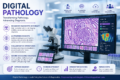
As healthcare systems worldwide accelerate their shift toward digital transformation, digital pathology is emerging as a cornerstone of next-generation diagnostics. According to the latest report, “Digital Pathology Market by Product (Scanner, Software, Storage System), Type (Human, Veterinary), Application (Teleconsultation, Training, Disease Diagnosis, Drug Discovery), End User (Pharma & Biotech, Academia, Hospitals) – Global Forecast to 2030,” the market is projected to grow from USD 1.46 billion in 2025 to USD 2.75 billion by 2030, at a robust CAGR of 13.5%.
Download PDF Brochure:- https://www.marketsandmarkets.com/pdfdownloadNew.asp?id=844
What is driving this accelerated growth, and why is digital pathology gaining strategic importance now?
The increasing demand for remote pathology services, coupled with the rapid adoption of AI-based image analysis, is transforming how diagnostic decisions are made. As healthcare providers prioritize faster, more accurate diagnoses, digital pathology solutions are enabling pathologists to enhance productivity while reducing turnaround times.
How are technological advancements reshaping pathology workflows? Innovations in whole-slide imaging and cloud-based platforms are enabling seamless, borderless collaboration among pathologists. These capabilities not only improve diagnostic accuracy but also support real-time consultations and second opinions, critical in complex disease cases. Furthermore, integration with laboratory information systems (LIS) across diagnostic labs, research institutions, and hospitals is streamlining data management and enhancing operational efficiency.
Where is digital pathology creating the most impact? The convergence of digital pathology with precision medicine is unlocking new opportunities in disease diagnosis and drug discovery. By enabling high-resolution imaging and automated analysis, these solutions are supporting more targeted treatment approaches and accelerating research outcomes.
Segment Insights:
Why is the human pathology segment witnessing the fastest growth? By type, human pathology is expected to register the highest growth rate during the forecast period. The increasing prevalence of chronic diseases, particularly cancer, is intensifying the need for accurate and timely diagnostic solutions. Digital pathology offers significant advantages over traditional methods, including advanced image analysis, reduced reliance on physical storage, faster slide retrieval, and enhanced collaboration for second opinions—making it a critical tool in modern clinical decision-making.
Who is leading adoption among end users? Pharmaceutical and biotechnology companies accounted for the largest share of the market in 2024. How are they leveraging digital pathology? By utilizing high-resolution imaging and automated analytics, these organizations are accelerating drug discovery processes, improving tissue sample evaluation, and enabling high-throughput screening. This not only enhances research efficiency but also supports the development of personalized therapies.
Regional Insights:
Where does North America stand in the competitive landscape? In 2024, North America dominated the global digital pathology market, driven by strong investments in healthcare technologies, a high incidence of chronic diseases such as cancer, and well-established healthcare infrastructure. The presence of leading research institutions and technology providers continues to foster innovation and accelerate the adoption of digital pathology solutions across the region.
Who are the key players shaping the future of digital pathology?
Prominent companies including Huron Digital Pathology, Hologic, Inc., Corista, Indica Labs Inc., 3DHISTECH, Objective Pathology Services Limited, OptraSCAN, Sectra AB, Akoya Biosciences, Inc., Hamamatsu Photonics K.K., F. Hoffmann-La Roche Ltd., Apollo Enterprise Imaging, XIFIN, Inc., Proscia Inc., KONFOONG BIOTECH INTERNATIONAL CO., LTD., Glencoe Software, Inc., Aiforia, Paige AI, Inc., Fujifilm Holdings Corporation, Danaher Corporation, Koninklijke Philips N.V., Mikroscan Technologies, Inc., PathAI, Motic Digital Pathology, and Kanteron Systems are actively advancing innovation through AI integration, strategic partnerships, and platform development.
What lies ahead for market participants? As digital pathology becomes increasingly integral to precision medicine and clinical diagnostics, companies that invest in scalable, interoperable, and AI-enabled solutions are likely to gain a competitive edge in this rapidly evolving landscape.