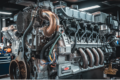
The ocean has always been the backbone of global commerce, and at the heart of every vessel cutting through its waters lies a marine engine. Today, that engine — and the industry built around it — is undergoing a fundamental transformation. Caught between the surging demands of international trade and the urgent call for environmental accountability, the marine engine market stands at one of its most pivotal crossroads in history.
A Market Poised for Steady Growth
According to a comprehensive industry analysis by MarketsandMarkets, the global marine engines market was valued at approximately $13.1 billion in 2024 and is projected to reach $15.2 billion by 2029, growing at a compound annual growth rate (CAGR) of 3.0%. While moderate, this growth reflects a sector driven by enduring structural demand — as long as goods travel across oceans, powerful and reliable propulsion systems will be non-negotiable.
The primary catalyst behind this expansion is the continued growth of international marine freight transport. As economies in Asia, Africa, and South America deepen their integration into global supply chains, the need for new and upgraded vessels grows in tandem. A significant number of aging vessels in the world’s maritime fleet also require engine replacement, creating a steady baseline of demand for more efficient, modern models.
Download PDF Brochure @ https://www.marketsandmarkets.com/pdfdownloadNew.asp?id=261640121
Propulsion Engines Lead the Way
Within the market, propulsion engines hold the dominant share — and for good reason. These are the workhorses that convert fuel into motion, making them indispensable to every class of vessel, from colossal container ships to nimble tugboats. The propulsion segment encompasses a broad spectrum of engine types, ranging from slow-speed two-stroke giants powering massive bulk carriers to high-speed gas turbines used in ferries and patrol vessels.
Among engine types, two-stroke engines command the largest market share. Designed to deliver extraordinary power at low speeds, they are ideally suited for propelling large commercial ships across vast distances. Their simpler design means fewer moving parts, lower friction losses, and, perhaps surprisingly, competitive fuel efficiency for large-scale applications — especially when running on cost-effective Heavy Fuel Oil (HFO).
On the fuel side, Marine Diesel Oil (MDO) currently holds the largest share of the fuel segment. Its versatility across engine types, cleaner combustion compared to HFO, and wider availability at global ports make it the pragmatic choice for a broad range of operators, particularly those running smaller and mid-sized vessels.
Environmental Pressures Reshape the Landscape
The market’s biggest disruptor is environmental regulation. The International Maritime Organization (IMO) has designated Emission Control Areas (ECAs) around the world where strict caps on sulfur oxide and nitrogen oxide emissions apply. This has made traditional HFO-dependent engines increasingly difficult to justify — commercially and legally.
The response from manufacturers has been innovative. Dual-fuel engines — capable of switching between conventional fuels and cleaner alternatives like Liquefied Natural Gas (LNG) — are gaining rapid traction. Hybrid propulsion systems, which pair internal combustion engines with electric motors and battery banks, are also emerging as a compelling solution, especially for vessels that operate in and around ports where zero-emission standards are tightening. Industry collaborations are advancing this shift; for instance, MAN Energy Solutions announced a partnership with Alfa Laval in late 2023 to develop a methanol fuel-supply solution for four-stroke marine engines, with retrofit capability expected by 2025.
Make an Inquiry @ https://www.marketsandmarkets.com/Enquiry_Before_BuyingNew.asp?id=261640121
Asia Pacific Leads, but Challenges Persist
Geographically, Asia Pacific dominates the marine engines market and is forecast to register the highest CAGR through 2029. Home to the world’s most prolific shipbuilding nations — China, South Korea, and Japan — the region benefits from deep manufacturing expertise, government-backed shipyard subsidies, and a diverse range of vessel production that demands engines across every power class.
Yet challenges persist globally. Volatile oil and gas prices continue to complicate financial planning for ship owners. The infrastructure required for LNG bunkering remains underdeveloped in many ports. And the technological leap to truly carbon-neutral fuels — including green hydrogen and synthetic fuels — still faces significant cost and scalability hurdles.