Urban Agriculture Emerges as a Strategic Growth Driver for Vertical Farming
Rapid urbanization, growing food demand, and increasing concerns about supply chain resilience are driving significant investments in urban agriculture worldwide. Governments, private investors, real estate developers, and agricultural technology companies are channeling capital into innovative farming solutions that bring food production closer to consumers. Among these solutions, vertical farming has emerged as one of the most transformative technologies, reshaping how cities produce, distribute, and consume fresh food.
As urban populations continue to expand, cities are seeking sustainable methods to ensure reliable access to nutritious produce while reducing environmental impact. This shift is creating substantial opportunities for the global Vertical Farming Market, accelerating technological innovation and commercial adoption across both developed and emerging economies.
Download PDF Brochure @ https://www.marketsandmarkets.com/pdfdownloadNew.asp?id=221795343
Why Cities Are Investing in Urban Agriculture
Urban agriculture has become a critical component of modern food security strategies. Traditional agricultural systems often rely on long and complex supply chains that are vulnerable to climate disruptions, transportation bottlenecks, and geopolitical uncertainties. Producing food closer to urban consumers helps mitigate these risks while enhancing local food resilience.
Major metropolitan regions are investing in urban farming initiatives to:
- Improve food security and self-sufficiency
- Reduce dependence on imported produce
- Lower transportation-related carbon emissions
- Utilize underused urban spaces efficiently
- Support sustainable city development goals
- Enhance access to fresh and nutritious food
These investments are creating favorable conditions for the expansion of vertical farming facilities in urban environments.
Vertical Farming Becomes the Backbone of Urban Food Production
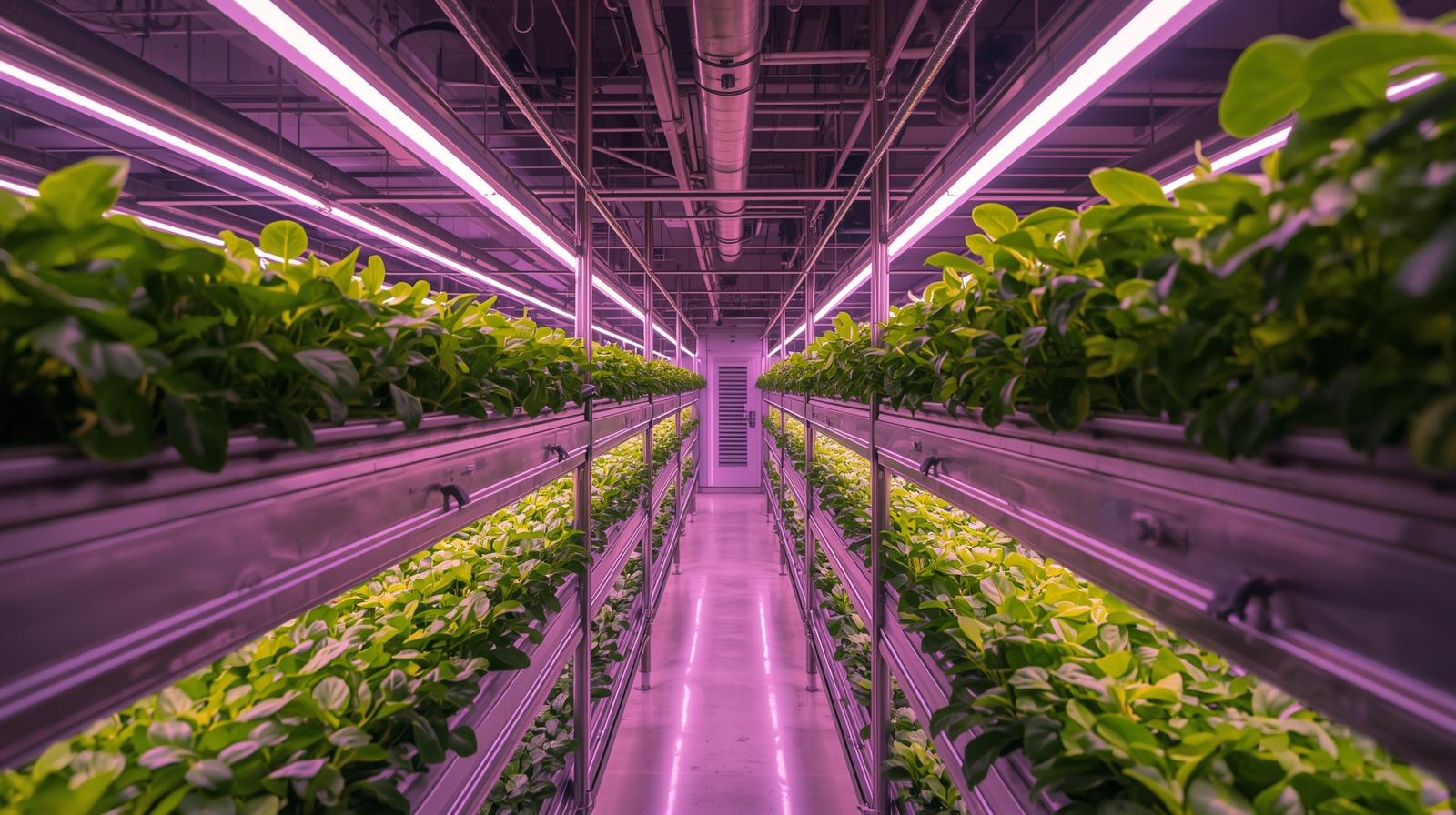
Vertical farming offers a highly efficient solution for cities with limited land availability. By growing crops in stacked layers within controlled indoor environments, vertical farms can maximize production while occupying a fraction of the space required by conventional agriculture.
Modern vertical farming systems utilize:
- Hydroponic cultivation
- Aeroponic growing methods
- Advanced LED lighting systems
- Artificial Intelligence-driven crop management
- Internet of Things (IoT)-enabled monitoring
- Automated irrigation and nutrient delivery
These technologies enable year-round crop production regardless of weather conditions, ensuring consistent supply and quality.
As urban agriculture investments increase, vertical farming is becoming a cornerstone of city-based food production ecosystems.
Government Funding Accelerates Market Growth
Public-sector support is playing a crucial role in scaling urban agriculture projects. Governments worldwide are introducing funding programs, innovation grants, tax incentives, and sustainability initiatives that encourage the adoption of controlled-environment agriculture technologies.
Many countries view vertical farming as a strategic investment capable of addressing multiple challenges simultaneously, including food security, climate adaptation, resource conservation, and urban sustainability.
Municipal governments are increasingly incorporating urban farming infrastructure into smart city development plans, creating new opportunities for technology providers and farm operators.
Private Capital Fuels Industry Expansion
The vertical farming industry has attracted substantial interest from venture capital firms, institutional investors, and agritech-focused investment funds. Investors recognize the sector’s potential to address long-term global challenges while benefiting from advancements in automation, artificial intelligence, and precision agriculture.
Funding is being directed toward:
- Expansion of commercial-scale indoor farms
- Development of next-generation cultivation technologies
- Energy-efficient lighting systems
- Robotics and automation platforms
- Data-driven crop optimization solutions
- Supply chain integration capabilities
This influx of capital is helping companies scale operations and improve the economics of vertical farming.
Sustainability Goals Drive Urban Agriculture Investments
Sustainability remains a major factor influencing investment decisions. Cities are under growing pressure to reduce greenhouse gas emissions, improve resource efficiency, and build climate-resilient infrastructure.
Vertical farming supports these objectives by offering several environmental advantages:
- Up to 95% lower water consumption compared to traditional farming
- Reduced pesticide usage
- Lower transportation emissions through local production
- Efficient land utilization
- Reduced food waste due to shorter supply chains
As environmental regulations become stricter and sustainability targets become more ambitious, urban agriculture investments are expected to increase further.
Smart Technologies Revolutionize Vertical Farming Operations
Technological innovation continues to transform the economics and scalability of vertical farming.
Artificial intelligence enables predictive crop management, helping operators optimize growing conditions and improve yields. IoT sensors continuously monitor environmental variables such as humidity, temperature, nutrient levels, and light intensity.
Automation technologies including robotic harvesting, automated seeding systems, and machine vision-based crop monitoring reduce labor costs while improving operational efficiency.
These innovations are making vertical farming increasingly attractive to investors seeking scalable and technology-driven agricultural solutions.
Commercial Real Estate Adopts Vertical Farming Concepts
Urban agriculture is also creating new opportunities within the commercial real estate sector. Developers are incorporating indoor farms into residential complexes, mixed-use developments, retail centers, and office buildings.
This integration offers multiple benefits:
- Improved sustainability credentials
- Enhanced community food access
- Reduced supply chain dependence
- New revenue generation opportunities
- Increased property value through green infrastructure
The convergence of real estate development and urban agriculture is expected to further accelerate demand for vertical farming systems.
Regional Market Opportunities
Asia Pacific
Asia Pacific remains one of the most dynamic markets for urban agriculture investments. High population density, limited arable land, and strong government support are driving adoption in countries such as China, Japan, Singapore, and South Korea.
North America
North America continues to lead in vertical farming innovation, supported by strong venture capital activity, technological advancements, and growing consumer demand for locally produced food.
Europe
European nations are investing heavily in sustainable agriculture initiatives aligned with climate neutrality goals. Urban farming projects are gaining traction across major cities seeking to strengthen food resilience.
Middle East & Africa
Water scarcity and harsh climatic conditions are encouraging governments and investors to deploy advanced controlled-environment agriculture technologies, creating significant growth opportunities for vertical farming providers.
Future Outlook
Urban agriculture investments are fundamentally transforming the global vertical farming landscape. As cities seek sustainable, resilient, and technology-enabled food production systems, vertical farming is becoming an essential component of future urban infrastructure.
Growing government support, increasing private investment, rapid technological innovation, and rising consumer demand for locally grown produce are expected to fuel continued market expansion. As a result, the Vertical Farming Market is poised for strong growth throughout the coming decade, creating substantial opportunities for technology providers, investors, growers, and stakeholders across the agricultural value chain.
According to MarketsandMarkets, the global Vertical Farming Market is expected to witness significant growth as urban agriculture investments continue to reshape food production systems and drive the adoption of advanced indoor farming technologies worldwide.
For more info: https://www.marketsandmarkets.com/Market-Reports/vertical-farming-market-221795343.html
