The magnetic current sensor market is expanding rapidly as industries increasingly require accurate, contactless, and real-time measurement of electrical current. The growing adoption of electric vehicles (EVs), renewable energy systems, industrial automation, smart grids, connected devices, and advanced power electronics is creating strong demand for magnetic current sensing technologies. These sensors help monitor current levels, improve energy efficiency, support system protection, and enable intelligent control across increasingly electrified applications.
According to MarketsandMarkets, The global magnetic current sensor market is projected to grow from USD 1.98 billion in 2025 to USD 3.51 billion by 2030, at a CAGR of 12.1%. Market growth is being supported by vehicle electrification, renewable energy expansion, industrial automation, smart grids, and the increasing requirement for accurate current monitoring in power-intensive systems.
Magnetic current sensors measure electrical current by detecting the magnetic field generated around a current-carrying conductor. Unlike conventional shunt-based approaches, these sensors can provide non-contact measurement and electrical isolation, making them useful in applications where safety, accuracy, response time, and compact integration are important.
Top 10 Key Takeaways
- The global magnetic current sensor market is projected to grow from USD 1.98 billion in 2025 to USD 3.51 billion by 2030.
- The market is expected to register a 12.1% CAGR from 2025 to 2030.
- EV adoption and charging infrastructure are major drivers of magnetic current sensor demand.
- AI and IoT are creating opportunities for real-time monitoring, predictive maintenance, and intelligent energy management.
- Hall-effect technology is projected to register the highest growth among sensor types.
- Closed-loop current sensors are gaining traction in applications requiring high precision, fast response, and improved linearity.
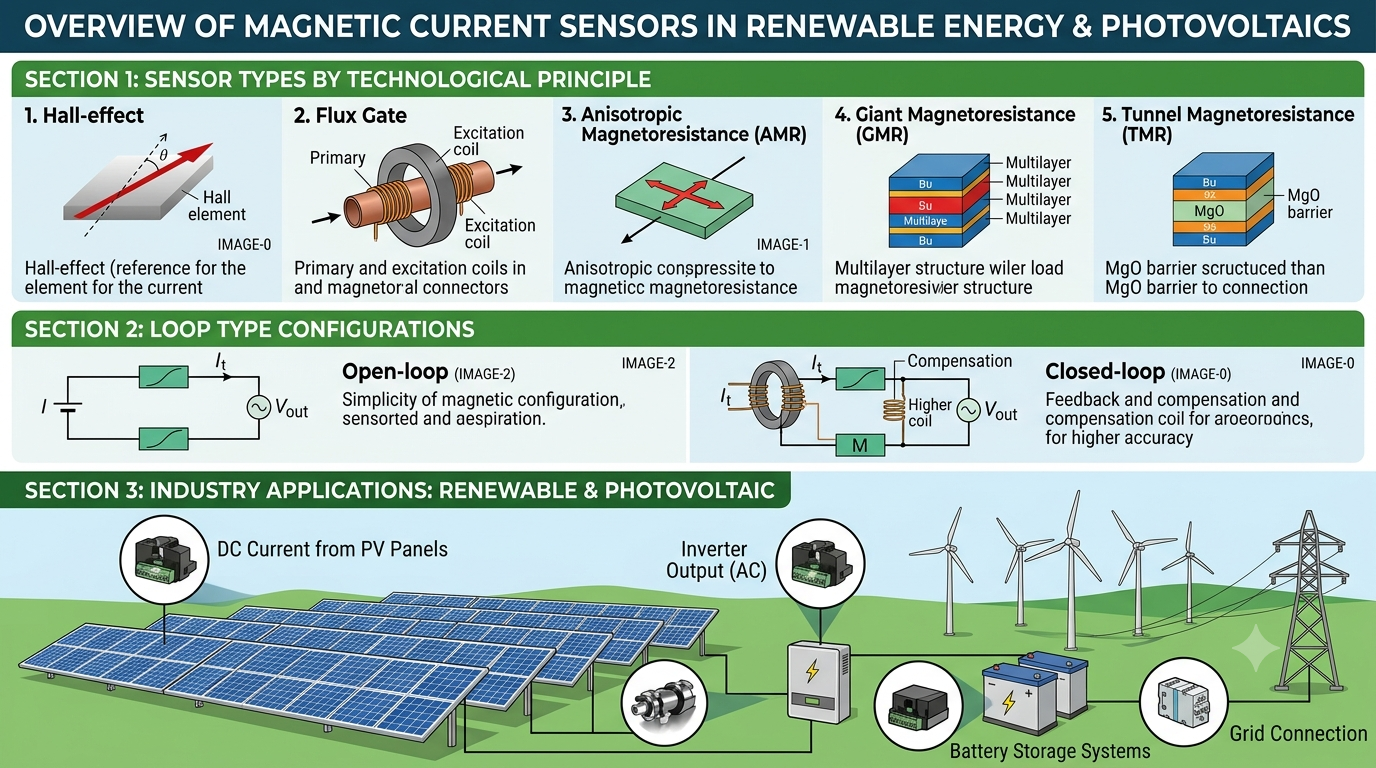
- Renewable energy projects are increasing demand for current sensors in solar, wind, hydropower, inverters, converters, and energy storage.
- Asia Pacific is projected to be the fastest-growing regional market, with a CAGR of approximately 14.1%.
- India’s magnetic current sensor market is projected to reach USD 237.5 million by 2030, growing at a 16.0% CAGR.
- Miniaturization, AI-enabled analytics, edge computing, SiC/GaN power electronics, and connected infrastructure are creating new technology opportunities.
Download PDF Brochure @ https://www.marketsandmarkets.com/pdfdownloadNew.asp?id=187942507
AI and IoT Transform Real-Time Current Monitoring
One of the emerging magnetic current sensor market trends is the integration of sensors with IoT, AI, and edge computing. Connected current sensors can continuously collect electrical measurements and transmit data to monitoring platforms, enabling organizations to understand energy consumption, detect abnormal operating conditions, and optimize equipment performance.
MarketsandMarkets identifies the scaling of IoT infrastructure as a significant opportunity for magnetic current sensors. IoT-connected sensors can support real-time monitoring across smart devices, transportation systems, healthcare equipment, grid infrastructure, and industrial applications. Integration with AI and edge computing can further support predictive maintenance and automated decision-making.
AI can analyze current signatures to identify unusual patterns that may indicate equipment degradation, overload, electrical faults, or changing operating conditions. Instead of relying only on periodic inspections, organizations can use continuous sensor data to monitor equipment health and identify potential problems earlier.
This shift from reactive maintenance toward predictive and condition-based maintenance is particularly relevant to factories, energy infrastructure, EV charging networks, and other applications where unexpected downtime can affect productivity and operational reliability.
Industrial Automation Accelerates Magnetic Current Sensor Adoption
Industrial automation is becoming an important growth area for the magnetic current sensor industry. Modern factories increasingly use motors, drives, robotic systems, programmable controllers, power converters, and automated production equipment that require accurate electrical monitoring.
Magnetic current sensors can measure current in motors and power electronics without interrupting the electrical circuit. This makes them suitable for motor control, robotics, industrial drives, power supplies, and automated machinery.
As manufacturers adopt Industry 4.0 technologies, current sensors can become part of connected monitoring systems. Sensor data can be combined with information from temperature sensors, vibration sensors, controllers, and other industrial devices to provide a more complete view of equipment performance.
Real-time current information can also help manufacturers optimize energy consumption. By identifying equipment operating outside expected ranges, automation platforms can adjust operating parameters or alert maintenance teams.
Electric Vehicle Electrification Drives Market Growth
The automotive sector represents a major application area for magnetic current sensors. The increasing production of electric and hybrid vehicles is creating demand for precise current measurement across battery management systems, traction inverters, onboard chargers, motor drives, and charging infrastructure.
Current sensors play an important role in monitoring battery charge and discharge conditions, controlling power flow, and supporting electrical protection. As EV architectures become more sophisticated, requirements for accuracy, response time, isolation, compactness, and reliability are increasing.
MarketsandMarkets identifies automotive as the leading industry segment in the magnetic current sensor market, supported by vehicle electrification, battery management requirements, charging infrastructure expansion, and safety requirements.
The growth of EV charging infrastructure is also creating opportunities. Charging stations need reliable current measurement to manage power delivery and support safe and efficient charging. Bidirectional charging technologies, including Vehicle-to-Grid (V2G) and Vehicle-to-Load (V2L), further increase the importance of accurate current monitoring.
Hall-Effect Technology Supports High-Growth Applications
By type, Hall-effect magnetic current sensors are expected to register the highest growth. Their versatility, compact form factor, cost-effectiveness, ability to measure AC and DC current, and galvanic isolation make them suitable for a wide range of applications.
Advances in Hall-effect sensor design are improving linearity, sensitivity, temperature stability, and integration. These improvements are supporting applications in automotive electronics, industrial automation, consumer electronics, renewable energy, power supplies, and EV charging.
Hall-effect sensors can also be integrated into compact electronic systems, making them suitable for applications where available space is limited. As power electronics become smaller and more efficient, sensor manufacturers are focusing on reducing sensor size while maintaining measurement accuracy.
Closed-Loop Sensors Gain Importance in High-Precision Applications
The closed-loop magnetic current sensor segment is projected to experience strong growth as industries demand greater measurement accuracy, fast response, and improved linearity.
Closed-loop sensors use feedback to improve measurement performance and can provide accurate current detection in demanding environments. Their characteristics make them relevant to motor drives, industrial automation, EV powertrains, renewable energy systems, and grid infrastructure.
The ability to provide reliable measurements in environments with electrical noise and rapidly changing current levels is increasingly important as power electronics become faster and more complex.
As industries transition toward higher switching frequencies and advanced semiconductor technologies, including silicon carbide (SiC) and gallium nitride (GaN), current sensing requirements are also evolving. High-speed and low-loss sensing solutions can help support the performance requirements of next-generation power systems.
Renewable Energy Creates New Opportunities
The expansion of solar, wind, and hydropower projects is another important driver of magnetic current sensor market growth. Renewable energy systems require current measurement across inverters, converters, battery energy storage systems, and grid-connected equipment.
In solar power systems, current sensors can support monitoring of photovoltaic generation and power conversion. In wind energy systems, current sensing can help monitor generators, converters, and electrical systems.
Energy storage is also creating opportunities. Battery energy storage systems require accurate monitoring of charging and discharging currents to support system control and operational safety.
MarketsandMarkets identifies renewable energy expansion as a significant market driver because magnetic current sensors enable precise monitoring in inverters, converters, and energy storage systems.
The increasing integration of renewable energy into electricity grids is likely to further increase the need for real-time electrical monitoring and intelligent power management.
Smart Grids Increase Demand for Intelligent Sensing
The modernization of electricity infrastructure is creating another growth opportunity for magnetic current sensors. Smart grids require continuous information about power flows, electrical loads, and system conditions.
Magnetic current sensors can provide current measurements to grid monitoring and control systems. When combined with communication technologies, analytics, and automation, these measurements can support more responsive power management.
The transition toward distributed energy resources also increases the complexity of electrical networks. Solar installations, energy storage systems, EV charging infrastructure, and other distributed assets create new power flows that require monitoring.
IoT-enabled magnetic current sensors can help utilities and system operators obtain more granular information from distributed assets and support real-time analysis.
AI-Enabled Predictive Maintenance Expands Applications
Predictive maintenance is becoming an important application area for intelligent current sensing. Electrical current can provide valuable information about the operating condition of motors, pumps, compressors, industrial machines, and other equipment.
AI algorithms can analyze current patterns over time to identify deviations from normal operation. For example, changes in current consumption can indicate mechanical stress, motor problems, load changes, or electrical abnormalities.
By connecting current sensors with edge processors or cloud analytics platforms, organizations can establish continuous equipment-monitoring systems. This approach can help maintenance teams prioritize inspections and reduce dependence on fixed maintenance schedules.
The combination of AI, IoT, magnetic current sensors, and predictive maintenance therefore represents an emerging opportunity across manufacturing, energy, transportation, and infrastructure.
Miniaturization Supports Compact Electronics
Miniaturization is another major trend shaping the magnetic current sensor market. Automotive electronics, consumer devices, charging systems, and industrial equipment increasingly require smaller components without sacrificing performance.
Sensor manufacturers are developing compact integrated solutions that combine sensing elements, signal processing, protection functions, and communication capabilities. Smaller sensors can help reduce system size and simplify integration.
Recent product developments also demonstrate this trend. In January 2025, Allegro MicroSystems introduced two current sensor ICs designed for precise sensing in compact packages, with a smaller footprint compared with earlier packages.
For EVs, compact sensors are particularly important because reducing component size and weight can contribute to more efficient power-system architectures.
SiC and GaN Power Electronics Create New Sensor Requirements
The adoption of SiC and GaN power semiconductors is changing the requirements for current measurement. These wide-bandgap technologies enable faster switching, higher efficiency, and higher power density than conventional silicon solutions in many applications.
However, higher switching speeds and electrical noise can create more demanding sensing environments. Current sensors therefore need to deliver fast response, accurate measurement, low power consumption, and strong immunity to electromagnetic interference.
MarketsandMarkets highlights current sensing solutions designed for applications involving next-generation SiC and GaN power modules, including EV chargers, traction inverters, and power modules.
This creates opportunities for sensor providers that can develop high-bandwidth, compact, and reliable solutions for advanced power electronics.
Asia Pacific Leads Market Growth
Asia Pacific is expected to be the fastest-growing region in the global magnetic current sensor market, with a projected CAGR of approximately 14.1% during the forecast period. Growth is being supported by EV adoption, infrastructure modernization, manufacturing activity, renewable energy integration, and smart manufacturing initiatives across countries including China, India, Japan, and South Korea.
The region’s strong electronics manufacturing ecosystem also supports demand for semiconductor-based sensing technologies. Increasing investments in electric mobility, renewable energy, industrial automation, and smart infrastructure are creating additional applications.
India represents a particularly important growth market. According to MarketsandMarkets, India’s magnetic current sensor market was valued at USD 113.1 million in 2025 and is projected to reach USD 237.5 million by 2030, registering a CAGR of 16.0%.
Competitive Landscape
The competitive landscape includes sensor manufacturers and semiconductor companies developing Hall-effect, magnetoresistive, and other magnetic current sensing technologies.
Key companies identified by MarketsandMarkets include Allegro MicroSystems, Infineon Technologies, TDK Corporation, Asahi Kasei, LEM International, Melexis, Honeywell International, Texas Instruments, TAMURA Corporation, and YAGEO Group.
Companies are focusing on product launches, sensor miniaturization, higher accuracy, improved temperature stability, integration, and solutions for automotive, renewable energy, industrial automation, and power electronics.
Recent developments demonstrate the industry’s focus on automotive and compact sensing technologies. LEM introduced its CDT series of automotive-grade residual current monitoring sensors in November 2024, while Asahi Kasei Microdevices launched its CZ39 series of coreless current sensors for EV applications in February 2024.
Challenges in Magnetic Current Sensor Adoption
Despite strong growth opportunities, the market faces several technical and commercial challenges. One important issue is maintaining measurement accuracy across changing temperatures. Automotive and industrial environments can expose sensors to substantial temperature variations, which can affect stability and reliability.
Electromagnetic interference can also degrade sensor performance, particularly in high-power electronics and densely packed systems. Manufacturers therefore need to improve shielding, compensation, materials, and sensor architectures.
Another market restraint is pricing pressure. Increasing competition among suppliers is contributing to declining average selling prices, creating pressure on manufacturers to control costs while continuing to invest in research and development.
Future Outlook for the Magnetic Current Sensor Market
The future of the magnetic current sensor market will increasingly depend on the convergence of sensing, connectivity, AI, automation, and electrification. As more systems become connected and electrically powered, accurate current measurement will become an increasingly important source of operational data.
The market is projected to increase from USD 1.98 billion in 2025 to USD 3.51 billion by 2030, representing a CAGR of 12.1%.
AI-enabled analytics can turn current measurements into actionable information for predictive maintenance and energy optimization. IoT connectivity can enable continuous monitoring across distributed systems, while edge computing can support faster analysis closer to the point of measurement.
At the same time, EVs, renewable energy, smart grids, industrial robots, and advanced power electronics will continue to create demand for compact, accurate, and high-speed current sensing.
The evolution of Hall-effect, closed-loop, TMR, and other magnetic sensing technologies will support increasingly demanding applications. As current sensing becomes integrated into intelligent electronic systems, magnetic current sensors are moving beyond basic measurement toward real-time monitoring, control, protection, and predictive intelligence.
Frequently Asked Questions
1. What is the size of the magnetic current sensor market?
The global magnetic current sensor market was valued at USD 1.98 billion in 2025 and is projected to reach USD 3.51 billion by 2030.
2. What is the CAGR of the magnetic current sensor market?
The magnetic current sensor market is projected to grow at a CAGR of 12.1% from 2025 to 2030.
3. What is driving magnetic current sensor market growth?
Key growth drivers include EV electrification, renewable energy expansion, industrial automation, smart grids, energy efficiency requirements, and advanced power electronics.
4. Which region is expected to grow fastest in the magnetic current sensor market?
Asia Pacific is expected to be the fastest-growing regional market, supported by EV adoption, manufacturing expansion, renewable energy integration, and smart manufacturing.
5. Who are the key companies in the magnetic current sensor market?
Key companies include Allegro MicroSystems, Infineon Technologies, TDK Corporation, Asahi Kasei, LEM International, Melexis, Honeywell International, Texas Instruments, TAMURA Corporation, and YAGEO Group.
The Magnetic Current Sensor Market Growth is being shaped by the rapid transition toward electrification, connected infrastructure, automation, and intelligent energy management. AI and IoT are adding new capabilities to current sensing by enabling continuous monitoring, predictive maintenance, and real-time optimization.
EVs, renewable energy systems, industrial automation, smart grids, and advanced power electronics will remain important application areas. Meanwhile, innovations in Hall-effect, closed-loop, TMR, coreless, and other magnetic sensing technologies are supporting smaller, faster, and more integrated solutions.
As organizations increasingly seek real-time visibility into electrical systems, magnetic current sensors are becoming an important component of intelligent power and automation architectures. The combination of AI, IoT, advanced sensing, and electrification is expected to create sustained opportunities across automotive, energy, industrial, consumer electronics, and infrastructure markets
