The Mining Automation Market Growth Analysis highlights a major transformation taking place across the global mining industry as companies increasingly adopt artificial intelligence (AI), robotics, autonomous equipment, Internet of Things (IoT) connectivity, remote monitoring, and advanced analytics. Mining companies are using automation technologies to improve worker safety, increase productivity, reduce operating costs, optimize equipment utilization, and manage increasingly complex mining environments.
According to MarketsandMarkets, the global Mining Automation Market was valued at USD 3.96 billion in 2025 and is projected to reach USD 5.93 billion by 2030, registering a CAGR of 8.4% from 2025 to 2030. The market covers automation technologies used across exploration, drilling, excavation, loading, hauling, dumping, maintenance, and other mining activities.
The shift toward automation is being driven by the need to minimize human exposure to hazardous environments, address skilled-labor shortages, improve operational efficiency, and support data-driven decision-making. Autonomous haul trucks, automated drilling rigs, underground loaders, smart ventilation systems, remote monitoring platforms, and asset management software are becoming increasingly important components of modern mining operations.
AI and Robotics Transform Mining Operations
Artificial intelligence and robotics are emerging as major technologies supporting Mining Automation Market Growth Analysis. Traditional mining operations depend heavily on human operators and manual processes, particularly in drilling, loading, hauling, inspection, and maintenance. AI-powered automation is changing these workflows by allowing equipment to operate with limited human intervention.
AI systems can process information collected from sensors, cameras, equipment, and communication networks to support operational decisions. These capabilities can help mining companies optimize equipment movement, identify potential equipment failures, improve fleet utilization, and monitor changing conditions.
Robotics is also expanding automation capabilities. Autonomous mining trucks, robotic drilling systems, automated loaders, and remotely operated equipment can perform repetitive or hazardous tasks while reducing the need for workers to remain in dangerous areas.
MarketsandMarkets identifies heavy investment in AI, robotics, and IoT integration as an important factor shaping competition and future opportunities in the mining automation industry.
Download PDF Brochure @ https://www.marketsandmarkets.com/pdfdownloadNew.asp?id=257609431
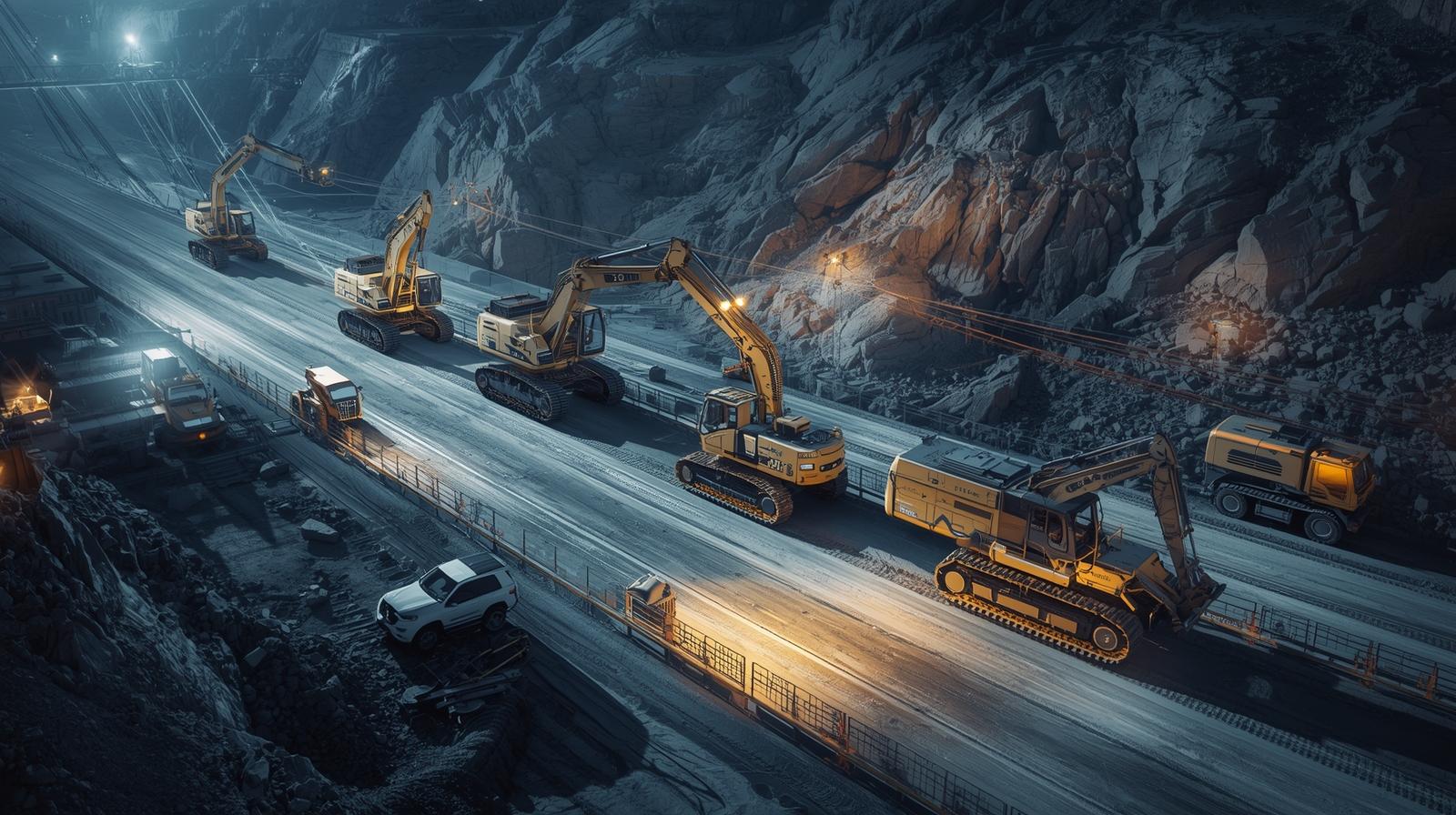
Mining Automation Market Growth Analysis: Safety Remains a Key Driver
Worker safety remains one of the most important factors behind mining automation adoption. Mining sites can involve unstable geological conditions, heavy machinery, extreme temperatures, dust, gases, and other hazards. Underground mines can present additional challenges because of confined spaces and limited accessibility.
Automation allows certain tasks to be performed remotely or autonomously, reducing human exposure to hazardous conditions. Autonomous hauling systems, remote-controlled drilling equipment, automated ventilation, and remote monitoring can help move workers away from high-risk operating zones.
MarketsandMarkets identifies the growing focus on enhancing safety and operational efficiency at mining sites as a key market driver. Remote locations can make it difficult to provide timely assistance during emergencies, increasing the value of automation and remote operations.
As mining companies continue to prioritize safety performance, automation can become an important component of broader mine-management strategies.
Autonomous Hauling Systems Increase Productivity
Autonomous hauling is one of the most visible applications of mining automation. Autonomous haul trucks can operate along predefined routes while using sensors, positioning systems, communication networks, and control software to navigate mining sites.
These systems can support continuous operations, optimize vehicle utilization, and reduce dependence on manual driving. Fleet management platforms can coordinate multiple vehicles and provide operators with real-time information about vehicle location, status, fuel consumption, and operating conditions.
MarketsandMarkets highlights autonomous haul trucks and advanced fleet-management systems as important commercial use cases. These systems can contribute to increased haulage productivity, predictive maintenance, reduced downtime, and lower total cost of ownership.
As autonomous technology becomes more sophisticated, mining operators can integrate hauling systems with drilling, loading, dispatch, and maintenance workflows to create connected mining ecosystems.
Automated Drilling Systems Support Precision Mining
Drilling is another major area of automation adoption. Automated drilling rigs can perform repetitive drilling tasks while using sensors and control systems to improve consistency and precision.
Automation can help control drilling parameters, monitor equipment performance, and reduce human exposure to potentially hazardous environments. Remote operation capabilities can also allow personnel to manage equipment from safer locations.
The increasing demand for precise drilling, improved resource utilization, and safer mining operations is creating opportunities for automated drilling systems. MarketsandMarkets identifies autonomous drilling rigs among the key offerings within the mining automation market.
AI can further enhance automated drilling by analyzing operational data and adjusting processes according to geological and equipment conditions.
IoT Enables Connected Mining Operations
The integration of IoT is a major component of the Mining Automation Market Growth Analysis. Mining companies are deploying connected sensors throughout equipment, vehicles, processing facilities, ventilation systems, and other infrastructure.
IoT-enabled systems can collect information related to equipment health, temperature, vibration, fuel consumption, location, productivity, and environmental conditions. This data can be transmitted to centralized platforms for monitoring and analysis.
Connected mining allows operators to gain greater visibility across mine operations. Instead of relying solely on periodic inspections or manual reports, companies can monitor equipment and processes continuously.
MarketsandMarkets identifies AI, IoT sensors, and real-time monitoring technologies as important technologies enabling predictive maintenance, fleet management, and data-driven decision-making.
Predictive Maintenance Reduces Equipment Downtime
Mining equipment represents a significant investment, making equipment availability and reliability critical to profitability. Unexpected equipment failures can interrupt production, increase maintenance costs, and affect mine schedules.
Predictive maintenance uses sensor data, equipment monitoring, AI, and analytics to identify potential problems before they result in major failures. Vibration, temperature, pressure, operating hours, and other equipment parameters can be monitored continuously.
Machine learning algorithms can analyze historical and real-time data to identify patterns associated with equipment degradation. Maintenance teams can then plan interventions according to equipment condition rather than relying only on fixed maintenance schedules.
MarketsandMarkets notes that mine maintenance is gaining traction as mining operators adopt predictive maintenance, remote diagnostics, and asset health monitoring to reduce unplanned downtime and extend equipment life.
Digital Twins Create Smarter Mining Environments
Digital twins are another technology contributing to the evolution of automated mining. A digital twin creates a virtual representation of physical assets, equipment, or processes and can use real-time data to reflect actual operating conditions.
In mining, digital twins can be used to monitor equipment, simulate operational scenarios, evaluate maintenance requirements, and optimize workflows.
When combined with AI and IoT, digital twins can provide mining companies with a more comprehensive view of their operations. Operators can analyze potential changes virtually before implementing them in physical environments.
MarketsandMarkets identifies the integration of AI, IoT, and digital twins as a major technology trend reshaping both underground and surface mining operations.
Smart Ventilation Systems Improve Underground Mining
Ventilation is particularly important in underground mining because it affects worker safety, air quality, temperature, and energy consumption.
Smart ventilation systems can use sensors, automation controls, and real-time monitoring to adjust ventilation according to operating conditions. Rather than operating ventilation systems at a fixed level continuously, intelligent systems can respond to changes in worker presence, equipment activity, air quality, and environmental conditions.
Smart ventilation is included among the key equipment and technology offerings in the Mining Automation Market. Its integration with connected mine-management systems can contribute to more efficient energy use and improved environmental monitoring.
Underground Mining Accelerates Automation Adoption
According to MarketsandMarkets, underground mining is projected to register the highest CAGR during the forecast period. The segment benefits from the strong need to improve safety, mitigate labor shortages, and enhance operational efficiency in challenging underground environments.
Automation can reduce human exposure to underground hazards through autonomous drilling, hauling, loading, monitoring, and remote operation.
The increasing demand for minerals and metals located in deeper deposits can further support the adoption of automated underground mining technologies.
As underground operations become more technologically sophisticated, mining companies are expected to integrate autonomous equipment with communications infrastructure, digital mine-management platforms, and real-time monitoring systems.
Equipment Remains a Major Component of the Market
The equipment segment represents an important part of the Mining Automation Market Growth Analysis. Autonomous trucks, drilling rigs, underground loaders, and other automated machines form the physical foundation of automated mining operations.
MarketsandMarkets reports that equipment accounted for a significant share of the market in 2024. Investments in autonomous fleets and the productivity and safety benefits associated with equipment automation are supporting adoption.
Software and communication systems are becoming increasingly important alongside physical equipment. Fleet management software, remote monitoring platforms, asset management systems, and communication networks connect machines and personnel across mining operations.
This convergence of hardware and software is creating an integrated automation ecosystem.
Metal Mining Creates New Automation Opportunities
The mining automation market serves mineral mining, metal mining, coal mining, and other applications. Metals such as copper, gold, silver, lithium, and nickel are increasingly important to industries including electronics, renewable energy, electric vehicles, and energy storage.
MarketsandMarkets projects the metal mining segment to record the highest CAGR during the forecast period. Increasing demand for metals used in emerging technologies is supporting investment in efficient and automated extraction processes.
Automation can help mining companies improve extraction precision, equipment utilization, worker safety, and operational visibility across metal mining operations.
Asia Pacific Leads Mining Automation Market Growth
Asia Pacific is projected to be the fastest-growing regional market for mining automation, with a CAGR of 8.9% during the forecast period. The region benefits from extensive mineral and metal reserves, industrialization, investments in smart mining technologies, and increasing adoption of autonomous equipment.
China, India, and Australia are important contributors to regional mining activity and technology adoption. Government initiatives and investments in digitalization are also supporting the transition toward connected and automated mining operations.
India, in particular, represents an emerging growth market. MarketsandMarkets estimates that India’s Mining Automation Market was valued at USD 214 million in 2025 and is projected to reach USD 394.6 million by 2030, representing a 13.0% CAGR.
Smart Connected Mining Creates Growth Opportunities
The increasing inclination of mine operators toward digital technologies is creating new opportunities within the mining automation ecosystem.
Smart connected mining combines automation, instrumentation, IT infrastructure, communications, analytics, and operational technologies. These technologies can support activities ranging from mine planning and exploration to extraction, transportation, maintenance, and analysis.
Connected systems allow data to move across different parts of the mining operation. This can help operators monitor assets, identify inefficiencies, coordinate fleets, and improve decision-making.
MarketsandMarkets identifies the growing trend of smart connected mining as an important market opportunity.
The development of high-speed communication networks and edge computing can further support real-time mining applications.
Remote Operations Expand Automation Capabilities
Remote operation centers are becoming increasingly relevant as mining companies seek to separate personnel from hazardous environments.
Operators can monitor and control equipment from centralized locations using high-resolution video, sensors, communications networks, and control software. This approach can enable personnel to supervise multiple machines or processes without physically entering the mining area.
Remote operations can also help address workforce availability challenges at remote mine sites. Skilled employees can support operations from locations that offer better working conditions and access to broader technical resources.
The combination of remote operations, autonomous equipment, AI, and IoT can create increasingly centralized and data-driven mining operations.
Workforce Skills Become Increasingly Important
While automation can reduce dependence on manual labor for certain tasks, it also creates demand for new technical skills. Mining companies require workers who can operate, maintain, program, monitor, and troubleshoot automated equipment and digital systems.
MarketsandMarkets identifies workforce shortages and skill gaps in operating automated mining systems as a challenge for the industry.
The transition toward automation therefore requires investment in workforce training and technical education. Mining companies may need personnel with expertise in robotics, data analytics, AI, industrial communications, cybersecurity, electrical systems, and equipment maintenance.
Building these capabilities will be important for realizing the benefits of automated mining systems.
Interoperability Remains a Major Challenge
Mining operations often involve equipment and software from multiple vendors. Ensuring that these systems communicate effectively can be difficult.
Interoperability issues can limit the ability of mining companies to create fully integrated automation ecosystems. Different communication protocols, data formats, software platforms, and control architectures can make integration more complex.
MarketsandMarkets identifies interoperability issues associated with mining automation as a key challenge.
Greater standardization and open communication architectures could help mining operators integrate equipment, software, sensors, and communication systems more efficiently.
Sustainability and Resource Optimization
Mining automation is also connected to the industry’s broader focus on resource efficiency and environmental performance. Automated systems can optimize equipment operation, reduce unnecessary movement, monitor energy consumption, and support more precise extraction.
AI-powered fleet management can help optimize vehicle routes and utilization, while predictive maintenance can reduce equipment waste and unnecessary component replacement.
However, automation does not eliminate the environmental impacts associated with mining. Resource depletion and environmental degradation remain important industry concerns. MarketsandMarkets identifies depletion of natural resources as a restraint affecting the broader mining automation landscape.
Future automation systems will therefore increasingly need to support both operational efficiency and more sustainable mining practices.
Competitive Landscape of the Mining Automation Market
The competitive landscape includes major mining equipment and technology providers developing autonomous machinery, digital platforms, automation systems, and connected solutions.
MarketsandMarkets identifies Caterpillar, Komatsu, Sandvik AB, Epiroc AB, and Hitachi Construction Machinery among the key players in the global market. These companies are focusing on product innovation, partnerships, acquisitions, and expanded automation portfolios.
Competition is increasingly extending beyond individual machines. Companies are developing integrated solutions combining autonomous equipment, AI-powered analytics, fleet management, remote monitoring, IoT connectivity, and asset-management platforms.
This ecosystem-based approach is expected to influence future innovation and deployment strategies.
Future Outlook for Mining Automation Market Growth Analysis
The future of Mining Automation Market Growth Analysis is closely linked to the convergence of AI, robotics, IoT, autonomous equipment, digital twins, remote operations, and advanced analytics.
The global market is projected to reach USD 5.93 billion by 2030, reflecting continued investment in technologies designed to improve mining safety, productivity, operational efficiency, and resource utilization.
Autonomous hauling, automated drilling, smart ventilation, predictive maintenance, and remote monitoring will remain important areas of technology development. At the same time, AI-powered analytics and digital twins can help mining companies move toward more integrated and intelligent operations.
Asia Pacific is expected to remain an important growth region, while mining companies globally continue to evaluate automation as part of their digital transformation strategies.
Ultimately, the Mining Automation Market Growth Analysis demonstrates how mining is moving from equipment-centered automation toward connected, intelligent, and increasingly autonomous operations. AI and robotics are becoming central technologies in this transition, while IoT, software, communications, and analytics provide the digital infrastructure needed to coordinate increasingly complex mining environments.
About MarketsandMarkets™
MarketsandMarkets™ has been recognized as one of America’s Best Management Consulting Firms by Forbes, as per their recent report.
MarketsandMarkets™ is a blue ocean alternative in growth consulting and program management, leveraging a man-machine offering to drive supernormal growth for progressive organizations in the B2B space. With the widest lens on emerging technologies, we are proficient in co-creating supernormal growth for clients across the globe.
Today, 80% of Fortune 2000 companies rely on MarketsandMarkets, and 90 of the top 100 companies in each sector trust us to accelerate their revenue growth. With a global clientele of over 13,000 organizations, we help businesses thrive in a disruptive ecosystem.
The B2B economy is witnessing the emergence of $25 trillion in new revenue streams that are replacing existing ones within this decade. We work with clients on growth programs, helping them monetize this $25 trillion opportunity through our service lines – TAM Expansion, Go-to-Market (GTM) Strategy to Execution, Market Share Gain, Account Enablement, and Thought Leadership Marketing.
Built on the ‘GIVE Growth’ principle, we collaborate with several Forbes Global 2000 B2B companies to keep them future-ready. Our insights and strategies are powered by industry experts, cutting-edge AI, and our Market Intelligence Cloud, KnowledgeStore™, which integrates research and provides ecosystem-wide visibility into revenue shifts.
To find out more, visit www.MarketsandMarkets™.com or follow us on Twitter , LinkedIn and Facebook .
Contact:
Mr. Rohan Salgarkar
MarketsandMarkets™ INC.
1615 South Congress Ave.
Suite 103, Delray Beach, FL 33445
USA: +1-888-600-6441
