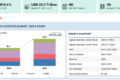
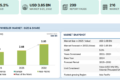
According to a research report “Natural Gas Power Generation Market by Technology (Combined Cycle, Open Cycle, Cogeneration), End User (Power Utilities, Industrial, Residential & Commercial), Fuel Source (Pipeline, Liquefied), Power Output, and Region – Global Forecast to 2030″, the global market for natural gas power generation market is projected to reach USD 122.49 billion by 2030 from an estimated USD 96.95 billion in 2025, at a CAGR of 4.8% during the forecast period. Market growth is driven by increasing electricity demand, the need for reliable and flexible power, and the transition toward lower-carbon energy sources compared to coal and oil. Advancements in high-efficiency combined-cycle turbines, distributed generation, and LNG infrastructure are enhancing operational efficiency and scalability. Supportive government policies, emissions regulations, and incentives for cleaner energy accelerate adoption. Additionally, natural gas’s role in balancing intermittent renewable energy, reducing grid volatility, and ensuring energy security further strengthens market growth.
Download PDF Brochure – https://www.marketsandmarkets.com/pdfdownloadNew.asp?id=131646934
By technology segment, the open cycle is expected to grow at the highest CAGR during the forecast period.
The Open Cycle segment is expected to grow at the highest CAGR in the natural gas power generation market due to its quick start-up and shut-down capabilities, making it ideal for meeting peak electricity demand and supporting grid stability. Its relatively lower capital expenditure compared to combined-cycle plants enables faster deployment and flexible operation. Technological improvements in aeroderivative and small-scale gas turbines enhance efficiency and reduce maintenance costs. Additionally, the growing integration of intermittent renewable energy sources, such as solar and wind, is driving demand for open-cycle plants as reliable peaking and backup power solutions.
By power output segment, the 201–500 MW segment is expected to grow at the highest CAGR during the forecast period.
The 201–500 MW power output segment is expected to grow at the highest CAGR in the natural gas power generation market due to its optimal balance between scale and flexibility. Plants within this range can efficiently serve regional grids, industrial zones, and urban centers without the high capital requirements of larger projects. They offer faster deployment, lower operational complexity, and adaptability to fluctuating demand. Technological advancements in mid-sized combined-cycle and open-cycle turbines further improve efficiency and emissions performance. Additionally, the increasing integration of renewable energy sources drives the need for mid-sized plants to provide reliable backup and grid-stabilizing support.
By region, Asia Pacific is expected to be the fastest-growing region during the forecast period.
In the natural gas power generation market, Asia Pacific is poised to emerge as the fastest-growing region through 2030, propelled by a confluence of innovative drivers. Surging electricity demand from data centers and AI-driven digital economies in China and India is accelerating gas adoption for reliable baseload power. Extreme weather events, including 2024 heatwaves, are intensifying cooling needs and grid resilience requirements. Policy shifts, such as China’s coal-to-gas conversions and the Philippines’ tax incentives for LNG development, are fostering cleaner transitions. Enhanced regional LNG imports and pipeline expansions in ASEAN nations further enable flexible integration with renewables, curbing emissions while supporting industrialization.
Make an Inquiry – https://www.marketsandmarkets.com/Enquiry_Before_BuyingNew.asp?id=131646934
Key Market Players
Some of the major players in the natural gas power generation market are GE Vernova (US), Siemens Energy (Germany), Tecogen, Inc. (US), Destinus Energy (US), Bechtel Corporation (US), Fluor Corporation (US), Worley (Australia), MITSUBISHI HEAVY INDUSTRIES, LTD. (Japan), Caterpillar Inc. (US), Wärtsilä (Finland), McDermott (US) and Clarke Energy (UK). These players adopt major strategies, including acquisitions, sales contracts, product launches, agreements, alliances, partnerships, and expansions.