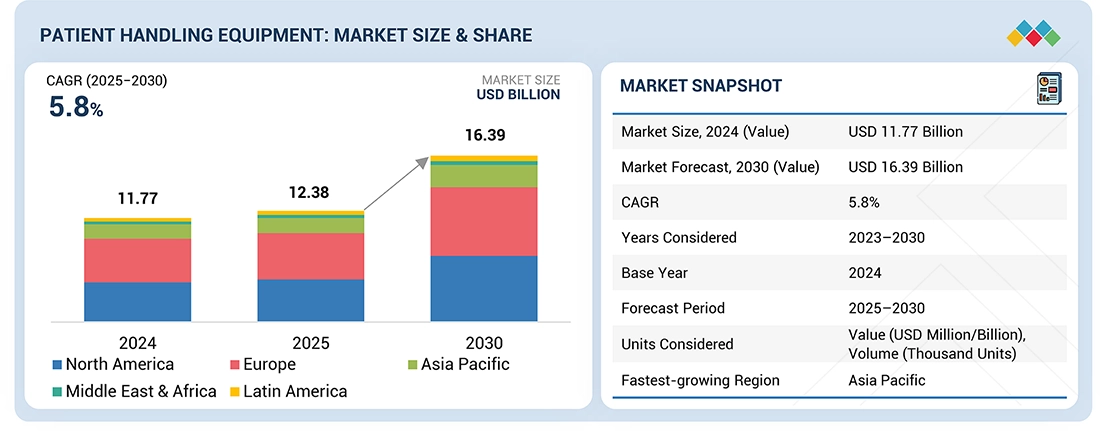
The global Patient Handling Equipment Market is projected to grow from USD 12.4 billion in 2025 to USD 16.4 billion by 2030, at a CAGR of 5.8% during the forecast period. The market’s steady expansion reflects the growing need for safe, efficient, and ergonomic patient mobility solutions across healthcare settings.
Download PDF Brochure:- https://www.marketsandmarkets.com/pdfdownloadNew.asp?id=186358368
Market Drivers: Why Demand is Accelerating
What is fueling market growth? A combination of demographic and clinical factors is driving sustained demand. The rising prevalence of chronic diseases—including cardiovascular disorders, stroke, and paralysis—is increasing the number of patients requiring assisted mobility. Simultaneously, the global aging population is contributing to higher incidences of mobility limitations and injury-related care needs.
Why is this critical for healthcare providers? The increasing occurrence of musculoskeletal injuries among healthcare professionals has made patient handling equipment essential for reducing workplace risks. Hospitals and care facilities are prioritizing solutions such as medical beds, transfer devices, and mobility aids to enhance both patient safety and caregiver efficiency.
Additionally, the expansion of rehabilitation centers and long-term care facilities is further strengthening market demand.
Segment Insights: Where Growth is Concentrated
By type, patient transfer devices are expected to dominate the market throughout the forecast period. This segment includes patient lifts, slings, sliding sheets, and air-assisted transfer systems. Growth is largely driven by the increasing number of patients with mobility impairments and age-related comorbidities, requiring frequent and safe transfers across care settings.
From an application standpoint, rehabilitation care is projected to register the highest CAGR. Why is this segment expanding rapidly? The answer lies in the growing emphasis on post-operative recovery and mobility restoration. Rehabilitation plays a crucial role in helping patients regain strength and independence, with rising adoption across hospitals, home healthcare, and senior care facilities.
Emerging economies, in particular, are witnessing increased investment in rehabilitation infrastructure, further accelerating segment growth.
Regional Outlook: Europe Leads the Market
In 2024, Europe accounted for the largest share of the patient handling equipment market. The region’s leadership is supported by several key factors:
- High prevalence of chronic diseases
- Strong government initiatives to enhance healthcare infrastructure
- Rising obesity rates and associated mobility challenges
- Rapidly expanding geriatric population
Additionally, the presence of established manufacturers and advanced healthcare systems continues to reinforce Europe’s dominant position in the global market.
Speak TO Analyst:- https://www.marketsandmarkets.com/speaktoanalystNew.asp?id=186358368
Competitive Landscape: Key Players Driving Innovation
Who are the leading players shaping this market? The patient handling equipment landscape includes several global and regional companies focused on product innovation, safety enhancements, and expanding care accessibility: Arjo (Sweden), Stryker Corporation (US), Baxter International, Inc. (US), Savaria Corporation (Canada), Drive Devilbiss Healthcare (US), Etac AB (Sweden), GF Health Products, Inc. (US), V. Guldmann A/S (Denmark), and Joerns Healthcare LLC (US), among others.
These companies are investing in advanced technologies and ergonomic designs to improve patient outcomes while addressing caregiver safety challenges.
Strategic Outlook: What This Means for Industry Leaders
As healthcare systems evolve toward patient-centric and safety-driven models, patient handling equipment is becoming a foundational component of care delivery. The focus is shifting toward integrated solutions that not only enhance patient mobility but also reduce operational risks and improve staff productivity.
For decision-makers, the opportunity lies in aligning with trends such as rehabilitation expansion, aging demographics, and workplace safety compliance. Companies that prioritize innovation, scalability, and regulatory alignment will be best positioned to capture long-term value in this steadily growing market.


