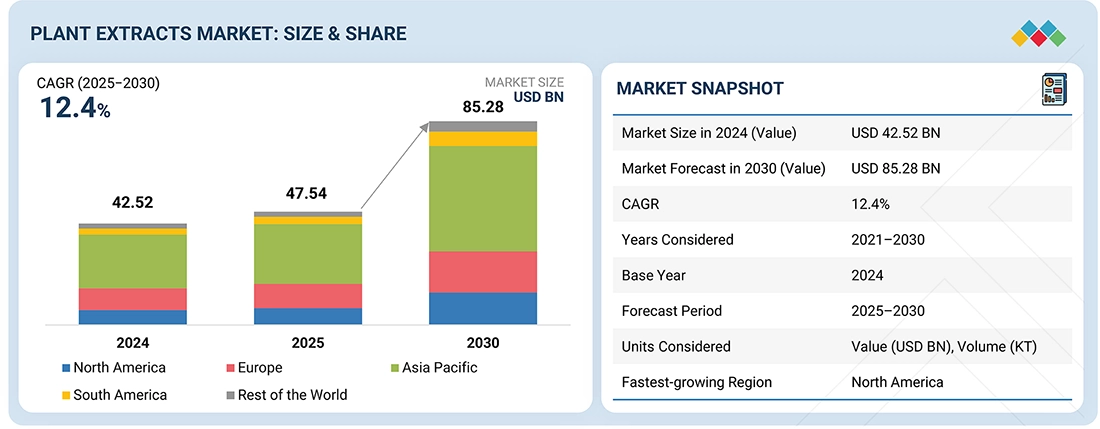
The plant extracts market is estimated at USD 47.54 billion in 2025 and is projected to reach USD 85.28 billion by 2030, at a CAGR of 12.4% from 2025 to 2030. Demand for plant extracts is expected to rise strongly in the coming years as consumers increasingly shift toward natural, clean-label, and botanical ingredients for health, wellness, and safe nutrition. With growing awareness of the limitations and side effects associated with synthetic additives, plant-derived extracts rich in polyphenols, flavonoids, essential oils, alkaloids, carotenoids, and other bioactive compounds are gaining significant attention for their proven antioxidant, anti-inflammatory, antimicrobial, immune-supporting, and therapeutic properties. Their stability under varied processing conditions enables broad integration into functional foods, dietary supplements, beverages, cosmetics, and personal care formulations. Popular extracts such as turmeric, ashwagandha, green tea, aloe vera, rosemary, chamomile, and ginseng are increasingly recognized for promoting digestive health, stress relief, cognitive balance, skin vitality, and immune resilience. As the global population becomes more health-conscious and prioritizes natural, preventive, and plant-based solutions, consumer demand for botanical extracts is expected to accelerate significantly, positioning them as a core component of the evolving natural wellness and clean-label ingredients market.
Download PDF Brochure: https://www.marketsandmarkets.com/pdfdownloadNew.asp?id=942
By source, herbs & spices segment to hold significant market share during forecast period.
The herbs and spices segment is estimated to hold a significant share in the plant extracts market due to its widespread and long-standing use across multiple industries, including food and beverages, dietary supplements, pharmaceuticals, and cosmetics. Herbs and spices such as turmeric, ginger, garlic, cinnamon, black pepper, rosemary, basil, oregano, clove, and cardamom are integral to daily culinary practices around the world and are extensively used as natural flavoring agents, preservatives, and functional bioactive ingredients, making demand far greater than other extract categories. A 2023 study published in Springer Nature reports that, upon evaluating 21 commercial spice samples, researchers found high levels of phenolic compounds and measured significant antioxidant and antimicrobial activity across multiple spices — e.g., clove, cinnamon, turmeric, and pepper — confirming their functional potential for both health and preservative applications. Their rich concentration of polyphenols, flavonoids, essential oils, antioxidants, and antimicrobial compounds enables broad application in natural health products and functional foods aimed at boosting immunity, supporting digestion, and preventing inflammatory and lifestyle-related disorders. Additionally, the strong cultural acceptance and historical medicinal use of herbs and spices, combined with rising consumer preference for clean-label, natural, and minimally processed ingredients, significantly enhances their commercial desirability compared to more specialized extract types. Growing interest in plant-based diets, herbal supplements, and global culinary diversity further accelerates the dominance of the herbs and spices segment, positioning it as the most widely adopted and commercially valuable category within the plant extracts market.
By application, cosmetics & personal care segment to grow at significant rate during forecast period.
The cosmetics and personal care segment is expected to be one of the fastest-growing application areas in the plant extracts market, driven by accelerating consumer preference for natural, chemical-free, and clean-label beauty solutions. Growing concerns over synthetic chemicals, parabens, sulfates, and artificial preservatives are prompting brands to shift toward botanical actives with proven benefits for skin, hair, and overall dermatological health. Plant extracts such as aloe vera, green tea, chamomile, licorice, rosemary, turmeric, rosehip, ginseng, neem, and grapeseed are increasingly incorporated into skincare, haircare, and cosmetic formulations due to their anti-aging, anti-inflammatory, antioxidant, brightening, moisturizing, and antimicrobial properties. The rapid expansion of herbal, organic, halal, vegan, and cruelty-free beauty products, coupled with rising demand for nutricosmetics and beauty-from-within supplements, is accelerating the adoption of plant-based ingredients across premium and mass-market product lines. Additionally, the growth of social media beauty trends, wellness-centric lifestyles, and personalized skincare solutions, along with increasing R&D investments and brand innovation in botanical actives and green extraction technologies, is propelling the cosmetics segment to become a leading high-growth contributor within the global plant extracts industry.
Request Sample Pages: https://www.marketsandmarkets.com/requestsampleNew.asp?id=942
Middle East & Africa to witness significant growth in global plant extracts market
The Middle East & Africa region is expected to emerge as one of the fastest-growing markets for plant extracts, driven by expanding consumer awareness of natural, herbal, and plant-based health solutions, combined with a rising shift toward clean-label and traditional medicine–inspired wellness products. The region has a strong cultural history of herbal and botanical medicinal use, including ingredients such as black seed, fenugreek, moringa, hibiscus, aloe vera, rosemary, myrrh, frankincense, cinnamon, and saffron, which are widely utilized for therapeutic, culinary, and cosmetic purposes. Increasing investments in the pharmaceutical, nutraceutical, functional food, and cosmetics industries, along with the rapid expansion of wellness tourism, halal and herbal beauty brands, and natural personal care products, are fueling demand for high-quality plant extracts. Urbanization, rising consumer spending on health & wellness products, and a growing focus on preventive healthcare and immunity-boosting natural products are accelerating adoption across the region. Additionally, government support for local cultivation, organic farming, and the commercialization of indigenous botanicals, along with efforts to reduce dependence on imported synthetic ingredients, is encouraging domestic production and industry expansion. Together, these factors position the Middle East & Africa region as a high-potential, fast-growing market for plant-derived extracts in the forecast period.
Leading Plant Extracts Companies:
The report profiles key players such as Givaudan (Switzerland), International Flavors & Fragrances Inc. (US), Sensient Technologies Corporation (US), Symrise AG (Germany), dsm-firmenich (Netherlands), Synthite Industries Ltd (India), Indesso (Indonesia), Cargill Incorporated (US), ADM (US), Kerry Group (Ireland), Döhler (Germany), Kangcare Bioindustry Co. Ltd. (China), Vidya Herbs (India), Carbery Group (Ireland), Martin Bauer Group (Germany), Kalsec Inc. (US), and Native Extracts (Australia).
