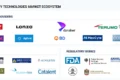
The nuclear medicine software market size is projected to reach USD 1.49 billion by 2030 from USD 0.97 billion in 2025, at a CAGR of 9.0% during the forecast period. This growth is primarily driven by the increasing adoption of advanced imaging technologies, rising demand for personalized medicine, and the growing prevalence of chronic diseases that require accurate diagnostic solutions. Enhanced workflow efficiency and the integration of AI in nuclear medicine software also contribute to market expansion.
Download PDF Brochure: https://www.marketsandmarkets.com/pdfdownloadNew.asp?id=417
Key Market Drivers and Trends
The nuclear medicine software sector is seeing rapid innovation in AI integration, imaging accuracy, and workflow automation. Modern tools now support image reconstruction, data analysis, dosimetry, and workflow coordination—all with improved interoperability and remote access capabilities. Enhanced PACS platforms, mobile access, and automated documentation are improving reliability and efficiency across clinical environments. Collectively, these developments are creating new opportunities for growth and innovation.
Market Segmentation
By Application
The market is segmented into diagnostics, therapeutics, emergency & stat workflows, and clinical research.
The diagnostics segment holds the largest share, driven by the widespread use of PET and SPECT imaging in oncology, cardiology, and neurology. Diagnostic imaging forms the foundation of nuclear medicine, supported by growing patient awareness and the push for early disease detection.
Radiology departments are increasingly adopting software for image acquisition, reconstruction, quantification, and automated interpretation, alongside major investments in PACS integration and AI/ML diagnostic platforms. Rising cancer screening programs, demand for multi-modality image fusion, and patient-centric reimbursement frameworks in North America and Europe further drive growth in this segment.
By End User
End users include healthcare providers, pharmaceutical & biotechnology companies, medtech firms, and others.
The pharmaceutical and biotechnology segment dominates due to expanding research in theranostics and radiopharmaceutical development. These companies rely on nuclear medicine software for clinical trial imaging, personalized dosimetry, and treatment response analysis. As precision oncology advances, the demand for regulatory-compliant, data-driven imaging tools continues to accelerate, particularly for multi-center clinical trials and targeted radiotherapeutics.
Regional Insights
The market is geographically divided into North America, Europe, Asia Pacific, Latin America, and the Middle East & Africa.
North America leads the global market, supported by advanced healthcare infrastructure, high adoption of imaging technologies, and strong regulatory and reimbursement frameworks. The U.S. and Canada have a large installed base of PET and SPECT systems and are early adopters of AI-enabled imaging platforms, cloud-based PACS, and dosimetry software.
The region’s growth is also fueled by the expanding use of theranostics—particularly in treating prostate and neuroendocrine tumors—and robust collaboration between hospitals, research institutions, and pharmaceutical companies. Additionally, North America hosts a significant number of radiopharmaceutical clinical trials and benefits from the presence of major market players such as GE HealthCare, Siemens Healthineers, and Philips.
Competitive Landscape
Key companies in the market include:
GE HealthCare (MIM Software Inc.) (US), Siemens Healthineers AG (Germany), Koninklijke Philips N.V. (Netherlands), Lantheus Holdings, Inc. (EXINI Diagnostics AB) (US), Brainlab AG (Germany), Mirada Medical (UK), DOSIsoft SA (France), Hermes Medical Solutions (Sweden), INVIA, LLC (US), and Canon Medical Systems Corporation (Japan).
These players are advancing analytics, dosimetry, and cloud-native platforms to support evolving care models focused on personalization, workflow efficiency, and regulatory compliance. The emergence of AI and mobile-enabled solutions is further improving data analysis, imaging precision, and remote access.
Strategic Developments
Two core strategies are shaping the market:
- AI and Advanced Analytics Integration – Enhancing diagnostic precision, optimizing workflows, and reducing manual effort.
- Example: GE HealthCare’s Voluson Expert Series (models 22, 20, and 18, launched in 2024) reflects the industry’s shift toward AI-driven automation in imaging and diagnostics, particularly in complex fields such as oncology.
- Collaborations and Partnerships – Expanding access to advanced diagnostic tools and streamlined workflows.
- Example: The seven-year Care Alliance between GE HealthCare and Sutter Health (2024) aims to expand access to AI-integrated imaging technologies across California, covering modalities including PET/CT, SPECT/CT, MRI, CT, and X-ray.
Outlook
As healthcare systems modernize, demand for flexible, interoperable, and AI-powered software is growing rapidly. The integration of theranostics, AI automation, and cloud-based infrastructure is redefining nuclear medicine workflows, supporting more precise diagnostics, personalized treatment planning, and improved patient outcomes worldwide.
Inquiry Before Buying: https://www.marketsandmarkets.com/Enquiry_Before_BuyingNew.asp?id=417