The global Smart Home Market Trends are evolving rapidly, driven by the widespread adoption of voice assistants and smart speakers. As consumers increasingly embrace connected living, voice-controlled ecosystems have become the central interface for managing smart devices, transforming how households interact with technology. Smart Home Market is projected to reach USD 230.76 billion in 2026 and USD 450.20 billion by 2032, exhibiting a CAGR of 11.8%
Voice assistants such as Amazon Alexa, Google Assistant, and Apple Siri have moved beyond simple command execution to become intelligent home management hubs. This shift is accelerating Smart Home Market Trends by enabling seamless automation, improved user convenience, and deeper integration of IoT-enabled devices across residential environments.
Top 10 Key Takeaways
- Voice assistants are a major driver of Smart Home Market Trends.
- Smart speakers have evolved into central hubs for home automation.
- AI and NLP technologies are enhancing user interaction and personalization.
- IoT device expansion is strengthening smart home ecosystems.
- Smart security systems are increasing adoption of connected homes.
- Energy efficiency is a key factor driving smart home demand.
- Smart entertainment systems are improving user engagement.
- Consumer preference for convenience is accelerating market growth.
- Cloud and edge computing are improving system performance.
- Asia-Pacific is emerging as a high-growth smart home market region.
Rising Adoption of Voice-Controlled Ecosystems
One of the most significant factors shaping Smart Home Market Trends is the growing adoption of voice-controlled ecosystems. Smart speakers are now widely used as central control units for home automation systems, allowing users to manage lighting, security, entertainment, and appliances through simple voice commands.
Consumers are increasingly drawn to voice assistants because they eliminate the need for manual control and mobile app navigation. Instead, users can perform tasks such as adjusting thermostats, locking doors, playing music, or checking weather updates using natural speech.
This convenience has led to widespread adoption across households, making smart speakers one of the fastest-growing segments in the smart home ecosystem.
Download PDF Brochure @ https://www.marketsandmarkets.com/pdfdownloadNew.asp?id=121
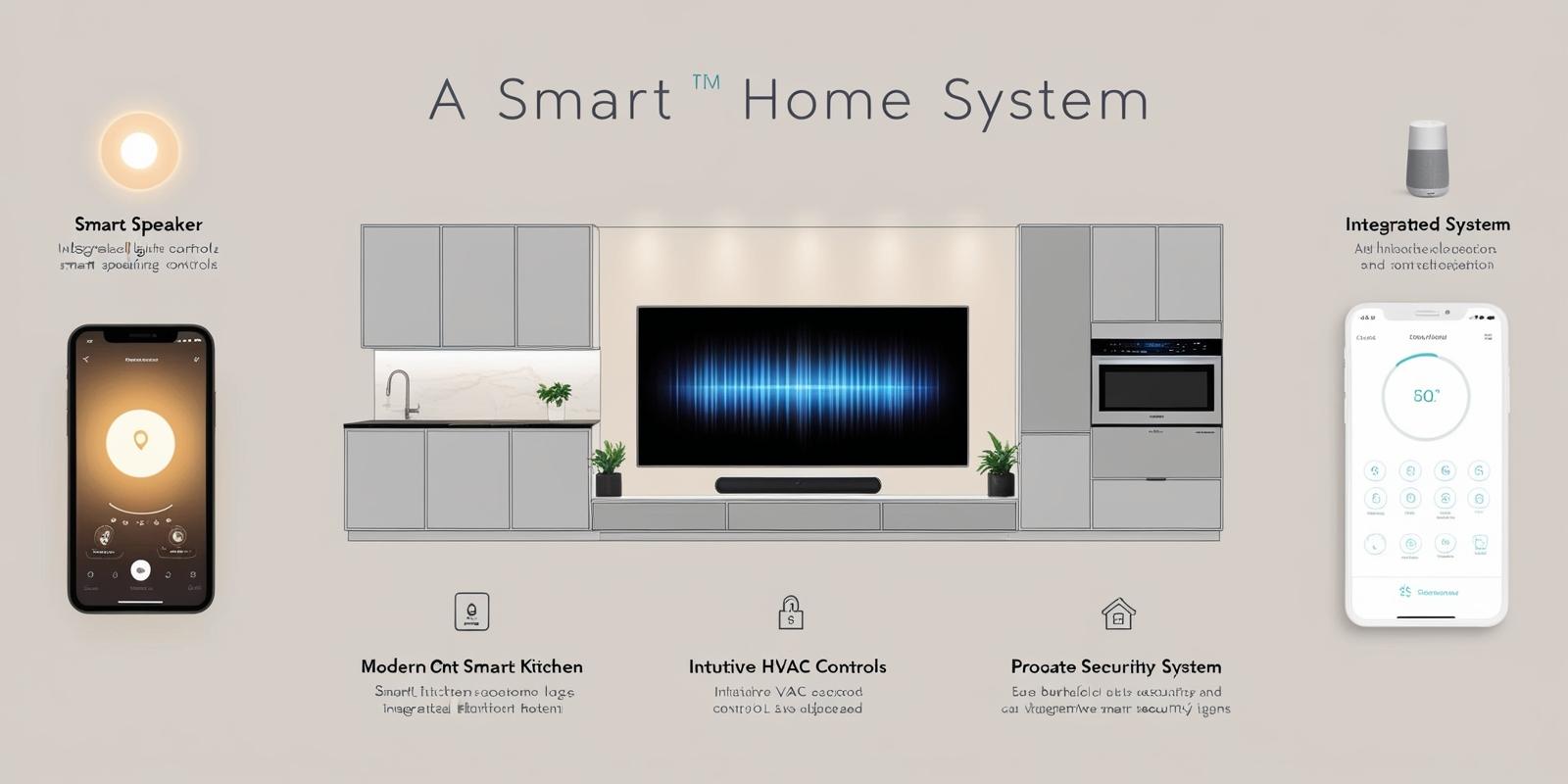
Smart Speakers as Central Hubs of Home Automation
Smart speakers have evolved from simple audio devices into powerful home automation hubs, playing a key role in accelerating Smart Home Market Trends. These devices integrate with a wide range of IoT-enabled products, enabling centralized control of multiple systems.
Popular smart speaker applications include:
- Controlling smart lighting systems
- Managing home security cameras
- Adjusting smart thermostats
- Operating entertainment systems
- Scheduling daily routines
The ability to connect and coordinate multiple devices through a single interface has significantly improved user experience and driven broader adoption of smart home technologies.
AI and Natural Language Processing Enhancing User Experience
Artificial intelligence (AI) and natural language processing (NLP) are at the core of modern voice assistants, significantly influencing Smart Home Market Trends. These technologies allow smart speakers to understand context, interpret commands, and learn user preferences over time.
AI-powered assistants can:
- Recognize individual voices
- Provide personalized recommendations
- Learn usage patterns
- Automate routine tasks
- Improve response accuracy
As AI continues to advance, smart home systems are becoming more intuitive and capable of handling complex multi-step commands, further increasing consumer adoption.
Expansion of IoT-Enabled Smart Devices
The rapid expansion of Internet of Things (IoT) devices is another key driver of Smart Home Market Trends. Smart homes now consist of interconnected devices such as smart bulbs, cameras, door locks, appliances, and sensors that communicate seamlessly through cloud platforms.
Voice assistants act as the central control layer, enabling users to manage these devices efficiently. The growing ecosystem of IoT-enabled products is making smart homes more accessible, scalable, and customizable.
As device compatibility improves and interoperability standards evolve, the integration between smart speakers and IoT devices is expected to become even more seamless.
Smart Security Systems Driving Market Growth
Security is one of the most important applications contributing to Smart Home Market Trends. Voice-controlled smart home systems now integrate with advanced security devices, providing real-time monitoring and control.
Smart security applications include:
- Voice-activated door locking systems
- Smart surveillance cameras
- Motion detection alerts
- Remote monitoring through mobile apps
- Emergency response integration
Users can now secure their homes using simple voice commands, enhancing convenience while improving safety. This integration of voice assistants with smart security systems is becoming a key differentiator in the smart home market.
Energy Efficiency and Smart Resource Management
Energy management is another major factor shaping Smart Home Market Trends. Smart home systems integrated with voice assistants allow users to monitor and optimize energy consumption more effectively.
Smart thermostats, lighting systems, and appliances can be controlled to reduce energy waste and improve efficiency. For example, users can adjust heating or cooling settings using voice commands or automate energy-saving routines.
As sustainability becomes a global priority, energy-efficient smart home technologies are expected to gain significant traction across residential markets.
Smart Entertainment Systems and Connected Living
The entertainment segment is playing a crucial role in expanding Smart Home Market Trends. Smart speakers are widely used for music streaming, video control, and multi-room audio systems.
Users can:
Play music across multiple rooms
Control smart TVs using voice commands
Stream content from online platforms
Manage home theater systems
The integration of voice assistants with entertainment ecosystems has significantly enhanced user engagement and convenience, making smart homes more appealing to consumers.
Increasing Consumer Demand for Convenience and Automation
Modern consumers are increasingly prioritizing convenience, automation, and seamless connectivity. This shift in lifestyle preferences is strongly influencing Smart Home Market Trends.
Voice assistants reduce the complexity of managing multiple devices, offering a unified and intuitive interface for home automation. This ease of use has been a major factor driving adoption among both tech-savvy users and mainstream consumers.
The ability to automate daily routines—such as morning alarms, lighting adjustments, and appliance scheduling—is further enhancing user experience and encouraging widespread adoption.
Integration with Cloud Computing and Edge AI
Cloud computing and edge artificial intelligence are playing an important role in advancing Smart Home Market Trends. Voice assistants rely on cloud-based platforms to process commands, store data, and deliver real-time responses.
At the same time, edge AI enables faster processing directly on devices, reducing latency and improving responsiveness. This hybrid architecture ensures efficient performance even in complex smart home environments.
As cloud and edge technologies continue to evolve, voice-controlled smart home systems are expected to become more reliable, secure, and intelligent.
Regional Market Growth and Adoption Trends
North America currently leads Smart Home Market Trends due to high technology adoption rates, strong presence of major smart device manufacturers, and early consumer acceptance of voice assistants.
Europe is also witnessing steady growth, driven by energy efficiency initiatives and smart building adoption. Meanwhile, Asia-Pacific is emerging as a high-growth region due to rapid urbanization, rising disposable income, and expanding IoT infrastructure.
Countries like China, India, and Japan are seeing increasing demand for affordable smart home solutions, further expanding the global market footprint.
Future Outlook of Smart Home Market Trends
The future of Smart Home Market Trends is expected to be shaped by deeper AI integration, improved device interoperability, and expanded IoT ecosystems. Voice assistants will continue to evolve into more advanced digital home managers capable of handling complex automation tasks.
Key future developments include:
- Fully autonomous smart homes
- Emotion-aware AI assistants
- Enhanced multi-device orchestration
- Increased adoption of edge AI processing
- Broader integration with smart city infrastructure
As technology becomes more affordable and accessible, smart homes are expected to transition from premium offerings to mainstream household standards.
Frequently Asked Questions (FAQs)
1. What are smart home voice assistants?
Smart home voice assistants are AI-powered systems that allow users to control connected devices using voice commands through smart speakers or mobile devices.
2. How do smart speakers work in home automation?
Smart speakers act as central hubs that connect and control IoT devices such as lights, thermostats, security cameras, and appliances using voice commands.
3. What is driving Smart Home Market Trends?
Key drivers include rising IoT adoption, AI advancements, voice assistant integration, energy efficiency needs, and increasing demand for home automation.
4. Are smart homes energy efficient?
Yes, smart homes improve energy efficiency by automating lighting, heating, cooling, and appliance usage to reduce energy waste.
5. Which region leads the smart home market?
North America currently leads the market, while Asia-Pacific is expected to experience the fastest growth in the coming years.
About MarketsandMarkets™
MarketsandMarkets™ has been recognized as one of America’s Best Management Consulting Firms by Forbes, as per their recent report.
MarketsandMarkets™ is a blue ocean alternative in growth consulting and program management, leveraging a man-machine offering to drive supernormal growth for progressive organizations in the B2B space. With the widest lens on emerging technologies, we are proficient in co-creating supernormal growth for clients across the globe.
Today, 80% of Fortune 2000 companies rely on MarketsandMarkets, and 90 of the top 100 companies in each sector trust us to accelerate their revenue growth. With a global clientele of over 13,000 organizations, we help businesses thrive in a disruptive ecosystem.
The B2B economy is witnessing the emergence of $25 trillion in new revenue streams that are replacing existing ones within this decade. We work with clients on growth programs, helping them monetize this $25 trillion opportunity through our service lines – TAM Expansion, Go-to-Market (GTM) Strategy to Execution, Market Share Gain, Account Enablement, and Thought Leadership Marketing.
Built on the ‘GIVE Growth’ principle, we collaborate with several Forbes Global 2000 B2B companies to keep them future-ready. Our insights and strategies are powered by industry experts, cutting-edge AI, and our Market Intelligence Cloud, KnowledgeStore™, which integrates research and provides ecosystem-wide visibility into revenue shifts.
To find out more, visit www.MarketsandMarkets™.com or follow us on Twitter , LinkedIn and Facebook .
Contact:
Mr. Rohan Salgarkar
MarketsandMarkets™ INC.
1615 South Congress Ave.
Suite 103, Delray Beach, FL 33445
USA: +1-888-600-6441
