The Intelligent Systems Industry is undergoing a transformation that is redefining how machines operate, learn, and collaborate with humans. Once confined to isolated applications and rigid automation tasks, intelligent systems are now shaping the infrastructure of modern economies. From manufacturing lines and healthcare diagnostics to autonomous vehicles and energy grids, these systems are driving the shift from reactive machines to predictive, adaptive, and autonomous platforms. As we look ahead to 2025 and beyond, the trajectory of this industry reveals some compelling trends that will shape the future of innovation.
From Automation to Autonomy
One of the most defining shifts is the evolution from automated processes to autonomous systems. Traditional automation has long focused on performing repetitive tasks with precision, but autonomous systems are capable of perceiving their environments, analyzing real-time data, making complex decisions, and adapting on the fly. In manufacturing, this is enabling smart machines to optimize production schedules, identify defects, and reroute workflows independently. The leap from automation to autonomy is not just technical—it is strategic. It redefines business models, shortens innovation cycles, and enables truly intelligent, self-regulating operations.
Edge AI and Local Intelligence
As intelligent systems become more ubiquitous and embedded into everyday operations, there is a growing need for real-time processing. This has fueled the adoption of edge AI, where computational intelligence is deployed closer to the source of data—whether in a factory floor sensor, a vehicle, or a wearable device. By minimizing latency and reducing reliance on cloud infrastructure, edge computing empowers systems to act faster and more securely. In applications like autonomous driving, industrial robotics, and smart grids, edge intelligence enables continuous decision-making without disruption, creating systems that are not only fast but also highly resilient.
Download PDF Brochure @ https://www.marketsandmarkets.com/pdfdownloadNew.asp?id=150375126
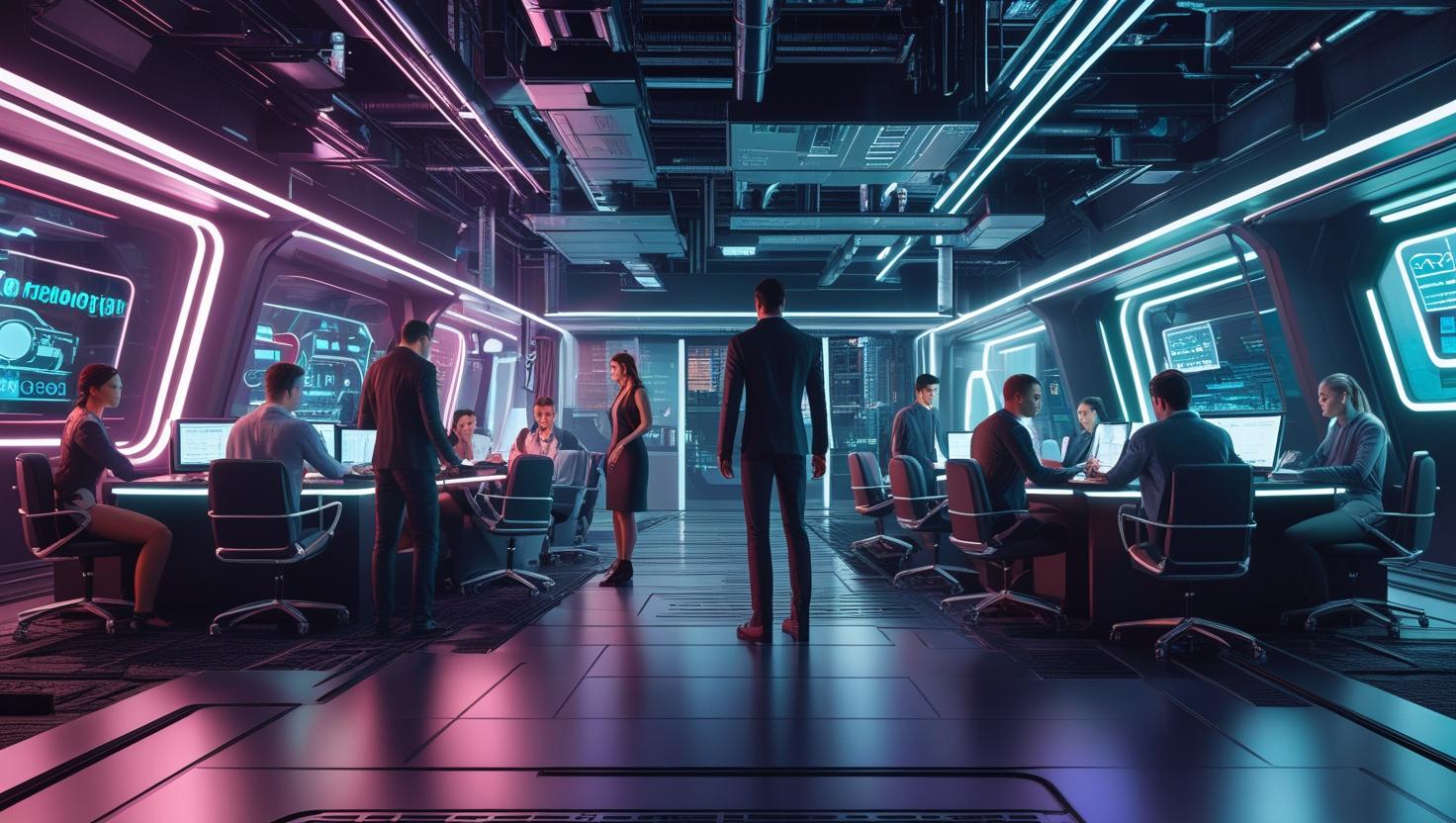
The Rise of Human-Machine Collaboration
The future of intelligent systems is not about replacing humans but enhancing their capabilities through collaboration. Machines are being designed to work alongside people—learning from human behavior, interpreting natural language, and responding intuitively to context. This shift is becoming especially relevant in healthcare, where AI assists clinicians in making better diagnostic decisions, or in industrial settings where collaborative robots, or cobots, enhance safety and productivity. As interfaces become more intuitive and AI becomes more empathetic, human-machine partnerships will become central to how work is structured and delivered in the digital age.
Interconnected Systems and Cross-Industry Convergence
A defining characteristic of intelligent systems moving forward will be their ability to integrate across industries and applications. No longer confined to siloed use cases, intelligent platforms are increasingly interoperable, thanks to open APIs, shared data models, and cloud-native infrastructures. This cross-industry convergence allows innovations developed in one field—such as predictive maintenance in manufacturing—to be adapted for logistics, energy, or healthcare. The result is a more fluid, agile innovation ecosystem where intelligent systems work in harmony across domains, accelerating efficiency and scaling impact.
Governance, Ethics, and Responsible AI
As intelligent systems take on greater roles in decision-making, the need for governance and ethical oversight is becoming critical. The questions around how AI reaches its conclusions, how data is used, and how bias is managed are front and center for regulators, businesses, and the public. In response, we are witnessing the rise of explainable AI , where systems are designed to provide transparency into their processes. Regulatory frameworks across Europe, North America, and Asia are beginning to formalize standards around ethical AI use. Moving forward, trust, fairness, and accountability will not be optional—they will be fundamental to the credibility and scalability of intelligent systems.
Simulation, Digital Twins, and Predictive Operations
A growing trend in the industry is the use of digital twins—virtual replicas of physical systems that are dynamically updated with real-time data. These digital models allow companies to simulate scenarios, test optimizations, and predict outcomes without interrupting actual operations. In sectors like energy, aerospace, and smart infrastructure, digital twins are becoming a powerful tool for operational intelligence. When combined with AI, these simulations go beyond static modeling; they become predictive, self-correcting systems that continuously evolve to improve performance, safety, and reliability.
Vertical Integration and Specialized Ecosystems
While intelligent systems are being adopted globally, they are also becoming deeply specialized within industries. In automotive, intelligent systems are enabling advanced driver-assistance features, predictive maintenance, and full autonomy. In healthcare, they are powering personalized treatment plans, robotic surgery, and patient monitoring. In logistics and supply chains, they are driving route optimization, inventory tracking, and demand forecasting. As adoption deepens, each industry is forming its own ecosystem of intelligent solutions, tailored to its unique challenges and opportunities. These vertically integrated platforms will be key to unlocking the next level of efficiency and innovation.
A Converging Future Built on Intelligence
The next five years will mark a period of accelerated convergence, where data, automation, connectivity, and cognition come together to form fully intelligent systems. These platforms will not just respond to commands—they will anticipate needs, correct inefficiencies, and adapt to changing environments autonomously. They will be context-aware, self-learning, and interoperable across disciplines. And most importantly, they will reshape the very foundation of industries—making them more agile, resilient, and intelligent by design.
The Intelligent Systems Industry is no longer a subset of digital transformation—it is becoming its core. As this momentum builds, organizations that invest early in intelligent technologies, ethical frameworks, and adaptive architectures will lead in a future where intelligence is not just embedded—it is expected.
- Key Takeaways
Intelligent systems are evolving from simple automation to fully autonomous decision-making. - Edge AI enables faster, real-time processing by analyzing data locally.
- Collaboration between humans and machines is becoming more seamless and intuitive.
- Intelligent systems are increasingly interconnected across different industries.
- Ethics, transparency, and governance are critical for responsible AI use.
- Digital twins and simulations improve efficiency through real-time monitoring and prediction.
- Industry-specific intelligent solutions are driving targeted innovation.
- The future relies on the convergence of AI, data, and automation for smarter, adaptive systems.
Semiconductor and Electronics Market Research Reports
About MarketsandMarkets™
MarketsandMarkets™ has been recognized as one of America’s Best Management Consulting Firms by Forbes, as per their recent report.
MarketsandMarkets™ is a blue ocean alternative in growth consulting and program management, leveraging a man-machine offering to drive supernormal growth for progressive organizations in the B2B space. With the widest lens on emerging technologies, we are proficient in co-creating supernormal growth for clients across the globe.
Today, 80% of Fortune 2000 companies rely on MarketsandMarkets, and 90 of the top 100 companies in each sector trust us to accelerate their revenue growth. With a global clientele of over 13,000 organizations, we help businesses thrive in a disruptive ecosystem.
The B2B economy is witnessing the emergence of $25 trillion in new revenue streams that are replacing existing ones within this decade. We work with clients on growth programs, helping them monetize this $25 trillion opportunity through our service lines – TAM Expansion, Go-to-Market (GTM) Strategy to Execution, Market Share Gain, Account Enablement, and Thought Leadership Marketing.
Built on the ‘GIVE Growth’ principle, we collaborate with several Forbes Global 2000 B2B companies to keep them future-ready. Our insights and strategies are powered by industry experts, cutting-edge AI, and our Market Intelligence Cloud, KnowledgeStore™, which integrates research and provides ecosystem-wide visibility into revenue shifts.
To find out more, visit www.MarketsandMarkets™.com or follow us on Twitter , LinkedIn and Facebook .
Contact:
Mr. Rohan Salgarkar
MarketsandMarkets™ INC.
1615 South Congress Ave.
Suite 103, Delray Beach, FL 33445
USA: +1-888-600-6441
