The global extended reality (XR) market is witnessing significant growth as businesses and consumers increasingly adopt immersive technologies to enhance digital experiences, improve operational efficiency, and transform traditional workflows. The growing popularity of augmented reality (AR), virtual reality (VR), and mixed reality (MR) solutions across gaming, healthcare, education, manufacturing, retail, and automotive industries is creating substantial opportunities for technology providers.
According to MarketsandMarkets, the global extended reality market is projected to grow from USD 24.43 billion in 2024 to USD 84.86 billion by 2029, registering a compound annual growth rate (CAGR) of 28.3% during 2024–2029. Rapid digital transformation, increasing enterprise adoption of immersive technologies, and advancements in XR hardware, software, and artificial intelligence (AI) integration are among the major factors driving market expansion.
The growing demand for virtual and augmented experiences is reshaping the digital technology landscape, encouraging companies to invest in advanced headsets, smart glasses, immersive applications, and spatial computing platforms.
Growing Adoption of AR, VR, and MR Technologies Drives Market Demand
One of the major factors supporting extended reality market growth is the increasing adoption of AR, VR, and MR technologies across consumer and enterprise applications.
Augmented reality overlays digital information onto real-world environments, enabling users to interact with virtual elements while remaining connected to their surroundings. Virtual reality provides fully immersive digital environments, while mixed reality combines physical and virtual elements to create interactive experiences.
These technologies are gaining popularity across multiple industries. In retail, AR applications allow customers to visualize products and experience virtual try-on solutions before making purchasing decisions. In education, VR-based learning environments enable students to explore complex subjects through interactive simulations.
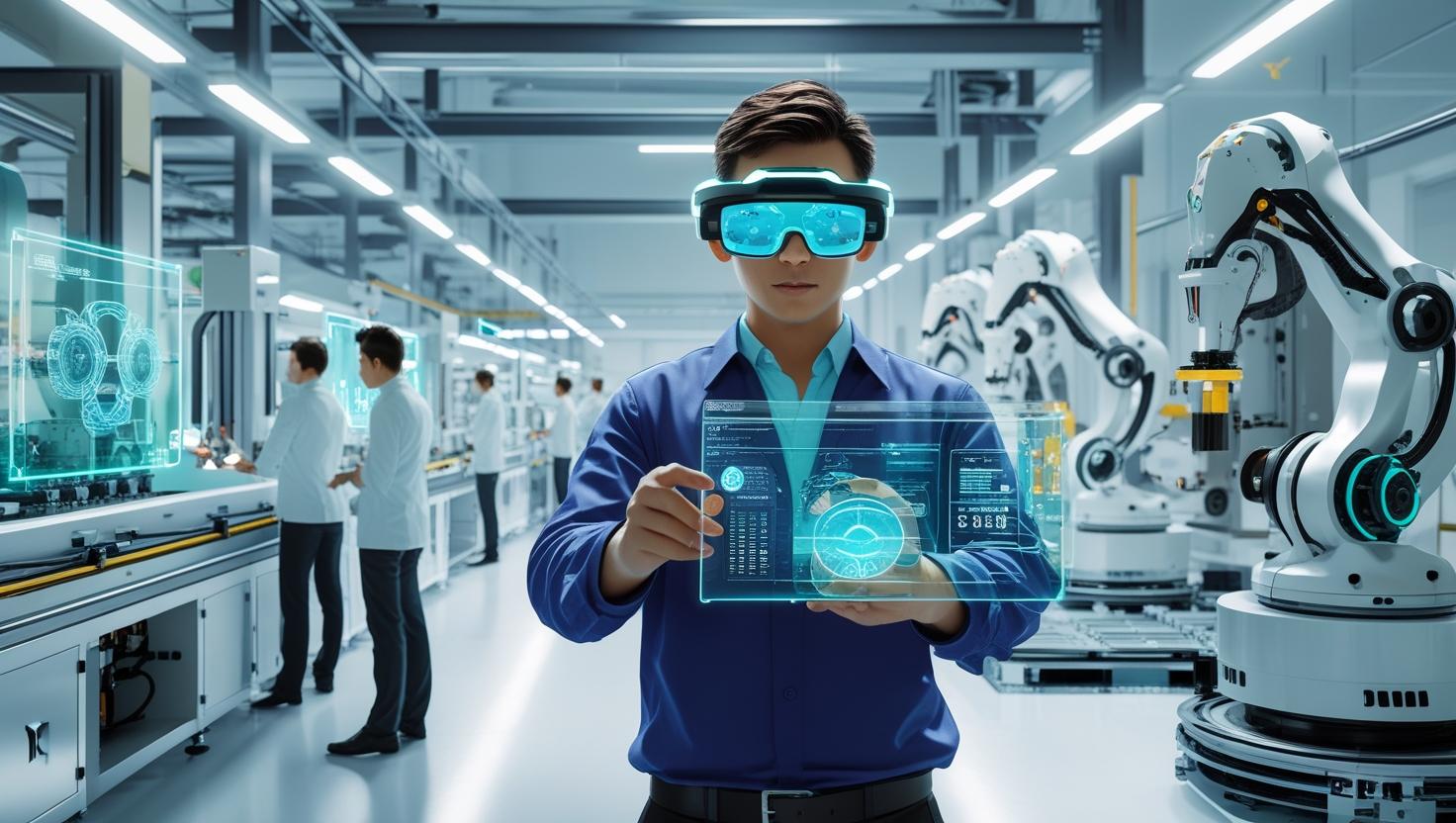
Similarly, manufacturing companies are adopting MR solutions for equipment maintenance, employee training, product development, and remote assistance. The growing versatility of these technologies is expected to create new opportunities for XR hardware and software providers.
Gaming and Entertainment Strengthen Consumer Demand
The gaming and entertainment industry represents an important growth area for the extended reality market. Increasing demand for immersive gaming experiences, interactive digital content, and virtual social environments is encouraging consumers to adopt advanced VR headsets and AR-enabled devices.
VR technology enables users to experience interactive gaming environments with enhanced visual immersion, motion tracking, and spatial audio. Meanwhile, AR applications are transforming mobile gaming by combining digital content with real-world surroundings.
The availability of more affordable VR devices, expanding content libraries, and improvements in display resolution and processing capabilities are supporting consumer adoption.
As gaming platforms and entertainment providers continue developing immersive content, demand for advanced XR devices and software solutions is expected to increase.
Enterprise Adoption of XR Transforms Industrial Operations
Another important trend influencing extended reality market expansion is the growing use of immersive technologies in enterprise environments.
Organizations are increasingly implementing XR solutions to improve employee training, product design, remote collaboration, and operational efficiency. Virtual simulations allow employees to practice complex tasks in controlled environments without the risks and costs associated with real-world training.
In manufacturing, XR applications support assembly planning, equipment maintenance, quality inspection, and digital twin visualization. Automotive companies are also using immersive technologies for virtual prototyping, vehicle design, and human-machine interface testing.
Healthcare organizations are adopting VR and AR technologies for medical education, surgical simulation, patient treatment, and rehabilitation.
These applications demonstrate how XR solutions can help organizations reduce operational costs, improve workforce productivity, and enhance decision-making.
Download PDF Brochure @ https://www.marketsandmarkets.com/pdfdownloadNew.asp?id=147143592
Artificial Intelligence and Spatial Computing Create New Opportunities
The integration of artificial intelligence and spatial computing is emerging as an important development in the extended reality market.
AI-powered technologies are improving object recognition, gesture tracking, virtual assistance, and real-time content generation. These capabilities enable more personalized and interactive immersive experiences.
Spatial computing is also transforming how users interact with digital information by connecting virtual objects with physical environments. Advanced sensors, computer vision, and real-time mapping technologies allow XR devices to understand surroundings and deliver context-aware digital experiences.
Additionally, generative AI is creating opportunities for faster development of immersive content, virtual environments, and interactive applications. These innovations are expected to strengthen the adoption of XR solutions across consumer and enterprise markets.
Hardware and Software Innovations Shape Market Development
Technological innovation across hardware and software components is playing an important role in the growth of the extended reality industry.
According to MarketsandMarkets, the hardware segment is expected to register the highest CAGR of 32.4% during the forecast period. Growing demand for advanced head-mounted displays, smart glasses, sensors, controllers, processors, and display technologies is supporting this growth.
However, the software segment held the largest market share in 2024. The increasing adoption of XR platforms, application development tools, content management systems, and cloud-based solutions is supporting software demand.
Continuous improvements in AI-enabled content creation, real-time rendering, and cross-device compatibility are further strengthening the role of software in enterprise XR deployments.
Mixed Reality Emerges as a High-Growth Technology Segment
Mixed reality is gaining attention because it combines real-world environments with interactive digital content. Unlike traditional VR experiences, MR allows users to remain aware of their physical surroundings while interacting with virtual objects.
According to MarketsandMarkets, the MR segment is projected to register the highest CAGR among technology segments during the forecast period.
The technology is increasingly being adopted for industrial training, remote assistance, collaborative product design, and digital twin applications. Improvements in spatial computing, sensor fusion, and enterprise-grade MR headsets are further supporting adoption.
As businesses look for more interactive and practical digital solutions, mixed reality is expected to create significant growth opportunities.
Asia Pacific Expected to Witness the Fastest Market Growth
Asia Pacific is projected to be the fastest-growing regional market for extended reality during the forecast period. Increasing digitalization, expanding smart manufacturing investments, and growing adoption of immersive technologies across consumer and enterprise applications are supporting regional growth.
Countries such as China, Japan, South Korea, and India are strengthening their digital technology ecosystems through investments in electronics manufacturing, gaming, education technology, and industrial automation.
The region’s expanding consumer electronics industry and increasing demand for immersive entertainment experiences are also creating opportunities for XR device manufacturers and software developers.
Government initiatives supporting emerging technologies and digital infrastructure development are expected to further strengthen the regional market outlook.
Competitive Landscape and Key Market Players
The global extended reality market is characterized by continuous product innovation, strategic partnerships, technological investments, and increasing competition among established technology companies and emerging XR providers.
Major companies operating in the market include:
- Meta Platforms, Inc.
- Microsoft Corporation
- Apple Inc.
- Sony Group Corporation
- Google LLC
- HTC Corporation
- PTC Inc.
- Qualcomm Technologies, Inc.
- Samsung Electronics Co., Ltd.
- Lenovo Group Limited
- Seiko Epson Corporation
- Panasonic Holdings Corporation
- EON Reality
- Continental AG
- Visteon Corporation
These companies are focusing on developing advanced XR headsets, smart glasses, spatial computing platforms, immersive software, and enterprise-focused applications.
Investments in AI integration, display technologies, content development, and next-generation wearable devices are expected to remain important competitive strategies.
Market Challenges and Future Opportunities
Despite strong growth prospects, the extended reality market faces several challenges, including high installation and maintenance costs, privacy concerns, hardware limitations, and rapid technological changes.
The cost of advanced XR headsets and supporting infrastructure can restrict adoption among smaller businesses and price-sensitive consumers. Issues related to display latency, limited field of view, device comfort, and content availability also influence user experience.
Furthermore, XR devices may collect sensitive personal information, including location, eye movements, facial expressions, and behavioral data, making data protection an important industry priority.
However, advancements in 5G connectivity, edge computing, AI, and spatial computing are creating new opportunities. Expanding applications in automotive, aerospace and defense, healthcare, manufacturing, and travel and tourism are expected to support long-term market development.
The global extended reality market is entering a significant growth phase as businesses and consumers increasingly embrace virtual and augmented experiences. Growing demand for immersive gaming, virtual training, digital collaboration, and interactive shopping is expanding the applications of AR, VR, and MR technologies.
Advancements in AI, spatial computing, 5G connectivity, and next-generation XR hardware are further transforming the industry. With the market projected to reach USD 84.86 billion by 2029, technology providers have substantial opportunities to capitalize on increasing investments in immersive digital solutions.
As adoption expands across consumer and enterprise applications, extended reality is expected to play an increasingly important role in shaping the future of digital interaction, industrial operations, and connected experiences.
Frequently Asked Questions (FAQs)
1. What is the projected growth of the global extended reality market?
According to MarketsandMarkets, the global extended reality market is projected to grow from USD 24.43 billion in 2024 to USD 84.86 billion by 2029, registering a CAGR of 28.3% during the forecast period.
2. What are the major factors driving extended reality market growth?
Key growth drivers include increasing adoption of augmented reality (AR), virtual reality (VR), and mixed reality (MR), rising demand for immersive gaming, enterprise digital transformation, advancements in AI, and growing investments in spatial computing.
3. Which technology segment is expected to witness the fastest growth in the extended reality market?
The mixed reality (MR) segment is projected to register the highest CAGR among technology segments, driven by increasing applications in industrial training, remote collaboration, product design, and digital twin environments.
4. Which region is expected to experience the fastest growth in the extended reality market?
Asia Pacific is projected to witness the fastest growth, supported by increasing digitalization, expanding consumer electronics manufacturing, rising gaming adoption, and investments in immersive technologies across countries such as China, Japan, South Korea, and India.
5. Who are the key players in the global extended reality market?
Major companies operating in the extended reality market include Meta Platforms, Microsoft Corporation, Apple Inc., Sony Group Corporation, Google LLC, HTC Corporation, PTC Inc., Qualcomm Technologies, Samsung Electronics, Lenovo Group, and Seiko Epson Corporation.
About MarketsandMarkets™
MarketsandMarkets™ provides quantified B2B research on 30,000 high growth niche opportunities/threats which will impact 70% to 80% of worldwide companies’ revenues. Currently servicing 7500 customers worldwide including 80% of global Fortune 1000 companies as clients. Almost 75,000 top officers across eight industries worldwide approach MarketsandMarkets™ for their painpoints around revenues decisions.
Our 850 fulltime analyst and SMEs at MarketsandMarkets™ are tracking global high growth markets following the “Growth Engagement Model – GEM”. The GEM aims at proactive collaboration with the clients to identify new opportunities, identify most important customers, write “Attack, avoid and defend” strategies, identify sources of incremental revenues for both the company and its competitors. MarketsandMarkets™ now coming up with 1,500 MicroQuadrants (Positioning top players across leaders, emerging companies, innovators, strategic players) annually in high growth emerging segments. MarketsandMarkets™ is determined to benefit more than 10,000 companies this year for their revenue planning and help them take their innovations/disruptions early to the market by providing them research ahead of the curve.
MarketsandMarkets’s flagship competitive intelligence and market research platform, “Knowledgestore” connects over 200,000 markets and entire value chains for deeper understanding of the unmet insights along with market sizing and forecasts of niche markets.
Contact:
Mr. Rohan Salgarkar
MarketsandMarkets™ INC.
630 Dundee Road
Suite 430
Northbrook, IL 60062
